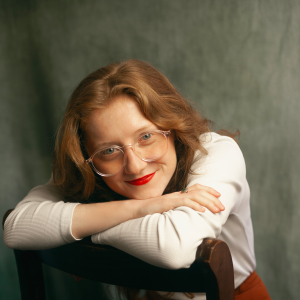
There is a particular quiet that arrives once a tour ends – not silence, but a loosening. A shift from motion into reflection. For Inni‑K – a singer, multi‑instrumentalist, composer, and songwriter with a deep and intuitive knowledge of sean‑nós and the Irish language – finishing the tour for Still a Day brought that change sharply into focus. After months shaped by travel, rehearsal, performance, and promotion, time has begun to stretch again, offering space to take stock of what the work has become and how it now sits with her.
She speaks candidly about finding herself with more space than before – not as absence, but as a necessary pause after sustained motion. The end of a tour brings with it both relief and recalibration.
Learning the Shape of Touring
“There’s always more you learn. Yeah. Every time,” she says. Touring, for her, is never fixed; it is “a constant, refining process,” one that mirrors the way albums themselves are released into an ever‑shifting landscape. The work changes, the audience changes, and the structures surrounding music change with them.
This time, the shift was particularly noticeable in how promotion functioned. “The whole landscape of social media really has changed,” she reflects, noting how difficult it felt to reach even people who already followed her work, with an algorithm behaving in unpredictable ways when it comes to what people see. The effort required to remain visible has grown heavier, demanding time and mental space that often sits uncomfortably beside the quieter labour of making songs.
Where the Music Lives
And yet, touring still revealed something grounding. “People will come anyway – people who are interested will always come,” she says, acknowledging the steady presence of listeners who have followed her work across releases. Those audiences, she adds, “really just love music and love what I’ve been doing and appreciate the progression of my journey.”
Playing live remains the counterweight to the abstraction of online promotion. “The difference between kind of shouting into a void and actually playing for people – that’s what I love doing,” she explains. Being in a room, feeling the music move between bodies, restores a sense of connection that can otherwise feel elusive online.
A Record That Trusts Restraint
Still a Day, her fourth studio album, has unfolded slowly and deliberately, both on record and on stage. It is a body of work shaped by trust and long‑standing collaboration, but also by an increasing confidence in restraint. Compared to earlier releases, it feels less concerned with display and more attentive to atmosphere – allowing songs to breathe, to hold silence, to trust simplicity.
Looking back across her catalogue, she recognises a clear trajectory, but describes this album as “a bit less showy… a bit more instinctual,” shaped by a growing confidence to keep things simple. “It’s really hard to describe your own stuff,” she admits, before adding that the work feels quieter, more settled, and more assured.
Nature as Language
Nature runs quietly but persistently through the album. Her writing often turns instinctively toward the elements when searching for language. “I think all of my writing and all my albums are very nature‑based,” she says, drawing inspiration from “the forces, from the elements.”
Water, soil, sky, darkness – these are not decorative images but working metaphors. One song, rooted in compost and the natural world, reflects her fascination with unseen systems. She describes it as thinking about “that invisible wisdom… the invisible life that’s in everything,” where breakdown becomes the condition for growth. Nature, for her, offers metaphors that allow experience to be expressed with depth rather than directness. “The power of metaphor is quite magical,” she notes.
Expanding the Sound
Musically, Still a Day expands her palette without abandoning its roots. Voice and fiddle remain central, but they now sit alongside subtle electronics and synthesizers. She began working more closely with synths while travelling, sketching ideas in motion. “I was on a tour bus in Germany… working away on my little synths,” she recalls, building bass lines and textures that later shaped the album.
In the studio, these ideas were refined through close collaboration, most notably with Seán Mac Erlaine, who worked closely with her on shaping and producing the record. Working with a small group allowed space for intuition rather than over‑explanation, letting sounds arrive organically.
Collaboration and Trust
That sensitivity to process extends into how she works with others. “It really depends on the person and my relationship with them,” she explains. Some musicians need structure, others instinct. With this record, the collaboration remained deliberately contained. Alongside Seán Mac Erlaine, drummer and percussionist Matthew Jacobson played a key role in giving the songs their rhythmic shape. “It was just the three of us… it’s very contained in that way.”
Rather than strict instruction, she often communicates through feeling and imagery – gestures toward tone or energy rather than technical language. Trust, more than control, shapes the work.
Inviting People In
Alongside the concerts, she ran workshops during the tour, inviting audiences into the music itself. Participants learned parts of songs and later joined her on stage.
“It’s just including people,” she says simply, recognising how many want to participate but need encouragement. The result was a soft dissolving of the boundary between performer and listener.
Writing as Process
Songwriting, for her, remains deeply personal – not always autobiographical, but always rooted in lived experience. “I think they’re all very personal… that’s sort of the point for me,” she reflects. Music is a way of understanding life, something she describes as “a really healthy and healing thing to do.”
Not every song is shared. Some remain private, written like letters never sent. Others, like one track built around an internal dialogue, unfold as conversations between parts of herself – between change and familiarity, openness and hesitation.
Letting Direction Emerge
Change, she insists, is not something she consciously pursues. “It’s not something that I sit down and decide – it just happens out of the work,” she says. Albums come together when enough songs gather and begin to speak to one another, usually every few years. They form chapters rather than conclusions.
“It still seems like the most exciting project for me,” she says of album‑making – a way of marking time, attention, and growth.
Returning to Stillness
Now, with the road behind her, attention turns again to smaller details: light shifting across a room, the steady burn of a candle. “There is nothing more interesting than the everyday things,” she says, reflecting on how attention transforms the ordinary into something expansive.
What Remains
In the aftermath of touring, the songs remain – grounded, patient, and continuing to unfold. Away from schedules and stages, they return to stillness, listening again for what might come next.