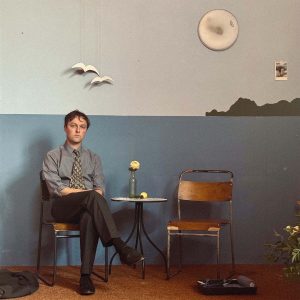
Kerrie Hanna

Visual Artist

Ancient pigment and endangered craft meet feminist reclamation and community authorship in a practice rooted in land and light

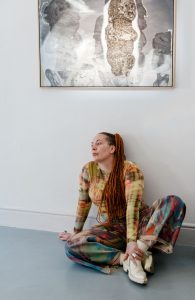
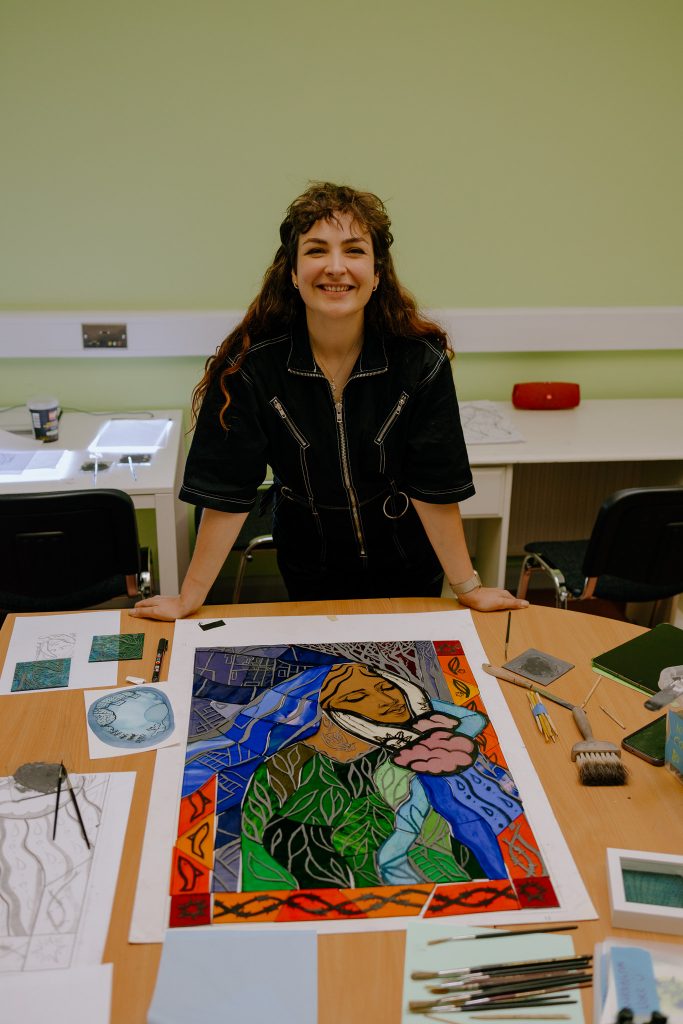
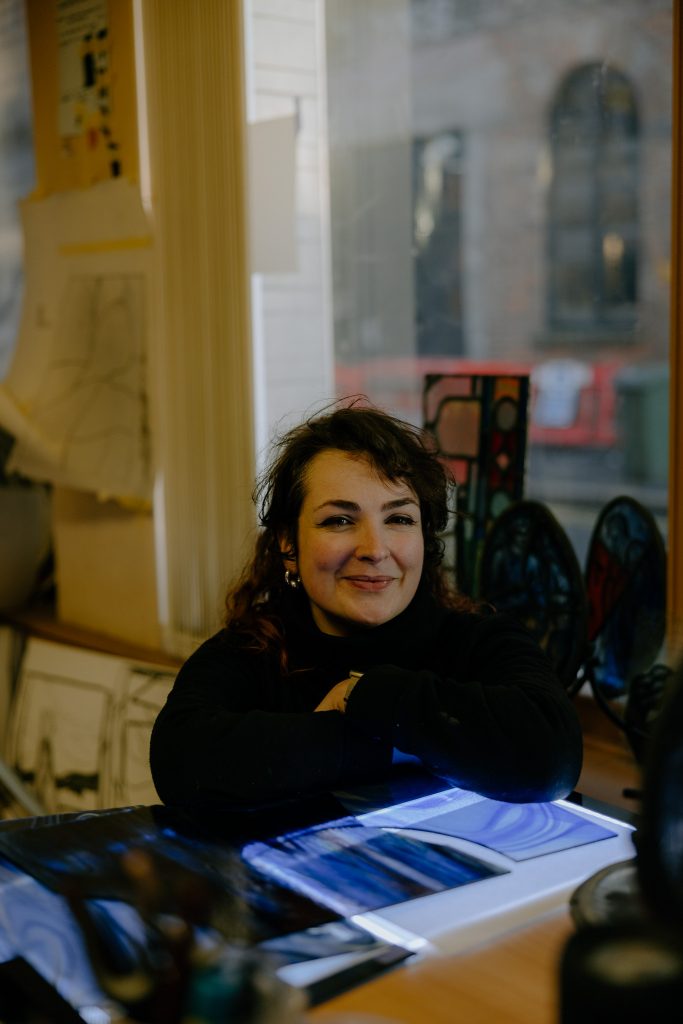
Kerrie Hanna - Photographed by Kate Donaldson @katedonaldsonphotography

There are artists who move between mediums – and then there are artists who carry a thread through them.

Kerrie Hanna’s work sits firmly in the latter. Her practice spans stained glass, mural, illustration, fused glass and foraged pigment painting, but what binds it is not variety – it is a steady deepening. Each shift in material marks a further step inward and outward at once: into her own process, and into the landscapes that shape it.

For Hanna, that movement did not begin with rock or pigment, but with something far less fixed.

From Ink to Earth

Before the materials were gathered, they were imagined.

“I really began to connect to making art as an active meditation, to get into my body and explore my inner world more deeply,” she says. “The rules are simple: create free flowing shapes, and then once dry, begin to work into them to see what stories and imagery emerges.”

These early works – built from inkblots and intuitive forms – became a kind of language. A way of allowing imagery to surface without force or expectation. What emerged, however, began to take on a surprising consistency.

“Much of the imagery reflected the Irish landscape, characters, emotions – and, as a surprise to me, rocks.”

What began as internal soon started to point outward. The shapes she was uncovering in ink seemed already rooted in something older, something physical. The work began to ask for material.

A Return to Material

That shift coincided with a growing sense of disconnection.

“My brain felt like it was full of thousands of other people’s thoughts, other people’s words. There was a disorientation about it, and I began to intuitively seek out grounding processes in my work.”

Grounding, for Hanna, meant moving away from the screen and toward the tangible. Toward processes that required time, weight, and touch. The transition wasn’t abrupt – it unfolded gradually, as if the work itself was leading her there.

The rocks that had first appeared in her ink drawings became something she could hold. Clay could be gathered. Pigments could be made. Colour could be built from the ground up.

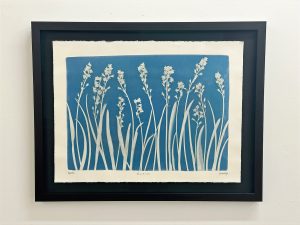
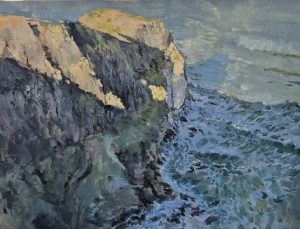
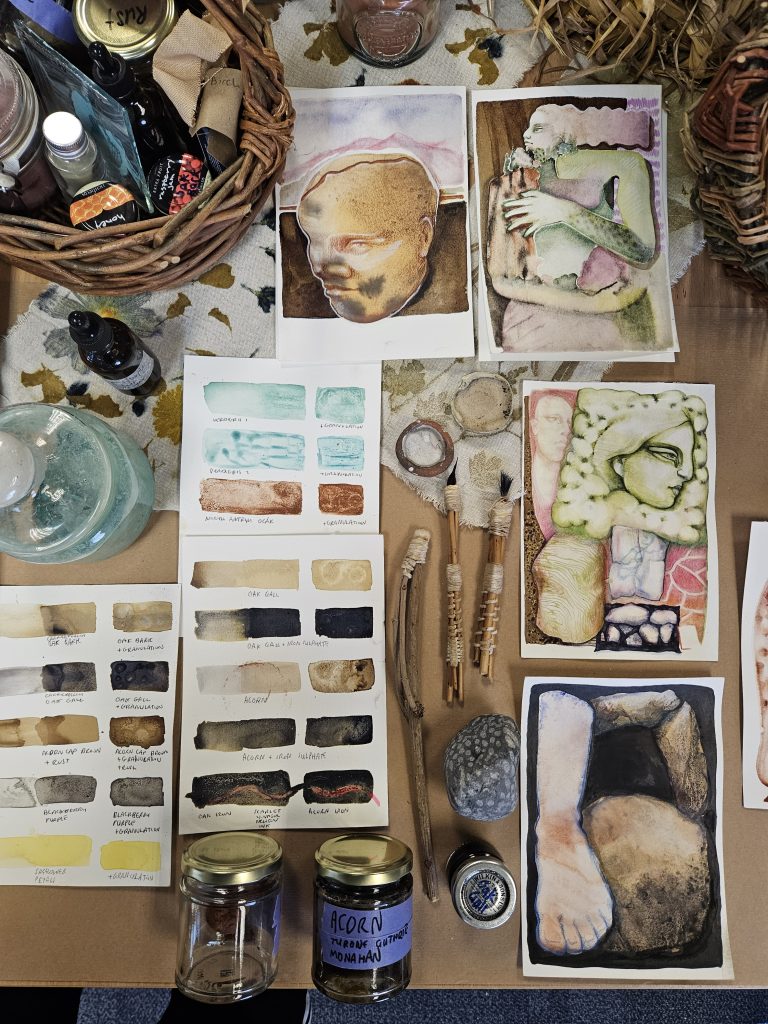
“For the past two years I’ve been using foraged pigments within my paintings. I became totally fascinated by the idea of – how do I create a work somewhere, which can only be created there?”

It was no longer just about image. It was about origin.

Learning the Language of Pigment

A key turning point came through her engagement with pigment-making, and in particular through learning from Tricia Kelly of Ócar.

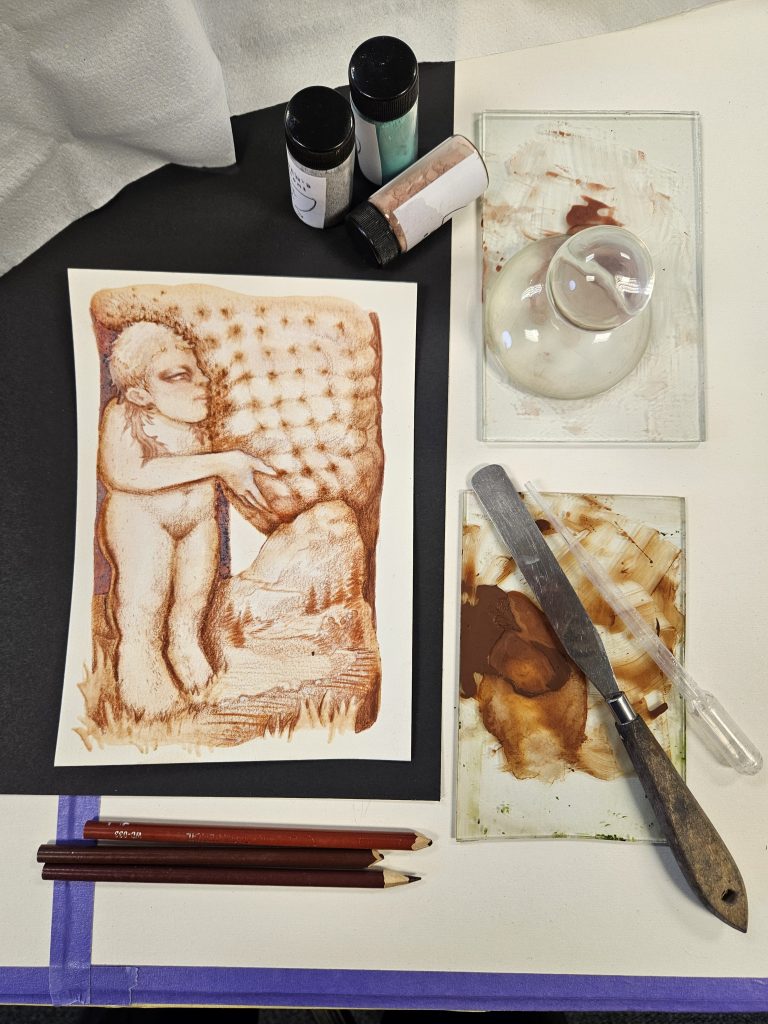
Through that process, Hanna began to understand not just how colour is made, but how it carries place within it. Grinding, levigating, binding – each step slowing the act of painting into something deliberate and considered.

“I am so fascinated by using ancient pigments which have so much lore and depth attached to them,” she says. “And also from an ecological standpoint – using local pigments to connect to the land more deeply, and to move away from petroleum-based paints.”

Ochre, in particular, became a point of focus.

“I was amazed to find that ochre is found in an inter-basaltic layer running around the North Antrim coast.”

Formed through volcanic activity millions of years ago, these iron-rich deposits sit quietly within the landscape – often extracted and discarded as part of quarrying processes.

“The ochre which is pulled out alongside is essentially viewed as a waste product, and often left beside the quarries unused.”

In Hanna’s work, that overlooked material is reactivated. Not as a novelty, but as a continuation – a way of allowing the land to re-enter the image not as subject, but as substance.

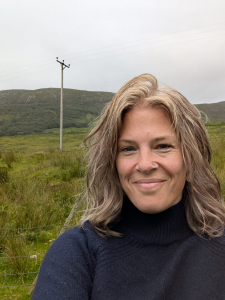
Photographed by Kate Donaldson @katedonaldsonphotography

What the Work Carries

There is a growing sense, across Hanna’s practice, that the work is less about representation and more about relationship.

“I am the first generation to not be living on the land, with many of my predecessors working with the land as farmers,” she reflects. “So maybe a little of their legacy is touched on by me being drawn to dig for my own materials and process them by hand.”

That connection does not arrive as nostalgia. It emerges through process – through repetition, through labour, through attention.

The earlier ink works, with their open-ended forms, still sit beneath everything. But now they are anchored. The shapes that once floated now carry weight. The imagery that once surfaced from within now meets the material world halfway.

There are traces of folklore, of ancient sites, of figures that feel both familiar and slightly out of reach – but they are never imposed. They emerge in the same way the earliest ink forms did: slowly, and with a degree of unpredictability.

“I have always loved visiting ancient sites and neolithic cairns, and the mystery and intrigue of the layers and layers of meaning and stories found there.”

That sense of layering – of time, of material, of meaning – runs throughout the work.

A Moment of Peace - Photographed by Kate Donaldson @katedonaldsonphotography

An Ongoing Process

What defines Hanna’s practice is not a fixed style, but a willingness to follow where the work leads.

The progression from inkblot to rock, from image to material, from observation to making, is not presented as a finished journey. It is ongoing – each stage opening into the next.

“Embedding place into my work, reconnecting to these practices, brings me so much joy and reminds me of the magic to be found within the natural world.”

There is a quiet clarity in that approach. A sense that the work does not need to declare itself loudly to hold weight.

“The paintings are often more honest than you will be with yourself,” she says. “But when you surrender to that process, that honesty – that connection – is when I know a piece has been successful.”

In Hanna’s work, that honesty is not just found in the image. It is built into the material itself – carried from ground to hand, and back again.

A Moment of Peace - Photographed by Kate Donaldson @katedonaldsonphotography

Stained Glass in a New Setting

Parallel to pigment, Hanna continues to work in stained glass – a craft now listed on the Red List of Endangered Crafts.

Her practice has been shaped by institutional collaboration. “It was really an honour to be asked to work with NGI by Marie Lynch, Curator of the Centre for the Study of Irish Art at the National Gallery of Ireland.”

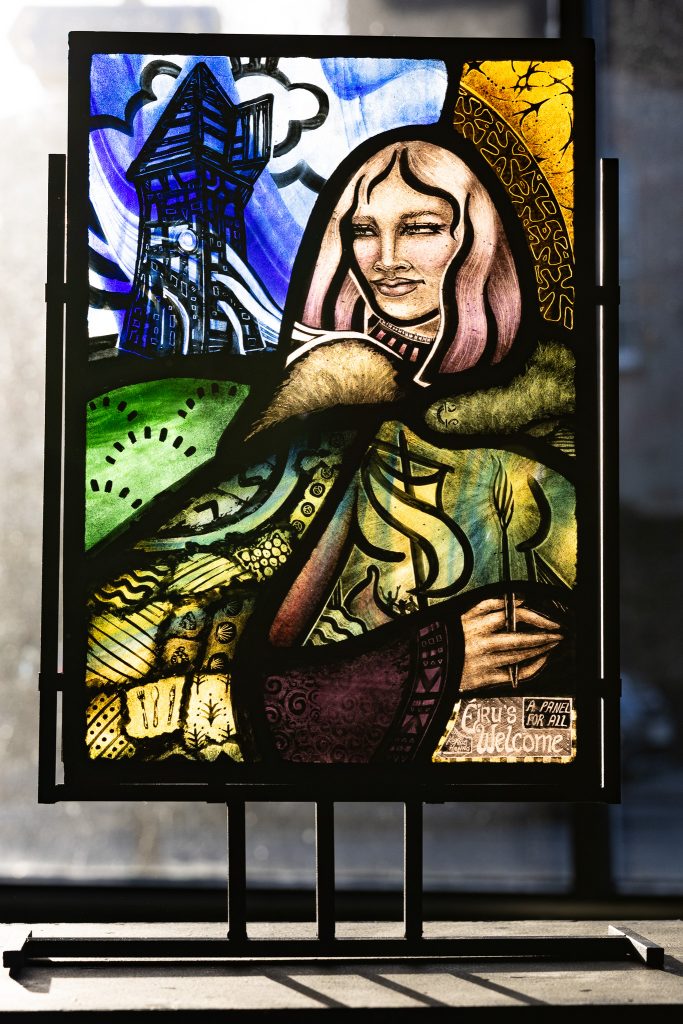
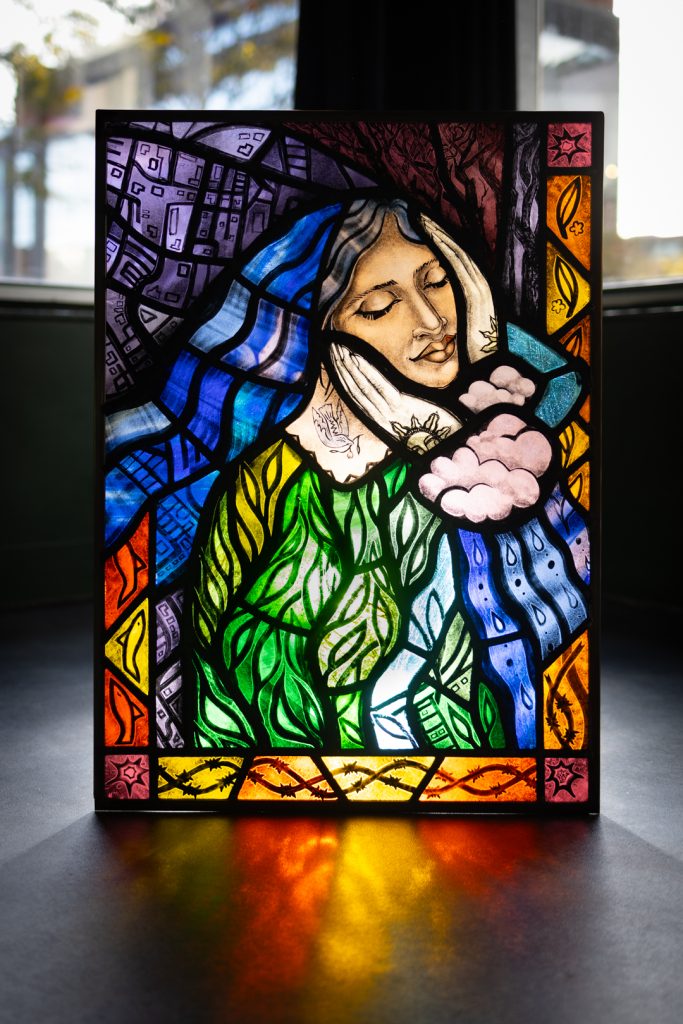
Responding to An Túr Gloine: Artists and the Collective – the early 20th-century stained glass movement led by Sarah Purser – she worked alongside young people, including the National Gallery of Ireland’s Apollo Youth Panel, to create Éiru’s Welcome; A Panel for All, a panel celebrating Ireland as a proudly multicultural country.

“The process of working with the collections of Irish stained glass directly informed my approach to working within glass – from both an aesthetic perspective and a thematic one.”

With the National Trust, she brought young school leavers from the Yeha Project to Divis Mountain, exploring foraging and plant identification before translating that experience into glass.

“Instead of memorialising within a church setting, these panels memorialised a moment in time, with a particular group.”

She is honest about the emotional weight of such recognition.

“Of course I would be lying to say I didn’t get a sense of validation from working on projects like this – they do help carve out a path and shed a little light on an endangered craft.”

Yet the deeper achievement lies in reframing stained glass itself.

“With stained glass window making being on the red list of endangered crafts, I do feel a sense of pride working on projects which help highlight how the medium can be used within new settings and opening to new audiences.”

Éiru’s Welcome; A Panel for All - Photographed by Kate Donaldson @katedonaldsonphotography

Cailleach and Collective Power

Hanna’s responsibility extends into curating. Cailleach, co-curated with Zippy & Wee Nuls at Vault Gallery, centred on the archetype of the crone.

“We all connected to her story, her power to move landscapes and shape winter, and also her role as a representation of women’s inner power and learning.”

For Hanna, the crone is not stereotype but aspiration.

“The crone – to me – represents a deep inner knowing. Discernment and intuition which is gained from life experience. While the patriarchal systems impose a youth-obsessed culture, what if we were to uplift the crone as an aspiration – to celebrate our hard earned wisdoms.”

Her feminist perspective is clear.

“Being a feminist is a core part of my perspective on the world – both in the importance of uplifting women but also in addressing inequalities within the world, and art has the power to do that.”

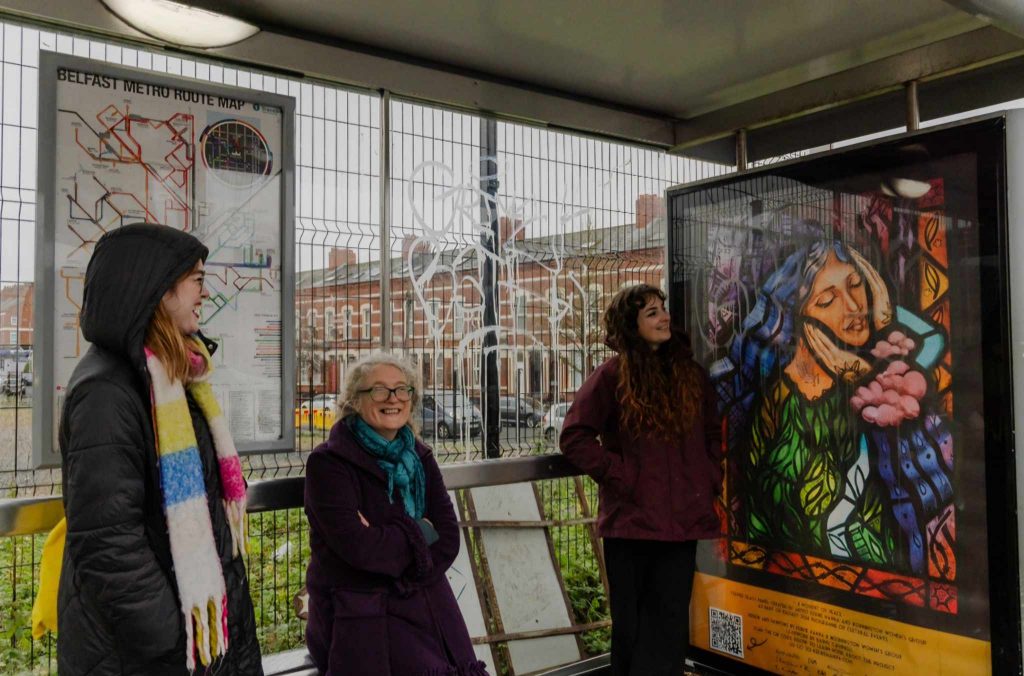
The exhibition addressed the demonisation of healer women and the ongoing realities of violence against women, including trans women, situating myth within lived urgency. Hanna exhibited her Inner Landscape paintings there for the first time, alongside a stained glass panel co-designed with Mornington Women’s Group exploring Belfast’s evolving story post-ceasefire.

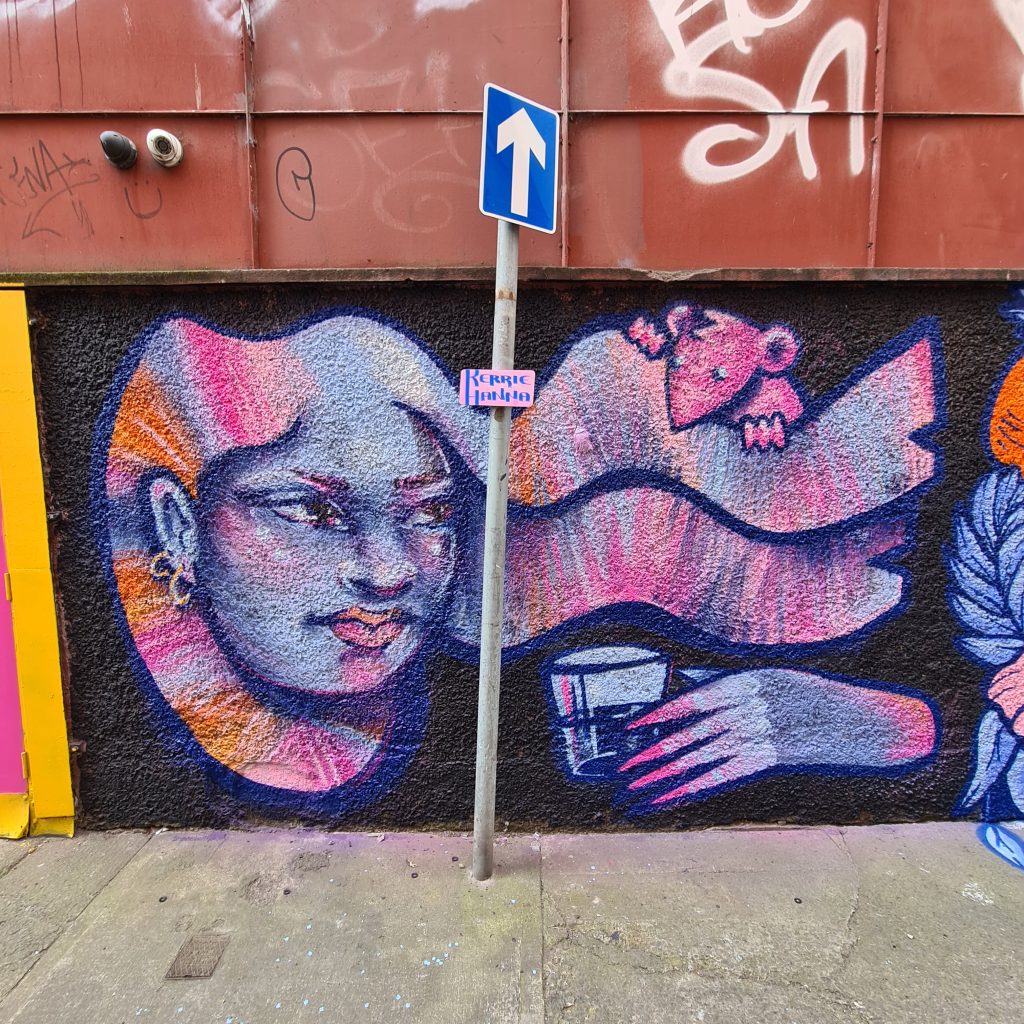
Water Street Mural - The first street in Belfast to get running water, later renamed College Court

Authority and Negotiation

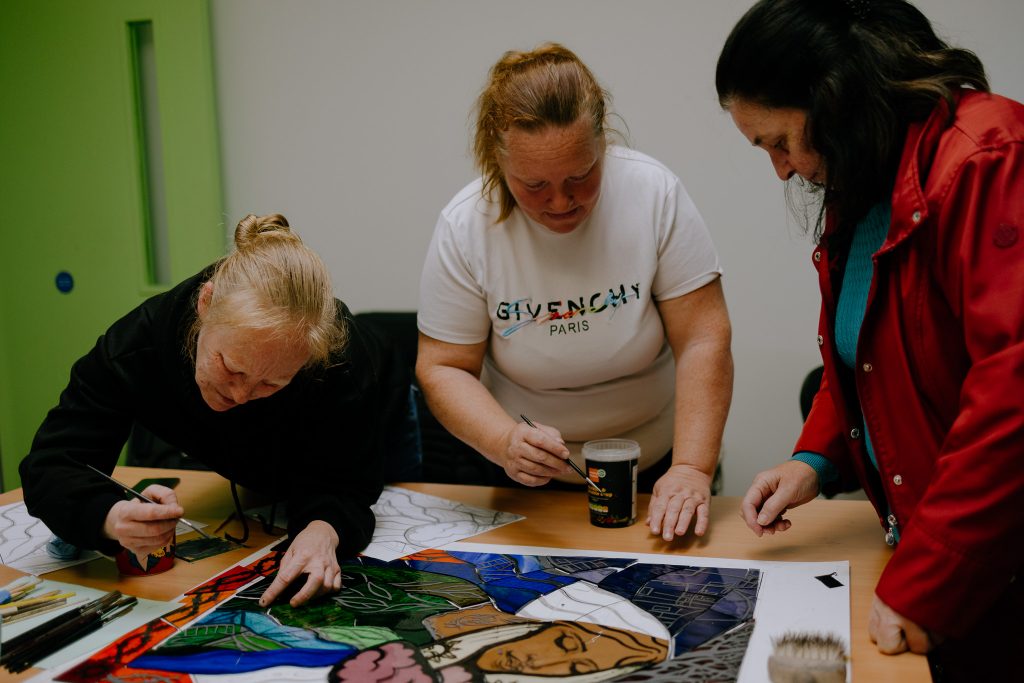
With fifteen years in community arts, rooted in Northern Ireland’s peacebuilding context, Hanna approaches co-design as both craft and civic practice.

“The co-design process is something I have developed to incorporate open group discussions, art-making to develop symbols which are important to the group’s core beliefs or themes. The artwork is negotiated, imagined together, and layered.”
“Participatory design changes the power dynamic within the process, and if done well, produces artworks all the stronger for the multiple perspectives within them.”

She acknowledges the balance required.

“It can be a tricky balance to represent a broad range of opinions and symbols… so I do think there is a balance of coming to the group with some parameters to allow freedom within those themes.”

Skill-sharing remains central.

“As much as possible I also share the stained glass painting skills with the participants… so it truly is a collaborative work from the start to finish.”

Authority shifts. Singular voice becomes collective.

“How can we align? What do we feel comfortable all saying together?”
A Moment of Peace

Drawing Strength Forward

Across pigment and glass, folklore and feminism, institutional collaboration and grassroots practice, Kerrie Hanna’s work demonstrates how craft can be both preservation and progression.

She excavates 60-million-year-old earth while building contemporary stained glass.

She works with National Gallery of Ireland and National Trust while nurturing community voices through projects like the Yeha Project and Mornington Women’s Group.

She curates alongside Zippy and Wee Nuls while learning from figures like Tricia Kelly and the legacy of Sarah Purser.

Through material and through collaboration, she draws strength from the past and carries it forward.

“Embedding ‘place’ into my work… reminds me of the magic to be found within the natural world.”

In Hanna’s practice, that magic is not abstract. It is iron-rich. It is negotiated. It is illuminated.

And it insists that craft is not a relic – but a living force shaping how we understand where we stand.

For more on Kerrie Hanna’s work, upcoming projects and available pieces, visit: kerriehanna.com
And keep up with Kerrie via social media: @kerriehanna

Support Go Leor. Get the Print. Join the Story.

Go Leor is an independent Irish arts magazine built by hand, heart, and community. Your support keeps meaningful storytelling alive – in print, in culture, and in conversation. Through Patreon, you can join as a monthly supporter and receive exclusive benefits across our tiered memberships:

  • Fir Bolg: Your name printed inside every issue.

  • Muintir Neimhidh: Your name + monthly issue delivered (UK & Ireland) and PDF issues.

  • Muintir Partholóin: All previous benefits + monthly editor’s dispatch.

  • Bradán Feasa: All benefits + help shape future articles and themes.

Your backing helps us print, publish, and grow a space for creative voices across Ireland and beyond.

The Latest Articles