
Chiara Mattozzi
Author
From queer readings of Arthurian legend to Welsh history and low fantasy, a practice shaped by scholarship, story, and the magic still held in old texts
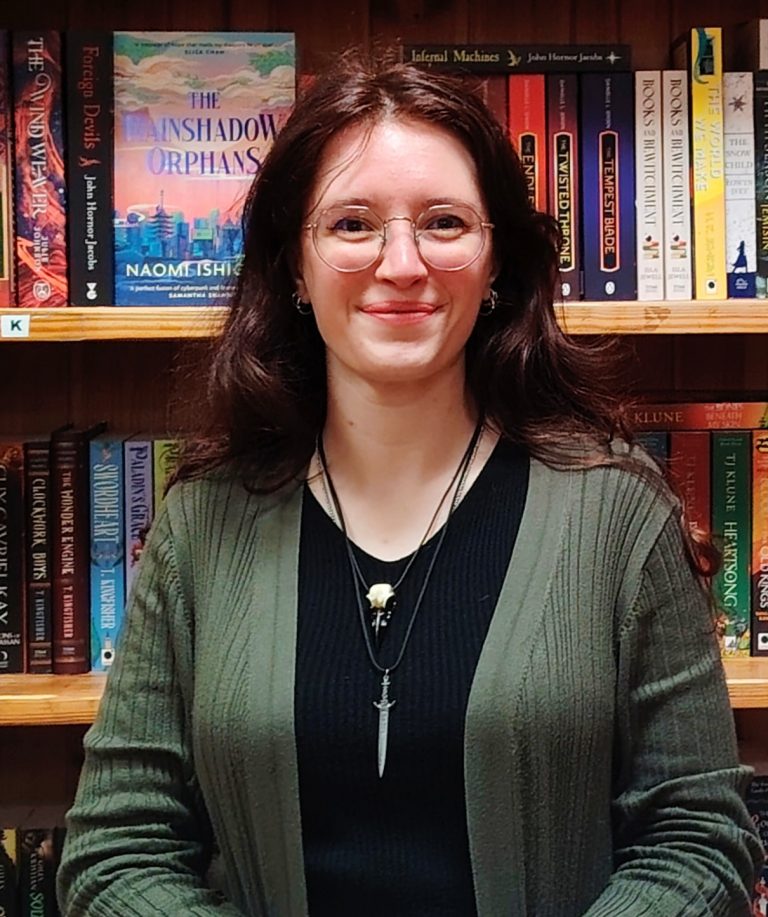
Chiara Mattozzi describes herself first through curiosity. Not through a neat professional label, or through the kind of single-line biography that makes a writer easier to file away, but through the restless instinct to study, read, wander, and return again to the past.
“I would say I’m a really curious person,” she says. “I love studying. I’m a bit of a nerd. I would just spend days in a library.”
It is a fitting beginning for a writer whose work moves between fantasy, medieval literature, ancient ruins, queer readings of Arthurian legend, and the long imaginative life of Wales, Ireland, Rome, and Britain. Chiara was born in Rome and moved to Ireland five years ago, bringing with her a fascination with history that had already travelled through several worlds before she arrived here.
As a teenager, she had been deeply interested in ancient Roman history. Then, around the age of sixteen, medieval literature opened another door. “I discovered this new side of the world,” she says, “and was like, oh, I want to know more.”
That moment did not remain academic. It became creative. The same landscapes that drew her into research began to shape the fiction she wanted to write. Medieval courts, Arthurian legends, magic, old systems of belief, difficult endings, flawed characters, and the uneasy space between history and fantasy all became part of the same ongoing conversation.
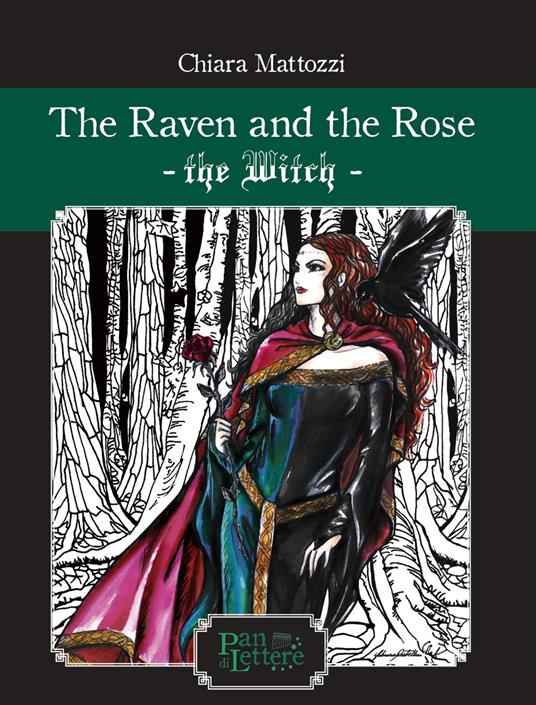
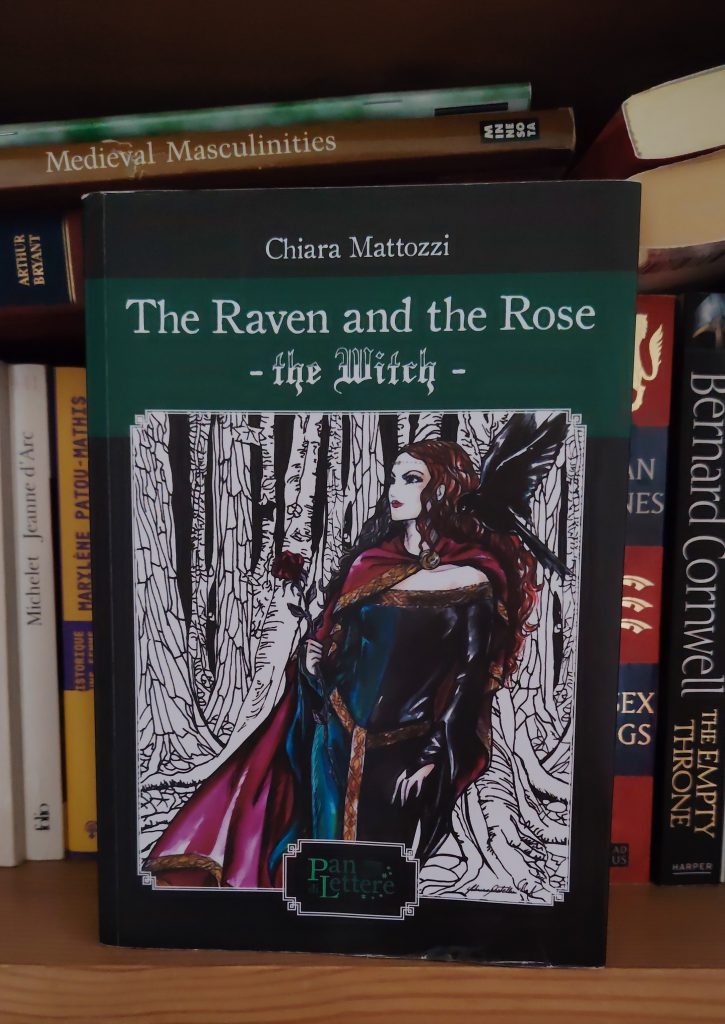
Chiara’s novel, The Raven and the Rose – The Witch, was first published in Italian in 2021. Its English version followed in 2025, widening the audience for a story that had already existed in one language before being carried into another. For Chiara, that movement between Italian and English was not simply a matter of availability. It was a way of allowing the work to find new readers, especially in a literary landscape where fantasy can still be treated as something lesser, lighter, or more childish than it is.
“In general, Italians don’t like fantasy that much,” she says with a laugh, before qualifying the thought. “I mean, they do. But they kind of say it like it’s for kids, and this book is not for kids.”
That distinction matters. Chiara’s interest in fantasy is not escapist in the shallow sense. It is not a rejection of history, but a way of pressing closer to it. Her fiction sits in the older tradition of stories where realism and myth do not cancel one another out, where magic is not a system to be explained but a pressure within the world, where the past carries its own strangeness without needing to be made modern.
The Queer Threads Already Present in Arthurian Legend
Before speaking about her fiction, Chiara speaks about study. Her academic work has focused on medieval literature, with a queer lens placed especially on Arthurian material. This was the subject of her master’s thesis, and it remains one of the clearest ways into understanding how she reads the past.
She is careful not to frame queer readings as an artificial imposition on medieval literature. For her, the evidence is not absent. The issue is often that it has been ignored.
“I didn’t really find it too hard to find the evidence of it,” she says. “But I found it really striking that many scholars just skipped over it. They just saw things that were plainly, or clearly, queer, and they just didn’t talk about it.”
There is a particular loneliness in that kind of reading. To sit with a medieval text and see something plainly present, only to discover that generations of scholarship have hurried past it, is to be left briefly wondering whether the problem is in the text, in the reader, or in the history of what readers have been permitted to notice.
“You start questioning yourself,” Chiara says. “You’re just like, am I really the only one that sees this? Am I crazy, or is it really there?”
One example came from an Anglo-Norman text, Roman de Brut by Wace. Chiara describes two male characters whose bond is framed in language that goes far beyond ordinary companionship. One loves the other more than anyone else. The line she draws attention to is clear: “he had greatly loved and cherished him.” Yet the scholarly habit has often been to flatten that feeling into friendship.
“The author says that one loved and cherished the other more than anyone else,” she says. “He uses that kind of language throughout the text for fathers and children, uncles and nephews, and heterosexual relationships. But it is still interesting to see the same words used for two men who are not related by blood, who are both unmarried and inseparable. And still, scholars are like, ‘yeah, they’re close friends’. I wouldn’t say they’re not friends, but there’s something else there as well.”
It is this “something else” that matters. Chiara is not trying to make medieval literature less itself. She is trying to read what is there without sanding down its complexity. The queer dimension of Arthurian and medieval material has often been treated as marginal or speculative, but her point is that the marginalisation frequently happens after the fact. The text speaks, and then interpretation decides what it is willing to hear.
This is why her academic interest feels so naturally connected to her creative work. She is drawn to overlooked spaces in old stories, to perspectives that were present but under-read, to the possibility that the past has always been stranger, more open, and more emotionally varied than later systems allowed it to be.
“There are more scholars now doing this work,” she says. “Hopefully there will be more and more. It’s not even finding out. It’s just highlighting things that were already there.”
Wales, Arthur, and the Histories Still Pulling at Her
If Arthurian legend runs through Chiara’s academic work, Welsh history remains one of the areas she is most eager to explore creatively. Her fascination is not casual. It sits at the meeting point of medieval literature, myth, language, place, and queer possibility.
“I really love Welsh history and the medieval side of it,” she says. “So I would really love to explore that more in my writing.”
At present, she has been working with short Arthurian retellings, allowing ideas to take shape without forcing them too quickly into a larger project. But the ambition is there. She speaks of the possibility of a bigger work, perhaps a novel or a collection of stories, something that would allow Welsh and Arthurian material to be approached from angles that have not always been given space.
“I would like to work on them from the queer perspective,” she says. “That side that many people ignored. I’m trying to dig it up and be like, look, it’s still the same story, but there’s also this thing.”
Her interest in Wales also sits alongside an affection for other medieval and legendary texts. One of the projects she hopes to return to is a retelling of Sir Gawain and the Green Knight, possibly from the Green Knight’s perspective. The original poem, with its enchantment, tests, reversals, and strange moral atmosphere, appeals to her precisely because it already contains so much magic.
“The original story has lots of magic in it,” she says. “I think it’s brilliant.”
There is something telling in her instinct to approach the story from the Green Knight’s side. Again, she is drawn to the figure at the edge, the one who disrupts the court, the one who appears almost as a test sent from another order of reality.
Low Fantasy and the Uses of Magic
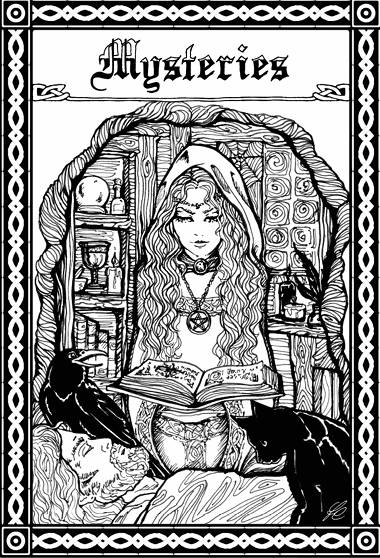
Although Chiara writes fantasy, she is not especially interested in spectacle for its own sake. The Raven and the Rose – The Witch is low fantasy, rooted in a world where magic exists but does not dominate every structure of life.
“There is magic and some characters have it and know how to use it,” she says. “But it’s not really the main thing in their world. There’s no magic system in it.”
That choice places her work closer to myth and medieval storytelling than to the more mechanical approaches sometimes found in contemporary fantasy. Magic is not a diagram. It is not a neatly explained technology. It is woven through belief, character, atmosphere, and consequence.
For Chiara, this is part of what makes medieval material so compelling. In older legends, the boundary between history and wonder is porous. Arthur fights Romans and Saxons in stories that were understood as history, but those same stories contain Merlin, giants, enchanted swords, and forces that modern readers would place under fantasy or mythology.
“They did believe those were history,” she says. “But I would say that they knew the giants and stuff were not exactly something that would happen every day.”
That balance interests her: realism, but with “hints of something more, something different.”
In her own writing, fantasy is not about abandoning the world. It is about expanding it. A character may move objects with thought, light fires, or possess abilities that shift the ordinary laws around them. But the emotional weight of the story remains human. The characters are still driven by loyalty, fear, guilt, ambition, love, survival, and the struggle to do what they believe is right.
That is part of why she resists the idea that fantasy should be dismissed as childish. The setting may be medieval. The story may contain magic. But the material itself is concerned with difficult decisions and adult consequences.
The Raven and the Rose Across Two Languages
The Raven and the Rose – The Witch began in Italian. The first version was published in 2021, with the English translation appearing in 2025. Chiara did not translate the book herself, but she was involved in the process of reading and adjusting the English version so that it still carried the feeling of the original.
“I was reading the translation and trying to fix those tiny things that didn’t sound right to me,” she says. “It was really well done, but sometimes there’s one sentence that doesn’t sound as you want it to sound.”
There is a delicate balance in that kind of work. A translated novel is both the same book and another version of it. It has to move naturally in a new language without losing the rhythm, intention, and emotional shape of the first.
Chiara describes herself as cautious in that process. She did not want to undo the translator’s work, but she also knew where certain sentences needed to carry her own particular weight.
“I was just trying to adjust it,” she says, “trying not to ruin the work that the translator did.”
The move into English gave the book access to a broader readership, but it also brought Chiara into direct contact with the difficulty of hearing her own story through another language. For a writer, every sentence matters. The wrong phrasing can tilt a scene. A line that sounds right in Italian may need more than a literal equivalent in English. Meaning is not just content. It is music, pressure, timing, and silence.
When asked which parts of the book mattered most to her, Chiara laughs at the impossibility of choosing. “Every part,” she suggests, before settling on the ending.
The ending was difficult to write. It has also been difficult for some readers to accept, not because they disliked it, but because it left them upset.
“It was really hard to write,” she says. “But I think it’s just the only conclusion that would make sense to the story.”
There is a conviction there that speaks to her wider attitude towards storytelling. She likes happy endings. She enjoys reading them. But she does not believe they should be forced onto a story that has not earned them.
“You can’t have the perfect happy ending if the story is not going that way,” she says. “I like happy endings and sad endings, but I wouldn’t force it.”
For Chiara, the ending must answer the story honestly, even if that answer hurts.
Characters Who Refuse to Behave
Chiara talks about writing as a conversation. Not a mechanical act of planning and execution, but an ongoing exchange with the characters who arrive in her mind and begin to make demands.
“I didn’t plan most of the things that are in the book,” she says. “Still, they ended up being there.”
Sometimes a writer can remove those unexpected elements. Sometimes they become too important to lose. In Chiara’s case, part of writing is following the characters, watching what they do, and trying to understand why they have done it.
“I’m just there with these people I created in my mind,” she says. “I’m talking to them and seeing what they want to do.”
That approach has already generated more material than one book could hold. Some scenes were removed from The Raven and the Rose – The Witch because Chiara realised they belonged elsewhere, possibly in a spin-off told from the perspective of one of the darker figures in the story.
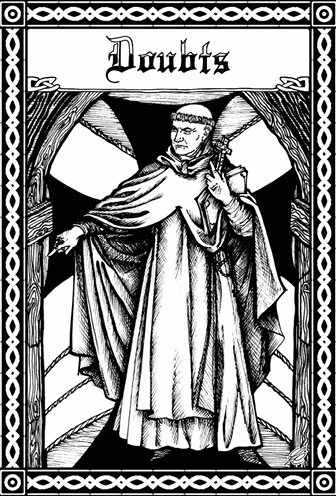
She resists easy categories of hero and villain. The world of the novel is not divided neatly into good and evil. Some characters are worse than others, certainly, but even the so-called “bad guys” may be driven by recognisable pressures.
One figure in particular interests her because he is trying to do the right thing, or at least what he believes to be right, and failing repeatedly.
“He’s constantly trying to do the best thing,” she says. “Trying to do the right thing. And he’s constantly failing at it because he’s trying to keep his world together.”
That kind of character allows Chiara to explore morality as something lived rather than declared. The question is not simply whether someone is good or bad, but what happens when their loyalties, fears, promises, and survival instincts come into conflict.
“He’s probably just someone that’s trying to survive,” she says, “trying to keep his world as it is, and the others are not making it easy for him.”
In this sense, her fiction is less concerned with clean judgement than with pressure. Characters reveal themselves under strain. Their failures are not distractions from the story. They are often the story.
Writing as a Form of Change
When Chiara speaks about writing, she does not describe it as something separate from the self. A book is not simply produced by the writer; it changes the writer in return.
“Writing shapes you,” she says. “You’re not the same person once you finish a book. You’re not the same person that started it, because you’re growing with it.”
This is one of the most revealing parts of the conversation. Chiara understands fiction as an imaginative act, but not an unreal one. To write grief, betrayal, fear, desire, loyalty, or magic is to spend time with those forces in the mind.
“You still have to get into your character’s mind,” she says. “At least for me, that’s something that really shaped me and changes me all the time.”
A finished book, then, is evidence of more than discipline. It is evidence of transformation. By the time the story has been followed to its end, the writer has also travelled.
“I’m learning about characters,” she says. “I’m learning about myself, learning about the world that I’m writing about.”
That learning can feel strange because it begins internally. The world is in the head, and yet it becomes real through sustained attention. A writer spends enough time with imagined people and places that they begin to exert their own pressure. The invented world pushes back.
“It feels really weird,” Chiara says, “because it’s only in your head, but it feels real.”
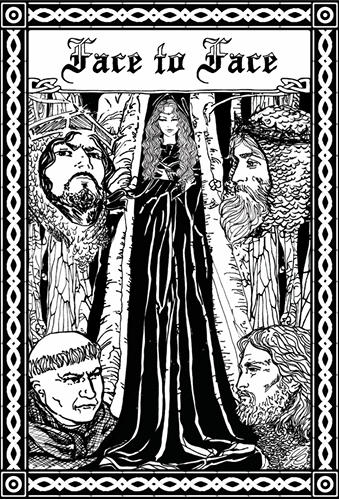
From the Image in the Head to the Sentence on the Page
For Chiara, stories often arrive visually. She sees them vividly, almost like a film, before the work of writing begins. The difficulty is that language does not always meet the image immediately.
“I kind of see things really vividly in my head,” she says. “They’re really clear and they’re lovely. It’s kind of like a movie. And then I have to write it and it’s like, ‘the horse was white.’”
It is a wonderfully honest description of the gap every writer knows: the distance between the living image in the imagination and the first plain sentence that lands on the page. The work is in closing that distance.
Chiara’s process is one of drafting, returning, revising, rewriting, and letting trusted readers look at the work. She does not expect the first version to carry everything. The first draft is a beginning, a way of making the image visible enough that it can then be shaped.
“It’s a long process,” she says. “It’s really just to get to the image that I have in my head.”
That visual quality also shapes how she reads. The page becomes a screen, but one assembled by the reader’s imagination.
Chiara is fascinated by this difference between readers: some see the story like a film, others have to focus differently, building the world piece by piece.
“As a writer, it’s lovely,” she says. “Because I want to know what people feel like when they’re reading, not only my books, but also other books.”
There is curiosity again. Not only curiosity about history, but curiosity about the act of reading itself. How does a story enter another person? What does it look like once it gets there? What does the reader supply that the writer never directly named?
Rosemary Sutcliff and the Historical Imagination
Among the writers who have shaped Chiara, Rosemary Sutcliff holds a special place. Sutcliff’s historical novels, many of them written for younger readers, have stayed with her long after adolescence.
“She’s my favourite author,” Chiara says. “I discovered her as a teen, and I keep reading her.”
What draws Chiara back to Sutcliff is the blend of historical grounding and invented life. Sutcliff’s work often features historical contexts and occasional historical figures, but much of the emotional world is built through fictional characters. For Chiara, that is where the power lies.
“I just love the way she blends history and her own storytelling,” she says. “The stories that she makes up, because there are historical characters in them, but most of them are just created by her.”
It is easy to see why that would appeal. Chiara’s own work inhabits a similar threshold. She is not writing academic reconstruction, but she is also not treating the past as decoration. History gives the world its texture; storytelling gives it breath.
This is also why her interest in fantasy does not feel detached from her academic life. Medieval literature itself does not obey modern genre boundaries. Myth, chronicle, romance, political memory, religious imagination, and entertainment all overlap. Chiara’s fiction grows from that older mixture.
Bandruí, Land, and the Magic of Storytelling
Chiara also describes herself as a Bandruí, a term connected to modern druidic practice. She is careful in how she explains this, aware that the historical druids remain partly unknowable. The contemporary practice she follows is not a claim to perfect reconstruction, but a way of deepening her relationship with land, story, and spiritual attention.
“It’s part of my life,” she says. “Being connected to the land.”
For Chiara, this is not separate from writing. It is another thread in the same fabric. The land carries stories. Storytelling revives the past. Words shape worlds. There is, as she puts it, “a bit of magic in it.”
“I just see it as a really deep connection to the land and the stories that are connected to the land,” she says. “Storytelling is an important side of it.”
That connection also has an environmental dimension. Reverence for the land has to become practical, even in small ways. Chiara mentions the simple example of leaving offerings in nature. A candle might seem devotional, but if it is left behind as waste, the gesture contradicts itself.
“You’re worshipping the land,” she says, “and you’re leaving something that’s spoiling it.”
Her approach is grounded in care rather than performance. The small choices matter: what is bought, what is eaten, what is left behind, what is taken home and disposed of properly. Magic, in this sense, does not float above the world. It has to answer to the material reality of the ground beneath it.
Cats, Monks, and Medieval Margins
No medieval conversation is complete without animals, and for Chiara, cats inevitably find their way into the work. Her own cat, an eighteen-year-old “grumpy old man,” makes a brief appearance in the conversation by trying, unsuccessfully, to open the fridge.
“He only wants food,” she says.
Cats appear in her fiction too. Not always in large roles, but often enough to feel like a signature. “There’s always a cat,” she says. “Most of the time.”
Other animals enter through the medieval worlds she writes about: dogs, horses, hawks, the animals of knights and nobles, the creatures that belong to a social and historical setting as much as to the plot. But cats carry a special place, perhaps because they already haunt medieval culture in such memorable ways.
The conversation turns to the famous Irish poem about the monk and his cat, Pangur Bán, and to the cats that appear in the margins of medieval manuscripts. These animals are more than decorative. They remind us that the past was lived by people with humour, frustration, affection, distraction, and domestic life.
For a writer like Chiara, those details matter. They bring history down from abstraction and back into the room.
The Pressure of Being Seen
Like many contemporary writers, Chiara has to navigate the uneasy world of social media. She wants readers to find her work. She wants to connect with other writers and with people who care about the same histories, myths, and stories. But the platforms themselves can be difficult, especially when visibility often seems to demand constant performance.
“I put loads of pressure on myself,” she says, “because I really want people to find out what I’m doing, and I also want to connect to other writers or readers.”
She understands the strange balance of sharing literary work online: wanting readers to find the stories, while also having to meet the visual demands of platforms like TikTok and Instagram. Face-to-camera videos are part of that landscape, but they sit alongside slower, quieter forms of connection too. There is a familiar rhythm to it: effort, exhaustion, withdrawal, return.
“Sometimes I don’t have energy and just leave it there for weeks,” she says, “and then I come back and be like, oh, I have to do this.”
The tension is recognisable. Writers are often expected to be public figures, marketers, performers, designers, and community builders, all while preserving the quiet interior life required to write. For someone whose work grows from libraries, ruins, research, and slow imaginative attention, that pressure can feel especially at odds with the work itself.
Yet her online presence also reflects something sincere: a desire to share history, myth, research, and fiction with people. Her posts are not simply promotional. They are part of the same curiosity that shapes her writing.
A Writer Digging Up What Was Always There
Across the conversation, Chiara returns again and again to the idea of seeing what has been missed. In medieval scholarship, that might mean queer readings passed over by earlier critics. In Arthurian legend, it might mean retelling the same story from a different angle. In fiction, it might mean listening to the character who refuses to stay in the role of villain. In history, it might mean noticing the cat in the margin, the spell inside the chronicle, the grief inside the ending, the old story still waiting for a new listener.
Her work is shaped by academic discipline, but it is not confined by it. It is shaped by fantasy, but not detached from history.
It is shaped by land, language, and myth, but also by the practical craft of revision, translation, and sentence-making.
At the centre of it all is a writer who wants to keep learning.
“I would spend probably most of my days either writing or just wandering around in ancient ruins,” she says.
That image feels like the clearest one: Chiara Mattozzi, moving between books and ruins, between Rome and Galway, between Italian and English, between medieval texts and modern retellings, between the stories that have been told and the meanings still waiting inside them.
Her work asks us to look again. Not because the old stories are empty, but because they are full.
And for Chiara, that is where the writing begins.
To read more of Chiara Mattozzi’s work, including the free stories A Thief’s Tale and Mountain Lions, visit her Ko-fi shop: ko-fi.com/chiaramattozzi
The Raven and the Rose – The Witch by Chiara Mattozzi is available online: pandilettere.com
To follow her writing updates and creative work, find her on TikTok here: @chiaramattozzi_author
And keep up with her via social media: @salviarectina

Support Go Leor. Get the Print. Join the Story.
Go Leor is an independent Irish arts magazine built by hand, heart, and community. Your support keeps meaningful storytelling alive – in print, in culture, and in conversation.
Through Patreon, you can support the magazine in two simple ways:
- Supporter Listing
Have your name printed inside every issue as part of the community helping Go Leor grow. - Print Copy – UK & Ireland
Receive the latest print issue delivered each month across the UK and Ireland, with your name included inside the magazine.
The Latest Articles

Maria Noonan-McDermott: Where Memory Becomes Art
Transforming intimate family memories into paintings and poetry, her work invites others to recognise stories of their own.
Rosina Law-Braney: Reclaiming the Seven Deadly Sins
Through zines, illustration and humour, Rosina Law-Braney creates vibrant feminist stories that make room for identity, desire, grief and collective creative freedom.

Alexander Edward: Weaving from the Land
Growing his own willow beside Strangford Lough, Alexander Edward brings coppicing, landwork and an ancient craft into bold contemporary forms.
John Britton: Finding Calm Through Ink
After three decades of visceral performance and constant travel, John Britton has found a quieter connection through ink, mentorship and calm.
Yvonne Moore: Following Curiosity into Colour
Refusing to settle into a single style, Yvonne Moore follows curiosity across colour, poetry and community, creating art that brings her – and those around her – fully to life.
Lucy Fleming: Carrying the North Coast Light
Through fluorescent colour, oil pastel and an instinct for collaboration, Lucy Fleming turns the light of the North Coast into images that connect art, music and community.