
KODJO
Isac Kossivi
Through sculpture, fabric, dance and lived experience, KODJO explores migration, family, racism and the work of building belonging beyond temporary welcome.
There is a particular kind of energy around Isac Kossivi, also known as KODJO, that seems to come from movement in every sense of the word. Movement between countries. Movement between communities. Movement between work, study, responsibility, art, dance, football, friendship and family.
When we spoke, he had just come to the end of his time working in Dunnes. He had also just finished his course and was preparing for the next chapter, including a Student Union Vice President role beginning in July. In the middle of all that, what he wanted to make clear was not a grand artistic statement, but something much more grounded.
“I’m eating well and looking after myself.”
That small sentence says a lot about where KODJO is at. He is an artist standing at the edge of several thresholds at once, but he is also someone trying to stay steady, to prepare properly, and to carry the people who have helped him without losing himself in the process.
The Weight We Give to Fabric
As KODJO steps into his new role within LSAD, his focus on community and its inherent diversity becomes central to how he imagines the space evolving. One of the images he returned to was simple but powerful: students bringing different flags together to reflect the range of people who make LSAD what it is. For him, this is not just a symbolic gesture but a way of recognising and valuing the many identities that coexist within the college. Fabric, in this sense, is not decoration. It carries identity, distance, memory and belonging, and becomes a way of making visible the diversity he is committed to supporting and strengthening within the LSAD community.
That way of thinking connects strongly with his interest in Ibrahim Mahama, the Ghanaian artist whose work often uses fabric, labour and collective histories to speak about how communities are formed and remembered. KODJO will travel to Ghana in December, during the holidays so that it does not interfere with his responsibilities, to spend time learning from Mahama’s work.
What draws him most is not just Mahama’s scale or international recognition, but the communal nature of the practice. He is interested in work that is not individualistic, work that gathers people, materials and histories into one place. Coming originally from Togo, KODJO also sees deep cross-community and shared historical connections between Togo and Ghana. The trip is not simply professional development. It is a return toward West Africa through art, learning and cultural exchange.
Long term, his dream is to open cultural spaces in Togo. He speaks about the lack of infrastructure there for the kind of artistic spaces he has encountered in Ireland, and about the difficulty of even moving between Ireland and Togo when diplomatic ties are limited.
Often, he says, travel has to be routed through the UK or France. These are practical barriers, but they also become part of the larger threshold he keeps returning to: who gets access, who gets recognised, and who has to take the longer route to be seen.
The Pressure to Become Useful
KODJO is honest about the pressures that come with immigration. When family members, cousins, uncles, brothers and sisters carry a financial burden to help someone move to Europe, that movement is rarely seen as only personal. It comes with expectation. You are not just leaving. You are being sent forward.
That expectation can be loving, but it can also be heavy. KODJO spoke about the pressure to become a productive part of that movement, to succeed in ways that are legible to family and community. He had originally considered art education, but quickly realised it was not for him. Fine art, however, was not always seen as the safest path. There was scepticism around it, as there often is when families want security for someone they have sacrificed for.
He understands that pressure. He does not dismiss it. But he also knows that art is where his life has opened.
There is another threshold he names too: the one that exists even in Togo, between people studying with the aim of emigrating to Europe and the Western-orientated skills that are often seen as proof of success. KODJO is aware of how much value can become attached to leaving, to adapting, to becoming employable elsewhere. Part of his work seems to push back against that, not by rejecting movement, but by asking what it would mean to build something meaningful at home too.
A Camera as a Passport
Before KODJO was making the work he is making now, a camera helped him move through the world. He described it as his “passport out of the house.”
It gave him a reason to go to events, to stay out late, to be part of things without feeling as though he was only there to socialise. With a camera in his hand, he could look more closely. He could give meaning to nights that might otherwise pass by as noise. He could document, observe, and slowly become part of a community.
It was through that process that he first photographed his friend Tobi Omoteso breakdancing, before KODJO himself had ever tried it. That connection would become part of his route into the dance community, and into Top 8, the street dance group and battle space where KODJO now works as creative director, shaping its visual identity and contributing to its growth. He has even made trophies for their awards, turning celebration itself into something handmade and personal.
The camera was never just a tool for images. It was a way of entering. A way of belonging before belonging had fully arrived.
Threshold of Belonging
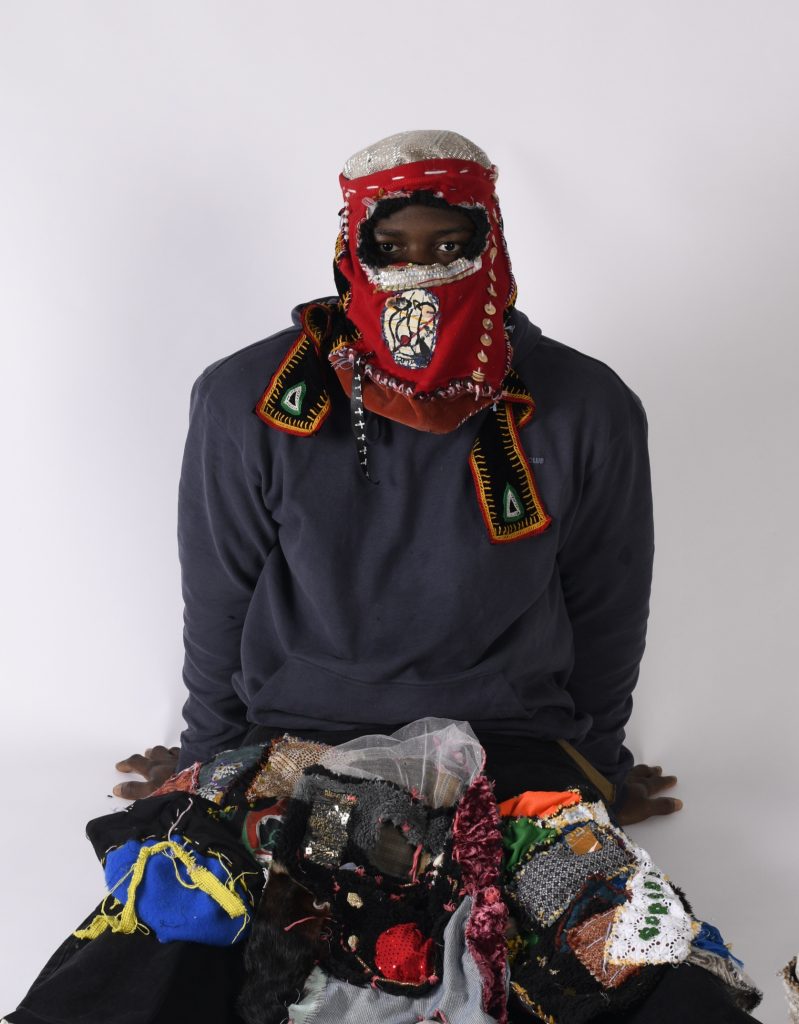
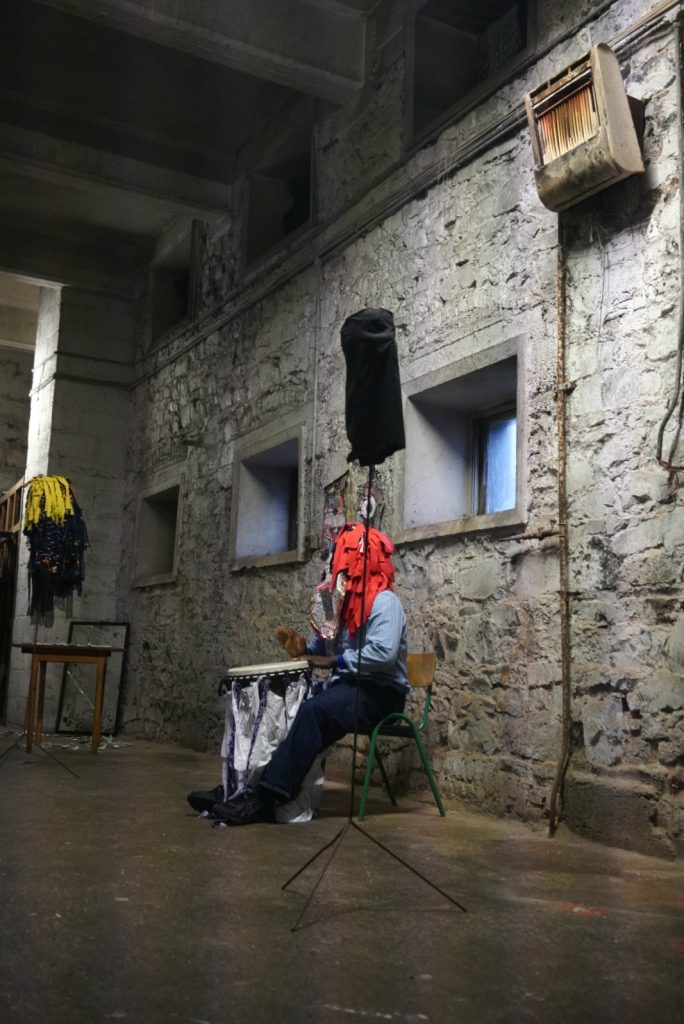
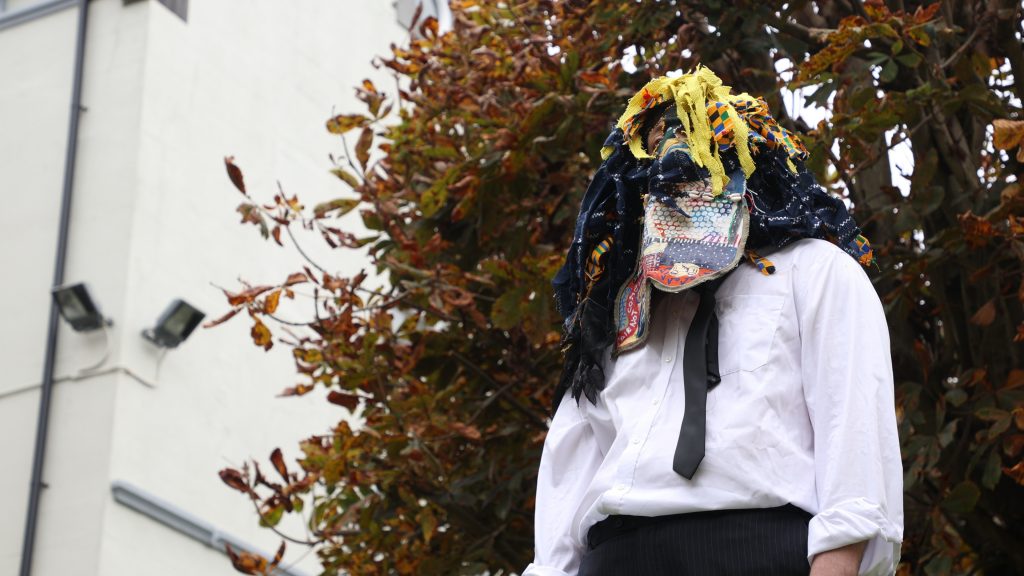
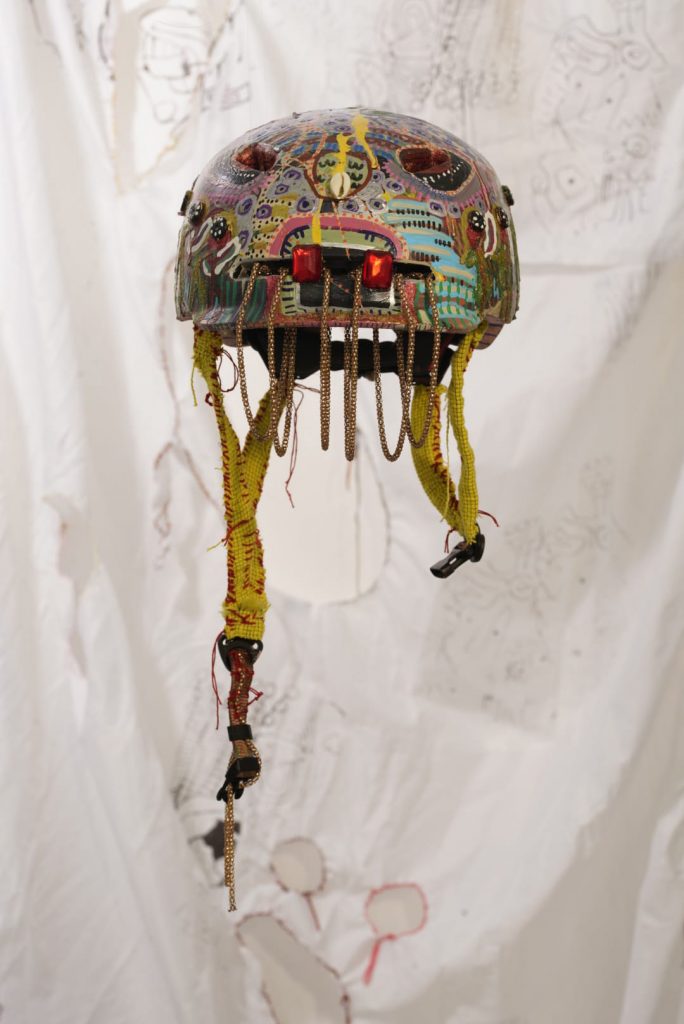
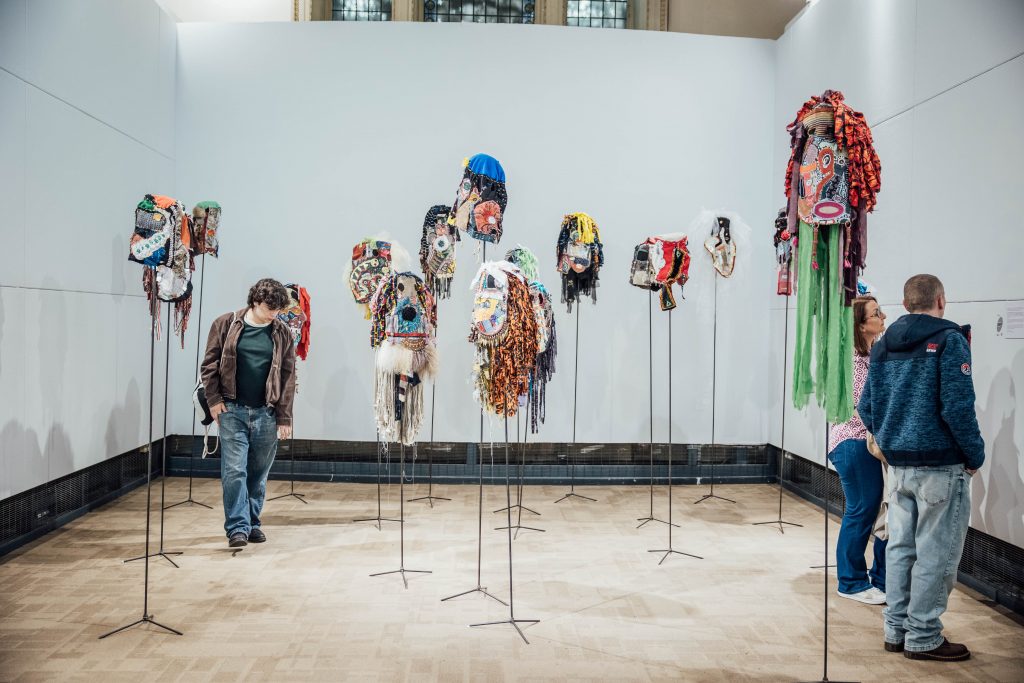
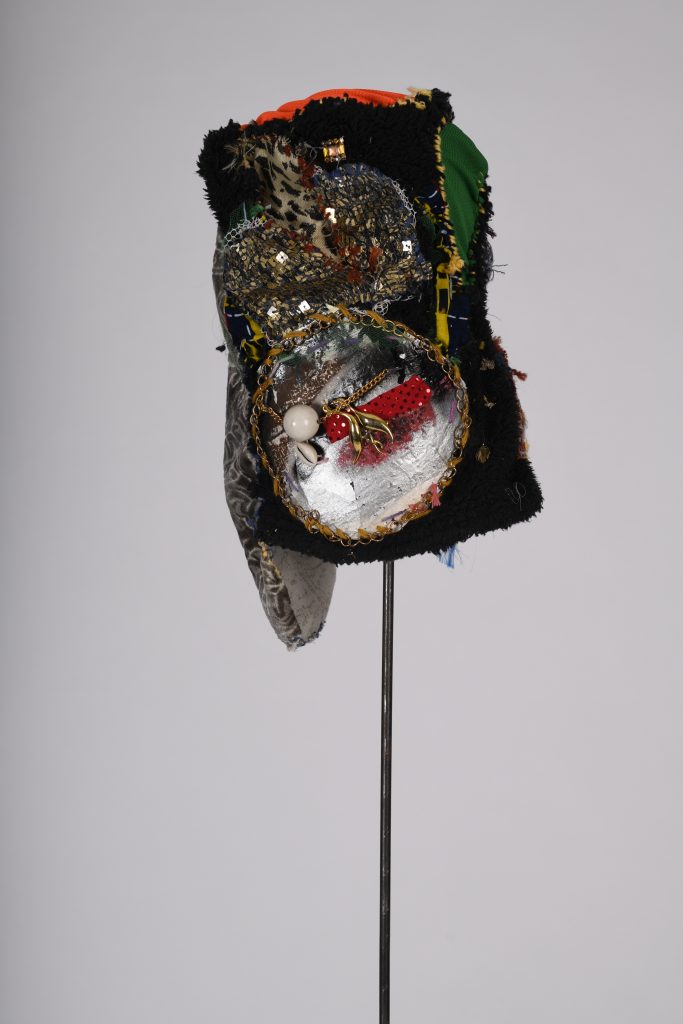
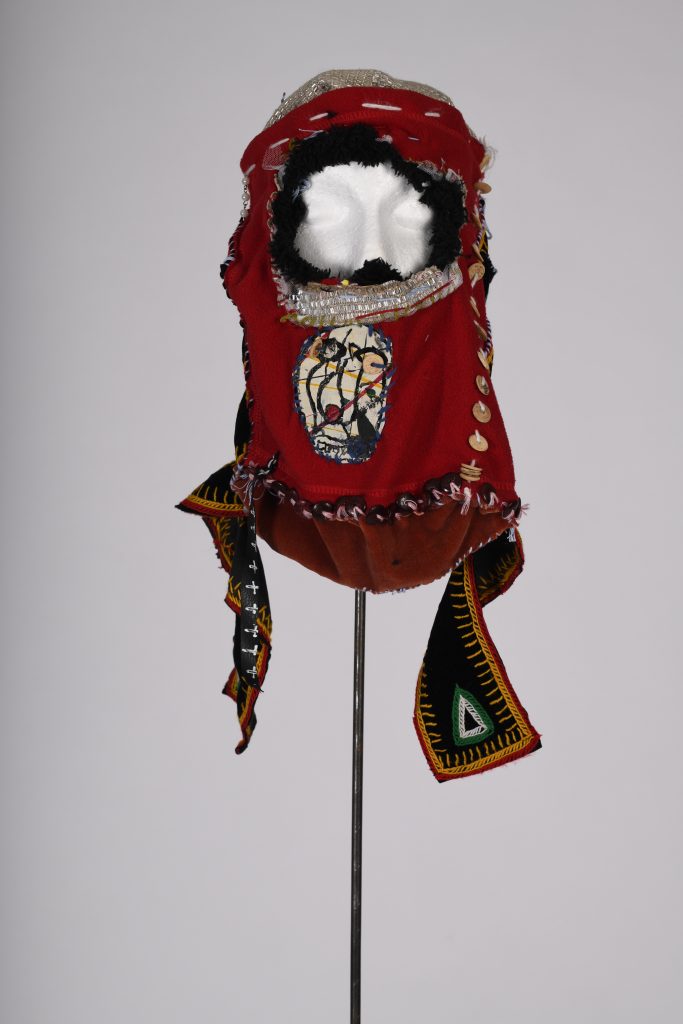
KODJO’s exhibition, Threshold of Belonging, emerged from personal and communal experience. The helmets in the work reflected family care: the protection that is placed over a person, layer by layer, through material, sacrifice and expectation.
He spoke with deep affection about his mother and about trying, in whatever way he can, to repay her kindness. But the work also reaches into more difficult feelings. He remembers gaining the documents that allowed him to travel to Ireland only a few days before his eighteenth birthday. Alongside the relief, there was imposter syndrome. His sister, who had a child, was unable to acquire the same documents because she was deemed too old. That contrast stayed with him.
The opportunity to move was not neutral. It was marked by luck, age, paperwork and the uneven decisions that shape families. One person crosses. Another cannot. One life opens in one direction. Another takes a different path.
In KODJO’s work, belonging is never treated as a soft or easy word. It is layered with paperwork, grief, pride, guilt, hope, protection and survival.
What Happens After the Event
One of the moments that brought the idea of the threshold into sharper focus came after his friend Tobi was attacked while they were both in the car. They had left a community event in Limerick city connected to street dancing and hip hop through Top 8 to go host a community event in the cresent shopping centre. The incident forced KODJO to think more deeply about visibility, safety and how quickly a narrative can change depending on who is being spoken about.
He wondered what would happen if the person attacked had not been part of a large, dynamic, visible community. What if it had been a person of colour who simply worked nine to five, went home, and played video games? Would people still gather around them? Would the story still be understood with care? Would anyone make the effort to see them fully?
That question sits at the centre of a lot of what KODJO is trying to do. He is not interested in only reacting when something terrible happens. He wants stronger structures of belonging before crisis arrives.
As he put it, “We need to not just react to terrible events, we need to be building a home for everyone, not just making space for visitors.”
That distinction matters. Making space for visitors still implies that some people are temporary, tolerated or politely accommodated, and it reflects a reactionary way of handling the world – only supporting communities when they are attacked, rather than permanently accepting diversity. Building a home suggests permanence. It suggests responsibility. It suggests that people are not guests in the places where they live, study, work, create and contribute.
Football, Racism and the Room Behind the Game
KODJO also spoke about football, particularly Sunday league football, and the racism that can exist inside that world. His interest is not only in what happens on the pitch, but in the spaces around it: the changing room, the locker room, the places where jokes, comments and attitudes can be normalised before they ever become visible outside.
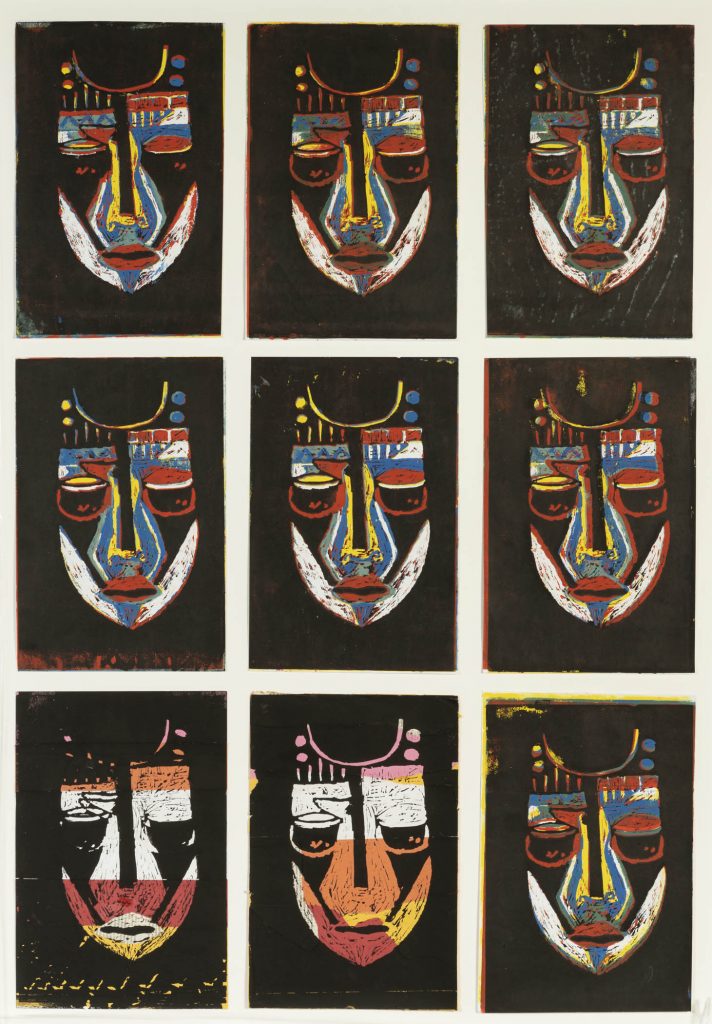
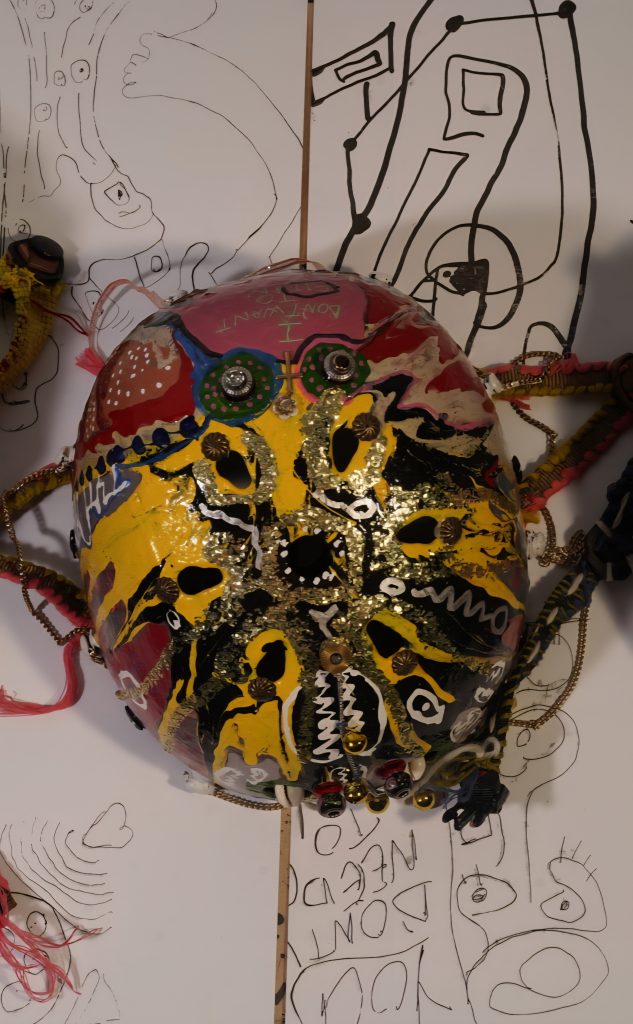
He has considered work that addresses the inside of a football locker room, and even the idea of people wearing masks while playing football as a way of confronting the issue. It is a striking image because football is already so tied to identity, masculinity, belonging and tribalism. To bring masks into that environment is to ask what people hide, what they reveal, and what they feel entitled to say when they think no one is watching.
For KODJO, art has a role in opening that conversation. Not as a neat solution, but as a disruption. A way of making people face what they have learned to ignore.
Care That Needs to Be Spoken
Again and again, KODJO returned to the need for better dialogue. He spoke about the way people often say prayers for others, or carry care silently, without actually communicating that care in a way the person can feel.
That observation is simple, but it reaches into something deep. In families, in immigrant communities, in friendships, in institutions, love and concern are not always expressed directly. Sometimes people sacrifice for one another without ever saying what they need. Sometimes people are protected without being understood. Sometimes people are expected to endure because previous generations endured.
KODJO wants immigrant communities to feel that systems like Garda stations are accessible to them, and that they “don’t have to smile and take it” in the way their parents or other generations may have felt they had to. That is not just a political point. It is an emotional one. It is about giving people permission to name harm, ask for support, and expect dignity.
Learning From Artists Without Becoming Them
KODJO is deeply thankful for the artists who have supported him. He spoke with warmth about Alice Rekab, who became a close friend and someone he had the opportunity to work with. He is equally thankful to Shirani Bolle, and to lecturers who, over time, became friends.
Some of that support arrived in ordinary, generous ways. Artists would drop into Dunnes to see him, talk about his work and motivate him. These moments matter because they show how artistic development is not only shaped in studios, crits or exhibitions.
It is also shaped in shop aisles, quick conversations, encouragement given at the right time, and the feeling that someone has remembered what you are trying to become.
At the same time, KODJO is careful. He does not want to be pulled too tightly along the same threads as acclaimed artists he admires. He wants to learn, but not imitate. He wants to remain close to the artists he graduated with, the people who know his process best, because they understand where the work is actually coming from.
That instinct feels important. KODJO is not trying to borrow significance from proximity. He is trying to build his own language.
That language has also been shaped through collaboration. One of KODJO’s long-term creative relationships has been with multidisciplinary artist and musician Methembe Thabani Mafu, whose work moves through sound, painting, performance and improvisation. Their connection points to the way KODJO’s practice often grows through exchange, conversation and shared creative risk.
He has also carried that energy into his role as creative director of StateYourFlow, the platform founded by DJ Ceese, Ciara O’Callaghan. In that space, creativity is not treated as something fixed or solitary, but as something that moves between people, music, image, performance and community. For KODJO, collaboration is not a loss of authorship. It is part of how he tests, sharpens and expands the work.
No Backup Plan
There is a sense, speaking to KODJO, that his work is still changing shape in real time.
He does not pretend to have fixed answers. His practice is in a constant stage of evolution, moving through sculpture, fabric, performance, photography, social spaces and lived experience.
But there is no hesitation in the commitment.
For him, being an artist is not one option among several. There is no neat fallback position waiting behind it. He is giving everything to everything he does as an artist.
That can sound risky, but it also explains the urgency in his work. KODJO is not making art from a distance. He is making it from the middle of things: from the shop floor, the dance battle, the football pitch, the family home, the immigration office, the studio, the street, the memory of Togo and the reality of Limerick.
His work asks what it means to cross a threshold, but also what happens after you cross it. Who meets you there? Who protects you? Who speaks for you? Who listens? Who helps you build a home?
For KODJO, belonging is not something handed over once the door opens. It is something made, remade and defended together.
Refuge
In the world driving by comfort
and quickly retreat when faced by discomfort.
Every living creation are constantly looking for comfort
Either physical, emotionaly and mentally
We spend our existence looking for the next comfortable couch,
bed or couch that turn into bed.
People we feel comfortable around.
While some people are hunted out of the comfort by war,
racism and natural catastrophie,
leaving behind things and the people the hold on to the most.
It’s a story we all share.
We are all targeted
Tagged and surveill
But when we move together
Stand together for each other
Picking up the broken promises
We build a world of Hope that stand tall on
equity and equality.
Then we make knew promises of joy.
Kodjo kossivi.
Keep up with KODJO via social media: @isac_with1a
And follow the journey of State Your Flow Studio: @stateyourflowstudio
Keep up with Top 8 Dance Battle for future events, battles and community updates: @top8streetdancebattle
Support Go Leor. Get the Print. Join the Story.
Go Leor is an independent Irish arts magazine built by hand, heart, and community. Your support keeps meaningful storytelling alive – in print, in culture, and in conversation.
Through Patreon, you can support the magazine in two simple ways:
- Supporter Listing
Have your name printed inside every issue as part of the community helping Go Leor grow. - Print Copy – UK & Ireland
Receive the latest print issue delivered each month across the UK and Ireland, with your name included inside the magazine.
The Latest Articles

Seba Brhom: Art, Memory and the Beauty of Being Seen
A Syrian artist and teacher now living in Northern Ireland, Seba Brhom uses drawing, fabric, Arabic lettering and community workshops to share beauty, memory and gratitude.

René Mullin: Printmaking, Irish Linen and the Art of Reuse
Through printmaking, rescued Irish linen and careful teaching, René Mullin builds a practice rooted in hand-process, access and the lasting value of cloth already in the world.

Laura McKenzie Atkins: Wimmelbild Art, Hidden Stories and Fantasy Worlds
Intricate ink, hidden stories and strange little worlds come together in Laura McKenzie Atkins’ wimmelbild drawings.

Deirdre Murphy: Capitalism The Musical and Revolutionary Art
Music, movement and revolutionary imagination meet in work that turns political urgency into something physical, funny and impossible to ignore.

Aodh O’Cuana: A Living Memorial Built from Stone, Love and Oak
Through cairn-building, oak saplings and communal remembrance, Aodh O’Cuana asks how we might honour those we love beyond the formal space of a funeral.

Charlie: A 16-Year-Old Guest Writer on the Harms of AI
Submitted to Go Leor by his mother, this essay by sixteen-year-old student Charlie considers the environmental, social and personal harms of generative AI.