
Deirdre Murphy
Queen Dragon
Music, movement and revolutionary imagination meet in work that turns political urgency into something physical, funny and impossible to ignore.
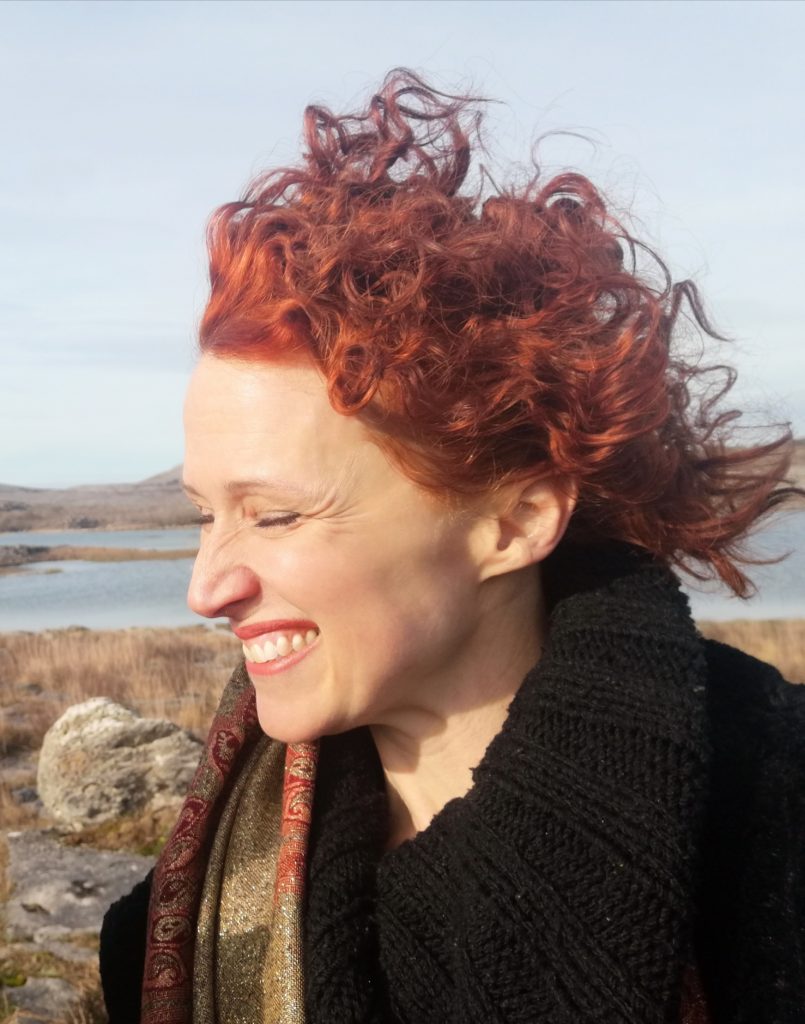
Deirdre Murphy begins her day by slowing down. Most mornings start somewhere between eight and nine, followed by meditation, coffee, voice and movement.
It is not a dramatic ritual, but it says a great deal about the artist behind Capitalism: The Musical. Before the spectacle, before the politics, before the vocal layering, loop station, choreography and satire, there is a body being prepared. There is a voice being warmed. There is imagination being given room to move.
“I usually meditate in the morning for 15 or 20 minutes,” she says, describing a rhythm that often leads into vocal work and music early in the day. “Very often I do a physical practice as well.”
The meditation itself is practical rather than precious. Murphy uses guided meditations online, whatever “gets me there,” as she puts it. But what draws her in is not passivity. It is depth, stillness, imagination and what she describes as the felt sense connected to imagination.
“I love going really deep and still,” she says. “I love being guided into the body, finding a trigger for the imagination and the felt sense.”
That phrase, the felt sense, runs beneath much of Murphy’s work. Her art is not built only in the mind. It is written through the body, sung through the voice, moved through nervous system, breath and muscle. Whether she is speaking about music, dance, political change or healing, Murphy returns again and again to the body as a place where thought becomes real.
Capitalism Keeps Catching Up
Murphy’s Capitalism: The Musical has had a long life. Written initially in 2013 and shaped more fully by 2017 after a year and a half performance residency, the show has moved through different forms, returns and contexts. It recently received an award for Best Ensemble, adding another marker to a production that has continued to find new relevance with every passing year.
Yet for Murphy, the strange thing is how little the bones of the piece have had to change.
“It has changed a bit,” she says. “But honestly, the bones of it are so similar to what it was when I started writing it in 2013 and more or less finished shaping it in 2017.”
The world, she suggests, has done more changing than the musical. What once may have seemed like an exaggerated or theatrical response to economic systems now feels increasingly direct. The conditions the work was trying to confront have only become sharper.
“Mostly the world is just proving that the musical is more relevant,” she says. “It just keeps on going in the direction of what the musical is trying to combat or trying to disarm. Things are just getting more intense. The stakes are getting higher.”
That sense of political acceleration gives the work a particular charge. Capitalism: The Musical is not a historical curiosity, nor a fixed piece from another political moment. It is a work that keeps being answered by the present.
Murphy did not arrive at political performance as a late development. The desire to make art that intervenes in the world has been with her since youth. At sixteen, still living in Alaska, she remembers feeling that she had a choice between dance and law, particularly human rights law. Even then, she believed the body might be able to do something that argument alone could not.
“I thought at the time that dance would have a bigger impact,” she says. “A more visceral, more physical impact than anything I could do intellectually.”
That choice became formative. For Murphy, performance creates a direct line between content, performer and audience. A dancer or performer does not only represent an idea; they pass through it. The audience sees that transition inside a living body.
“Seeing this honest transition within somebody’s body is part of creating the virality with which I want to bring love to the world,” she says.
It is an unexpected use of the word virality, especially in an age where virality is often tied to outrage, humiliation or conflict. Murphy uses it differently. She is interested in what spreads through bodies when performance carries delight, love, energy or possibility.
“I do think it’s contagious,” she says. “High vibes are contagious. Delight is contagious. Love is contagious.”
Writing Towards Revolution
Murphy speaks with admiration about the science fiction writer Kim Stanley Robinson, whose work she returns to for its ability to imagine political and ecological transformation at scale. What interests her is not escapism, but the insistence on writing towards possibility.
“He keeps on writing his way to revolution,” she says. “He’s covering the science. He’s covering the economics. He’s covering the personal element. He’s covering compassion and kindness.”
That combination matters to Murphy. Political art can fail when it becomes too narrow: all theory and no feeling, all rage and no tenderness, all diagnosis and no possible route forward. Robinson’s writing gives her a model of imagination that refuses despair.
“I find it so inspiring,” she says. “I would actually love to write a musical with him. It would be top of the list for things I would like to do.”
When asked whether writing for revolution is part of her own work, Murphy does not hesitate.
“Yeah,” she says. “I think it’s part of my remit here on this earth.”
There is no irony in the statement. It is not grandstanding either. It comes from the same place as her morning practice, her vocal discipline, her choreographic scores, her interest in the body and her belief in joy as force. Murphy’s revolutionary imagination is not only about overthrowing systems. It is about remaking sensation, attention, confidence, love and the ways people understand what is possible.
Alaska, Expanse and the Body
Murphy grew up in a remote part of Alaska, on the Kenai Peninsula, in what she describes as “pretty full-on wilderness.” Her parents built their home near a few other families, with nine children growing up across the small cluster. The result was a childhood marked by outdoor play, imagination, solitude and wild space.
“I grew up living in the middle of the woods,” she says. “A lot of time spent outside and playing in our imaginations, and a lot of time alone in nature as well.”
She did not necessarily understand the significance of that at the time. Looking back, she sees it as foundational. It gave her a feeling of space that is hard to recreate elsewhere.
“In hindsight, I feel like it gave me a real sense of spaciousness,” she says. “I don’t know if it’s really recreatable in a city or in another environment.”
Murphy now lives in Dublin, and she is clear that she thrives in the city. She likes its stimulation, music and cultural movement. But the wilderness remains part of her internal architecture. She speaks of sea swimming, camping and being outdoors at festivals as necessary forms of reconnection.
“Connecting to the land is still very much critical to who I am,” she says. “And to the water.”
What she misses most about Alaska is its rawness. The mountains there, she says, are not gentle. They are young, sharp and physically present.
“The mountains are so sharp,” she says. “You can literally go up to the top of them and cut yourself on them. They’re so young and they’re so raw.”
That image feels close to Murphy’s work: beauty that is not softened, landscape as force, performance as something that can cut through what has become dulled.
Moving to Ireland
Murphy moved to Ireland around twenty years ago. She had citizenship through her grandparents, and her parents had long imagined retiring there. At the time, she had been living in Montana and decided with her then partner to move to Ireland spontaneously.
“It was an adventure,” she says.
There was also a political element. George W. Bush had just entered office, and the atmosphere in the United States was beginning to feel unstable.
“The political situation in the US was starting to feel like…” she trails off, allowing the implication to sit. Looking back now, she says, “it seems like those were the days of innocence.”
That mixture of adventure, instinct and political unease feels very much in keeping with Murphy’s later work. She is alert to systems before they fully announce themselves. She notices when something is turning. She does not separate personal movement from political weather.
Ireland has offered a balance: city life, music, performance, water and access to nature. Dublin, for her, gives both stimulation and a route back out.
“Dublin is a really good balance of cultural stimulation and amazing music and access to nature,” she says.
Music, Body, Words
Murphy works across so many forms that trying to define the centre of her practice is difficult. Music, dance, theatre, writing, voice, movement and political storytelling all overlap. When asked what sits at the centre, her answer shifts as she thinks.
Music comes first. Then the body. Then words.
“I think about the body and the felt senses and our imagination as part of the senses,” she says. “As being a portal for spiritual development or development of increasing perception.”
For Murphy, the body is not separate from thought. It is a way of perceiving energy, interaction and the internal life of experience. She speaks of human development as something that may now need to move inward, towards bliss or an enlightened state, not as an escape from politics but as part of how people might become capable of changing the world.
“A lot of my work tries to get to that,” she says.
She describes the transition from music into dance as “the original synesthesia,” where one sense moves into another. Sound becomes body. Body becomes healing. Healing becomes creativity. Creativity becomes a way of recreating the world.
“I say get to the dance floor,” she says.
Words, too, have become increasingly important. This has not always been easy. As a dancer, Murphy was trained to let the body speak, and earlier in life she felt shy of words and of her own voice. Now, words have become a source of pleasure.
“I love words and I love writing lyrics,” she says. “Whereas in my earlier life I was very shy of my voice, very shy of words in general.”
That movement from shyness to delight matters. It reflects the wider arc of her practice: the body finding voice, voice finding politics, politics finding humour, humour finding music.
Loop Stations and Internal Choreography
Murphy is currently close to finishing her second album, with a hoped-for release in September. Much of the work has been built through loop station experiments, vocal layering and vocal composition. Some tracks include spoken word, with two moving into a kind of science-fiction register.
“I’m really happy with it,” she says. “I’m delighted. I’m really pleased with the sound and how it’s all coming together and how it feels as a body of work.”
Although she plays guitar live, the current reshaping of her performance may allow her to put down the instrument and move more freely. She imagines staging collaborators in beautiful lighting on bigger stages, giving her the freedom to communicate through movement and the body.
That matters because several of the pieces have choreographic scores.
For Murphy, choreography is not always a fixed sequence of steps. It can be an internal arc, a set of states to pass through, a structure of experience rather than instruction.
“It’s more like I’m going to experience this and see how my body reacts,” she says. “Taking into account the lyrics, taking into account the music and taking into account what I want to communicate, how I want that experience to land with the audience.”
This approach connects directly back to the decision she made at sixteen. She is still looking for that visceral response, still trying to find the place where body, music and audience meet.
“Ideally, we’ll get to that same sort of visceral response I was hoping for when I was 16 years old,” she says.
Collaboration and the Captain of the Ship
When speaking about Capitalism: The Musical, Murphy is clear that directing and choreography were collaborative. She values what other performers bring into the room, and she understands that a work can become stronger when it is not built by one person alone.
“It was a beautiful collaborative process,” she says. “You want to be open to other people’s amazing ideas and it comes out better than you could ever do on one’s own.”
At the same time, she believes in the need for direction. Collaboration does not mean vagueness. A production still needs someone holding the larger shape.
“It’s also important to have the captain of the ship,” she says.
That balance between openness and authorship seems central to Murphy’s work. She allows the unexpected to enter. If a moment calls the work in another direction, she follows it far enough to see what it offers. Sometimes those discoveries become part of the final production. Sometimes they remain part of the learning.
“If something happens to call me to roll this way, of course I’m going to be like, absolutely, let’s explore it,” she says.
Healing, Luck and Becoming Older
For all the scale of Murphy’s political concerns, there is also a deeply personal thread in the way she speaks about healing. She describes a moment when something fell from a counter but caught on what she was wearing rather than smashing, and she experienced a burst of luck. Instead of rushing past the moment, she paused.
“I felt so pleased and proud!” she says. “I was like, I’m just going to pause for a second and let my nervous system absorb it.”
The practice stayed with her. Several times that day she found herself noticing more evidence of luck, reinforcing the feeling rather than dismissing it.
For Murphy, this kind of attention is not naive. It is a sophisticated practice: allowing love, luck or safety to imprint the nervous system. She connects it to the idea of calling up unconditional love from a pet, parent, friend or anyone with whom love feels easy, then pausing to allow that feeling to become available inwardly, to tune in with the energy of it.
“I think that’s a very intelligent practice,” she says. “To take those moments… and let that love imprint you.”
Getting older, she says, has also been healing. She is not the same person she was ten years ago, and that change has come through art, somatic practice, movement, therapy, coaching and better frameworks for understanding herself.
“One of the blessings of getting older is that getting older can be super healing,” she says. “I’ve really changed a lot and for the better.”
This is part of what gives Murphy’s political work its texture. Her art does not only point outward at systems. It also asks what has to change internally for people to become freer, kinder, more available to one another and more capable of collective transformation.
Anti-Capitalist Cabaret
Murphy began writing music because she needed it for Capitalism: The Musical. Before that, she had never written music.
“I started writing music so I could write the musical,” she says.
The impulse was clear. She felt there was a need in the world for anti-capitalist cabaret, something that could carry difficult truths without becoming unbearable.
“If you’re going to tell people bad news, you better make it funny,” she says. “So that’s where that started for me.”
Since then, she has continued writing. Her first album took ten years to record, and she now has a large backlog of songs waiting to be developed. Some are guitar-based. Some are among what she considers her best songs. Alongside the second album, she is already thinking towards future recording projects, including the need to properly record the musical itself.
“There’s a lot to do,” she says. “Quite a lot.”
That backlog suggests an artist still gathering momentum. Capitalism: The Musical may be the work that introduced many people to Murphy’s political and theatrical imagination, but it is not the limit of it. The next album, the unrecorded songs, the possible future musicals and the continuing development of her live work all point to a practice still expanding.
Towards the Dance Floor
What makes Murphy compelling is the way her work refuses separation. Politics is not separate from music. Music is not separate from the body. The body is not separate from healing. Healing is not separate from revolution. Revolution is not separate from joy.
That refusal gives her work its particular force. In Murphy’s world, a musical can be political theory, a cabaret can be warning system, a loop station can become architecture for the voice, and choreography can be an internal state made visible.
Her work asks what performance can do when argument is not enough. It asks how delight, humour, rage, love and physical presence can reach people before defensiveness closes the door. It asks what becomes possible when the audience does not simply hear an idea, but feels it move through another human being.
Murphy’s answer is not fixed. It is still being sung, danced, written, layered, recorded and tested live. But its direction is clear.
“Get to the dance floor,” she says.
For Deirdre Murphy, that is not escapism. It is a route back into the body, back into connection, back into the kind of contagious aliveness that might yet help remake the world.
Find out more about Deirdre Murphy’s music, theatre work and upcoming projects via her website: deirdremurphy.net
And keep up with her via social media: @deirdremurphymusic
Support Go Leor. Get the Print. Join the Story.
Go Leor is an independent Irish arts magazine built by hand, heart, and community. Your support keeps meaningful storytelling alive – in print, in culture, and in conversation.
Through Patreon, you can support the magazine in two simple ways:
- Supporter Listing
Have your name printed inside every issue as part of the community helping Go Leor grow. - Print Copy – UK & Ireland
Receive the latest print issue delivered each month across the UK and Ireland, with your name included inside the magazine.
The Latest Articles

Maria Noonan-McDermott: Where Memory Becomes Art
Transforming intimate family memories into paintings and poetry, her work invites others to recognise stories of their own.
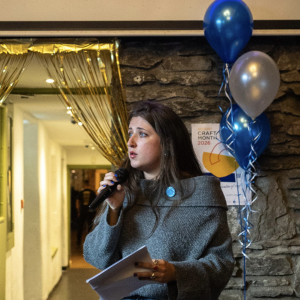
Rosina Law-Braney: Reclaiming the Seven Deadly Sins
Through zines, illustration and humour, Rosina Law-Braney creates vibrant feminist stories that make room for identity, desire, grief and collective creative freedom.
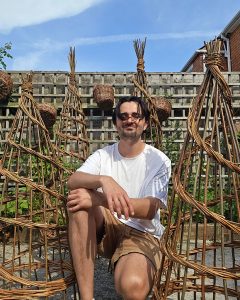
Alexander Edward: Weaving from the Land
Growing his own willow beside Strangford Lough, Alexander Edward brings coppicing, landwork and an ancient craft into bold contemporary forms.
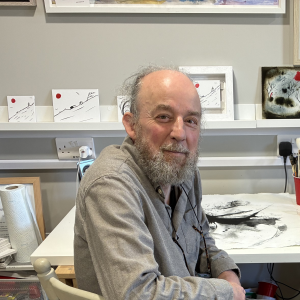
John Britton: Finding Calm Through Ink
After three decades of visceral performance and constant travel, John Britton has found a quieter connection through ink, mentorship and calm.
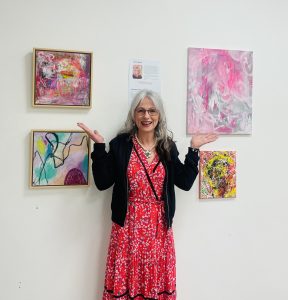
Yvonne Moore: Following Curiosity into Colour
Refusing to settle into a single style, Yvonne Moore follows curiosity across colour, poetry and community, creating art that brings her – and those around her – fully to life.
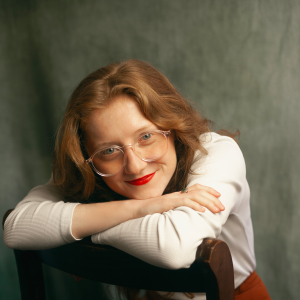
Lucy Fleming: Carrying the North Coast Light
Through fluorescent colour, oil pastel and an instinct for collaboration, Lucy Fleming turns the light of the North Coast into images that connect art, music and community.