
Dylan McKnight
Hearthfire Tales
Around the table and out in the field, Hearthfire opens fantasy into something deeply human, helping people find confidence, community and a place to belong.
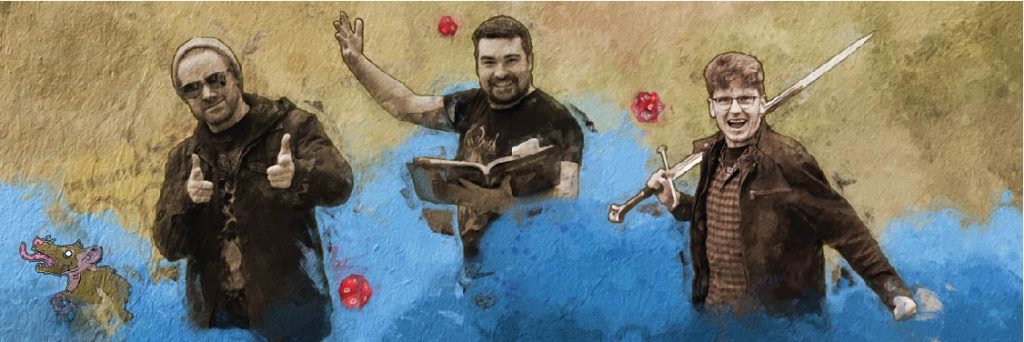
For Dylan McKnight, Hearthfire Tales began as something familiar to many creative projects: a passion that had to live around the edges of ordinary working life.
By day, Dylan works a regular desk job. Hearthfire, he explains, takes up much of his free time, but it has grown into something far more than a side hobby. What began with friends around a table has developed into a live-play Dungeons & Dragons and roleplaying collective, with podcasts, convention appearances, theatre shows, commissioned videos, Patreon supporters, merchandise, live performances and a growing community around it.
The group has worked with Cubicle 7, an Irish publisher producing adventures, settings and rules for Dungeons & Dragons and other systems. They have taken shows to conventions, built their own theatrical events, and moved from audio podcasting into video, streaming and live formats. But underneath that growth, Hearthfire remains grounded in something simple: people coming together to tell stories.
“It’s very much a passion project,” Dylan says. “We’ve been lucky enough to make some money from it. We’ve got Patreon supporters, which is great. We’ve managed to get a few opportunities for paid work.”
That mix of enthusiasm, professionalism and openness runs through the whole conversation. Hearthfire is not only making fantasy entertainment. They are making doorways into it.
Finding Your Tribe
One of the clearest examples of that accessibility is a Dungeons & Dragons summer camp Dylan is helping to run for young people aged 11 to 17. Though the opportunity came through Hearthfire, it sits slightly outside the group’s main content work. The goal, however, aligns closely with everything Dylan values about roleplaying games.
The camp is built around the idea of helping young people “find your tribe.”
The organiser, Dylan explains, had seen the effect Dungeons & Dragons had on his own son. It helped him come out of his shell, find friends, express himself and discover a hobby he cared about deeply. In rural Ireland, where so much of youth activity can still revolve around team sports and more traditional pastimes, that kind of alternative space can matter.
“There’s so many people, kids in particular, and God knows I was one of them too, that felt very disenfranchised with the standard expected ways to spend your time,” Dylan says.
For those young people, Dungeons & Dragons offers something different. It is social, imaginative and collaborative, but it does not require a person to fit neatly into the usual sporting or social structures around them. It gives them a table, a character, a story and other people willing to build something alongside them.
That is what makes Hearthfire’s work feel important beyond entertainment. The events they are making are not just for those already comfortable in fantasy spaces. They help make the doorway easier to find.
A Game That Lets People Try on a Different Face
On the surface, Dylan says, Dungeons & Dragons can look like a game about mechanics. What can your character do? What are the rules? What happens when the dice fall?
But once people settle into it, something more personal begins to emerge.
“What does it feel like to embody a character?” he asks. “What does it feel like to have a character do something that I, as a player, wouldn’t do in my real life?”
For Dylan, this is one of the reasons roleplaying games attract such a wide and often queer player base. Dungeons & Dragons can become a safe way to test out aspects of personality, identity, gender, sexuality, confidence or performance. It gives people a frame in which they can try something new without having to declare it in ordinary life first.
“It’s such a nice, easy way to dip the toe in the water,” he says, describing it as a way to “try on a different face or a different persona” in a format that feels approachable.
That accessibility matters. A fantasy game can become a social rehearsal room. It can let someone be brave before they feel brave. It can let someone speak differently, move differently, care differently, fail differently and be met by a group of people who are also choosing to play along.
From Tolkien to the Table
Dylan’s own route into fantasy started early. He remembers reading The Lord of the Rings when he was around 10 or 11, a doorway into the wider world of fantasy and “general nerd” culture. Around 12 years ago, he and Jim Tuohy, his partner in Hearthfire, were invited to play Dungeons & Dragons.
They had always wanted to try it. Once they did, Dylan quickly realised he wanted to run games himself.
“I was like, I could do this. I could run a game.”
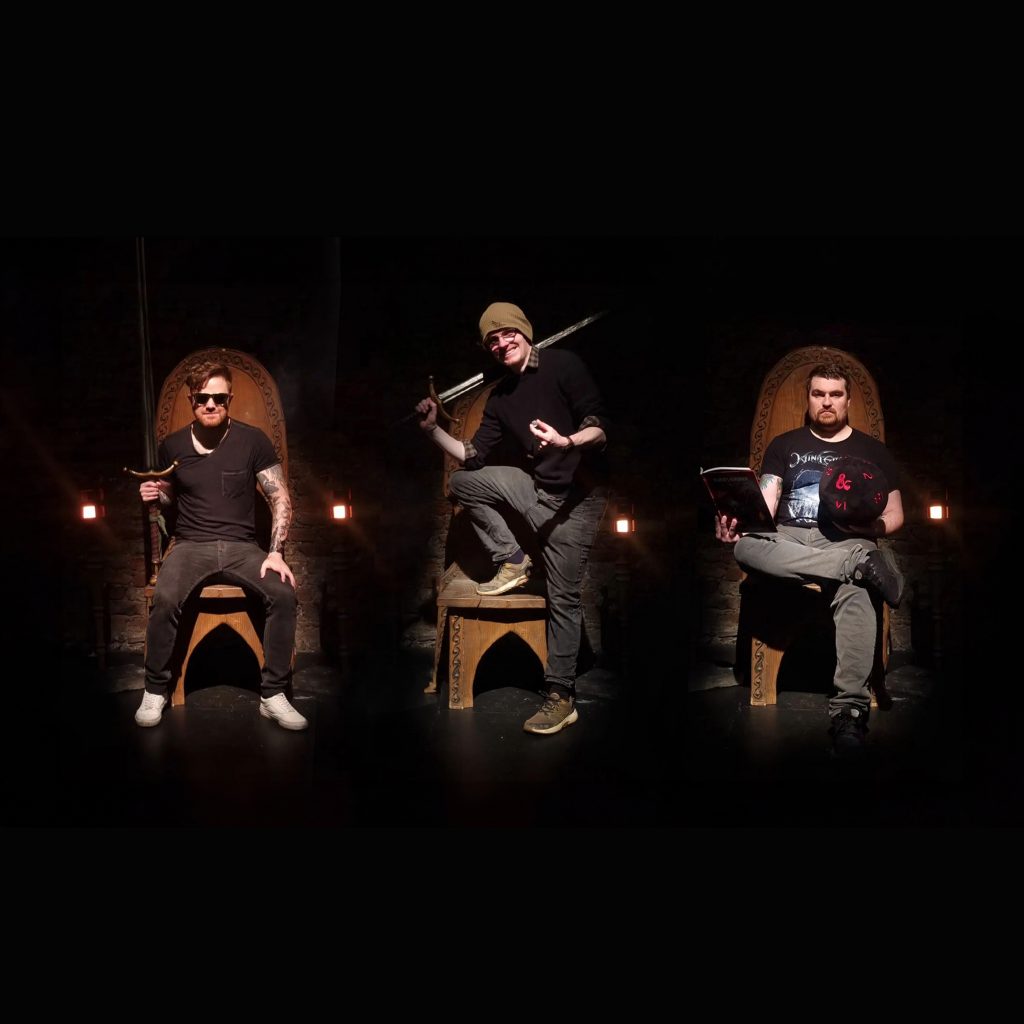
From there, it became a regular thing with friends. Different people came and went, but Dylan, Jim and Ryan Andrew Dillon became the core of what would later become Hearthfire. Dylan was drawn to running the games. Ryan had experience as an audio engineer. Jim, a graphic designer, could shape the visual identity, branding and social media presence.
A spark came when Dylan and Jim saw NADDPOD, or Not Another D&D Podcast, perform a live show. The energy of it stuck with them. Both had a performance streak, and the thought of bringing that same electricity to their own work felt exciting.
They began planning around the Covid period, though they held off recording because they wanted to do it properly, in person. Many people moved their games online during that time, but the feeling around the table mattered too much to them.
They wanted the energy of bodies in the same room, reacting in real time.
When they were finally able to meet again, they began recording. Early on, they secured a spot at Comic-Con, where they could table, promote the podcast and run a 45-minute self-contained live adventure in a panel slot.
The response was strong.
“We got really good reception and really good feedback,” Dylan says. “We were like, ‘this is great. We really love this.’”
Hearthfire began in earnest in early 2022, first as an audio-only podcast. Since then, the group has expanded into video, online streams, live convention shows, theatre shows, guest appearances and collaborations.
Irish Myth, Rebellion and the Skeleton of D&D
Although Dungeons & Dragons is closely associated with Wizards of the Coast, Dylan points out that the game has always drawn from many mythological sources, including Irish folklore. Creatures such as the fey already carry traces of Irish and Celtic storytelling.
For Hearthfire, that Irish element has become something they are increasingly interested in exploring.
Dylan recently ran a game that allowed him to use Gaeilge within the session. It was directly inspired by Irish mythology, with a search for the Dagda’s Cauldron, a trickster fey, kidnapped heroes and storytelling elements drawn from older Irish traditions.
Even before that, Irish myth had entered the main campaign almost instinctively. Lugh, the Irish god associated with poetry, warriors and other aspects of life and skill, became an important character in the story Dylan was telling.
That was not always a consciously planned decision. It emerged because it was already part of the cultural ground he was standing on.
Dylan describes Dungeons & Dragons as a skeleton. The rules, mechanics and broad structures are there, but every table adds its own flesh. Each Dungeon Master, group and story shapes the game differently.
“Each story, each table and each GM is different,” he says.
The Irish influence, for Dylan, is not only mythological. It is also political and emotional. Toward the end of the conversation, he reflects on the rebellious nature of Irish culture and how naturally that fits with the structure of Dungeons & Dragons.
So much of the game is about small groups facing systems of oppression, resisting overwhelming forces, challenging rulers, finding allies and building something bigger through community.
“There’s such a culture of rebelliousness within Irish culture,” Dylan says. “I think that translates really, really well to D&D.”
In Hearthfire’s current podcast story, that idea of community has become central. The characters begin as just a few people in a wide world, but through the relationships they form, the people they influence and the people who influence them, they become capable of more than they could be alone.
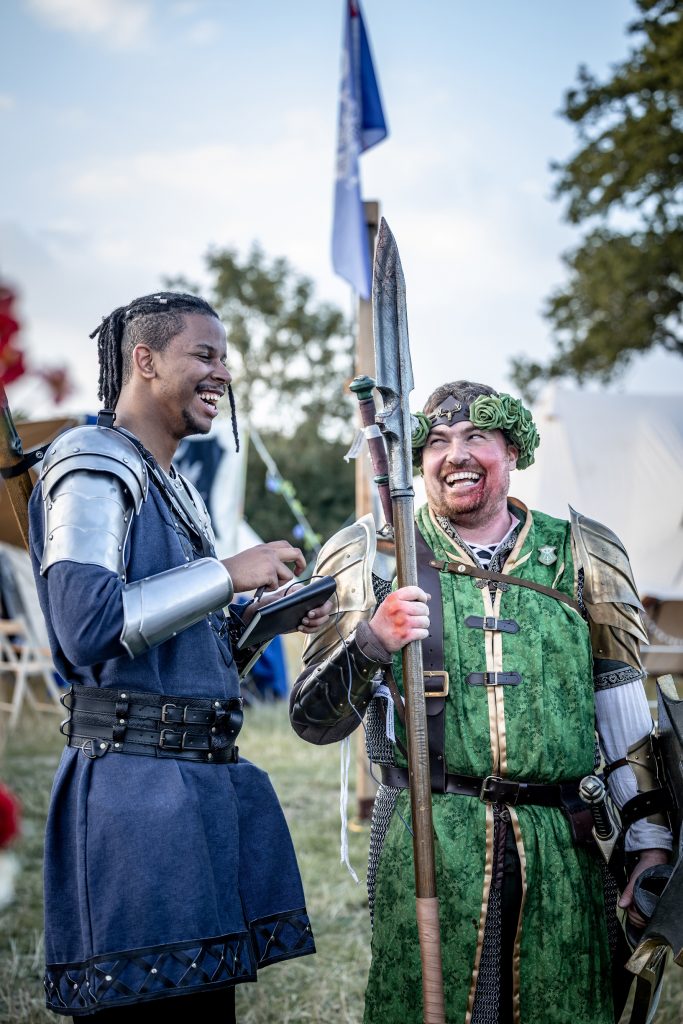
Fake Swords, Real Feelings
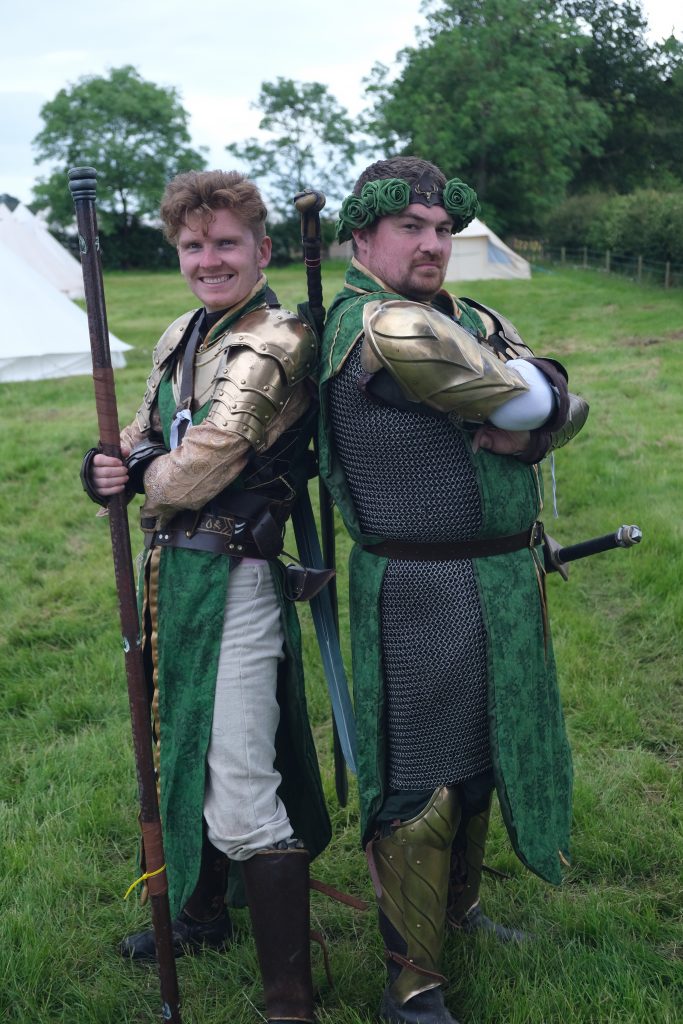
Hearthfire has also moved beyond the tabletop into live action roleplay, or LARP.
For Dylan and Jim, this began almost accidentally. At one point, friends had planned a surprise LARP experience as part of a stag party for Dylan, though the plan fell through during Covid. Eventually, they entered that world properly, beginning around late 2022.
They were quickly hooked.
LARP, Dylan says, feels like an evolution of Dungeons & Dragons. The roleplaying element is still there, but the immersion is deeper. At the table, a player can step out of character easily, talk above the table, check rules, roll dice and return to the fiction. In LARP, the body is inside the world.
If you want to do something, you have to do it.
The scale can be enormous. Dylan describes events with around 3,000 people, with camps, costumes, characters, conflict and shared story unfolding across a physical space. That makes it easier to lose yourself in the world, but it also makes the feelings more real.
This is where Dylan and Jim’s podcast Fake Swords, Real Feelings comes in. The title captures what LARP can do.
The swords may be fake. The emotions are not.
Dylan remembers one moment in particular, after a large in-game massacre where around half of his friend group’s characters died. Walking back to camp as one of the surviving characters, he saw the emptiness where those friends should have been and felt his stomach drop.
“These are real feelings that I’m having here,” he realised.
It was all make-believe, and yet the grief, shock and attachment were genuine. That tension between fiction and feeling is one of the reasons the work remains powerful.
Collaboration at the Centre
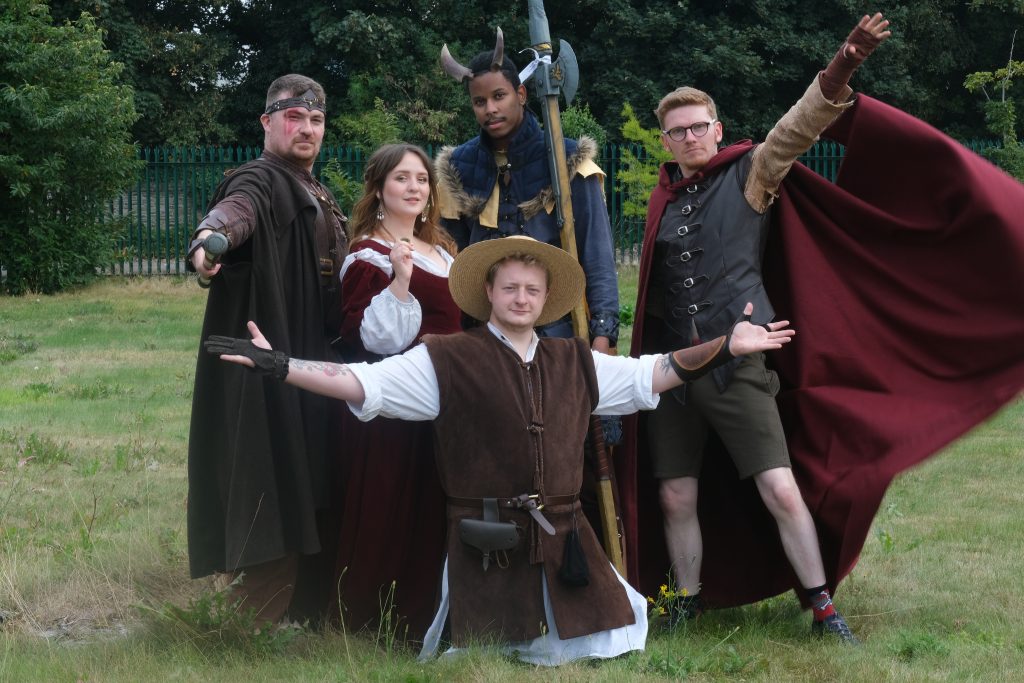
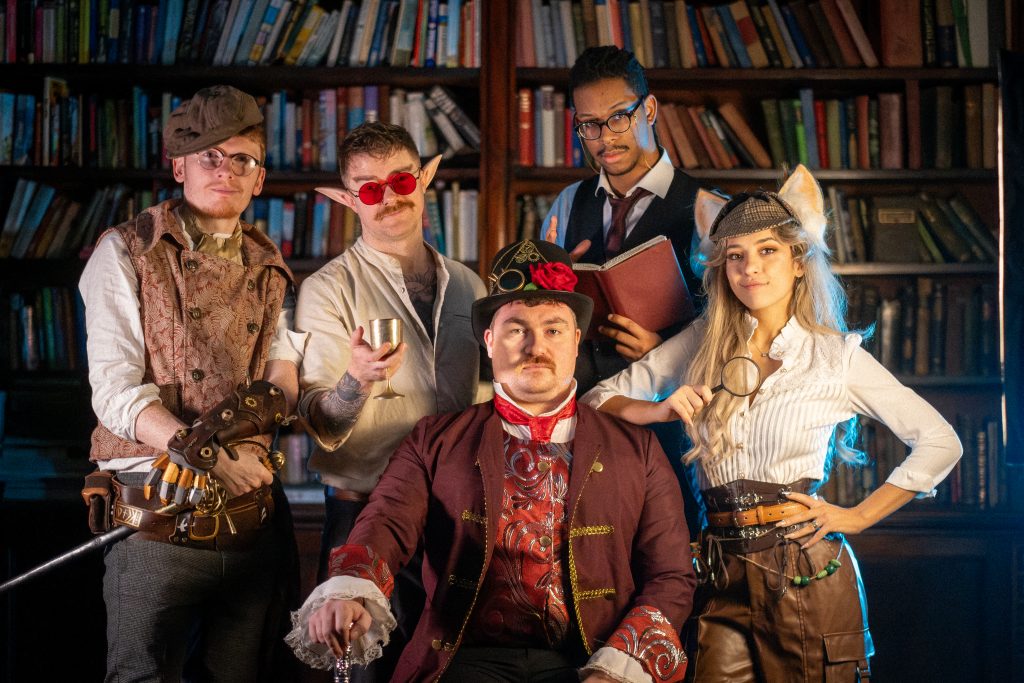
Although Dylan, Jim and Ryan form the core of Hearthfire, collaboration has always been central to the project. Roleplaying games are collaborative by nature, and Dylan is clear that they do not want to sit in their own bubble.
The group has worked with series regular Apollo, with their friend Caitlin, and with other players and creators depending on the project. Dylan describes the spirit of it as “a rising tide lifts all ships.”
The wider Hearthfire umbrella has also begun to gather different creative strands together. Dylan and Jim have worked on Fake Swords, Real Feelings, and in the past have also done With the Heron, linked to fantasy sword fighting. Rather than trying to manage too many separate accounts, identities and channels, they have started to bring these interests under the Hearthfire name.
The goal is not to narrow what they do, but to make room for all of it.
“We’re going to have everything under Hearthfire and just be ourselves,” Dylan says. “Put our passions into the world, be creative under the things that we want to be creative about, and hopefully people enjoy that and want to follow along.”
That willingness to include others is also part of what makes their events accessible. Hearthfire does not present fantasy as something guarded by experts. It is something people can enter, shape, respond to and share.
Live Shows, Mad Libs and Letting the Audience In
In recent live shows, Hearthfire has been experimenting with more improvised, audience-led formats. Dylan describes using improv and Mad Libs-style Dungeons & Dragons, where the crowd provides prompts that help fill out a familiar adventure framework.
This creates a structure that is both prepared and open. Dylan still holds the shape of the story, but the audience gets to influence what happens inside it.
That matters for accessibility. A live Dungeons & Dragons show could easily become intimidating to newcomers if it relied too heavily on rules, lore or inside jokes. By taking prompts from the crowd, Hearthfire turns spectators into collaborators. People do not have to know everything to take part. They only need to offer an idea.
The result is a performance style that feels theatrical, playful and communal. The audience is not simply watching a closed game. They are helping make it stranger, funnier and more alive.
Improv, Creativity and the Theatre Kid Within
Dylan has recently been exploring improv more directly, partly because he had found himself in what he describes as a “creative winter” toward the end of last year. He was struggling to write and prepare sessions, and improv offered something different.
As a Dungeon Master, he is often responsible for preparation, structure and direction. Improv forced him into a space where he could not prepare in the same way. He had to react, trust instinct and accept whatever appeared.
“I really wanted to put myself in a situation where I am just reacting to things,” he says.
Some parts of improv felt immediately familiar. They used skills he had already been building through Dungeons & Dragons. Other parts challenged him. As a DM, he is used to holding control. Improv asked him to relinquish some of that control, listen differently and allow others to lead.
It also helped him recognise a part of himself that had been waiting for an outlet.
Dylan says he never considered himself especially creative growing up. But through Dungeons & Dragons, live shows, improv, LARP and performance, something has opened. When someone recently asked whether he was a theatre kid, he realised that he would have loved to have been one.
“I think D&D going into this has awoken that in me,” he says.
Now, he is interested in exploring voice acting, singing and other creative forms. Dungeons & Dragons has become a route into performance, storytelling, hosting, writing, improvisation and collaboration all at once.
“You are performing when you’re at the table or you’re on the stage or you’re in front of mics,” he says. “But you’re also writing the story ahead of you.”
Making Fantasy Visible
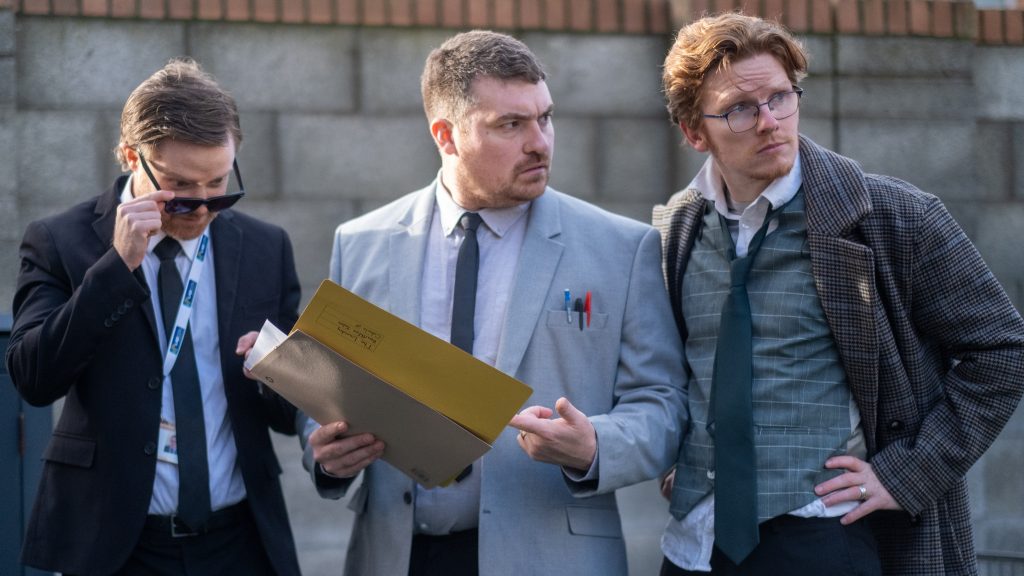
Part of the value of Hearthfire’s work is simply that it makes fantasy spaces easier to see.
For many people, especially those who grew up outside obvious creative or gaming communities, roleplaying games could feel hidden behind closed doors. Dylan recognises that feeling. There is a particular kind of ache in looking at a space and knowing, somewhere inside yourself, that you might belong there, while still feeling unsure how to enter.
That is why visibility matters.
“You can’t be what you can’t see,” Dylan says.
For him, discovering these spaces in his mid-to-late 30s has been healing rather than regretful. He gets to experience them now, share them with others, and help create access points for people who might otherwise have missed them.
Through Fake Swords, Real Feelings, he and Jim have even had people come up to them in the field and say the podcast changed their life by opening them up to a world of play and self-discovery.
That is the heart of Hearthfire’s accessibility. It is not only about whether someone can buy a ticket or understand the rules. It is about whether they feel invited. Whether they can imagine themselves there. Whether the space says, in some way, this is for you too.
What Comes Next
Hearthfire is continuing to develop in several directions. Dylan is organising a smaller-scale LARP player event, while the group is also working with the Brandywine Festival, a Hobbit-themed LARP coming to the UK. The link back to Tolkien feels fitting, given how early The Lord of the Rings shaped Dylan’s own imaginative life.
After a short hiatus, the group is also looking forward to simply playing together again and being creative together. That remains the core of everything.
They are open to more collaboration, more genres and more ways of performing. While they have often worked in high fantasy, they have also begun exploring horror, lower-stakes personal stories and different emotional tones. Dylan mentions guesting with friends in D8 Dungeon on a story that was essentially a tragedy, still fantasy, but built around a very different emotional agreement with the players.
That willingness to move between tones shows how broad roleplaying can be. Dungeons & Dragons and related games can hold comedy, grief, rebellion, friendship, horror, family drama and myth. Hearthfire’s work seems less interested in proving what the medium should be than in asking what else it can hold.
Greater Than the Sum of Its Parts
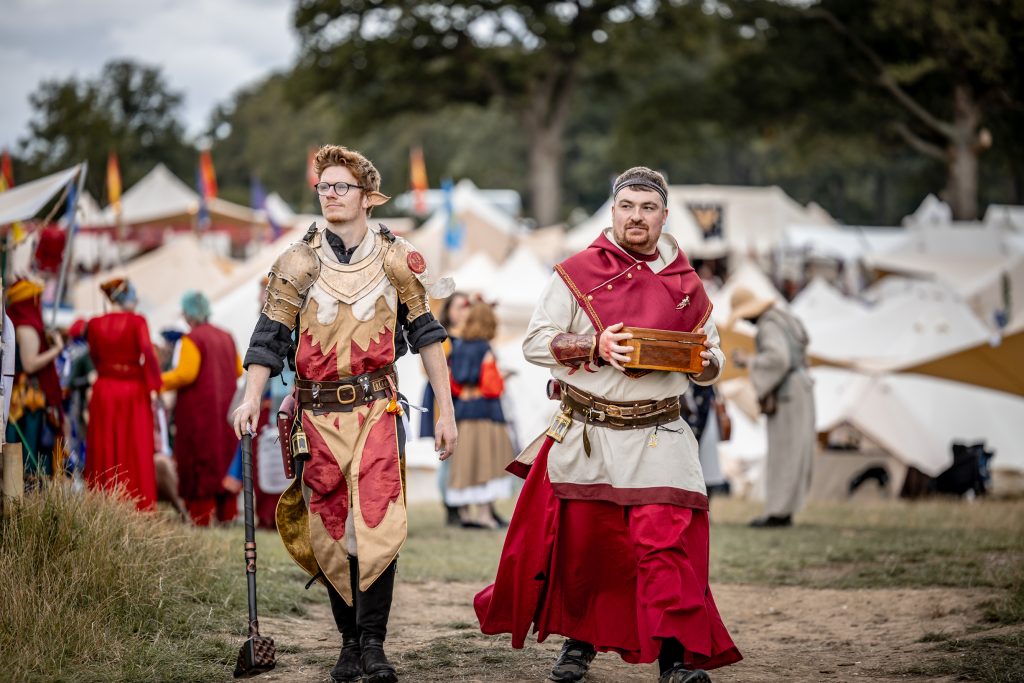
What comes through most strongly in Dylan’s conversation is the idea that roleplaying games are never only about rules. They are about the effort people put into each other.
A table is only as good as the people willing to play, listen, risk embarrassment, support one another and build a world together. A LARP is only as powerful as the collective buy-in of those who choose to make the fake swords matter. A live show only works when performers and audience agree to meet in the same imaginative space.
For Hearthfire, that shared investment is everything.
At its best, Dungeons & Dragons becomes a way for people to find confidence, connection and community. It gives people a story to step into, but it also gives them a group of people to step toward.
That is what Hearthfire Tales is building: not just campaigns, podcasts or performances, but accessible spaces where fantasy becomes social, visible and shared.
To find out more about Hearthfire Media, visit their website: hearthfiretales.com
Support Hearthfire Tales via their Patreon: patreon.com/Hearthfiretales
And keep up with them via social media: @hearthfiremedia


Support Go Leor. Get the Print. Join the Story.
Go Leor is an independent Irish arts magazine built by hand, heart, and community. Your support keeps meaningful storytelling alive – in print, in culture, and in conversation.
Through Patreon, you can support the magazine in two simple ways:
- Supporter Listing
Have your name printed inside every issue as part of the community helping Go Leor grow. - Print Copy – UK & Ireland
Receive the latest print issue delivered each month across the UK and Ireland, with your name included inside the magazine.
The Latest Articles
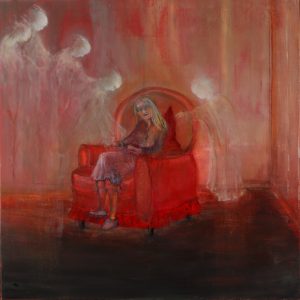

Maria Noonan-McDermott: Where Memory Becomes Art
Transforming intimate family memories into paintings and poetry, her work invites others to recognise stories of their own.
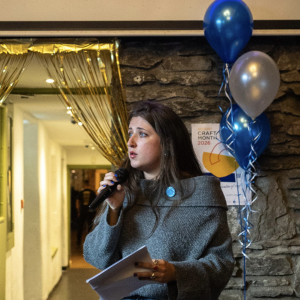
Rosina Law-Braney: Reclaiming the Seven Deadly Sins
Through zines, illustration and humour, Rosina Law-Braney creates vibrant feminist stories that make room for identity, desire, grief and collective creative freedom.
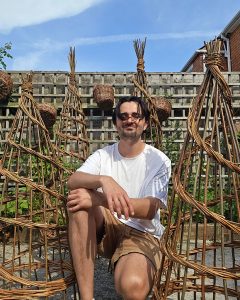
Alexander Edward: Weaving from the Land
Growing his own willow beside Strangford Lough, Alexander Edward brings coppicing, landwork and an ancient craft into bold contemporary forms.
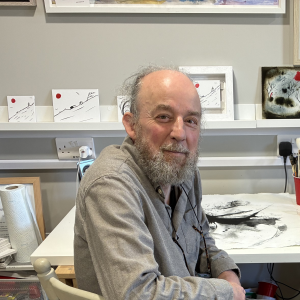
John Britton: Finding Calm Through Ink
After three decades of visceral performance and constant travel, John Britton has found a quieter connection through ink, mentorship and calm.
Yvonne Moore: Following Curiosity into Colour
Refusing to settle into a single style, Yvonne Moore follows curiosity across colour, poetry and community, creating art that brings her – and those around her – fully to life.
Lucy Fleming: Carrying the North Coast Light
Through fluorescent colour, oil pastel and an instinct for collaboration, Lucy Fleming turns the light of the North Coast into images that connect art, music and community.