Siobhán McTaggart
Artist
A reflection on climate, conflict, and the emotional weight of living within the systems we sustain, while navigating an evolving landscape shaped by AI
Siobhan McTaggart’s work begins with observation, but it rarely stays there. What she encounters – whether through news, lived experience, or memory – tends to stay with her, building over time until it needs to be processed.
Art, for her, is how that happens.
“Creating… is my language and output,” she says.
That sense of necessity runs through her work, from her climate-focused pieces to her storyboards centred on conflict, and across the range of mediums she works within – from digital illustration to prosthetics and film.
Growing up with an awareness of damage
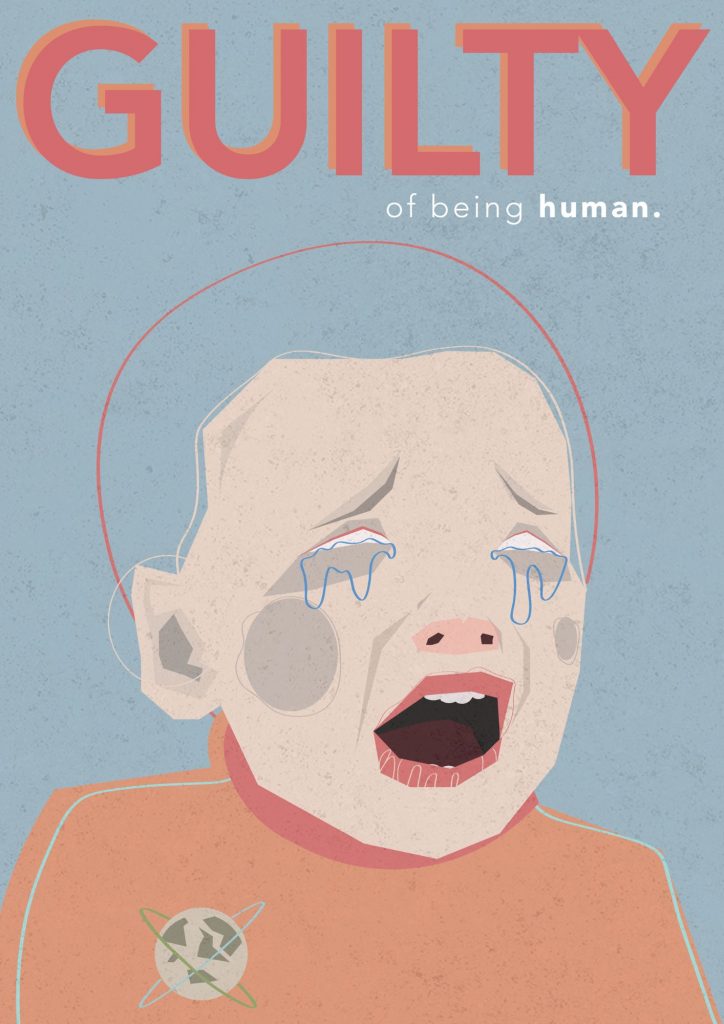
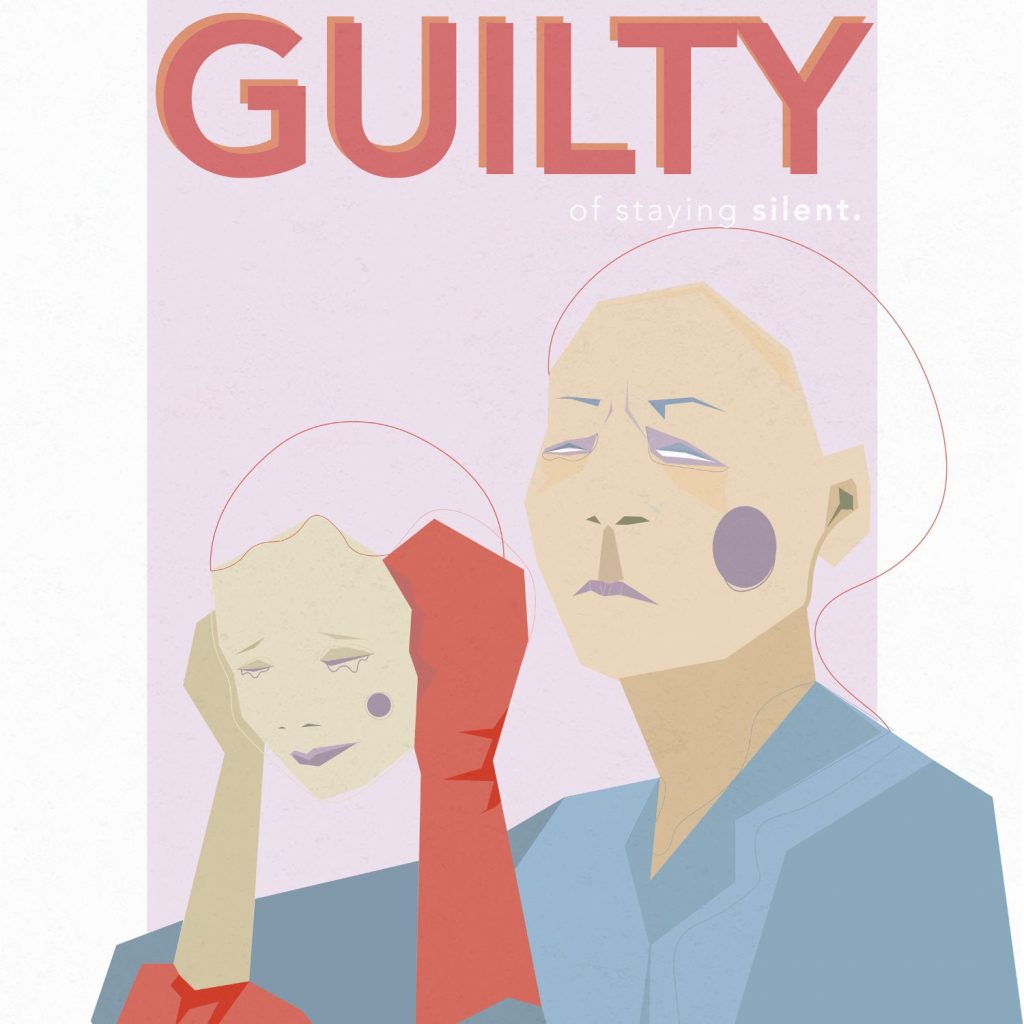
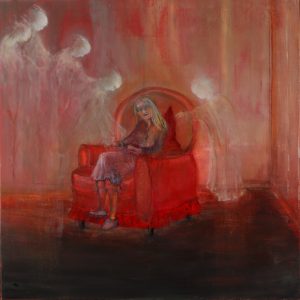
The work GUILTY didn’t emerge from a single moment. It developed over time, shaped by a long-standing relationship with the natural world.
“Since childhood, I have held a fascination, love and respect for the natural world,” she explains.
That early connection was paired with a growing awareness of harm – not just in abstract terms, but through visible, repeated examples.
“From large oil spills… cruelty in our food chain systems… deforestation, climate instability, pollution… and the hostility of manmade infrastructures making it impossible… for other life forms to simply even exist.”
Over time, that awareness shifted into something more personal.
“It was some years later I gained the awareness that living within modern society meant I was contributing to that harm.”
That contradiction – care alongside complicity – became the starting point for the work.
Moving away from statistics
Rather than approaching climate through data, McTaggart focused on how people respond to it.
She spoke with others to understand the range of perspectives around her.
“Some deeply aware… some actively advocating… some indifferent, and some who viewed climate action as an exaggerated woe or falsity.”
What became clear was that information alone wasn’t enough to connect people.
“I needed to… create a statement people could empathically understand rather than statistically.”
That thinking carries directly into the composition of GUILTY, where a child becomes the focal point of the image.
“The first one is… passing down the burden of what we’ve failed to do and what we have done.”
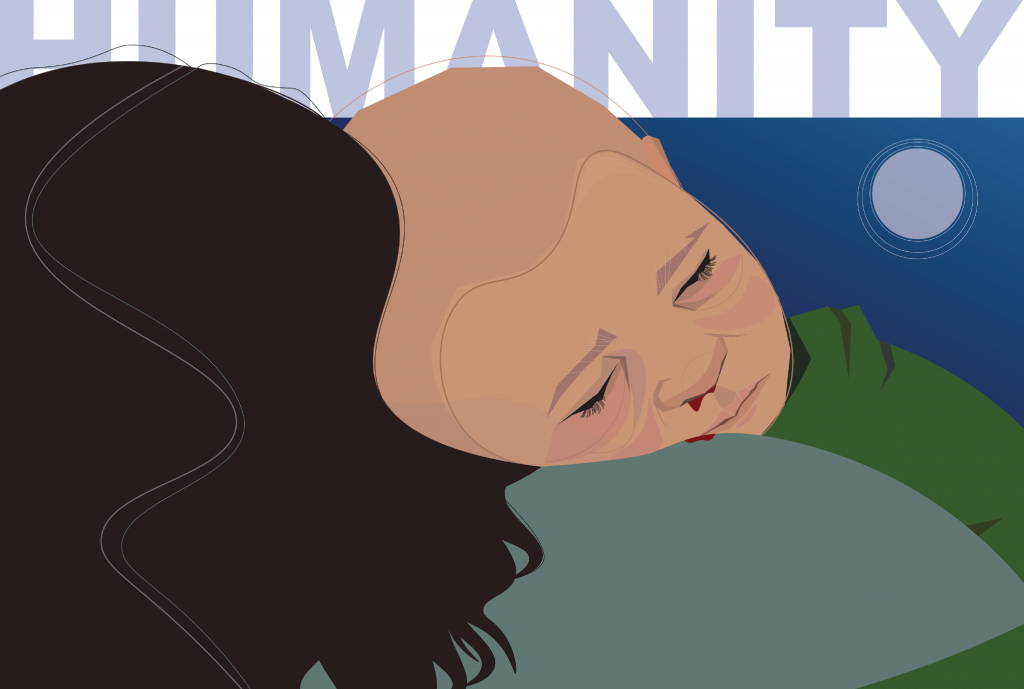
The work is grounded in lived experience – including time spent working with children – and the question of what kind of world they are inheriting.
“I thought, if it’s bad for me, how bad will it be for them?”
Living inside the system
One of the central tensions in McTaggart’s work is the difficulty of separating individual action from larger systems.
“You grieve for the world, but you also live in a system where you feed into that at the same time.”
That applies not just to large-scale issues like climate, but to everyday realities – infrastructure, consumption, and the way environments are shaped.
She points to simple observations: manicured lawns that act as “deserts” for biodiversity, or small disruptions to natural processes caused by built environments.
These aren’t presented as isolated problems, but as part of a broader system that is difficult to step outside of.
“It’s such a larger thing than just… recycling or being greener… you’re really born into this sort of system.”
That scale – and the lack of clear solutions – is what gives the work its weight.
Processing conflict and media exposure
Alongside climate, McTaggart’s work also engages with conflict and the way it is experienced through media.
“We’re exposed to so much trauma… and we consume that on a daily basis,” she says.
Often, that exposure goes unspoken in everyday life.
“You don’t really talk about them… so going home and making a piece… is my way of making noise.”
Her storyboards, in particular, return to war as a subject – not in a stylised or heroic sense, but as a way of examining human behaviour under pressure.
“It’s a very chaotic environment… it’s brutal… and because it’s so brutal, I think it emphasises someone’s humanness.”
What interests her is the contrast between expectation and reality.
“When you really look at war, you actually see vulnerability… you see emotions, you see fear.”
Thinking through image and environment
Even in still work, McTaggart approaches her pieces as part of a larger visual and emotional environment.
“Being an animator inherently shapes the way I approach still work,” she explains.
Her process begins with building the world around the subject.
“My mind instinctively begins by constructing the world… allowing me to feel… colour, density, and emotional weight.”
Figures are then developed within that space.
“I begin to imagine their presence… how they occupy it, what they carry.”
Even without movement, there’s an implied narrative.
“Even in stillness, there is a sense of before and after… something held in suspension.”
Medium, craft, and influence
McTaggart works fluidly across mediums, selecting processes based on what best suits the idea.
“I move between processes quite fluidly, following whatever best serves the idea.”
Digital illustration – particularly using Adobe Illustrator – remains central to her practice however, shaping how she constructs form, colour, and composition.
“I would think in illustrator 100%… the way those images are formed.”
Her use of colour also traces back to early visual influences.
“I’ve taken so much inspiration from games like Spyro… I remember as a kid looking at them and thinking, wow, what a beautiful world.”
That early curiosity extended beyond playing into analysing – questioning how and why things were made.
“That’s when I first started that… artistic way of thinking.”
Alongside this, her work in makeup and special effects has reinforced an approach centred on character.
“You need to really jump into the character and feel that character… to create the look.”
Craft, authorship, and the scourge of AI
Alongside the themes that run through her work, there is another concern beginning to take shape – one that sits closer to her own practice.
“I think what’s on my mind at the moment… is definitely what’s on a lot of artists’ minds, and that’s AI,” she says.
It’s not something she has fully resolved into a piece yet, but it’s already influencing how she thinks about making.
“It’s on the forefront of my mind… where AI is going, how it affects us on our day to day, and obviously how that affects the art world.”
The uncertainty isn’t abstract – it connects directly to the value of craft, and the time spent developing it.
“For myself… sometimes you might think, what’s the point of creating?”
That question carries particular weight in fields like animation and illustration, where the line between generated and handmade work is becoming increasingly blurred.
But rather than stepping away from that tension, McTaggart’s response is to lean further into the act of making – and into the skills that underpin it.
“I suppose that highlights the importance of still drawing your imagery and still keeping up that craft, and not to give that craft away because that’s more convenient.”
Even the tools she turns to reflect that position. While she works digitally, her process remains rooted in drawing – building images manually through Illustrator rather than relying on automated systems.
It’s not a rejection of technology, but a reaffirmation of authorship.
And ultimately, it brings her back to the same point that runs through the rest of her work – that creating is not just output, but a way of understanding.
“Creating is just my language… so that’s why I keep doing it.”
In that sense, the question of AI doesn’t replace her practice. It sharpens it – forcing a clearer sense of what it means to make something, and why that still matters.
A practice rooted in concern
Across Siobhan McTaggart’s work, what becomes clear is not just the subjects she returns to, but the way she continues to approach them.
Whether addressing climate, conflict, or personal experience, her work is grounded in a willingness to engage directly with difficult material – not to resolve it, but to work through it. Each piece becomes part of an ongoing process: observing, questioning, and translating those responses into something visible.
That flexibility allows the work to shift in form, but not in intent. What remains consistent is the commitment to making – to testing ideas through practice, and to staying with them long enough to reach something honest.
“What connects them all… is the act of exploring… and pushing it until it finds its most honest expression.”
In a space where images are constant and attention is short, that kind of persistence stands out. Not as resistance for its own sake, but as a steady continuation of craft – one that prioritises depth, process, and meaning over immediacy.
McTaggart’s work doesn’t attempt to simplify the themes it engages with. Instead, it holds them in place – giving form to experiences that are often difficult to articulate, and allowing them to be seen, considered, and felt.
It’s in that continued act of making that her work finds its strength.
Keep up with Siobhán via her social media: @creating1324
Support Go Leor. Get the Print. Join the Story.
Go Leor is an independent Irish arts magazine built by hand, heart, and community. Your support keeps meaningful storytelling alive – in print, in culture, and in conversation.
Through Patreon, you can support the magazine in two simple ways:
- Supporter Listing
Have your name printed inside every issue as part of the community helping Go Leor grow. - Print Copy – UK & Ireland
Receive the latest print issue delivered each month across the UK and Ireland, with your name included inside the magazine.
The Latest Articles

Shirani Bolle: Monsters, Survival & the Power of Colour
Colour, craft, and confrontation converge in a feminist practice that reclaims the body, the home, and the right to be seen

Stuart Quigley: The Wonderful Spirit Behind This Beyond
Through This Beyond, Stuart Quigley transforms landscape into a charged field of light, colour, memory, and return.

Seanna O’Boyle: The Authentic Depth of Light, Layers and Ancient Wood
Drawing from the Old Masters and Irish prehistory, a practice that builds meaning through material, memory, and the discipline of making

Alison Pascoe: The Powerful Art of Knots, Craft & Connection
A practice rooted in heritage craft, where knotting, material and teaching become a language of connection across place and people

Bernadette Doolan: The Revealing Force Behind Her Figures
A practice shaped by resilience, where the figures she paints hold a quiet strength that continues to rise through each work, carried across a practice that moves between mediums

Sam Allen: The Special Pull of Home, Sea and Memory
A practice shaped by return – where coastlines, family memory, and material come together to explore what it means to carry home with you