Stuart Quigley
Artist
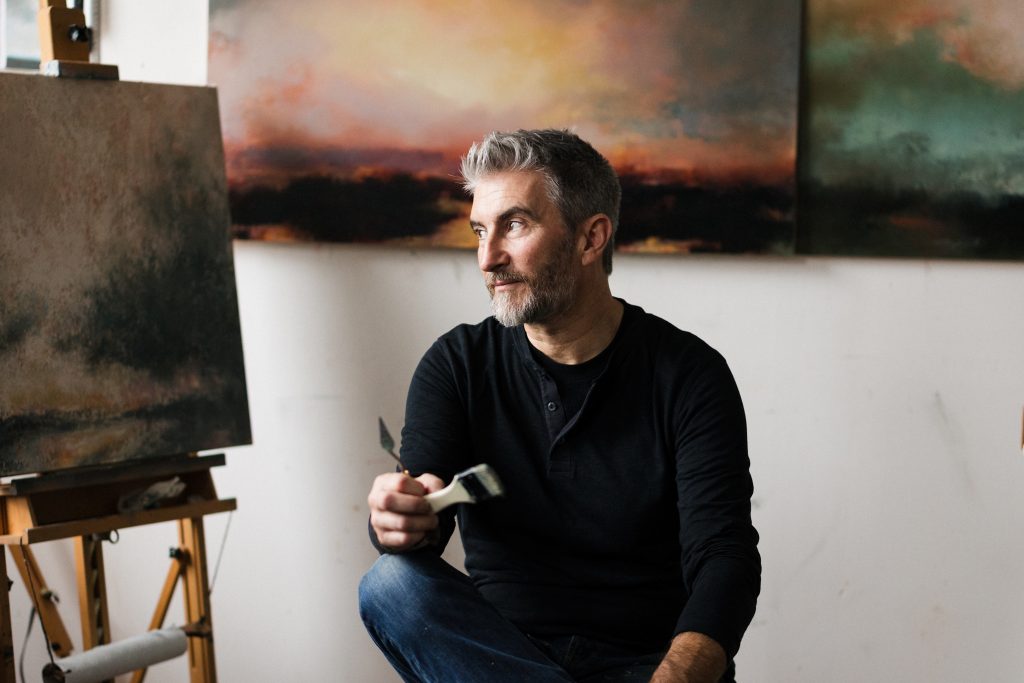
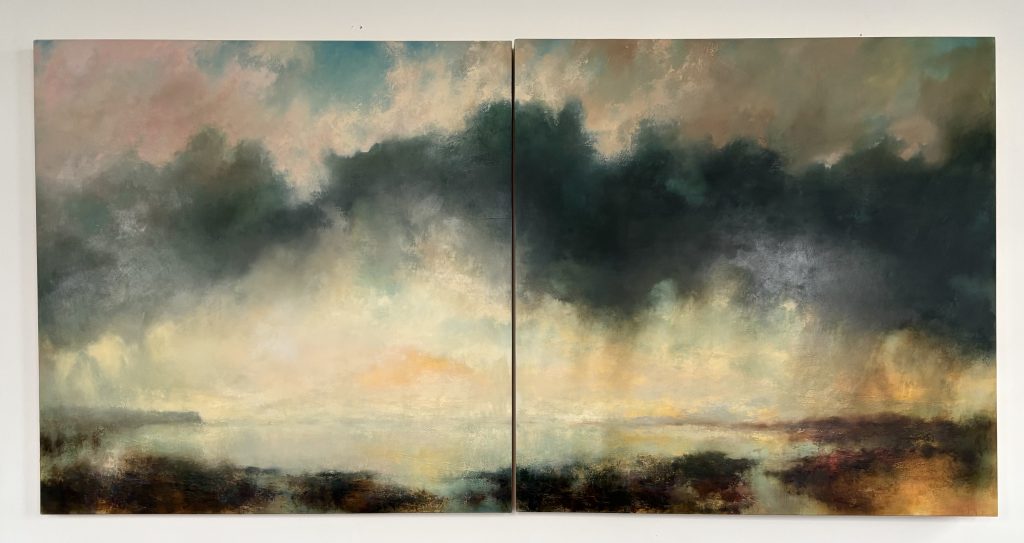
Through This Beyond, Stuart Quigley transforms landscape into a charged field of light, colour, memory, and return.
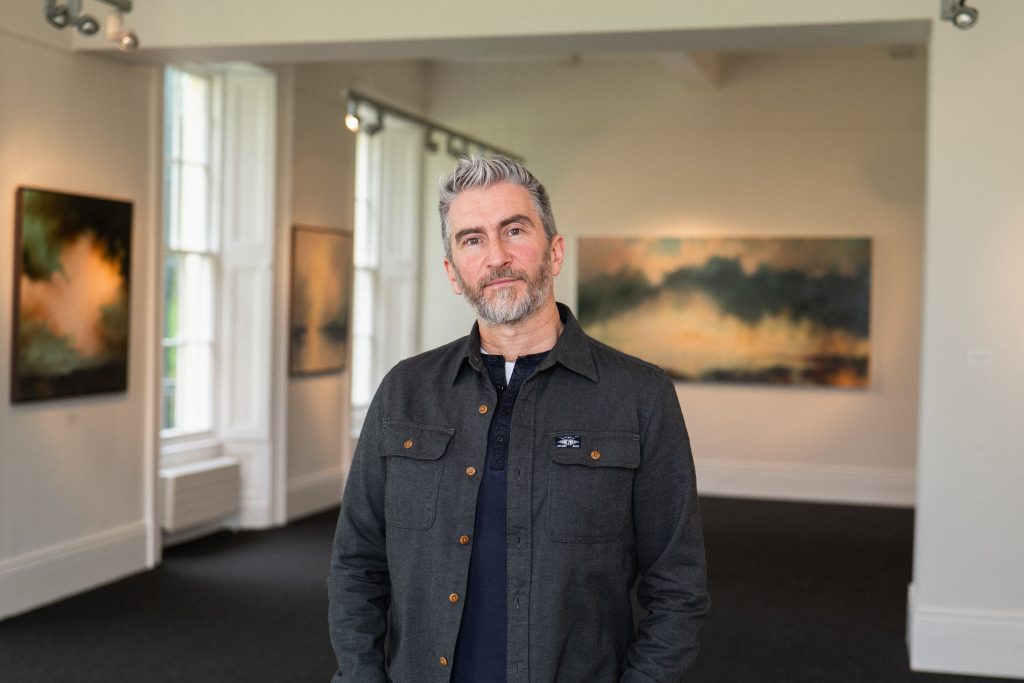
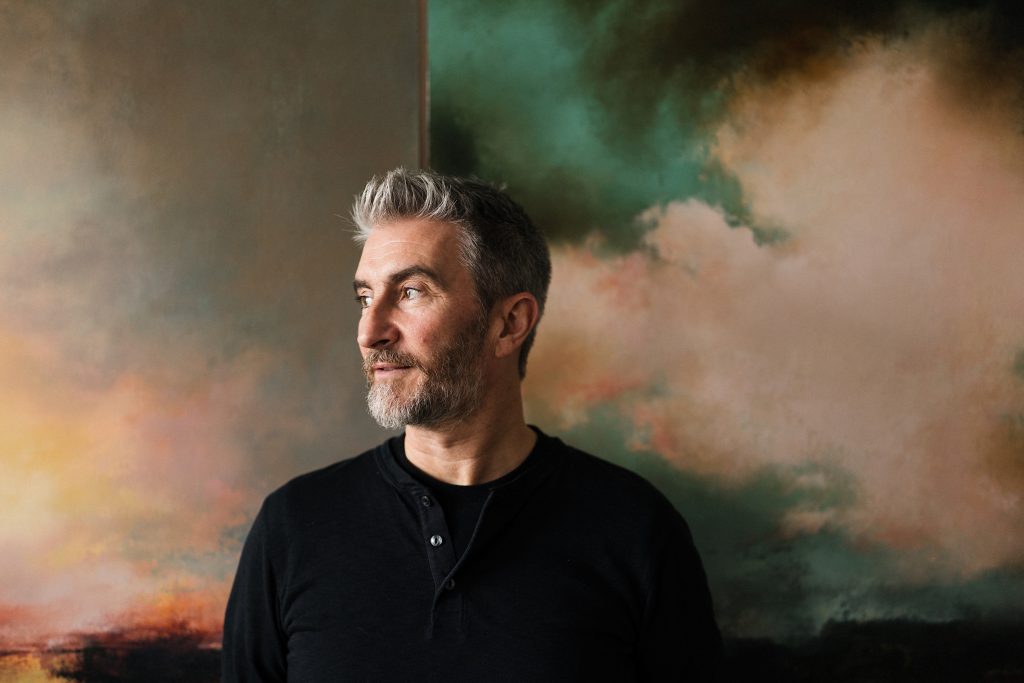
There’s a quiet weight to the way Stuart Quigley speaks about returning home. Not as a simple reversal of distance, but as something slower – a reorientation shaped by time, memory, and lived experience.
After years spent in Cumbria, Yorkshire, and beyond, it was something deeply personal that brought him back – a reconnection with a childhood relationship.
Now, that connection places him within the daily rhythm of Green Cat Bakery, his wife’s small working bakery where the steady, demanding movements form a quiet counterpoint to the slower, reflective pace of his painting practice.
What followed was not nostalgia, but discovery:
“It was really lovely to come home as an adult… it’s been really a reawakening of home.”
That sense of reawakening now runs through the work – shaped by time spent across Donegal and along the north coast, where landscape becomes less a subject and more a foundation.
This Beyond – A Landscape Reimagined
Quigley’s current exhibition, This Beyond, held at Flowerfield Arts Centre (11 April – 23 May), brings these ideas into sharp focus.
The exhibition explores the layering of light, colour, and form over time – drawing from the landscapes that have shaped him, from Cumbria to Isle of Skye and back to the North Coast of Ireland.
It positions painting not as a direct response to place, but as something filtered through memory and experience.
As Quigley describes:
“The conditions of light alter what we see and how we see it… what is painted is an eventual interpretation.”
This aligns closely with his own reflections during our conversation:
“It’s an amalgamation of ideas that isn’t any one particular thing.”
The exhibition itself builds on his earlier experience at Roe Valley Arts & Cultural Centre – marking a continuation of his move toward larger, more ambitious bodies of work, while refining the conceptual depth behind them.
Painting Beyond Place
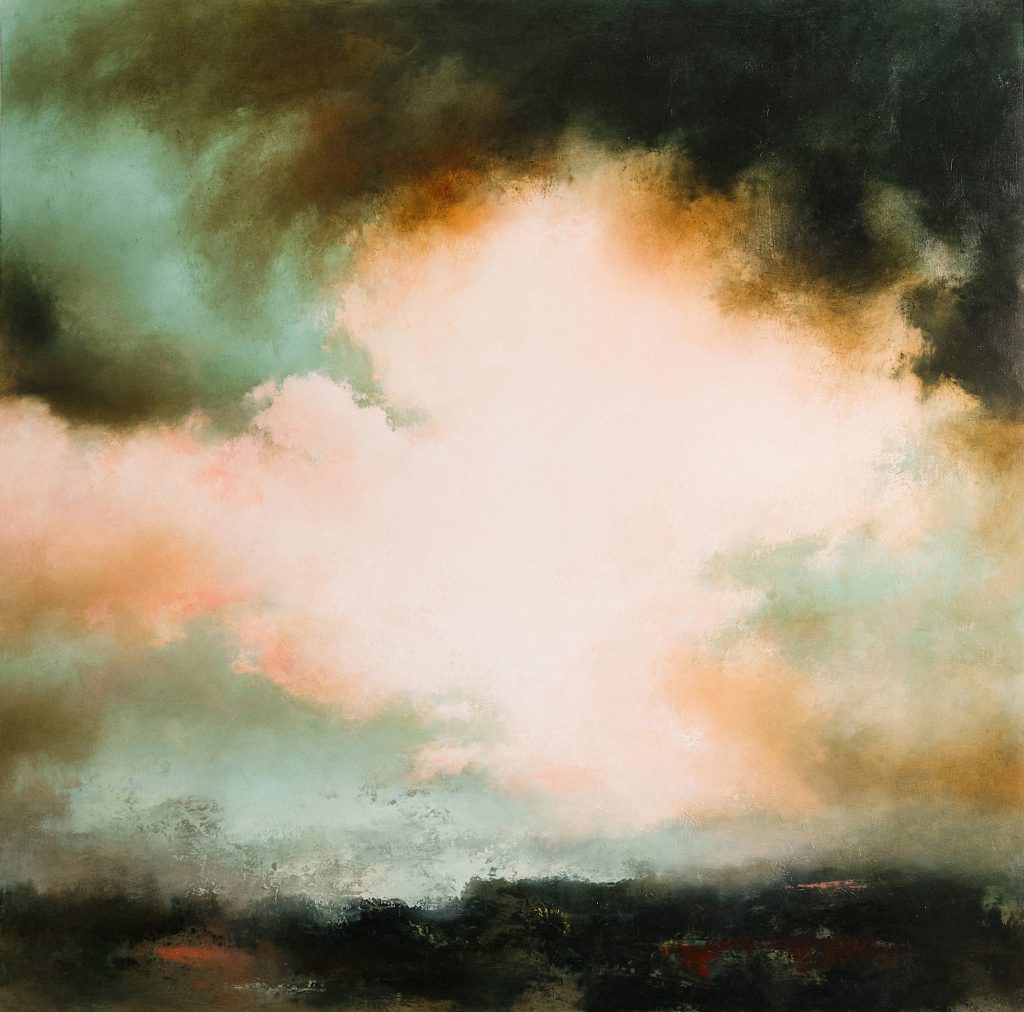
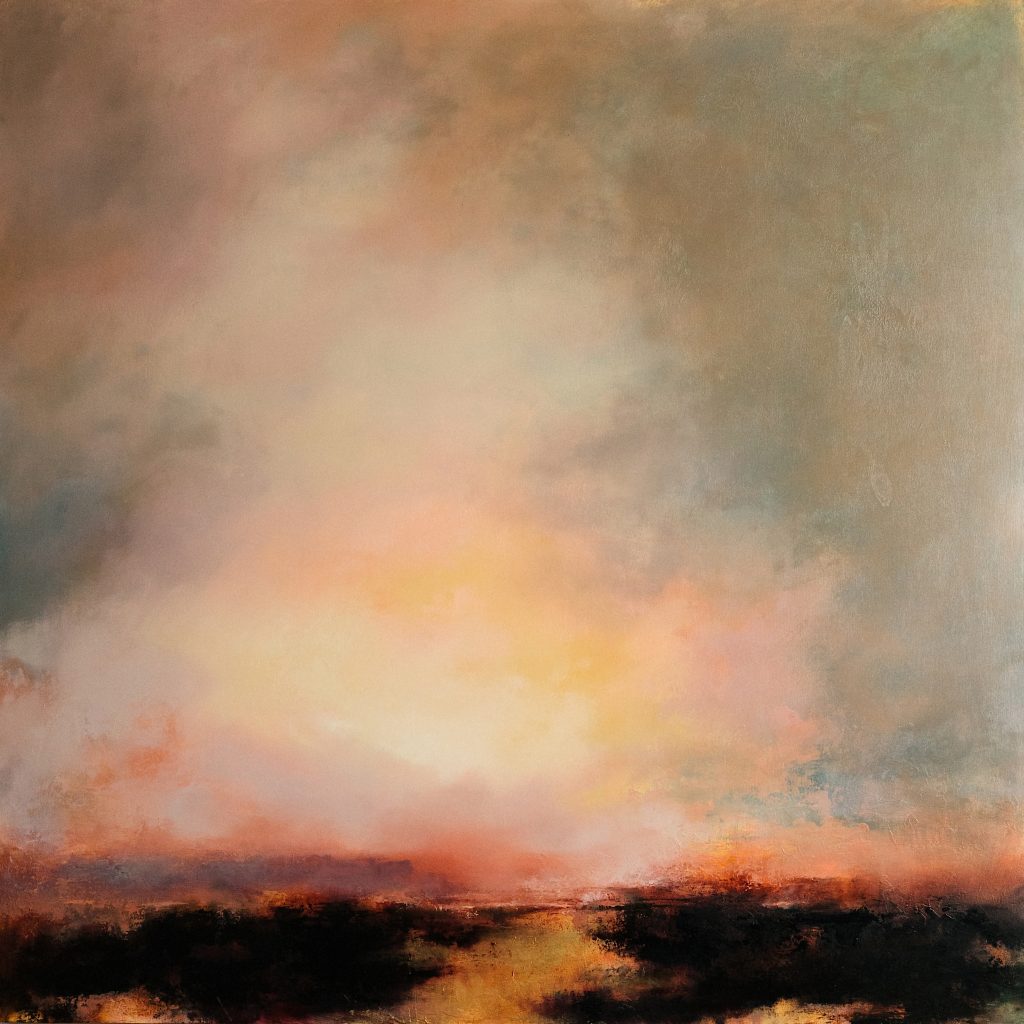
While Quigley’s work sits within landscape, it resists the idea of fixed location. His paintings are not depictions, but constructions – built from overlapping memories, experiences, and observations.
Fragments of Cumbria, Skye, and Ireland merge into something new, something that feels familiar but can’t be placed.
“Sometimes [they] would almost blend from Skye to Cumbria to Ireland…”
This approach shifts the focus entirely. The question is no longer where – but how.
“How does it make you feel… to stand in front of something that’s wide and big and beautiful?”
It’s here that the work takes on its distinctly turneresque quality – not through direct reference, but through its commitment to atmosphere, light, and emotional resonance.
Exhibitions, Scale, and Momentum
For much of his career, Quigley worked almost exclusively through commissions – building a global audience without necessarily building a public exhibition practice.
“I never really had exhibited… it was just working back to back on commissions for years.”
That changed when he committed to his first major exhibition – a decision that reshaped not only how he worked, but how he thought about his work.
“It really made me look at how long does it take to make a painting, through production and scale.”
Now, with This Beyond, there’s a clear sense of momentum. The work has expanded – in size, in ambition, and in clarity of intent.
Scale and the Physical Experience of Painting
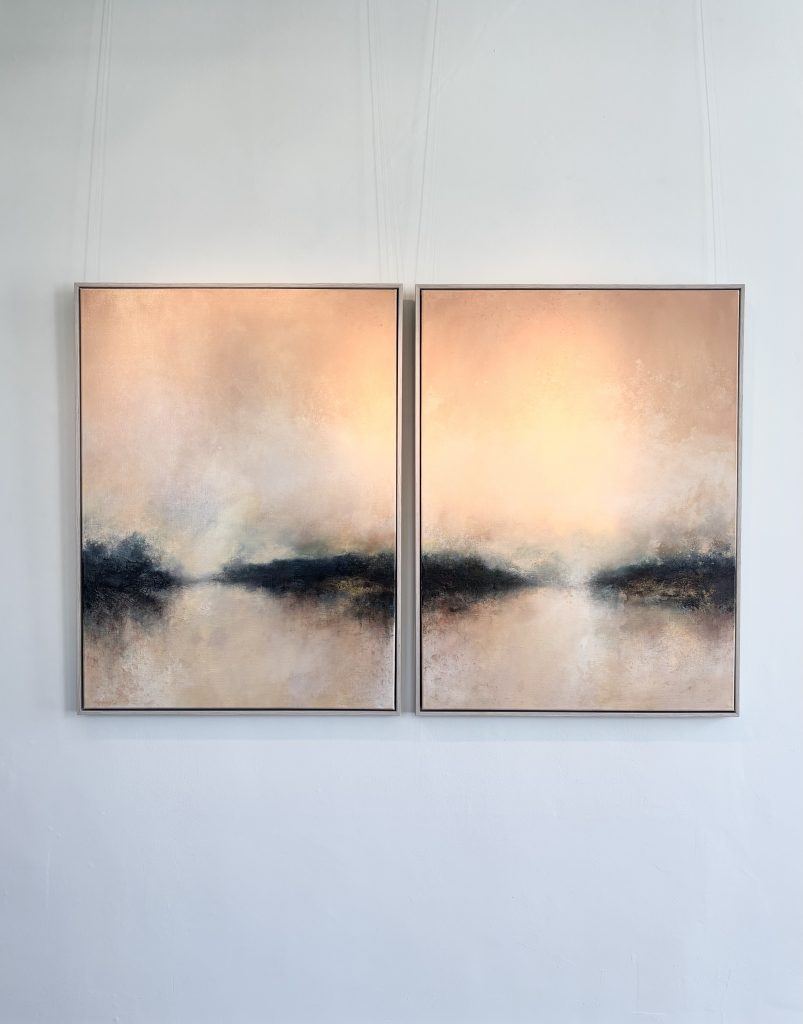
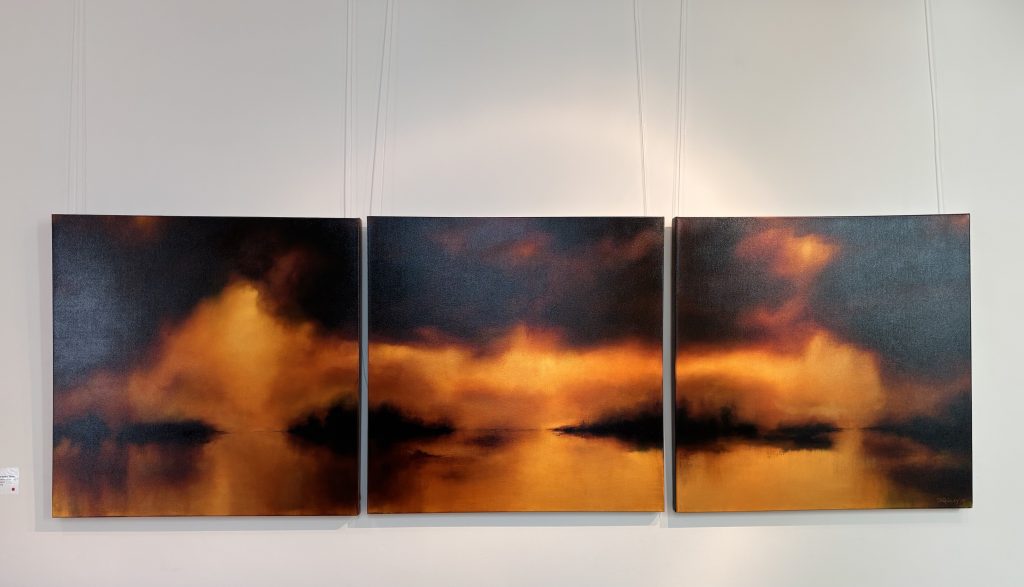
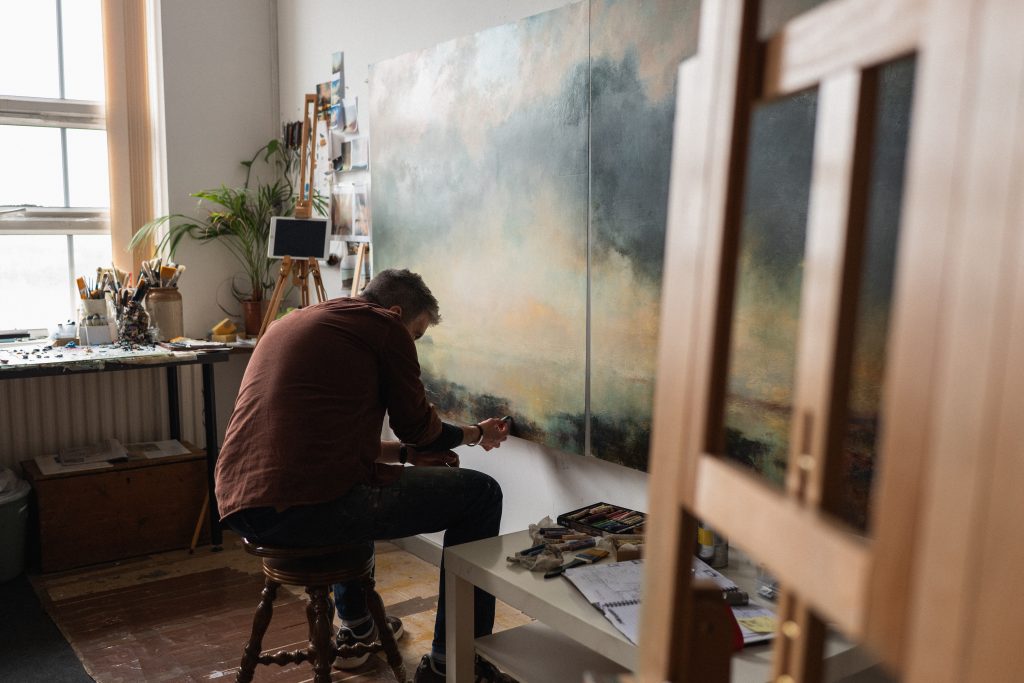
One of the most immediate qualities of Quigley’s work is its sense of scale – not just in size, but in how it unfolds across space. Large canvases sit alongside diptychs and triptychs, where a single image is extended, fractured, or transitioned across multiple panels. These works allow him to move between moments – shifting light, place, or memory – creating a rhythm that carries the viewer from one surface to the next.
“I thought, this is great. I can really play here… I can really maximise it.”
At the same time, smaller works remain just as considered – drawing the viewer inward, asking for a different kind of attention.
“You can almost spend too much time working on a tiny bit… you want to say so much.”
Across single canvases and multi-panel pieces alike, there’s a consistent balance between immersion and intimacy – a practice that expands and contracts while holding the same level of intent.
The Language of Colour
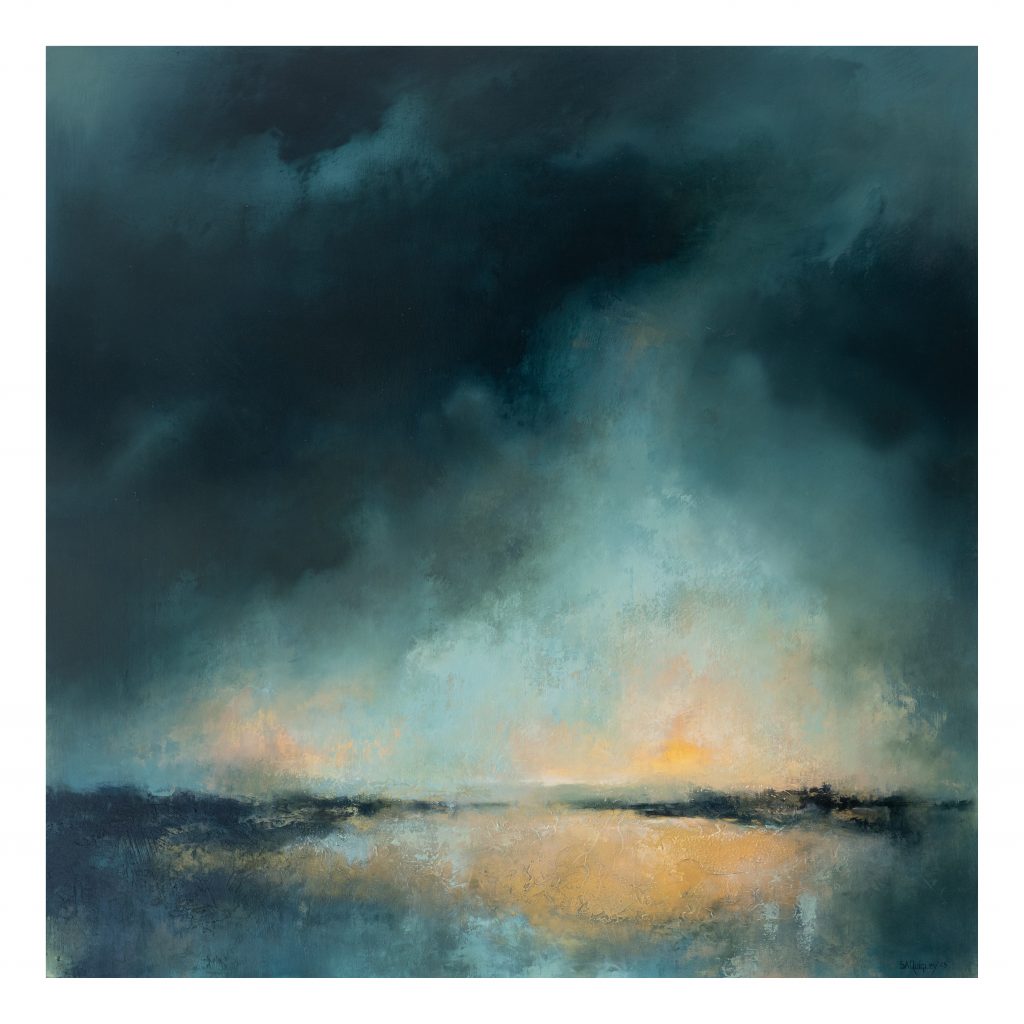
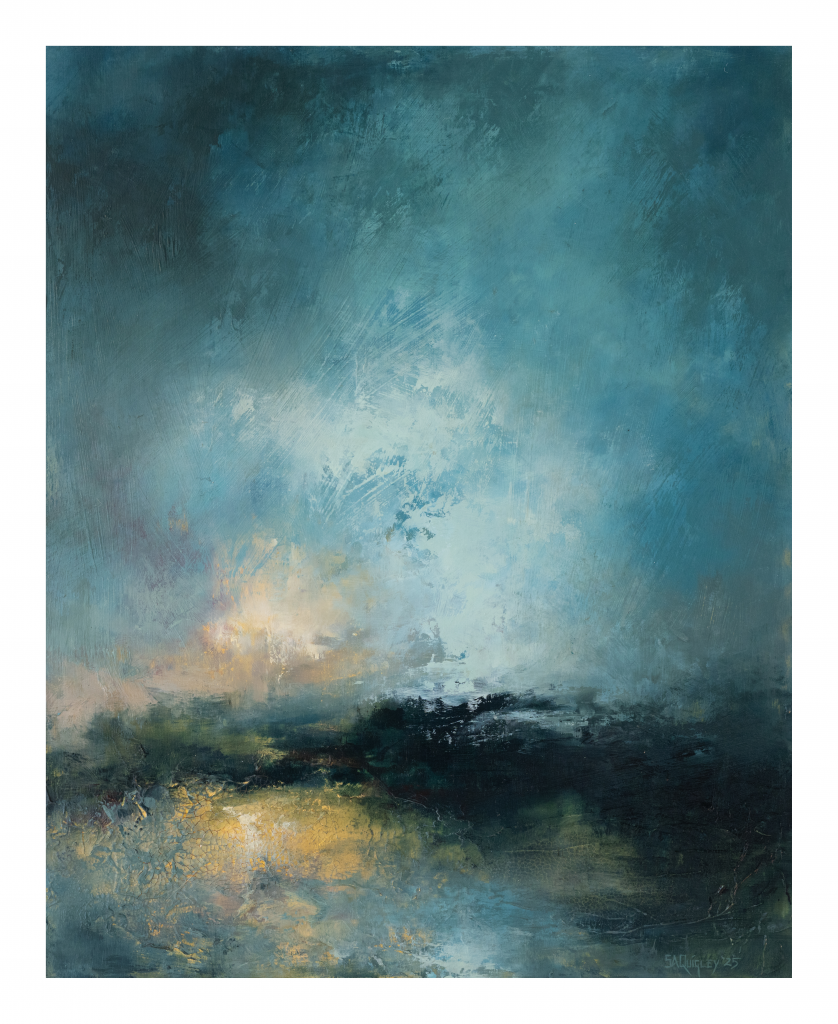
Quigley’s command of colour is one of the defining strengths of his practice. His palettes are rich but controlled – built through layers of blues, umbers, and ochres that shift under changing light.
That sensitivity can be traced back to an early fascination with Egypt, particularly encounters with artefacts like the coffin of Tutankhamun – where the interplay of deep blue and radiant gold leaves a lasting impression. Those colours, both symbolic and luminous, have stayed with him, quietly informing the way he approaches tone, contrast, and depth.
Rather than relying on black, he builds darkness through colour itself:
“I very, very rarely use black… I’ll try to go as dark with the browns and the blues.”
The result is work that feels alive – colours interacting, shifting, and revealing themselves over time. What might initially read as darkness is in fact layered colour, holding warmth and variation beneath the surface.
This sensitivity to colour is not incidental. It’s something deeply embedded in his thinking – a thread that runs from those early encounters with Egyptian artefacts through to the present, where golds, blues, and earth tones continue to define the visual language of his work.
Surface, Texture, and Process
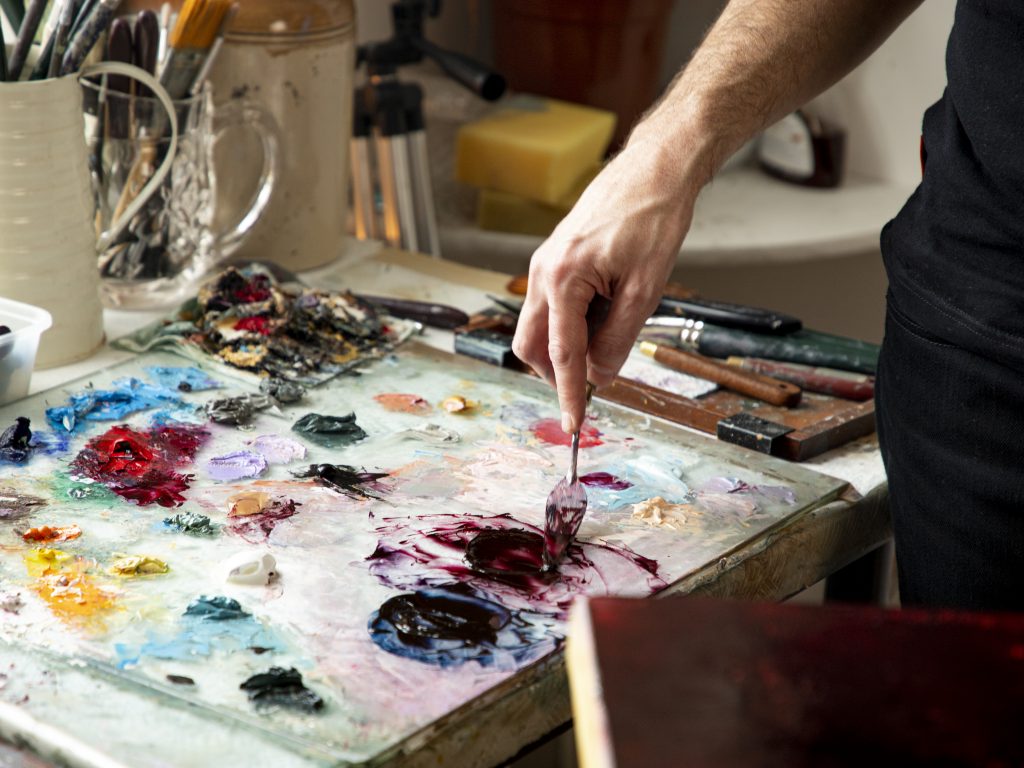
In recent years, Quigley’s move toward wooden panels has transformed his process. The surface itself becomes part of the work – not just a support, but an active element.
“That smooth starting point lets me control the surface more.”
What’s particularly striking is the way he builds texture – often embedding it at the very beginning of a painting, long before it becomes visible.
“The marks that I made when I was priming it… come into play at the very end.”
It’s a process that speaks to both control and patience – an understanding of how a painting will unfold over time.
Between Two Distances
A key idea within Quigley’s work is the relationship between proximity and distance.
Up close, the paintings reveal their making – the gestures, the textures, the movement of the hand.
Step back, and those same elements resolve into something more structured.
“You stand at two feet… and then at twelve feet… there’s this sort of dialogue between those two distances.”
This dynamic creates an active viewing experience – one that requires movement, attention, and time.
Light, Memory, and the Dissolving Form
Light sits at the centre of Quigley’s practice – not as a detail, but as a force that reshapes everything it touches.
Solid forms dissolve. Edges soften. The landscape becomes something transient.
“The ambiguity of form… I’m finding more and more appealing.”
This shift toward ambiguity is closely tied to memory – to the act of holding onto fleeting moments and translating them into something lasting.
“I’m constantly trying to memorise that… a light effect on the water… or the side of a mountain.”
The result is work that feels less like depiction and more like distillation.
A Practice Rooted in Time
Time runs through every aspect of Quigley’s work.
Each painting becomes a record – not just of what is seen, but of the process of seeing, remembering, and making.
“I think of painting… as a repository or a treasury of time.”
This idea transforms the work into something more than image – it becomes a document of experience.
The Human Element
Alongside the landscapes, Quigley’s figurative work offers a different kind of insight into his practice.
A graphite portrait of his stepson, included in This Beyond, demonstrates a clear command of form – an ability to capture structure and presence with precision.
“I have a piece… a big graphite drawing.”
It’s a reminder that beneath the atmosphere and abstraction lies a strong foundation in drawing – one that informs everything else.
Studio, Teaching, and the Balance of Practice
Quigley’s time is split between the studio and teaching – a balance that feels central to his work.
The studio offers space for focus and reflection, while teaching provides connection and energy.
“Half the week I’m with people… and the other half I’m alone and process everything.”
This rhythm allows ideas to move between environments – to be tested, absorbed, and reworked.
The Experience of Seeing
Despite the reach of digital platforms, Quigley remains committed to the physical experience of painting – to the importance of encountering work in person.
“It just doesn’t do it justice… you feel absorbed into it much more than you would looking at a screen.”
It’s a sentiment that resonates strongly within This Beyond – an exhibition that rewards time, movement, and attention.
An Artist in Full Flow
There’s a sense, throughout this work, of an artist fully engaged with his practice – pushing it forward while remaining deeply connected to its foundations.
The paintings carry weight – not just technically, but emotionally. They hold moments, memories, and experiences, translating them into something that lingers.
“That’s made the whole exhibition worthwhile.”
These are not simply landscapes. They are encounters – shaped by light, held in time, and offered back with clarity and intent.
Join Stuart Quigley for his Artist Talk on Saturday 2 May (11:30am–12:30pm) at Flowerfield Arts Centre – with This Beyond running until 23rd May – and book your place here: flowerfield.org/events
And keep up with Stuart via social media: @stuquigley
Support Go Leor. Get the Print. Join the Story.
Go Leor is an independent Irish arts magazine built by hand, heart, and community. Your support keeps meaningful storytelling alive – in print, in culture, and in conversation.
Through Patreon, you can support the magazine in two simple ways:
- Supporter Listing
Have your name printed inside every issue as part of the community helping Go Leor grow. - Print Copy – UK & Ireland
Receive the latest print issue delivered each month across the UK and Ireland, with your name included inside the magazine.
The Latest Articles

Shirani Bolle: Monsters, Survival & the Power of Colour
Colour, craft, and confrontation converge in a feminist practice that reclaims the body, the home, and the right to be seen

Seanna O’Boyle: The Authentic Depth of Light, Layers and Ancient Wood
Drawing from the Old Masters and Irish prehistory, a practice that builds meaning through material, memory, and the discipline of making

Alison Pascoe: The Powerful Art of Knots, Craft & Connection
A practice rooted in heritage craft, where knotting, material and teaching become a language of connection across place and people

Bernadette Doolan: The Revealing Force Behind Her Figures
A practice shaped by resilience, where the figures she paints hold a quiet strength that continues to rise through each work, carried across a practice that moves between mediums

Sam Allen: The Special Pull of Home, Sea and Memory
A practice shaped by return – where coastlines, family memory, and material come together to explore what it means to carry home with you

Becca Calmont: The Magic Art of Wax, Silver and Instinct
From reclaimed materials to instinct-led making, a jewellery practice built on process, variation, and the refusal to repeat