Iseult McCormack
Artist
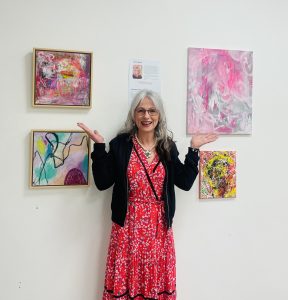
Colour, texture and bold mark-making become a way of trusting the unknown, giving shape to instinct while carrying connection outward through each new layer.
Iseult McCormack speaks about painting with the openness of someone who knows that art is not only about the finished work. It is also about permission, confidence, space, community and the moment when a person begins to trust the mark they are making.
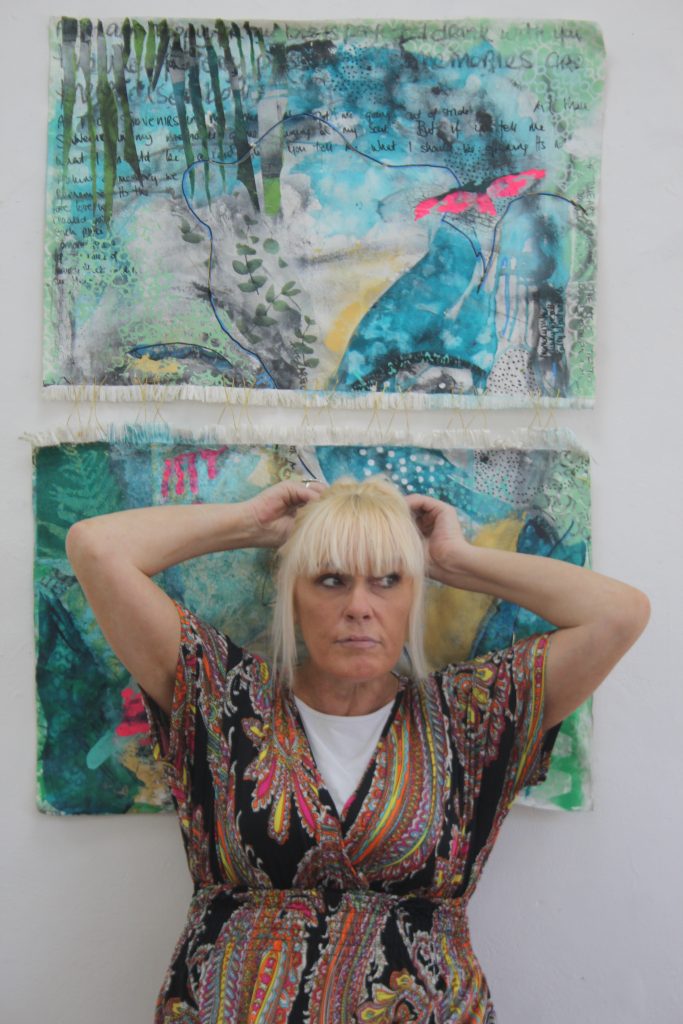
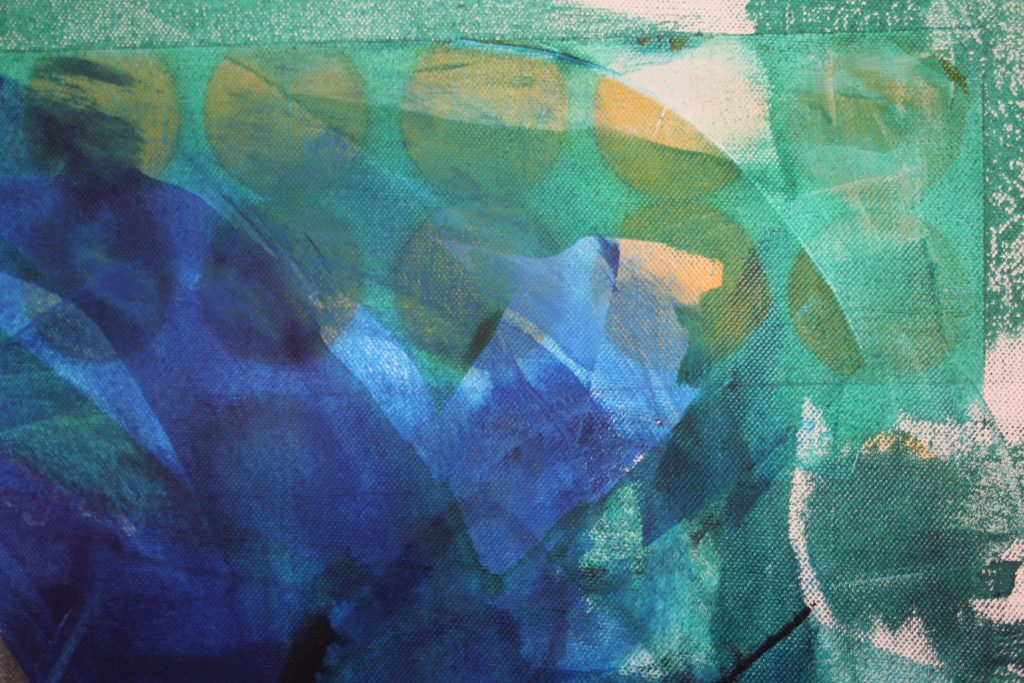
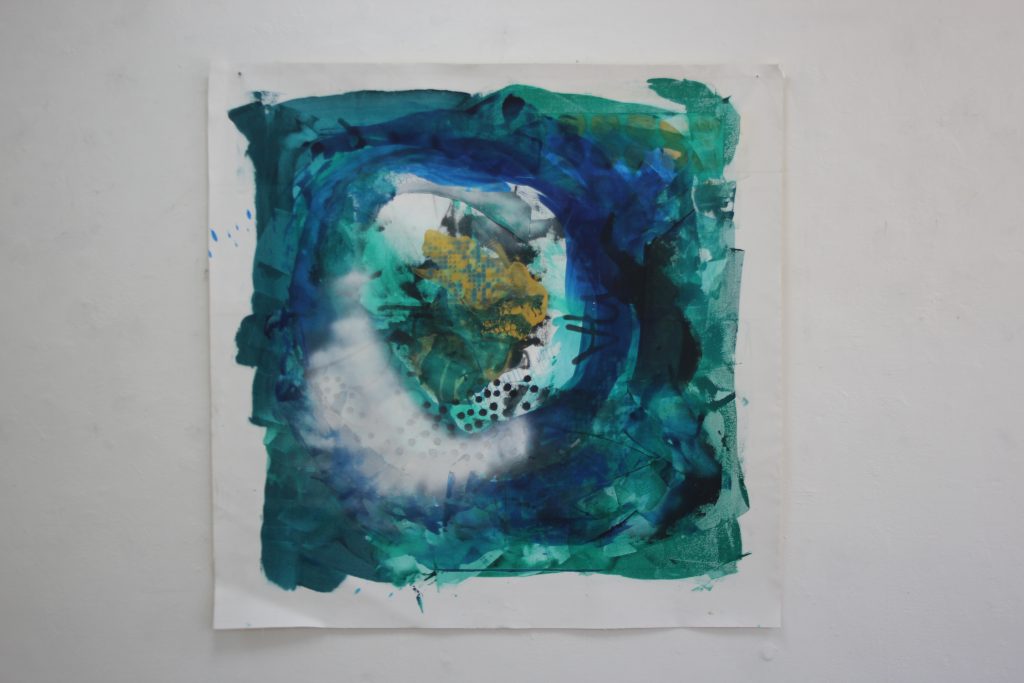
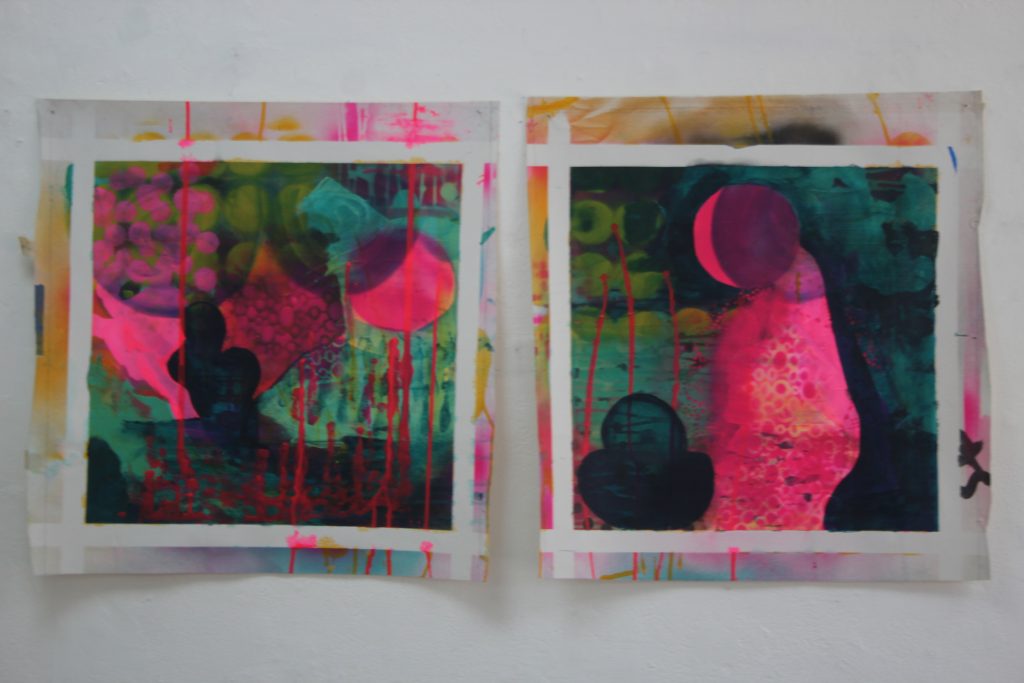
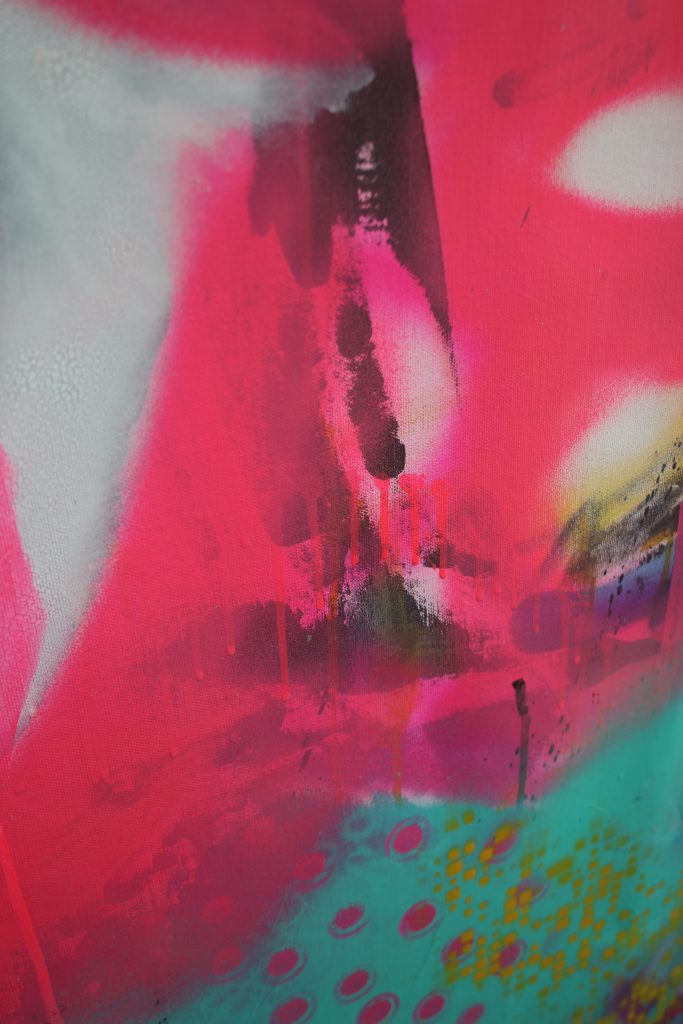
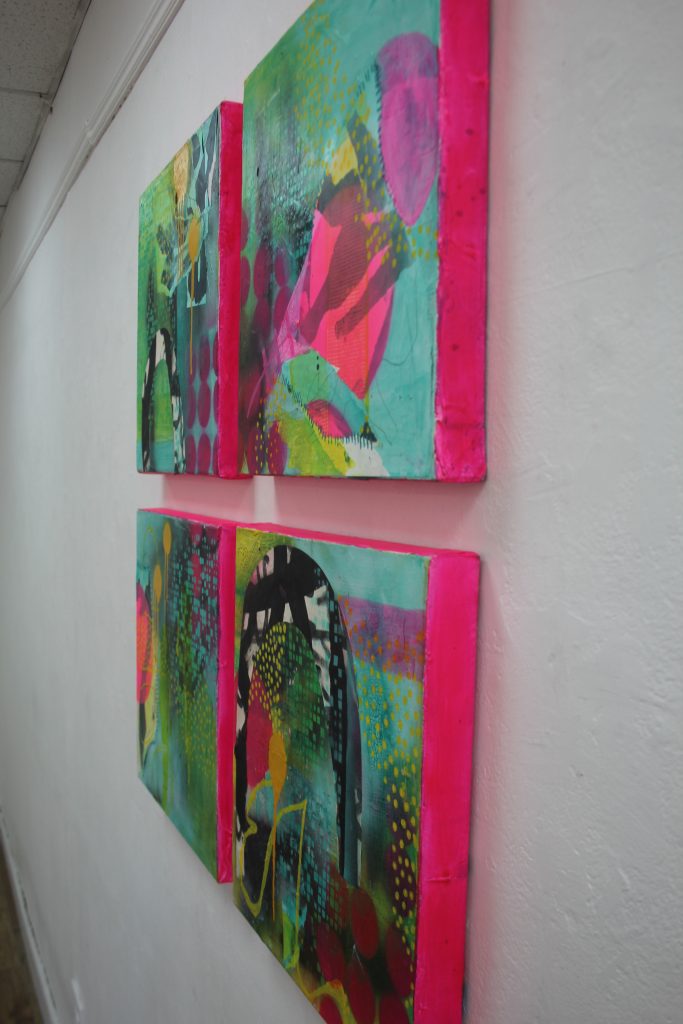
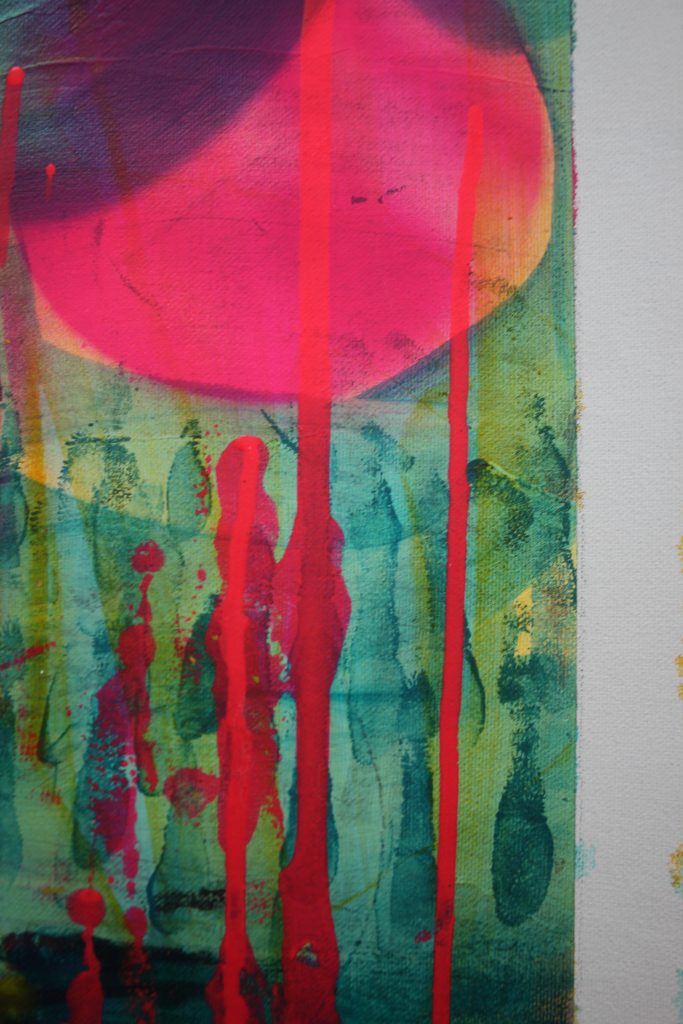
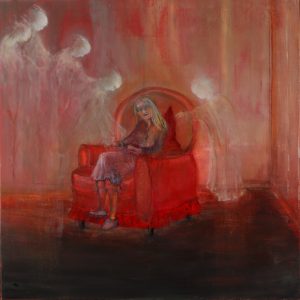
Her practice moves through vivid colour, texture, acrylic, collage, spray paint, charcoal and instinctive abstraction. It is work shaped by feeling, but not trapped inside it. McCormack’s paintings carry the energy of someone who has learned to begin without needing to know exactly where the painting will end.
“I never know what I’m going to paint,” she says. “I literally never know. I just start.”
There is boldness in her work, but also trust. In one video shared on her social media, McCormack makes a series of bold black marks before confidently covering and answering them with white. It feels like a small but revealing glimpse into her process: the willingness to make a strong decision, then keep working through it rather than retreating from it. Her paintings are not built from a fixed diagram or overplanned idea. They arrive through process, material, and colour – through the ability to keep responding until something begins to hold its own atmosphere.
For McCormack, abstraction is not an escape from the world. It is a way of listening to it differently.
Finding Her Own Visual Voice
McCormack had studied art before, but her return to painting in recent years came with a clearer sense of what she needed from the work. She remembers a time when she felt herself painting to please other people, rather than following the instinct that now drives her practice.
“When I got back into my painting a few years ago,” she says, “I was just following my soul. I’m just going to tap into what I need to convey, whatever that is.”
That shift changed everything. It moved the work away from approval and closer to something more personal, more intuitive and more alive.
McCormack recalls a former tutor who, at the time, had not responded warmly to the work she was making. Years later, after McCormack had returned to painting on her own terms, that same tutor bought one of her paintings at her first solo show.
“I think she just didn’t like that I wasn’t being myself,” McCormack reflects.
It is a small story, but it says a great deal about the shape of her practice. Her confidence has not come from neat certainty. It has come from learning to trust her own eye, to risk the mark, to stop hesitating, and to understand that a painting can keep changing until it finds itself.
“I think I’m more confident in my mark making,” she says. “I don’t hesitate as much anymore.”
The Freedom of Not Knowing
McCormack’s process is rooted in movement and discovery. Her palette is bright, her surfaces layered, and her approach open enough to let accident and instinct play their part. She is drawn to vividness – to marks and textures that hold emotion without needing to explain it too directly.
“I just go for it,” she says.
That does not mean the work is careless. Quite the opposite. There is a discipline in allowing a painting to evolve without forcing it too early into shape. The canvas becomes a place where the subconscious can speak before language catches up.
“Doing it in layers,” she says, “if I don’t like something, I can paint over it.”
There is also a practical confidence in the way McCormack now works. If something does not sit right, it can be layered over. If a mark feels too strong, it can be answered by another. Her paintings build through that conversation between control and surrender.
Teaching as Connection
Alongside her studio practice, McCormack teaches abstract painting and mixed media. She speaks about teaching with real affection, describing it not simply as instruction, but as helping people find their own “visual voice.”
“I try to facilitate them finding their own forms,” she says. “I show them different ways of doing things… for them to then take what they like.”
In class, she introduces people to different materials and ways of working: texture, collage, paint, spray paint, stencils, mark making and methods for loosening up.
The aim is not to make students paint like her. It is to help them move past fear, habit or self-consciousness and begin to recognise what belongs to them.
She remembers one class where a woman tried spray paint and stencils for the first time. The discovery opened something up, and the work changed in front of her.
“She created this amazing piece,” McCormack says, “because she’d never tried that before.”
For McCormack, those moments matter. They show what can happen when people are given space to experiment without immediately judging themselves.
Permission to Begin
Many of the people who come to McCormack’s classes are not absolute beginners. Some already paint, but want to loosen their work, become braver, or reconnect with the pleasure of making. Others arrive carrying old doubts or experiences from school where creativity was narrowed rather than encouraged.
McCormack has seen how difficult simple permission can be. She remembers one workshop where a woman became emotional when given the freedom to do whatever she wanted.
“The idea of me allowing her to just do whatever she wanted was nearly too much for her,” she says.
That moment reveals something central to McCormack’s understanding of art. Creativity is not frivolous. It can touch parts of people that have been ignored for years.
“When you honour that part of your soul, that creativity part, it truly matters,” she says. “Whatever you do, whatever you make changes the energy because it didn’t exist before.”
This belief runs through both her teaching and her painting. Making something matters because it comes from somewhere real. It changes the space around it. It proves that a person has acted on their own imagination.
The Energy in the Room
McCormack is particularly interested in what happens when people make work together. In a class, everyone might begin with the same rules or the same materials, yet every result is different. That difference fascinates her.
It also feeds her own practice. Watching people find confidence reminds her that creativity is not a solitary possession. It is something that can be shared, encouraged and strengthened by the presence of others.
She speaks about the classroom as a place where another kind of energy forms.
“It’s co-creating,” she says.
That sense of co-creation has become a major part of how she understands art. It is not only the finished object that matters, but the conditions around it: the conversation, the confidence, the permission, the shared willingness to try.
Signal Arts Centre and a Space to Grow
McCormack’s connection with Signal Arts Centre in Bray has been an important part of her development. During Covid, when restaurant work stopped and much of ordinary life was suspended, she found a route into a Community Employment scheme at Signal, a non-profit gallery where she became a staff artist.
What began as a practical opportunity became something much more meaningful.
“Signal was amazing,” she says.
Creating work, becoming involved in community projects, taking part in events and developing the confidence to see her own practice more seriously. It gave her space, structure and a creative environment at a time when all of those things mattered deeply.
“It definitely changed my life,” she says.
That time at Signal also led her back into learning. Through a part-time course, McCormack found another layer of confidence in both her writing and her work. It gave her the experience of being proud of what she was doing, not in a fleeting way, but as something she could stand behind.
“It gave me a real sense of pride in what I was doing.” she says.
Working Around the Realities
McCormack does not romanticise the practical realities of being an artist. She works around them. There are bills to pay. There is restaurant work. There are classes, applications, rejection letters and the constant question of how to fund the next stage.
“I just work around it,” she says. “I have to pay bills.”
That honesty gives the work another kind of strength. McCormack is clear about how much class, money and space shape artistic opportunity. Having a studio, being able to buy materials, affording a stand at an art fair, or simply having room to make larger work can change what an artist is able to attempt.
Recently, she received funding support from Wicklow, and describes the unusual joy of being able to order the materials she needed.
“For the first time ever, I was able to go online and order whatever I wanted,” she says.
It is a simple sentence, but it carries the weight of an unequal arts landscape. For many artists, materials are not incidental. They are the difference between an idea staying small and a work being allowed to become what it wants to be.
Space, Scale and the Tyrone Guthrie Centre
McCormack’s recent residency at the Tyrone Guthrie Centre gave her something transformative: time, quiet, food, space and the chance to work without constantly answering to the rest of the world.
“It was like magic,” she says.
At home, her studio is smaller, and that physical limitation has shaped the scale of her work. She often found herself working around manageable sizes, particularly the 40 by 40cm square.
At Tyrone Guthrie, she entered a much larger studio and suddenly had to rethink what was possible.
“I rolled out a canvas and it looked like a little Lego mat in the back of the room,” she laughs.
At first, habit took over. She began measuring out the smaller sizes she was used to, before realising she did not have to. The room itself gave her permission to expand. She began making larger paintings, with new work developing towards an upcoming exhibition in September.
The experience helped her refocus.
“I feel really energised again,” she says.
Art, Responsibility and the Wider World
McCormack is deeply aware of the world beyond the studio. She speaks about the difficulty of making art at a time when suffering, violence and injustice appear constantly across our screens. The endless flow of images can make art feel fragile, even impossible.
“I do find it hard sometimes to feel like society needs artists,” she says. “But the world really does need us.”
That line holds one of the central tensions of being an artist now. What can painting do when the world feels so unstable? What is the place of colour, abstraction or creative play in a time of crisis?
McCormack’s answer is not grandiose. She does not pretend that art solves everything. Instead, she returns to what is possible: the local, the human, the communal, the ripple effect of showing up and making something with care.
“You have to get back to what you can do,” she says. “What you can do in your community, what you can do with that ripple that goes out.”
In that sense, her work is not removed from the world. It is one of the ways she stays in relationship with it.
The Value of Making Something
There is a generosity in how McCormack speaks about other artists. She is alert to the ways artists support one another, encourage one another and celebrate opportunities even when resources are scarce. During her residency, she noticed the warmth of artists who could be genuinely delighted for a friend’s success, even when they were hoping for the same thing themselves.
That spirit matters to her. It pushes against the competitiveness and scarcity that can take hold in creative life.
For McCormack, art is connection. It is the class where someone discovers a new material and surprises themselves. It is the gallery that gives an artist room to grow. It is the residency where scale becomes possible. It is the inherited ruler from her architect father, still used in her own practice, carrying one maker’s hand into another’s work.
It is also the simple fact of bringing something into the world that was not there before.
Following the Work Forward
As McCormack prepares new work for September, there is a sense of movement in her practice. Not a final arrival, but a deepening trust. Her mark making is more confident. Her scale is opening. Her relationship with teaching, community and painting continues to feed back into itself.
“I’ve definitely settled into knowing that it’s going to be okay,” she says.
That may be one of the most honest things an artist can learn. Not that every mark will work. Not that every opportunity will come through. Not that money, space or rejection will suddenly stop mattering. But that the work can continue. That a painting can be layered. That confidence can be built. That colour can return.
For Iseult McCormack, abstraction is not simply a style. It is a way of making room for instinct, connection and courage. It is a practice built through vivid colour, shared energy and the brave, ordinary act of beginning without knowing exactly where the painting will go.
Keep up with Iseult via social media: @iseultmccormackcreations
Support Go Leor. Get the Print. Join the Story.
Go Leor is an independent Irish arts magazine built by hand, heart, and community. Your support keeps meaningful storytelling alive – in print, in culture, and in conversation.
Through Patreon, you can support the magazine in two simple ways:
- Supporter Listing
Have your name printed inside every issue as part of the community helping Go Leor grow. - Print Copy – UK & Ireland
Receive the latest print issue delivered each month across the UK and Ireland, with your name included inside the magazine.
The Latest Articles

Charlie: A 16-Year-Old Guest Writer on the Harms of AI
Submitted to Go Leor by his mother, this essay by sixteen-year-old student Charlie considers the environmental, social and personal harms of generative AI.

Francois Got Buffed on Beautiful Street Art, Colour & Place
Street art becomes a way of reading the city differently, where bold colour, sharp humour and careful placement turn ordinary walls into public acts of attention.

Elisabeth Neveux: Defending the Wonderful Art of Linocut
Through linocut, folklore and a traditional process, Elisabeth Neveux defends the human journey of making, where every mistake, mark and story carries its own weight.

Hearthfire Tales: Amazing Fantasy, Friendship and Finding Your Tribe
Around the table and out in the field, Hearthfire opens fantasy into something deeply human, helping people find confidence, community and a place to belong.

Ciara Darcy on Beading, Powerful Fashion and Feminist History
In beads, fabric and carefully held detail, Ciara Darcy turns fashion into a record of labour, memory and feminist history, where small objects carry serious weight.

Chiara Mattozzi: The Magic Still Held in Old Stories
From queer readings of Arthurian legend to Welsh history and low fantasy, a practice shaped by scholarship, story, and the magic still held in old texts