René Mullin
PLACED
Through printmaking, rescued Irish linen and careful teaching, René Mullin builds a practice rooted in hand-process, access and the lasting value of cloth already in the world.
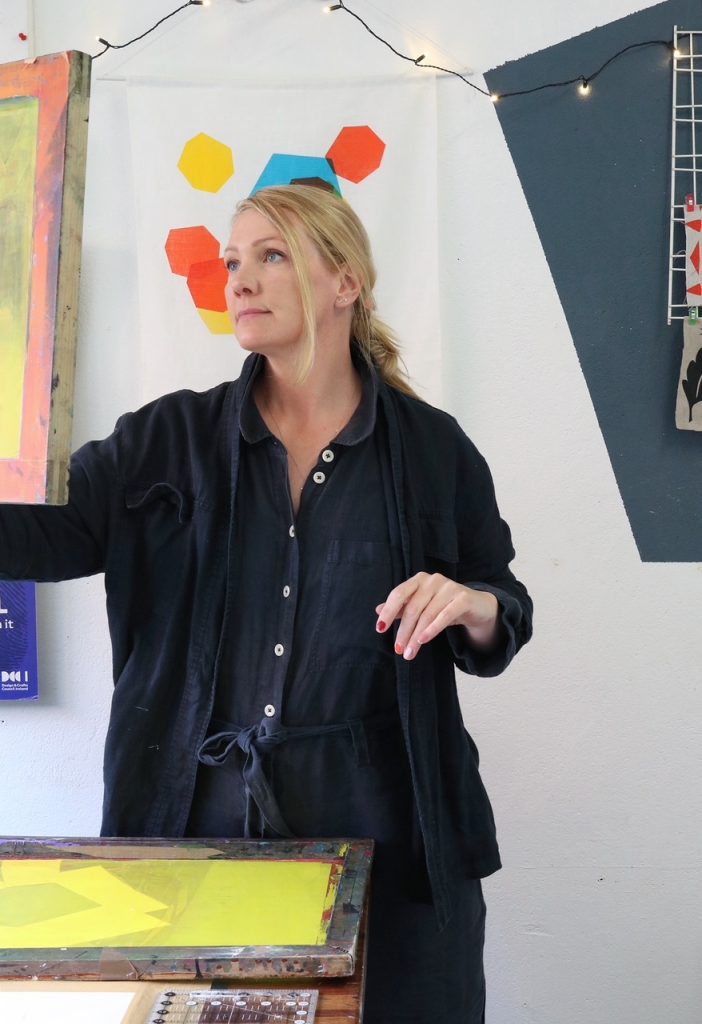
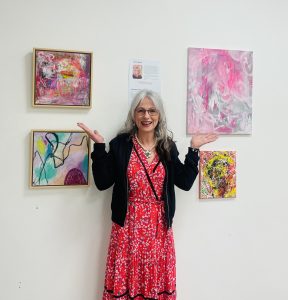
René Mullin works with print, Irish linen and the practical realities of making things by hand. Her work moves between screen print, textiles, homewares, teaching and rescued cloth, but it is held together by a clear position: there is enough material already in the world, and the act of making should not be reduced to production alone.
Her studio is in a barn in the countryside outside Strangford, Co. Down. It is not set up as a digital workspace. There is no Wi-Fi for her own work there. No phone-led admin. No constant screen. If she has to show work online, answer messages or deal with anything screen-based, she comes back inside.
“I don’t like doing anything that’s screen related out there,” she says. “It’s all analog stuff.”
That boundary is practical rather than romantic. Mullin uses a camera when she needs to document process or take product shots, but she has to remind herself to do it. The main activity in the barn is physical: cutting, printing, stitching, drying, sorting. Screens are for screen printing, not for scrolling.
From Prints to Products
Mullin began printmaking in Edinburgh in the late 1990s, taking part in summer schools and night classes before joining Belfast Print Workshop after returning to Ireland. In 2009, she set up her own studio, Placed. At first, much of her work was printed on paper. She made hand-pulled screen prints, built up stockists and, for a time, supplied shops across Ireland.
“I had about 29 stockists around Ireland,” she says.
That early period led to product work. Irish Design Shop commissioned Mullin and five other artists to design mugs in celebration of the Year of Craft. For Mullin, that project shifted something. Until then, her work had largely existed as prints. After that, it began moving toward objects people could use.
“That was kind of the start of me working on product-based things rather than prints,” she says.
She had already been interested in linen and textiles, but had not yet brought print and cloth together in the way she would later. The move into applied art allowed her to make homewares and functional pieces: craft that could sit in a kitchen, be handled, carried, used and worn into daily life.
But wholesaling at scale came with a cost. At its busiest, Mullin was producing for more than twenty shops. The work became less about making and more about keeping up.
“It became a logistics game,” she says. “The joy of making had gone when I was making at that level.”
She later opened her own shop, hoping to sell more directly, but that brought another lesson. A maker running a shop quickly becomes a retailer. The shop needs attention, customers, stock, display, ordering and admin. Making can be pushed to the edge.
“You basically are a retailer,” she says. “You have no time to make.”
Since closing the shop in 2018, Mullin has returned to wholesale more carefully. Now she works with a small number of shops, only occasionally, while also making direct commissions and selling through her own studio. The scale is deliberate. The work has to remain possible.
Print and Linen
Printmaking remains the centre of Mullin’s work.
“Printmaking is my first love,” she says, “and Irish linen goes alongside with that.”
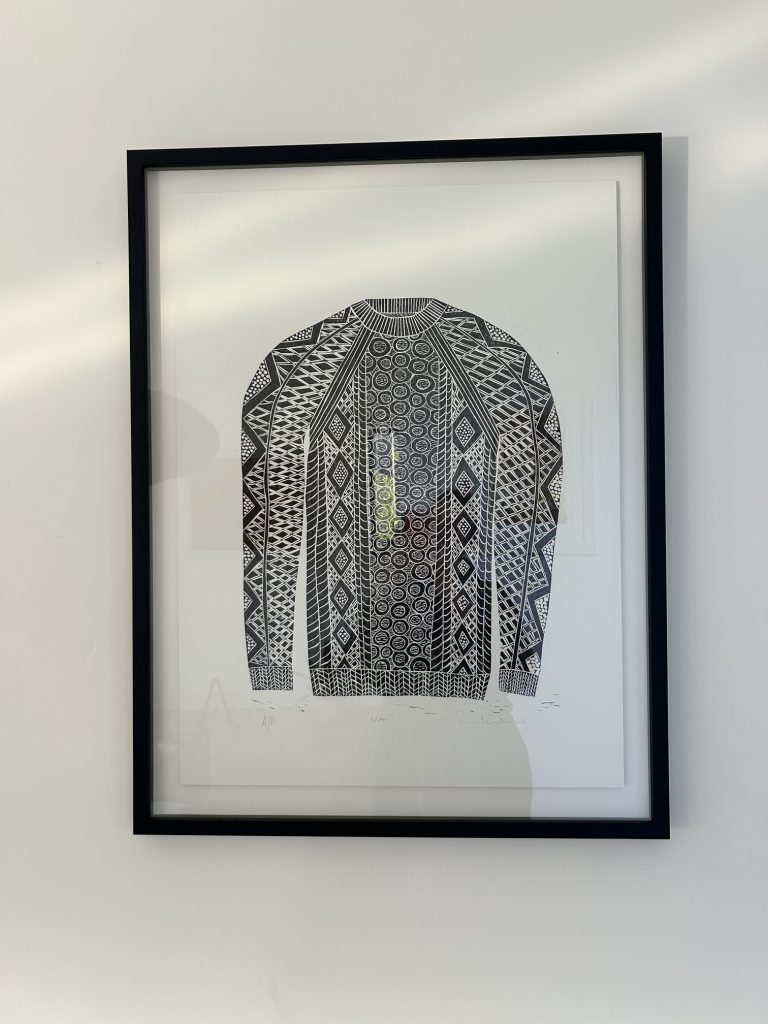
Those two elements give her a working language. She prints on paper and on cloth, using screen print, lino print and block print. Over time, she has become more particular about which process belongs where.
Lino printing still matters to her, especially on paper. She enjoys the carving, the surface, the pressure of the block. But when the image moves onto textile, she prefers screen printing. It gives her the finish she wants: cleaner, smoother, more controlled.
“I always like the outcome of a screen print on textile more than block print,” she says.
That preference has taken years to understand. The irregularity of block printing on fabric is exactly what many people love: the small shifts, gaps and unevenness that show the hand. Mullin understands that appeal, and teaches the technique often, but in her own textile work she finds herself drawn to a smoother, more even finish.
“I prefer a very smooth finish,” she says, “and I find I get a better result with screens.”
There is a useful honesty in that. Mullin is not choosing a process because it sounds traditional or because it photographs well. She is choosing by looking at the finished cloth and deciding what works for the particular outcome she wants. Printmaking, for her, is not a single fixed identity. It is a set of methods, each with its own strengths, textures and possibilities.
Teaching What People Can Do
Teaching is a major part of Mullin’s week. She brings printmaking into schools, art centres, her own studio and other venues, working with a wide range of people across different settings.
In those settings, print becomes a way of testing assumptions. People may arrive believing they cannot draw, carve, press or make a finished piece. Others around them may assume the same. Mullin is interested in what happens when the tools are placed in front of them anyway.
“A lot of the people that I work with, on first impression, you may expect that they aren’t going to be able to control a carving tool or reach and press enough pressure to pull a screen,” she says. “I really like to help them to prove us all wrong.”
Printmaking has a useful starting point. Many people remember potato printing at school, or using small stamp kits. There is often some memory of ink, pressure and the reveal of an image. That memory helps people enter the process without feeling shut out by it.
“Everyone has some kind of a reference to it,” Mullin says.
She has seen how quickly people respond once the process begins. Ink is applied to a surface. Pressure is used. A print appears. The method is clear enough to grasp, but still carries surprise.
“It lights them up,” she says.
One recent participant in a six-week community art project in Strangford stayed with her. The girl was a wheelchair user and had the use of one hand. She carved, inked and printed her own piece.
“She produced the most exquisite print,” Mullin says. “The precision and care in it were really beautiful.”
The impact of that moment went beyond the work itself. It affected the whole room. In a regular community class, held in a local hall, people saw someone with visible physical limits produce something careful, confident and strong. Assumptions shifted. The issue was no longer who looked most able, but what becomes possible when someone is given enough time, tools and trust.
Art in the Hospital
In hospital settings, Mullin is aware that the art class sits inside a much larger emotional reality. In a spinal ward, people may be adjusting to a life that has changed suddenly. Progress can mean sitting upright, taking a step, moving a hand or rediscovering a movement that had disappeared.
“The whole experience is emotionally charged,” she says, “because these people’s lives have completely changed in an instant.”
In that context, making a print is not separate from the physical work of recovery. It can support motor skills, hand movement, pressure, coordination and confidence. It can sit beside physiotherapy and other forms of therapy, not as a replacement, but as another route into the body.
A person might learn how to hold a tool. They might pull a squeegee. They might remember how to close a hand. The artwork becomes one part of a larger set of achievements.
“Engaging in art and making art ties the whole thing together for people often,” Mullin says.
She speaks about this work without overstating it. The art class does not solve everything. But it offers people a task, a result and a reason to try something difficult. It gives effort a visible outcome.
Village Charms
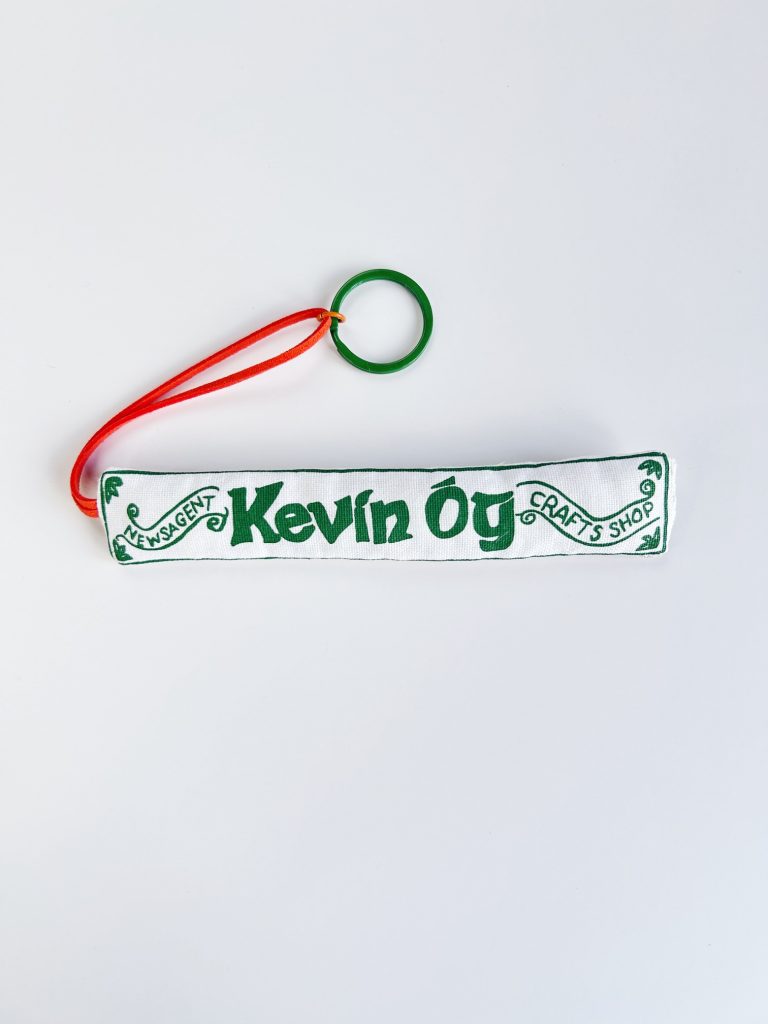
Mullin’s current orders show how she now works: smaller batches, limited cloth, selected shops and less waste. One series began with Kevin Og’s, the local craft shop in Strangford. After moving to the area, Mullin asked whether the shop wanted something connected to the village.
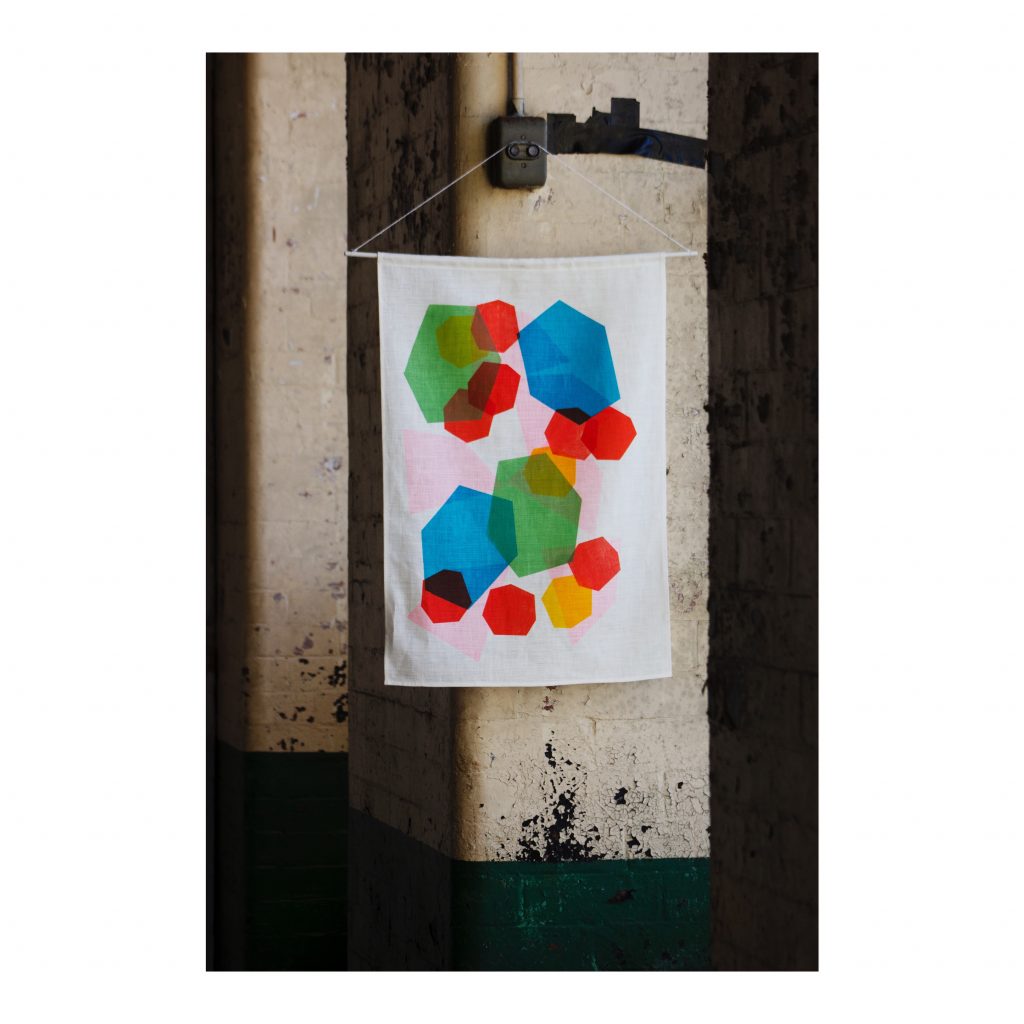
Together, they developed tea towels using small Strangford images that she calls “Village Charms”.
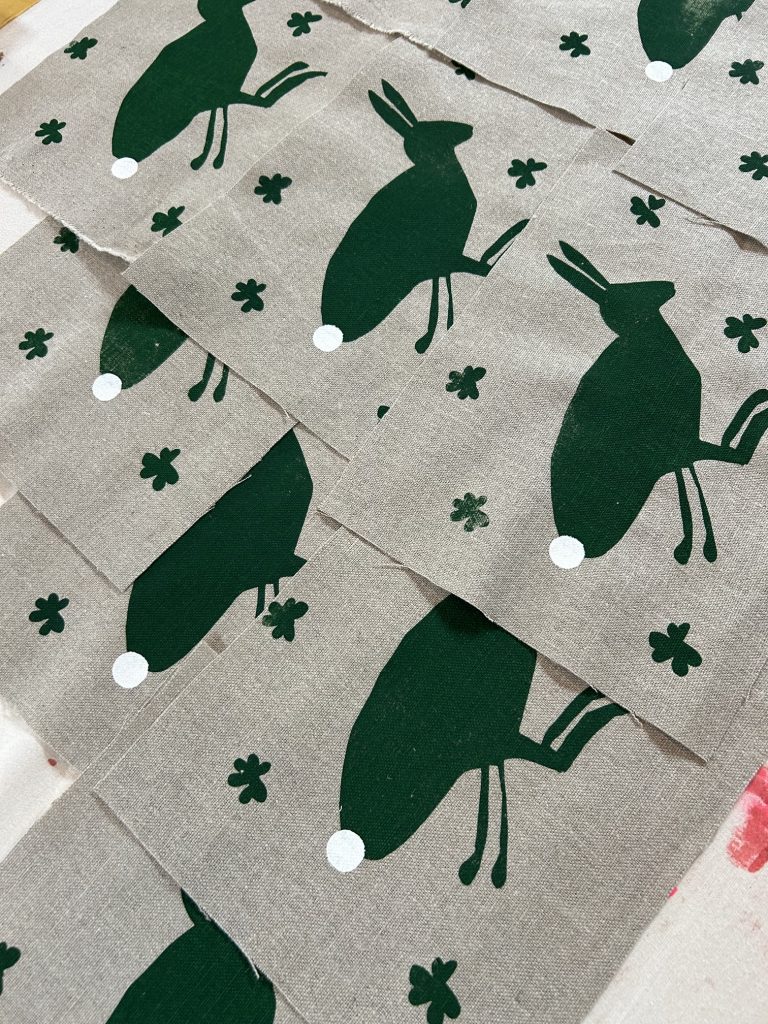
The work led to a problem familiar to anyone who prints by hand. Some tea towels came out imperfect. There were thumbprints, uneven areas of ink, sections that could not be sold as tea towels. Mullin began cutting them up and making other things: pencil cases, smaller pieces, and eventually keychain charms.
The charms caught attention online. Irish Design Shop asked to stock them.
“I just posted online one day while I was making these and then the Irish Design Shop were like, we have to have those in store,” she says.
What began as a way to use damaged or imperfect cloth has become its own line. It is a good example of how Mullin works now. A mistake is not automatically waste. A misprint can become another object. A tea towel can become a charm. The material keeps moving.
The Linen Already Exists
Mullin now works with a lot of rescued linen. Some comes from people clearing out houses. Some is found in roof spaces. Some comes from factory closures or end-of-line runs from mills. She does not usually have huge quantities. Often, there are only small amounts of a particular cloth.
Rather than designing large repeatable ranges, she works with what is there.
“I have very small amounts,” she says. “So then I can make marks on those smaller pieces, and I use them to then turn into homewares.”
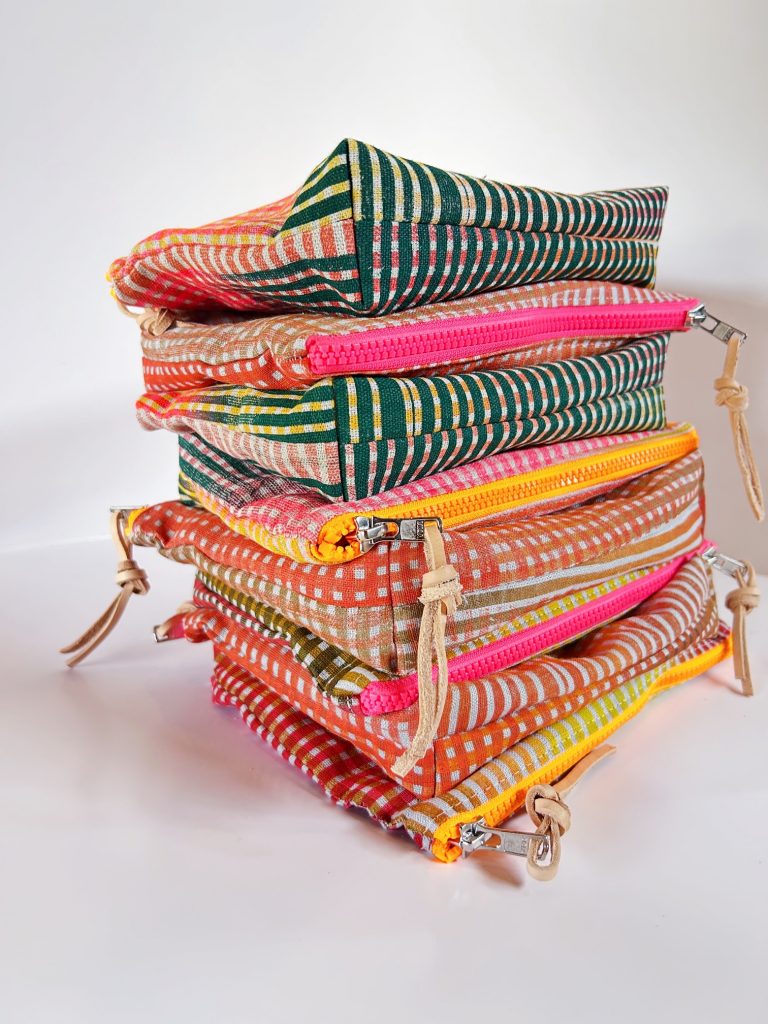
This means pieces are naturally limited. A set of zipped bags might be made in three colours from a piece of linen that will not exist again in the same way. Once the cloth is gone, that version of the work is finished.
“Once they are done, they’re done,” she says.
Some linen arrives marked by storage. A fold may have been exposed to light. Edges may be discoloured. Mullin might dye it with natural dyes, wash it, hang it outside and see whether the sun evens out the staining. The work begins before the print is added. The cloth has to be read first.
Her aim is to buy as little newly woven cloth as possible.
“There’s so much old linen in people’s cupboards and dressers,” she says. “It’s all still in its original packaging.”
For Mullin, that is both beautiful and frustrating. Good cloth was often kept for best until it was never used at all. She wants to pull it back into use: print on it, cut it, stitch it, make it part of a working object.
Her position is direct.
“The world does not need more cloth,” she says.
Family Links
Mullin began using linen around 2002 or 2003, before she fully understood her own family connection to it. At the time, she was studying business in Edinburgh. Her then-boyfriend, now husband, was at art school. When she first stepped into the art school, she felt immediately that she should have been there.
“I didn’t know art schools existed,” she says. “I thought, My God, I should have been here.”
She did not have a portfolio or A-level art, so she stayed on her course and took every creative class she could: summer schools, evening classes, ceramics, printmaking, paperwork and textiles. She stayed in Scotland during holidays and spent her spare time learning practical skills.
Around the same time, she was frustrated by the lack of affordable Irish-made homewares available when she came home or visited Dublin. Irish craft seemed split between expensive pieces and tourist souvenirs. There was little for a young person with limited money who wanted something made in Ireland and useful at home.
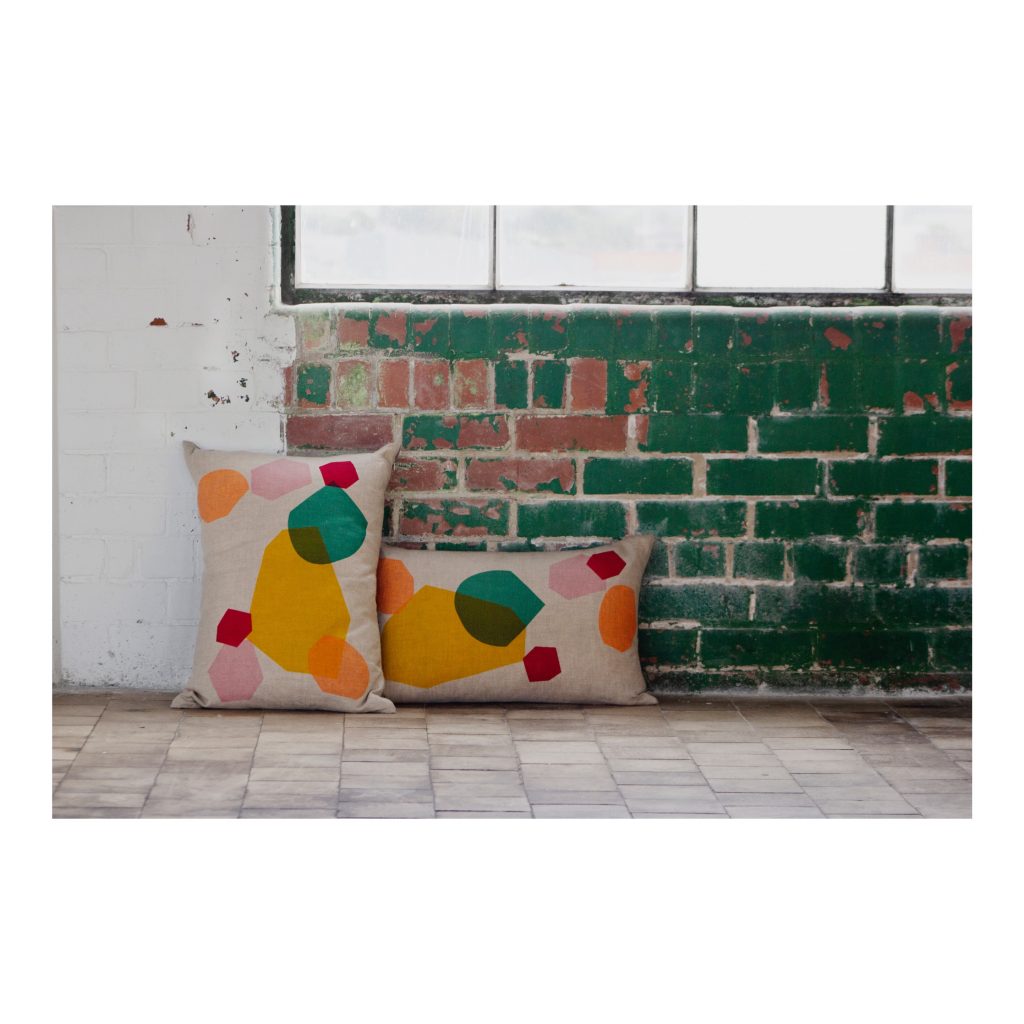
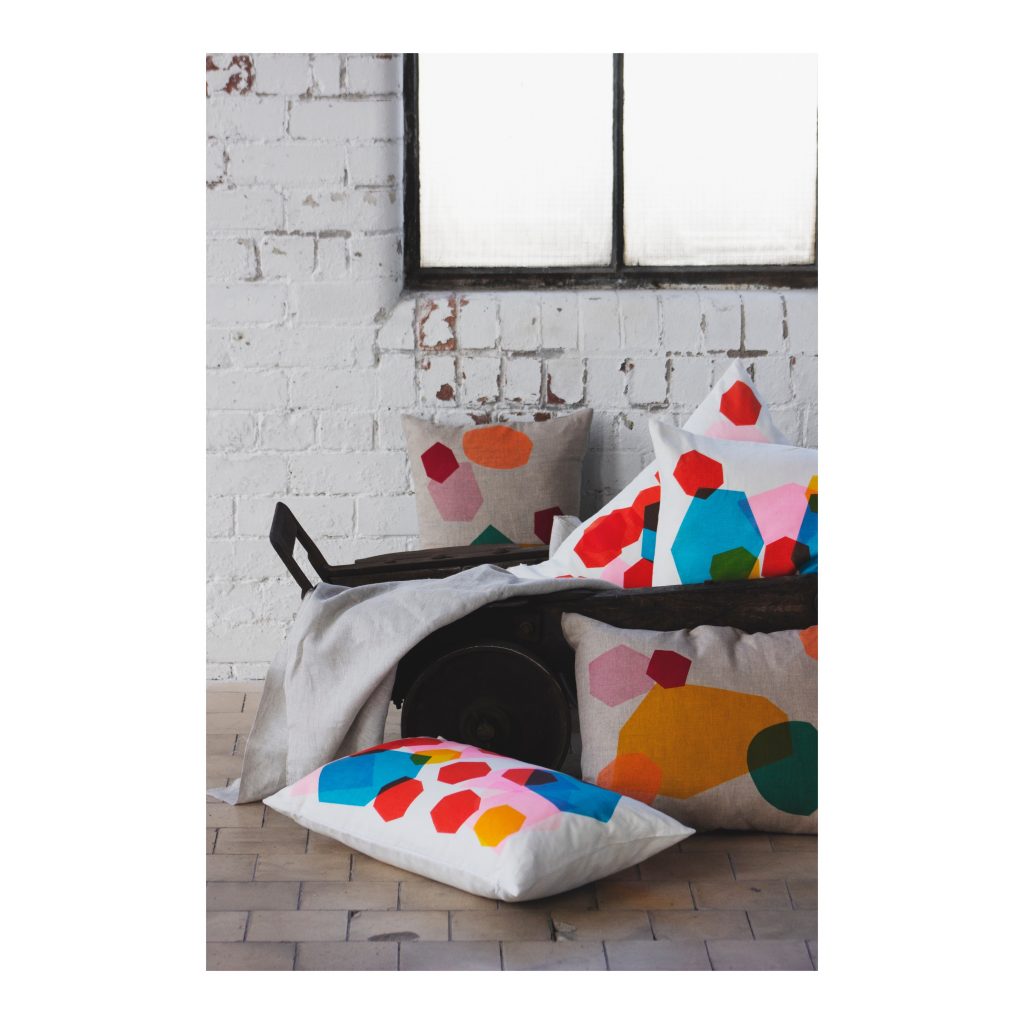
So she started making what she wished she could buy. She embroidered pieces of linen and made cushions. She tried things she no longer does now, but those experiments began her relationship with the material.
Only later did her mother tell her that her grandfather had grown flax. He had a field of it once a year, alongside other work as a blacksmith, taxi driver and whatever else needed doing. Mullin also learned that her father’s mother had worked in a Belfast mill before marriage.
Mullin had grown up without knowing the link.
Since returning to Ireland and becoming more involved with linen, she has found that this is common. Many people in the north have some family connection to the linen industry if they look back far enough.
“There is a familial link with everyone, to be honest,” she says. “If you dig.”
The Route She Took
Mullin once regretted not going to art school. She felt she had missed the validation and the freedom of that environment. Over time, her view changed.
She still sees what she missed: the chance to make without worrying whether work will sell. She describes it as the “blind abandon” that art school can offer. But she also sees the value of the route she took instead.
Her business degree and later master’s in arts management helped her understand self-employment, governance, cultural policy and the structures around creative work. She has served as chair of Belfast Print Workshop and as a director of Craft NI. That experience gave her tools she continues to use.
“I used to regret having that instead of having the innocence of creation,” she says. “But actually now I realise that it’s a real asset to know how to navigate being a self-employed person in the arts.”
Since 2018, she has also taught a course called The Business of Being an Artist. Many of those who take it are recent graduates trying to work out how to survive after art school. At first, Mullin wondered whether business training should be built into art school itself. Then she reconsidered.
“The purpose of going to the art school is to not concern yourself at all with what’s going to happen to the work,” she says. “It’s just about how to make the work.”
That tension runs through her own career: making and selling, freedom and survival, cloth and commerce, the object and the order sheet. Mullin does not pretend those pressures disappear. She has learned to work around them without letting them take over.
What the Work Does
Mullin’s work is built from decisions rather than slogans. No Wi-Fi in the barn. Screen print for textiles. Lino for paper. Fewer wholesale orders. More rescued linen. Use the damaged cloth. Teach the person in front of you. Do not assume inability. Do not buy new material unless it is needed.
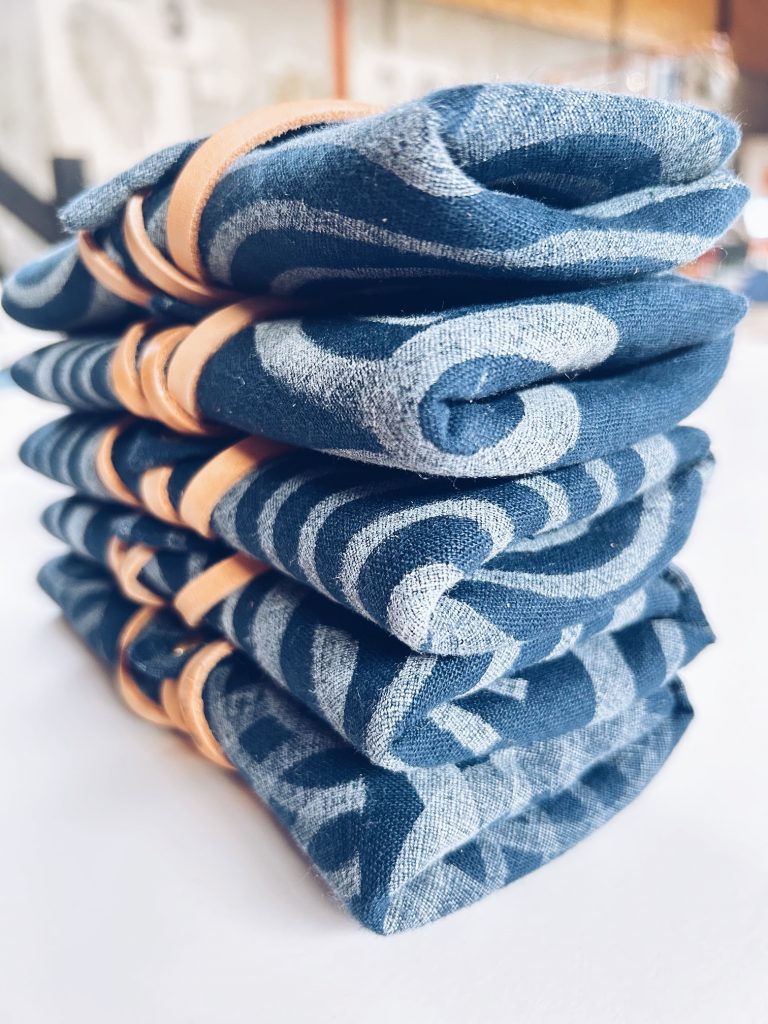
The result is a practice that is practical, clear-eyed and deeply connected to use. Her work does not treat linen as something too precious to touch. It becomes cushions, bags, charms, quilts, homewares, prints and class projects. It returns to the hand.
In Mullin’s work, cloth is not honoured by being kept in a cupboard. It is honoured by being cut, printed, stitched and used.
Explore printmaking, textile work, courses and workshops through René’s website, where you can also browse her online shop and see her latest pieces: placed.ie
And keep up with her via social media: @renemullin_
Support Go Leor. Get the Print. Join the Story.
Go Leor is an independent Irish arts magazine built by hand, heart, and community. Your support keeps meaningful storytelling alive – in print, in culture, and in conversation.
Through Patreon, you can support the magazine in two simple ways:
- Supporter Listing
Have your name printed inside every issue as part of the community helping Go Leor grow. - Print Copy – UK & Ireland
Receive the latest print issue delivered each month across the UK and Ireland, with your name included inside the magazine.
The Latest Articles

Seba Brhom: Art, Memory and the Beauty of Being Seen
A Syrian artist and teacher now living in Northern Ireland, Seba Brhom uses drawing, fabric, Arabic lettering and community workshops to share beauty, memory and gratitude.

KODJO: Migration, Belonging and the Art of Building Home
Through sculpture, fabric, dance and lived experience, KODJO explores migration, family, racism and the work of building belonging beyond temporary welcome.

Laura McKenzie Atkins: Wimmelbild Art, Hidden Stories and Fantasy Worlds
Intricate ink, hidden stories and strange little worlds come together in Laura McKenzie Atkins’ wimmelbild drawings.

Deirdre Murphy: Capitalism The Musical and Revolutionary Art
Music, movement and revolutionary imagination meet in work that turns political urgency into something physical, funny and impossible to ignore.

Aodh O’Cuana: A Living Memorial Built from Stone, Love and Oak
Through cairn-building, oak saplings and communal remembrance, Aodh O’Cuana asks how we might honour those we love beyond the formal space of a funeral.

Charlie: A 16-Year-Old Guest Writer on the Harms of AI
Submitted to Go Leor by his mother, this essay by sixteen-year-old student Charlie considers the environmental, social and personal harms of generative AI.