Becca Calmont
Silversmith
From reclaimed materials to instinct-led making, a jewellery practice built on process, variation, and the refusal to repeat
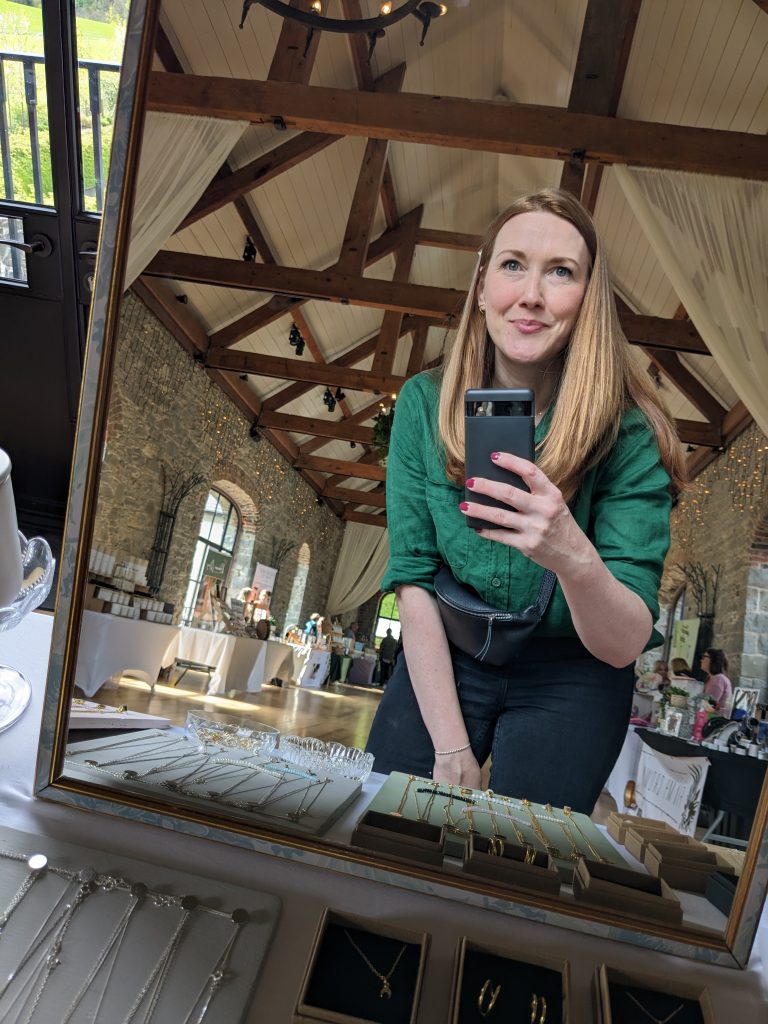
There’s a point in Becca Calmont’s process where control gives way to something else entirely. It happens not in silver, but long before – in wax.
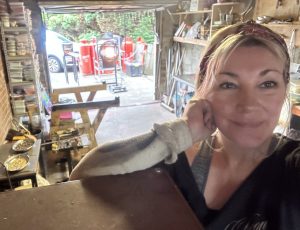
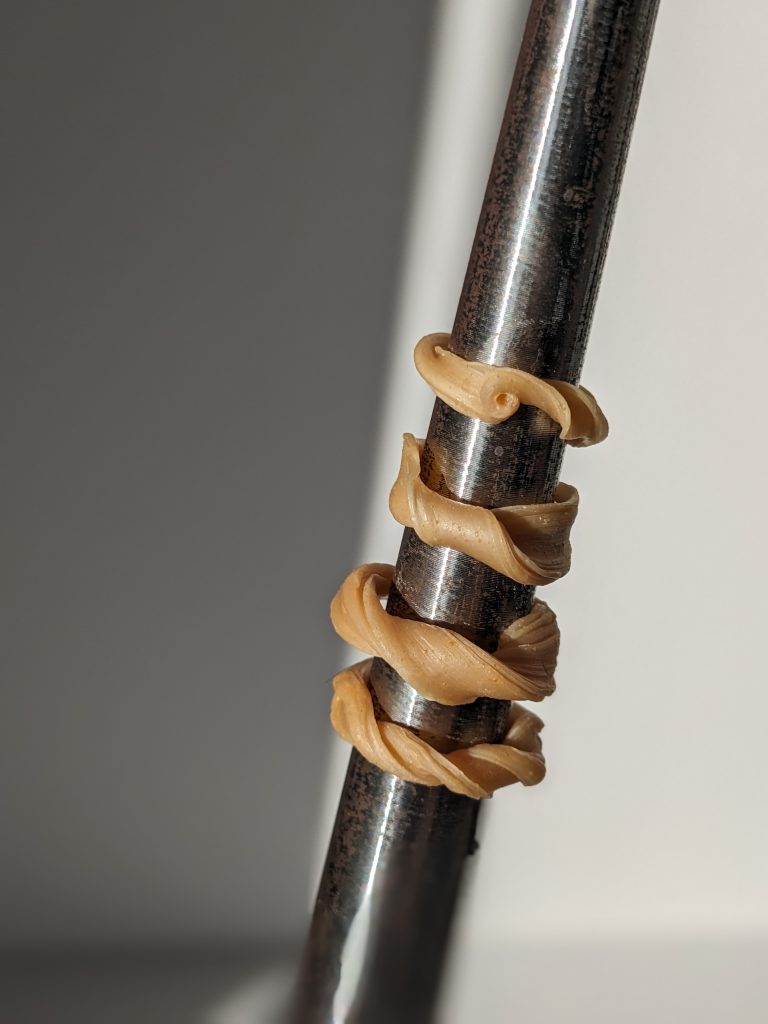
Working from her studio on the North Coast, Calmont creates her jewellery using the lost wax method. At times, she works with Mitsuro Hikime – a traditional Japanese wax technique that resists precision – while at others, she turns to classic jewellery waxes that allow for cleaner, more fluid forms.
The material stretches, pulls, and collapses in unpredictable ways, leaving behind textures that feel closer to something grown than something designed.
“Quite often, the wax guides me… I don’t feel like they’re designed – they sort of just happen.”
It’s a process built on responsiveness rather than control. Forms are shaped, reconsidered, and often destroyed entirely – returned to the wax pile if they fail to hold their weight. What remains is not the result of a fixed idea, but of something gradually arriving.
A material that leads the hand
Calmont describes her approach as “very naive” – not as a limitation, but as a way of working that stays open. Self-taught, she has built her practice around what the material allows rather than imposing rigid design structures onto it.
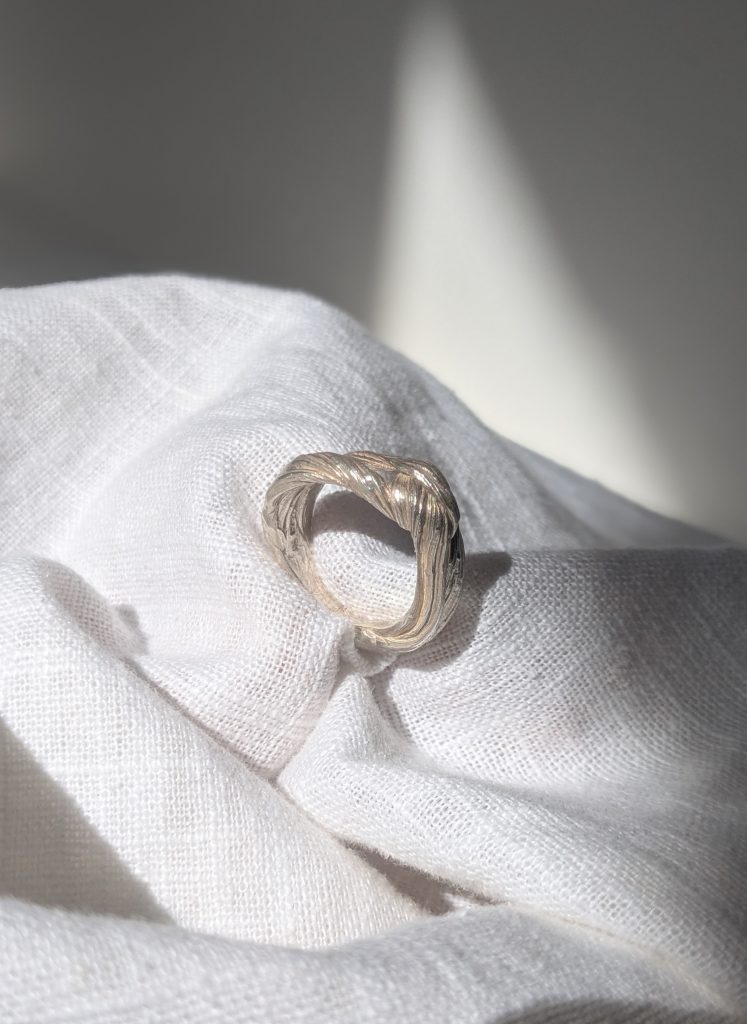
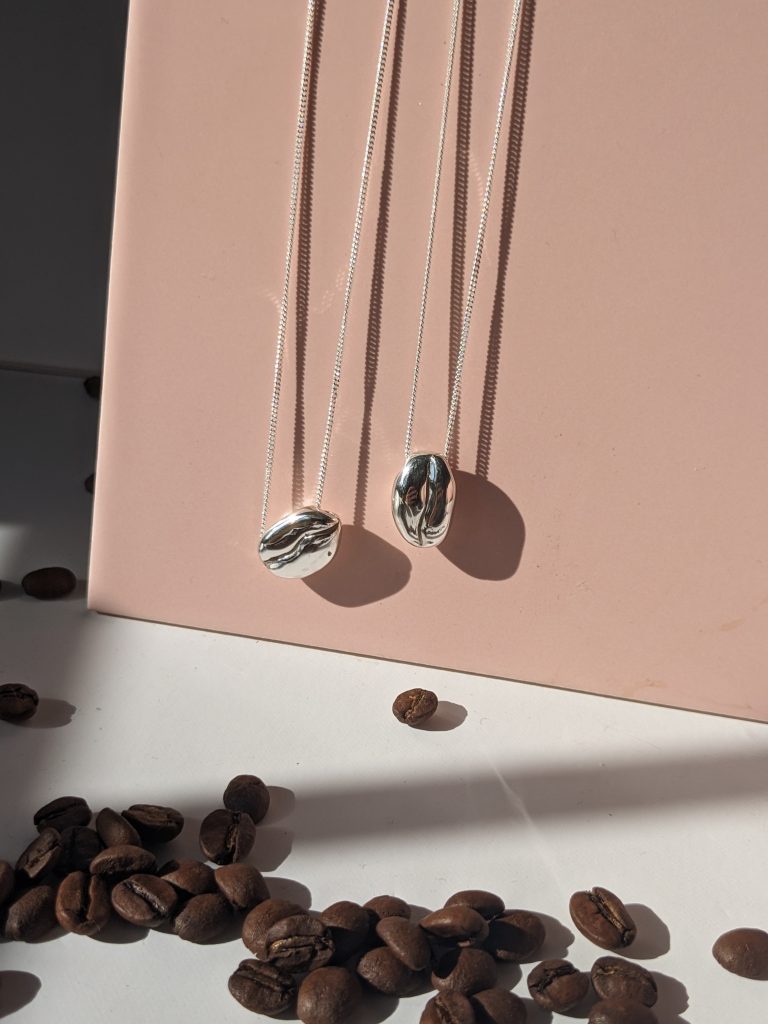
The wax itself dictates much of what follows. Temperature shifts its behaviour; slight changes in pressure create entirely new forms. Even imperfections – fingerprints, fragments of dust, or the stray cat hair – are carried through the casting process, embedded permanently in silver.
“Any mark or impression that was on the wax comes back in the silver.”
Once complete, these wax forms are sent to Scotland, where they are cast into recycled silver by a small independent family business with decades of expertise. The transformation is a pivotal moment – the softness of wax becoming something solid, tactile, and lasting.
From there, the work shifts into refinement. Filing, sanding, and polishing bring clarity to forms that began far more fluidly. It’s a slow process, but one that allows each piece to retain its origin.
Between industry and independence
Before turning fully to jewellery, Calmont spent over fifteen years in fashion buying – an experience that continues to inform both her creative outlook and her approach to making.
From her early role at Jaeger to time spent working in Hong Kong and with companies like Monsoon, then JoJo Maman Bébé she developed a broad understanding of how products are designed and brought to market.
It was during her later role under Laura Tenison MBE that her perspective began to shift more definitively. Working within a company grounded in ethical decision-making – from materials to manufacturing – brought a clearer sense of what mattered.
“That ignited it in me… that’s what’s important to me.”
Those experiences now sit at the foundation of her jewellery practice, shaping a more considered approach to materials, longevity, and scale.
She works exclusively with semi-precious metals – not only for their durability, but for their ability to be melted down and reused.
“Even if you don’t like it, it can be melted down and reused… it can be a family heirloom.”
This refusal to overproduce is deliberate. Even when pieces are cast in multiples, they are made in small batches – often no more than five at a time.
Influence without imitation
Calmont’s work draws from a wide range of influences, though rarely in direct ways. Instead, ideas surface gradually – filtered through memory, observation, and material.
Recent time spent in Sardinia has begun to shape her thinking, particularly through encounters with the sculptural work of Costantino Nivola. Smooth, organic marble forms – described by Calmont as “quite feminine shapes” – have sparked ideas for future pieces.
“How can I translate those into small, tiny pieces of jewellery?”
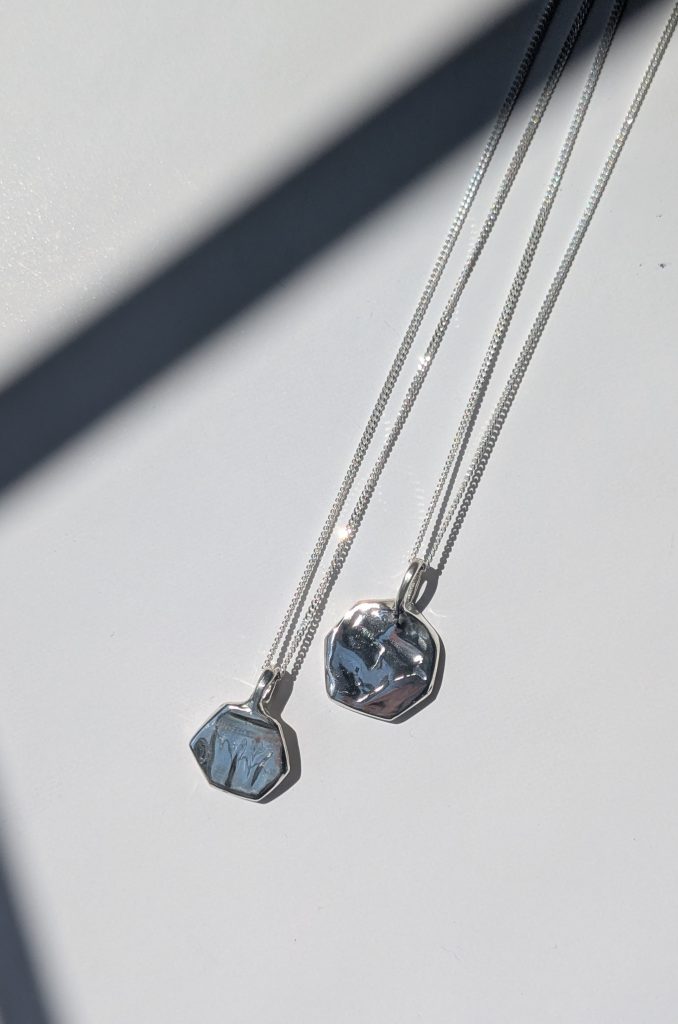
Elsewhere, influence comes from closer to home. A series inspired by the Giant’s Causeway began with a simple idea – a hexagonal form – but evolved through the behaviour of the wax itself, softening into more fluid, organic shapes.
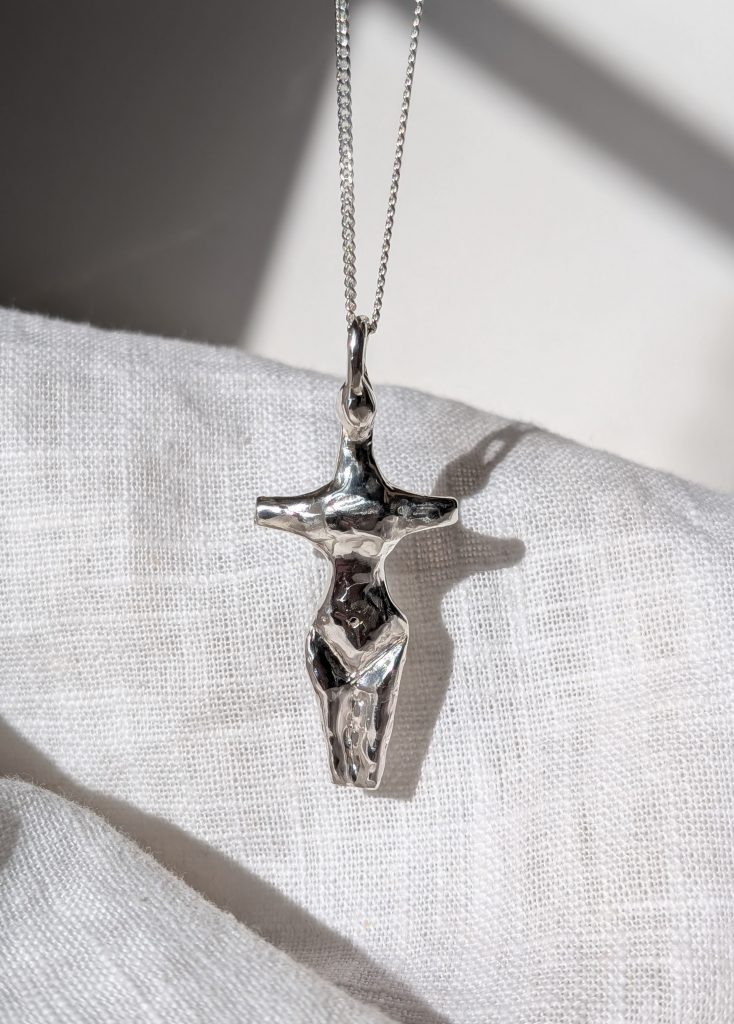
There are also moments of more direct inspiration. A “mother goddess” form, drawn from ancient imagery shared by a friend, became one of her most resonant pieces – later recognised by viewers as echoing figures from Malta, Cyprus, and beyond.
“Even though I said she’s a Romanian goddess… in hindsight, there’s versions all around the earth.”
A global sensibility, grounded in material
Time spent living in Hong Kong and travelling through India has also left a lasting impression. These experiences surface not through literal motifs, but through a broader understanding of material, colour, and value.
“From India – the semi-precious stones, the colours, the gold… at some point I’d love to bring that in.”
In many of these places, jewellery is not only worn but held – as investment, as inheritance, as something passed down. This idea of longevity feeds directly into her own work.
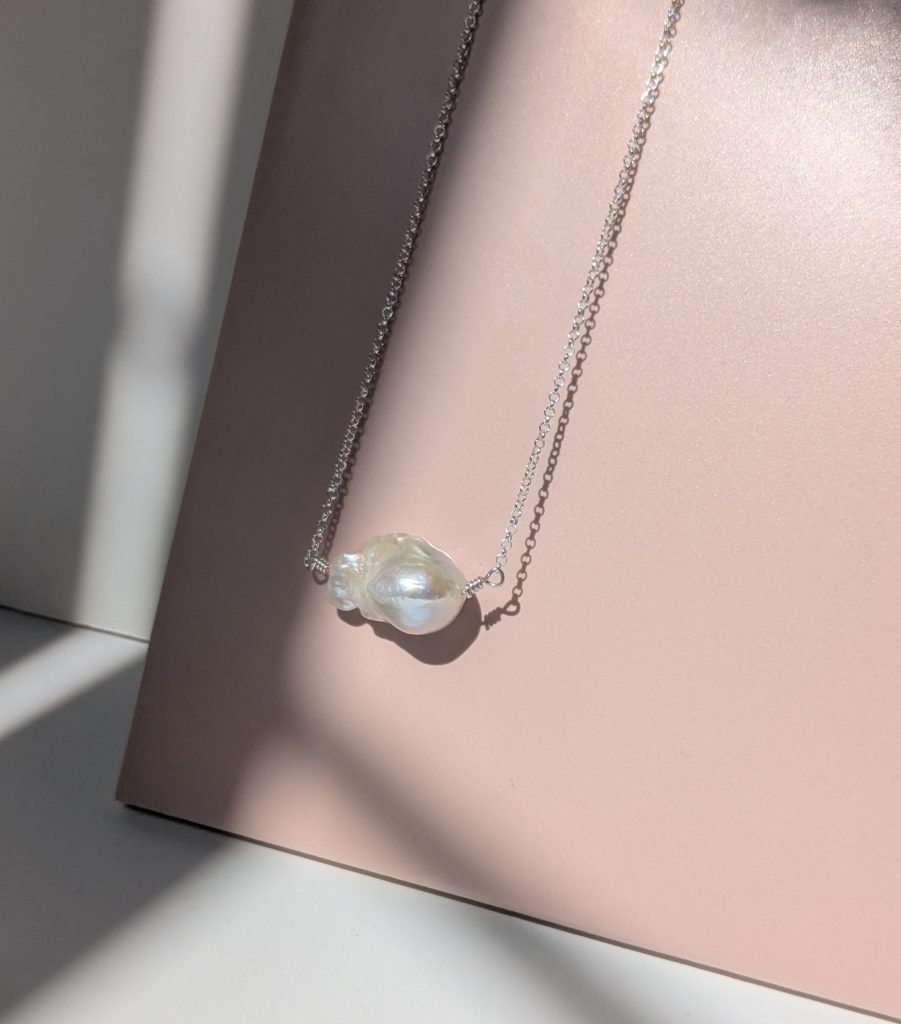
Even her use of pearls carries this sense of continuity. Many are reclaimed – sourced from broken jewellery or from connections in Hong Kong – bringing with them their own histories and irregularities.
A practice built in community
Despite the solitary nature of her studio work, Calmont’s practice is supported by a wider network of makers.
Regular meetups with local artists – jewellers, ceramicists, and printmakers – provide space for exchange, advice, and collaboration, with particular support coming from fellow female business owners such as Quirky but Fierce and SimplyNJewellery, both of whom remain consistently open to collaboration and have played an active role in supporting her work.
“We bounce ideas off each other… it’s really fab.”
One piece, one outcome
At the core of Calmont’s work is a refusal to repeat. Even when working within familiar forms – hearts, signet rings, or anatomical studies – each piece is shaped individually, never replicated exactly.
“This is the only one that’s exactly like that.”
It’s a philosophy that runs through every stage of her process. From the unpredictability of wax to the permanence of silver, each piece becomes a record of its making – shaped by hand, by material, and by a willingness to let the outcome remain uncertain.
What emerges is jewellery that feels less like a product and more like a moment – held, resolved, and left to stand on its own.
For Becca’s latest creations and to stay up to date with her work, visit her website: beccacalmont.com
And keep up with her via social media: @beccacalmont
Support Go Leor. Get the Print. Join the Story.
Go Leor is an independent Irish arts magazine built by hand, heart, and community. Your support keeps meaningful storytelling alive – in print, in culture, and in conversation.
Through Patreon, you can support the magazine in two simple ways:
- Supporter Listing
Have your name printed inside every issue as part of the community helping Go Leor grow. - Print Copy – UK & Ireland
Receive the latest print issue delivered each month across the UK and Ireland, with your name included inside the magazine.
The Latest Articles

Shirani Bolle: Monsters, Survival & the Power of Colour
Colour, craft, and confrontation converge in a feminist practice that reclaims the body, the home, and the right to be seen

Stuart Quigley: The Wonderful Spirit Behind This Beyond
A practice shaped by return – where coastlines, family memory, and material come together to explore what it means to carry home with you

Seanna O’Boyle: The Authentic Depth of Light, Layers and Ancient Wood
Drawing from the Old Masters and Irish prehistory, a practice that builds meaning through material, memory, and the discipline of making

Alison Pascoe: The Powerful Art of Knots, Craft & Connection
A practice rooted in heritage craft, where knotting, material and teaching become a language of connection across place and people

Bernadette Doolan: The Revealing Force Behind Her Figures
A practice shaped by resilience, where the figures she paints hold a quiet strength that continues to rise through each work, carried across a practice that moves between mediums

Sam Allen: The Special Pull of Home, Sea and Memory
A practice shaped by return – where coastlines, family memory, and material come together to explore what it means to carry home with you