
John Britton
Fanad Art
After three decades of visceral performance and constant travel, John Britton has found a quieter connection through ink, mentorship and calm.
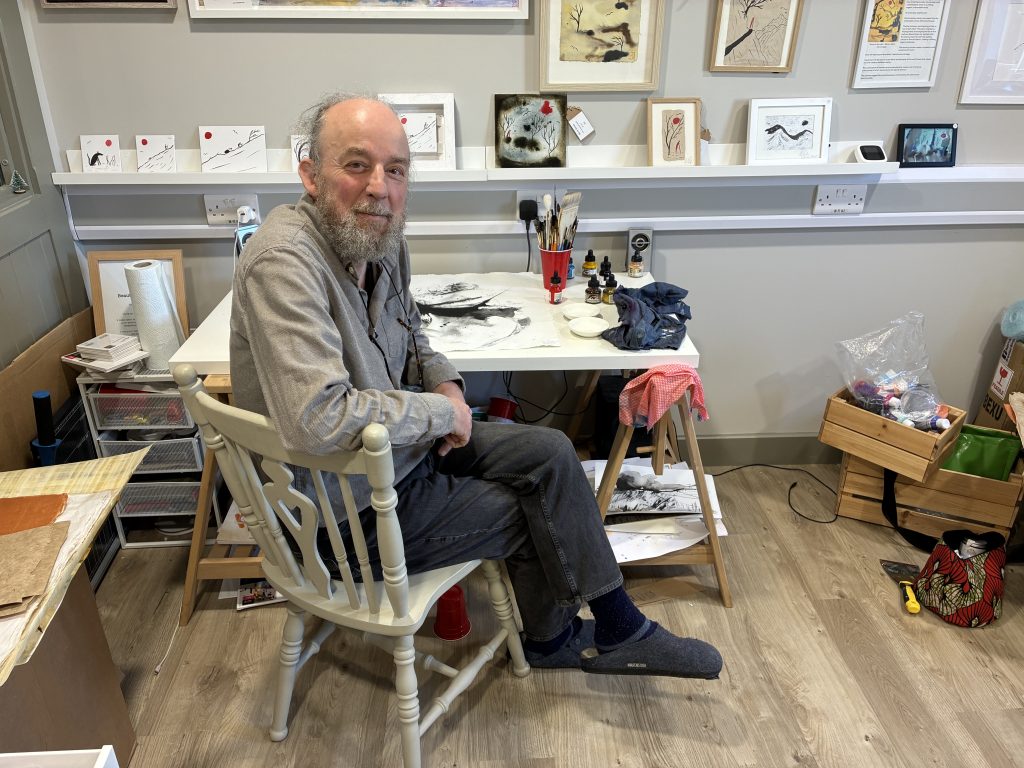
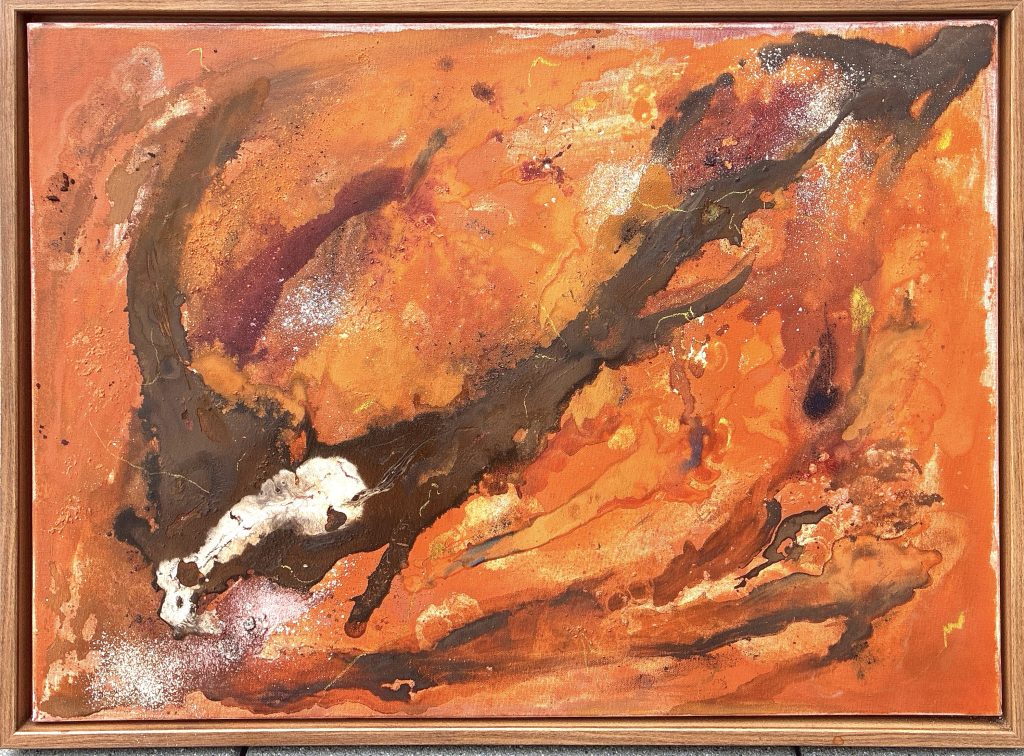
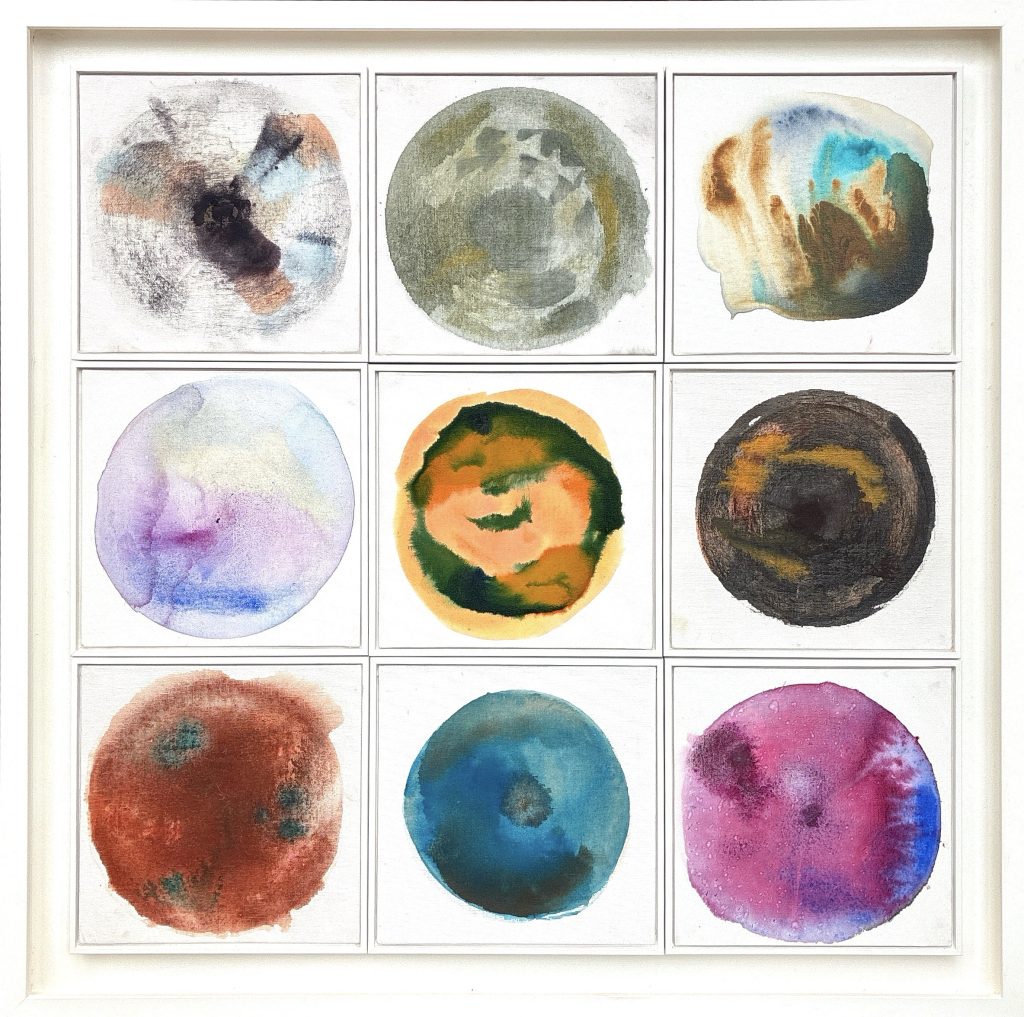
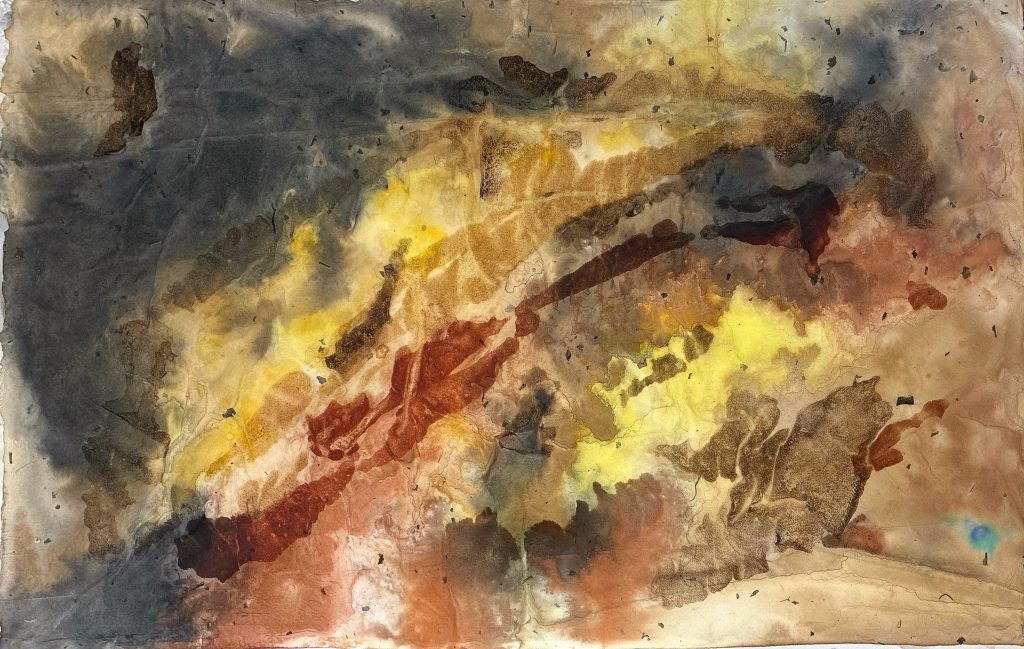
Across the largest canvas he has attempted, John Britton has spent the morning laying down a field of green earth. The pigment arrived as a powder alongside siennas, ochres and other colours drawn from minerals. Mixed into an ink and spread across the metre-square surface, it feels grainy, dirty and resistant to anything too polished.
“It feels earthy and mineral and a bit dirty and not very polite,” he says. “All of those things I love.”
The final design will be minimal: perhaps a circular movement across the green with a more formal shape held inside it. John has made related pieces, but something remains unresolved – an energy held within rock and soil that he has not yet brought fully into view.
There is no impatience in the admission. Speaking with John has something of the meditative quality he hopes people find within his paintings. His thoughts arrive with the confidence of someone carrying an enormous breadth of experience, but there is no pressure to force them into quick conclusions. He is comfortable pausing, questioning a word and allowing an idea to remain unfinished.
The calm is hard won. Before John began working primarily as a painter, he spent three decades travelling internationally as a performer, director and teacher. His theatre could be physically extreme and his schedule relentless. Now, from a rural home near the sea in Fanad and a studio at The Courthouse in Bushmills, he makes paintings that ask both himself and the viewer to become still.
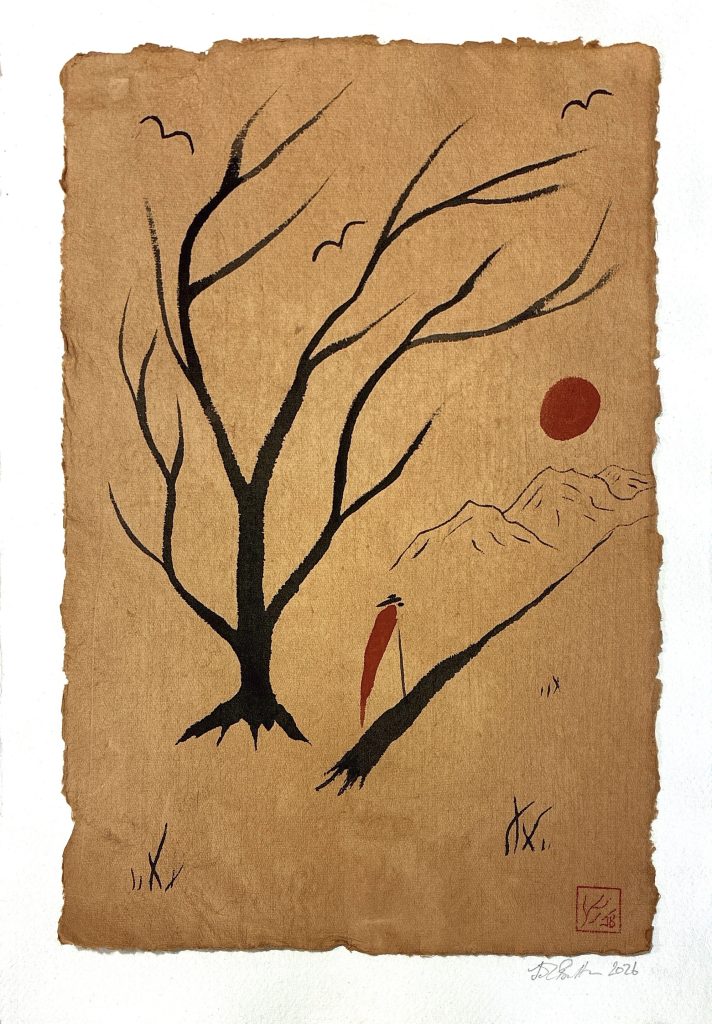
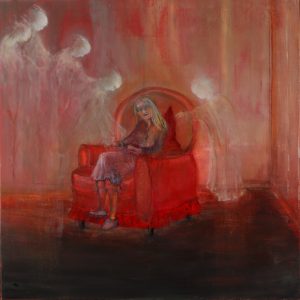
The contrast appears dramatic, yet the centre of the work has remained remarkably consistent. Whether bodies were being hurled against factory walls or a solitary red figure now waits beneath an ink-black tree, John has always been searching for the moment when noise gives way to complete attention.
The Moment After the Final Note
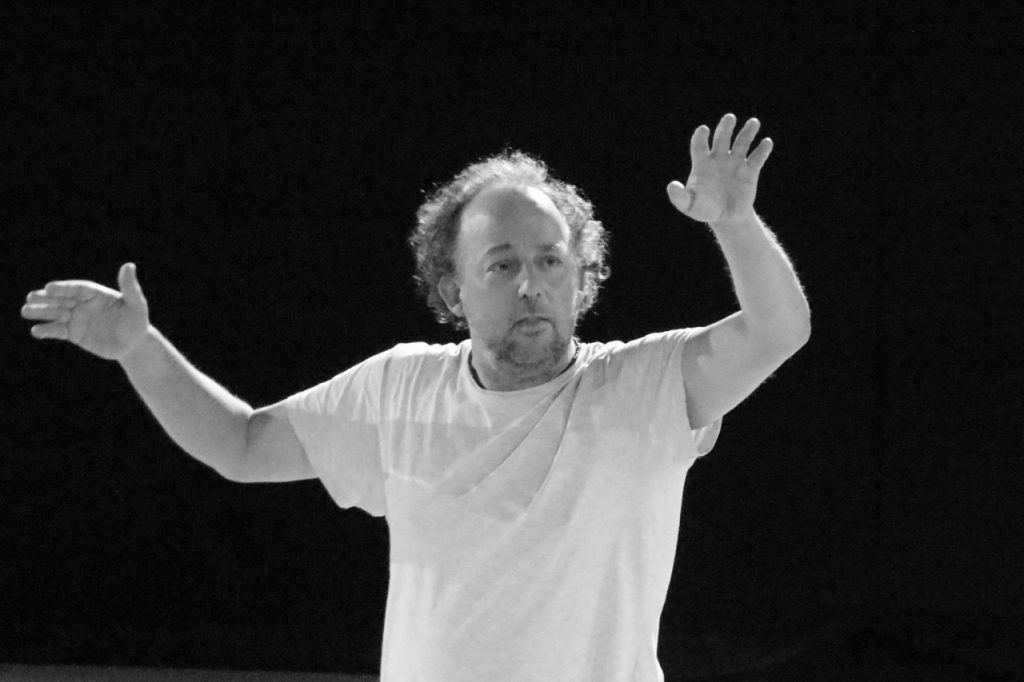
John’s theatrical life moved across performance, dance, circus, improvisation, clowning and education. He worked internationally, led a master’s programme built around his training methods and served as artistic director of DUENDE and the DUENDE School of Ensemble Physical Theatre.
Much of his work involved training actors, dancers and circus performers through the body. He directed productions and performed as an improviser, often making work far outside the security of conventional theatre. He remembers “naked bodies hurling against walls in the basement of factories”-performances that were avant-garde, visceral and willing to push physical expression towards its edges.
Yet spectacle was never the final purpose.
“The heart of the performance was a shared moment of silence,” John says. “The moment that it ends, before the audience applauds, and everybody in the room knows that they’ve arrived in the same place at the same time.”
He finds the same sensation at the end of a classical concert: the breath held after the last note and before applause restores everybody to their separate lives. It can also occur in front of a painting, before the viewer has found an opinion or decided whether they approve.
“It’s the moment where someone stands in front of a picture before they’ve had a thought about it,” he says. “That moment of stillness, for me, is the centre of it all.”
The intensity came with a cost. While travelling continuously, John suffered a heart attack during one of the rare occasions when he was at home. He returned to work aware that something remained wrong. When the pandemic interrupted that life, burnout and a wider collapse followed.
The realisation that emerged was unambiguous: he did not want to return to the way he had been living.
There are parts of theatre he continues to miss, particularly the studio and the direct encounter of training. He occasionally returns to teach, including visits to Greece, but no longer desires the constant movement that once defined his work. The transition into painting was not a gradual career adjustment so much as an acceptance that one life had finished and another needed to begin.
What carried across was his understanding of improvisation and the integration of mind and body. Those lessons remain fundamental. Theatre taught John how to act without knowing the outcome, respond to what another presence offers and edit spontaneously without extinguishing the original impulse. Painting asks the same of him.
A Conversation with Ink
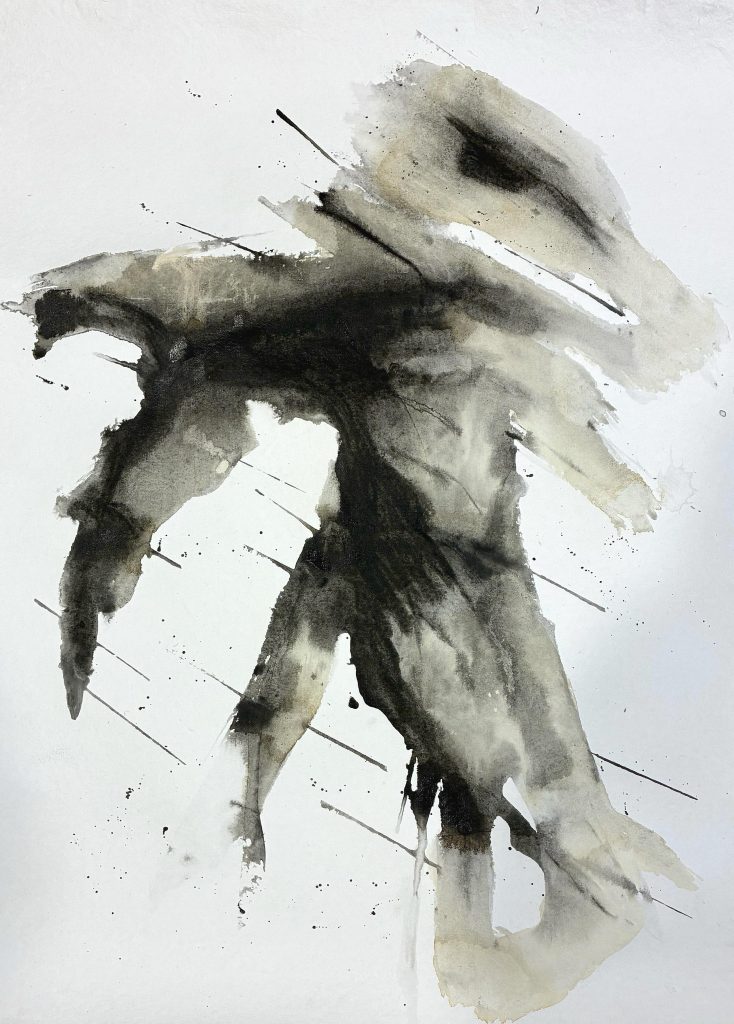
John rarely approaches a painting with a fixed destination. He describes the process as a conversation between three participants: himself, the ink or paint and the surface beneath it.
He may suggest an opening movement, only for the ink to spread in another direction. A handmade paper may blur an intended line, catch pigment within its fibres or alter a colour through its chemistry. John responds, the ink moves again and the surface exerts another quiet influence.
“My job is to be attentive to what the ink and the surface are telling me,” he says. “I never have the last word, because when I think it’s done, the ink has yet to dry. As it dries, it and the surface have the last word.”
For an artist whose earlier work depended upon live relationships, this material exchange offers a new kind of ensemble. Control is shared, each participant retains its character and the finished painting becomes something none could have created alone.
John makes many of his inks at home, following a process used for thousands of years: colour is extracted into water and combined with a binding agent, usually gum arabic, so it will adhere to a surface. The principle may be simple, but every ingredient behaves differently.
Gorse produces a yellow drawn from the bush outside his window. Moss creates a greenish brown, while pomegranate offers another strong colour. Peat has required further experimentation. Dandelion is the most unruly, breaking apart the pigments in almost any other ink it touches.
John speaks of it affectionately as “a really bad-tempered friend.”
His inks are not designed to imitate the dependable manners of commercial products. They have peculiarities that must be observed and learned. John warns anybody buying them not to demand politeness but to discover how each wants to behave.
“It’s got its own character,” he says, “and it will teach me a thing or two before it’s finished with me.”
Global and Local
That attention to character extends to paper. John frequently works on sheets handmade from recycled cotton waste in India, plant fibres in Bhutan and specialist materials produced in Nepal. Their irregular edges and varied absorbency are not imperfections to disguise; they help determine the work.
Combined with inks made from plants in Fanad or pigments supplied in mineral form, the papers have led John towards an idea he calls the “global local.” Materials rooted in specific places are brought together across borders, allowing artisans who may never meet to collaborate through the object they produce.
In an age of artificial intelligence and increasing disconnection from how things are made, John sees value in using technology to sustain physical skill. The internet allows him to buy paper from a Bhutanese village, supporting that knowledge while enabling an artist in Donegal to make something new.
“It’s artisans getting their hands dirty, collaborating across borders,” he says. “That feels like a hill I want to die on in the age of AI.”
The celebration is accompanied by questions. John recognises that he relies upon importers’ assurances that makers are properly paid and treated with respect. He would like to understand and document supply chains more rigorously, while also acknowledging the limits of what one independent artist can reasonably verify. Ethical responsibility, for him, is not a claim of purity but an obligation to remain attentive and do what is possible.
This respect for materials mirrors his wider relationship with nature. Around his home, John is growing a forest of more than 100 trees, with hedgerows providing shelter for birds and other wildlife. The landscape is not simply represented within his paintings. It enters through gorse, dandelion, earth and the patient timescale of things that grow without asking to be watched.
The Art of Calm
Ink requires John to enter a particular state. It does not respond well when he is distracted or physically tense. Before he can make a useful mark, he must quieten his mind, relax his body and pay attention to the relationship between brush, liquid and paper.
Working with ink then deepens the same calm it demanded at the beginning.
“There is a loop,” he explains. “Ink is the medium that asks us to be healthy and then gives us health.”
John often calls this element of his work “the art of calm.” During workshops, he does not expect participants to master a separate meditation routine before they are permitted to paint. The material itself can become the meditation.
He suggests dipping a brush into ink, breathing in and making one continuous stroke with the exhalation. Without reloading, the movement is repeated. Each mark becomes fainter as the brush empties. Attention settles upon breath, pressure, movement and the changing amount of pigment held between the bristles.
Someone who finds conventional meditation difficult does not need to sit apart and silence every thought. They can allow a physical action to guide them towards quietness.
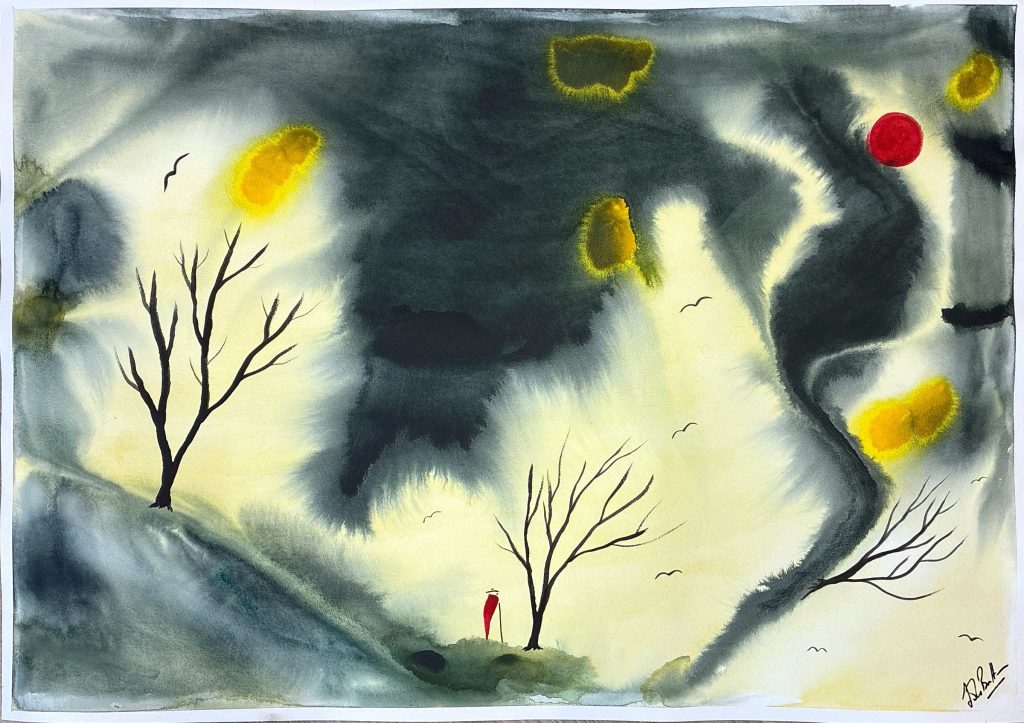
The meditative appeal of John’s work therefore exists both in its making and its reception. The empty paper around a tree, the movement of an arc or the isolation of a red figure offers somewhere for the eye to rest. Even when a painting becomes gothic or turbulent, it does not overwhelm every inch of the surface. Space remains for the viewer to enter.
Red, Black and Monk
John’s long association with red and black began through limitation. While travelling, he drew digitally using an ink-simulation programme that offered only those two colours, with a small number of variations between wet, dry and faded marks.
When a later version introduced a wider palette, John found that he preferred the restriction. Fewer choices created greater concentration. Red and black became the visual language of Ratdog & Boy, his illustrated story of a child and feral dog living adventurously in a world without other humans, and followed him when he began transferring his digital instincts onto paper.
The influence of Japanese and Chinese ink painting is clear and openly revered. John is drawn to the assurance of a single brushstroke and to work so simple that it can feel contemporary centuries after it was made. He does not attempt to reproduce those traditions, but measures himself against the clarity and beauty they demonstrate.
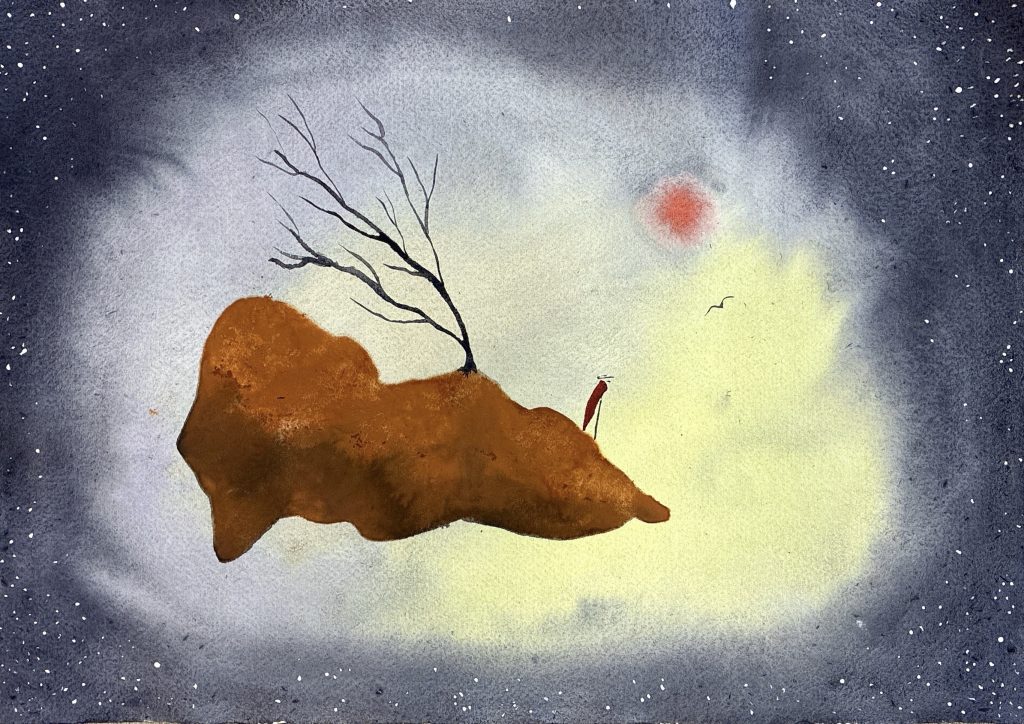
His recurring figure Monk developed from images of Buddhist monks in nineteenth-century East Asian painting. John wanted to create the simplest possible person: one red stroke for the body, accompanied by four small black marks forming a hat, cane and eye.
That economy allows viewers to bring their own lives to him. Monk travels through mountains, storms, forests and snow, but is most often shown pausing. He watches, waits, rests and continues. For some collectors, he has become less a character than a companion.
After receiving two commissioned Monk paintings in Arizona, one collector wrote to John that she had needed someone like Monk in her life for years. With his arrival, she felt that both he and she had come home.
The red circles appearing elsewhere in John’s paintings arose from the same restricted palette but have continued evolving. Sometimes the circle is a sun or moon; elsewhere it becomes a formal presence held against a sweeping, incomplete arc. Movement and stillness occupy the same surface. John has made several iterations without yet exhausting what the relationship is trying to tell him.
Teaching People How to Learn
Although John made a clear break from his former way of living, he remains a natural teacher. He continues to work occasionally in schools and is involved in a cross-border primary-school initiative. Visitors to his studio encounter more than finished paintings: they are shown papers, powders and the moment when water releases colour from pigment.
He describes the light appearing in a child’s face when they discover new possibilities. The same pleasure arises when an older visitor admits that they once painted but stopped. John gently encourages them to pick up a pen or a brush and start to create again.
“It feels like such an act of service to stimulate the curiosity of someone,” he says, “whether they’re a child or a 70-year-old.”
John’s experience gives him more than enthusiasm to offer. Across decades of training performers and leading formal education, he has thought deeply about the pedagogy of creativity. Showing someone how to reproduce a teacher’s technique may produce an imitation, but it does not necessarily equip them to continue independently.
For John, a learning journey should be incremental and empowering. The most important outcome is not that a participant leaves able to repeat one exercise, but that they understand how to encounter uncertainty, reflect upon experience and keep developing after the teacher has gone.
“They’ve not just learned how to do something,” he says. “They’ve learned how to learn.”
This principle now guides his mentorship. John is wary of a coaching industry that promises permanent happiness through simplified solutions. His own work is slower and more attentive. In one ongoing “creative soul work” mentorship, he meets weekly with an artist in Australia. They talk, but they also draw, write and move together before reflecting upon what the activity revealed.
Through doing, habits and needs emerge before the conscious mind can organise them into a presentable account. John’s mentorship does not provide his answers; it helps people listen closely enough to recognise their own.
Guidance Earned Through Experience
The stillness surrounding John today has not been achieved by avoiding intensity. It was shaped by decades spent travelling, teaching, performing and repeatedly asking bodies – including his own – to move towards the limits of what they could communicate. His calm contains knowledge of what happens when motion becomes unsustainable.
That history gives weight to both his paintings and his guidance. John values quiet because he has lived through noise; he respects limitation because he has experienced excess; he understands the need for mentorship because he has spent a lifetime examining how people learn, create and remain connected to one another.
The materials on his studio table reinforce those lessons. Ink cannot be bullied into obedience. Paper has a memory and character of its own. A mineral holds the slow energy of the ground it came from. The artist can offer direction, but must also recognise when to listen.
John once pursued a shared silence through the extremity of live performance. He now finds it through a red stroke, the fading trail of a brush or the instant before somebody decides what a painting means.
In both worlds, the achievement is not silence for its own sake. It is the rare moment in which artist, material and audience arrive fully in the same place, at the same time – held there briefly, before the applause begins.
Explore John’s paintings and handmade inks:
fanadart.com
Discover his mentorship, writing and teaching:
johnbritton.co
See a timeline of John’s work here:
washboat.art
And keep up with him via social media:
@fanadart
Support Go Leor. Get the Print. Join the Story.
Go Leor is an independent Irish arts magazine built by hand, heart, and community. Your support keeps meaningful storytelling alive – in print, in culture, and in conversation.
Through Patreon, you can support the magazine in two simple ways:
- Supporter Listing
Have your name printed inside every issue as part of the community helping Go Leor grow. - Print Copy – UK & Ireland
Receive the latest print issue delivered each month across the UK and Ireland, with your name included inside the magazine.
The Latest Articles

Maria Noonan-McDermott: Where Memory Becomes Art
Transforming intimate family memories into paintings and poetry, her work invites others to recognise stories of their own.
Rosina Law-Braney: Reclaiming the Seven Deadly Sins
Through zines, illustration and humour, Rosina Law-Braney creates vibrant feminist stories that make room for identity, desire, grief and collective creative freedom.
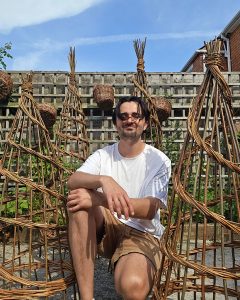
Alexander Edward: Weaving from the Land
Growing his own willow beside Strangford Lough, Alexander Edward brings coppicing, landwork and an ancient craft into bold contemporary forms.
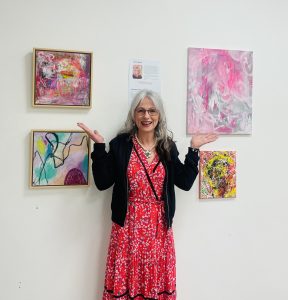
Yvonne Moore: Following Curiosity into Colour
Refusing to settle into a single style, Yvonne Moore follows curiosity across colour, poetry and community, creating art that brings her – and those around her – fully to life.
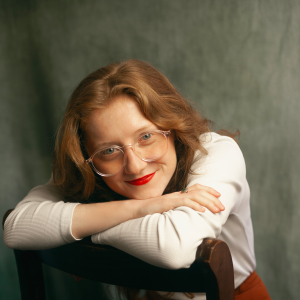
Lucy Fleming: Carrying the North Coast Light
Through fluorescent colour, oil pastel and an instinct for collaboration, Lucy Fleming turns the light of the North Coast into images that connect art, music and community.
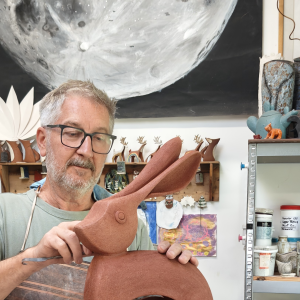
Paul Burch: Shaping Old Mountains in Clay
After decades spent teaching others, Paul Burch has returned to clay, building warm, characterful sculptures from memory, landscape and the freedom to experiment.