
Rosina Law-Braney
Artist & Curator
Through zines, illustration and humour, Rosina Law-Braney creates vibrant feminist stories that make room for identity, desire, grief and collective creative freedom.
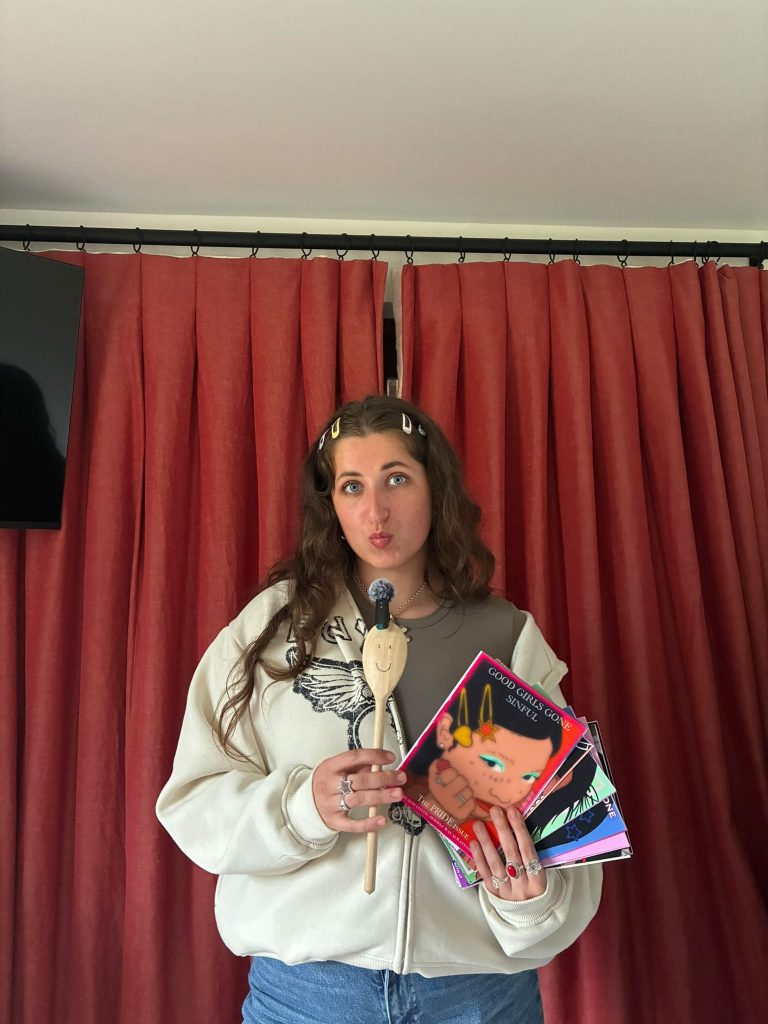
From seven hand-bound zines to a home built around heartbreak, Rosina Law-Braney follows ideas wherever they lead – and makes room for other women to discover their voices.
Rosina Law-Braney had been wishing for a moment to rest when a sentence appeared on the wall of a café in Kenmare: ‘What a privilege it is to be busy with the things you once wanted.’
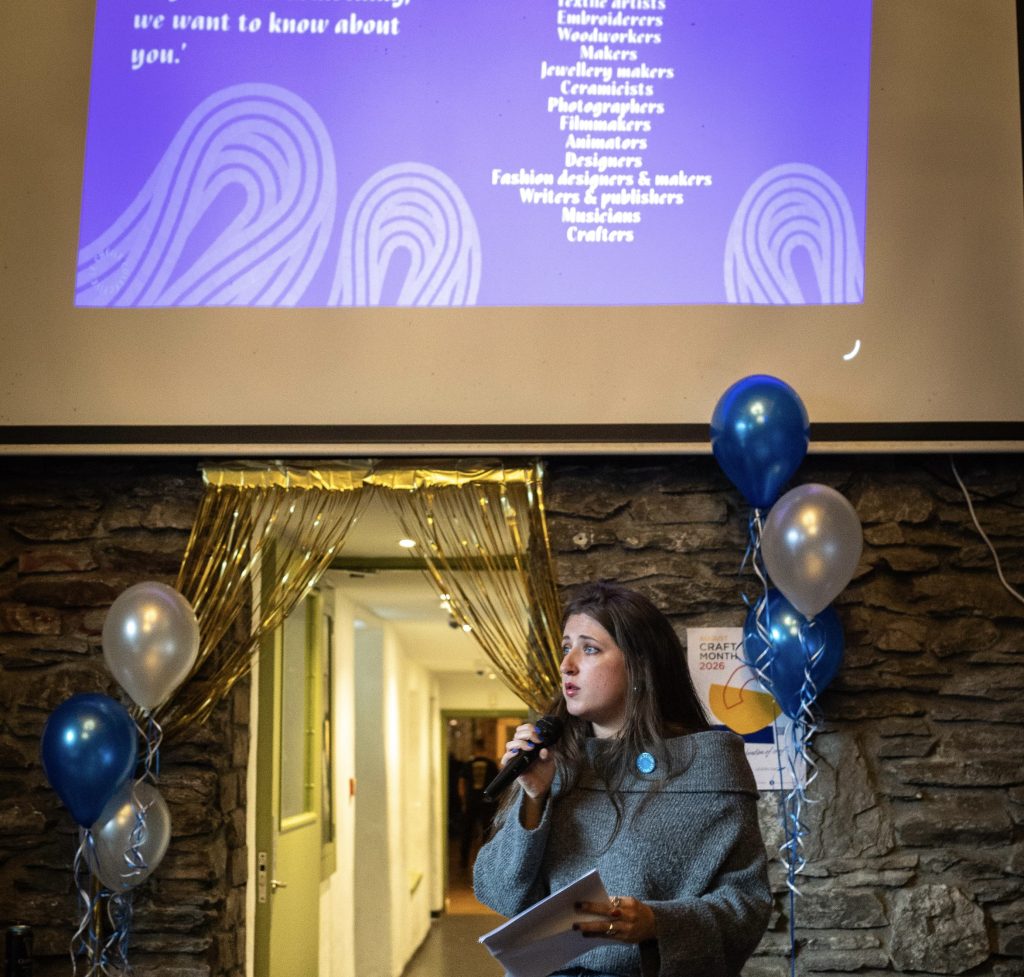
It arrived at the right time. She had recently joined Le Chéile Collective in Kenmare and, as Rosina cheerfully explains, become its spokesperson because the other members “have stage fright and I don’t.”
She has also curated Good Girls Gone Sinful, the collaborative exhibition she created around the seven deadly sins, which barely concluded before The Five Stages of Grief of a Broken Heart, her solo exhibition began approaching. The work she once hoped to make was now asking everything of her at once.
Rosina read the sentence and recognised her own life. This is the year, she says, in which she is working hard for everything. More importantly, it is the year in which she has permitted herself to be outrageous in asking for it.
That refusal to let an idea become smaller because its realisation is difficult runs throughout her work. When the original venue for Good Girls Gone Sinful became unavailable, Rosina considered the story that surrender would leave behind. She could say that she once planned an exhibition but circumstances prevented it – or make the story more interesting.
“It’s a much more interesting story to turn around and be like, ‘No, that happened, but I worked my arse off to make sure it happened somewhere else.’”
The exhibition happened. Yet Rosina’s force of personality did not place her alone at its centre. It gave her room to spare.
Seven Sins, Seven Personalities
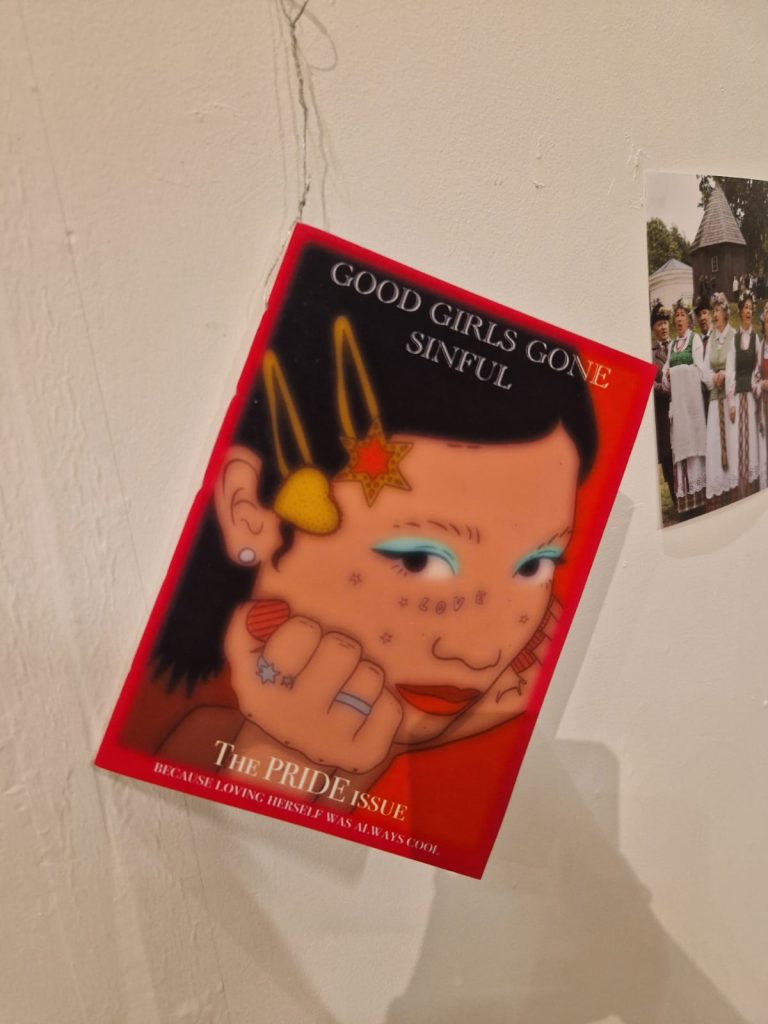
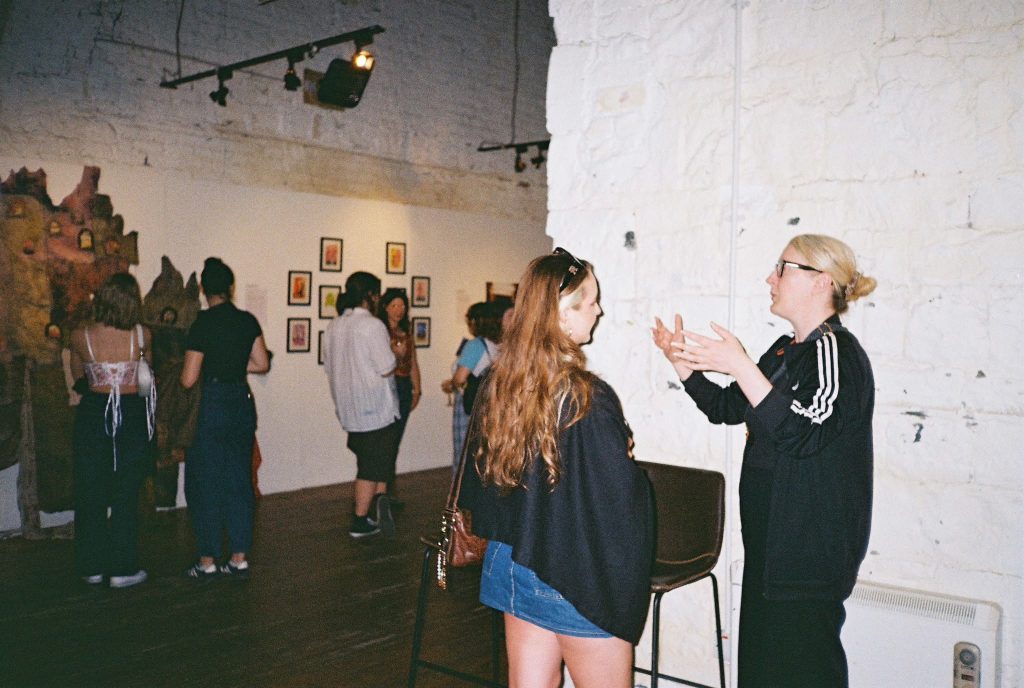
Created during Rosina’s MA in Illustration at Kingston School of Art, Good Girls Gone Sinful reimagined the seven deadly sins through seven hand-bound zines and the work of seven female creatives. Kathy Angela responded to Sloth; Nicola Long to Gluttony; Aoife O’Neill to Lust; Anne-Marie Flannery to Envy; Joyce Zacks to Wrath; Emma Mulrooney to Greed; and Greta Baltic to Pride.
Rosina chose the artists organically, looking for women whose personalities and existing work might pull each sin somewhere unexpected. She reviewed their work and offered possible directions if guidance was needed, understanding that complete freedom can become its own obstruction. These remained suggestions rather than instructions.
“I wanted each sin to feel like it had its own personality,” she says. “I wanted to give them the freedom to interpret it in the way it would be within their own practice and experience.”
Greta Baltic’s Pride, for example, could speak from her Lithuanian identity in a way Rosina never could. Rosina was interested in how Anne-Marie Flannery might respond to Envy and whether an emotion commonly regarded as ugly could instead become constructive, guiding her towards what she wanted from her work and life. Each artist brought a life, discipline and perspective that expanded the project beyond Rosina’s understanding of any one sin.
As curator, she built the structure that allowed those differences to meet. The zine format, her illustrations and the visual memory of teenage girls’ magazines supplied a common language: cohesive without becoming uniform.
This distinction is crucial. Rosina did not demonstrate her strength by controlling seven interpretations. She demonstrated it by creating a framework secure enough to release them. For several participants, it was their first exhibition; nevertheless, Rosina speaks about each contribution as work capable of supporting an exhibition of its own. Her confidence does not require anyone else to become less visible.
“There is only one Rosina,” she says. “There’s only one Anne-Marie Flannery. There’s only one Nicola Long.”
For Rosina, making space for herself and making space for other artists are part of the same action. Individualism is not isolation. Properly understood, it is the recognition that no woman should be reduced to a representative type when she could instead be encountered as a complete and singular person.
None of Us Are Like Other Women
The teenage magazine became an especially fertile object through which to explore that idea. Rosina was once obsessed with them. Their products and images offered a model of the person a teenage girl might become: the right spray could change her hair and, by suggestion, the course of her life. Bedrooms appeared curated to be messy, but never too messy. Girls were expected to look made-up without revealing the effort involved.
Young readers could compare the complexity of their private selves against those two-dimensional constructions and conclude that they were “not like other girls.” Rosina now sees the flaw in that promise. Other girls were never really like those images either.
“We are none of us like other women, but we’re all like other women,” she says. “And that’s a great thing. I want to be like other women.”
In Good Girls Gone Sinful, the format that once instructed girls how to become acceptable is turned against those instructions. Lust, anger, appetite, idleness, jealousy, ambition and pride become openings through which seven artists can discuss their lives. Their familiar brightness draws an audience close; what waits inside is more unruly than the culture that inspired them.
Rosina is comfortable describing herself as a feminist artist, although she approaches the label with characteristic resistance. She once wondered whether she was a feminist artist at all, or simply “a woman creating work about being a woman and being pissed off.” In recent years she has leaned into the term because it gives people a useful way to locate her work. Still, the distinction matters to her.
“Men tend to have the privilege of being their person first,” she says. “It can be quite exhausting to be a woman first. You should only hold me to the standards of myself.”
Her feminism is most powerful here. It is powered by the freedom to be Rosina first: talkative, funny, restless, ambitious and drawn towards whatever form best serves the next story. This does not abandon collective struggle for individual expression. It shows why the struggle matters – because every person deserves room to become irreducibly themselves.
A Vengeful Woman Having Fun
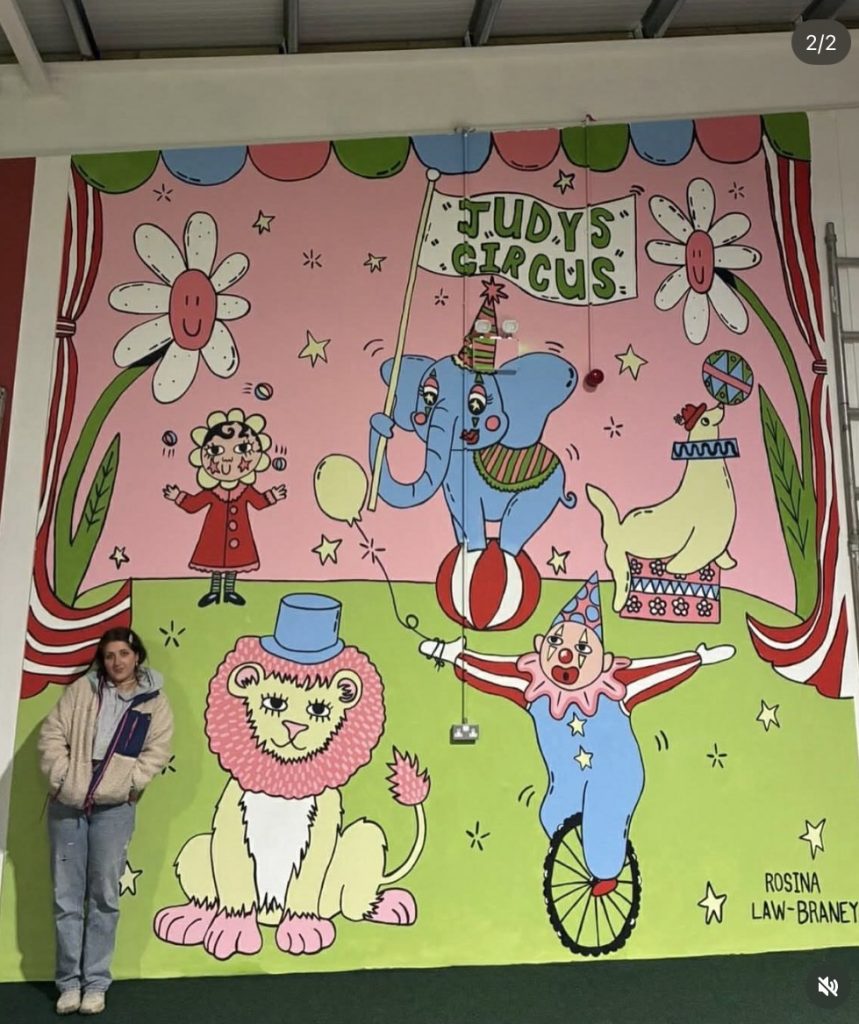
Illustration is the foundation of Rosina’s work, but she moves between zines, bookbinding, embroidery, photography, printmaking and murals according to what an idea needs to do. A tiny book can create intimacy and control the order in which a story is revealed. Embroidery slows her down and brings peace through repetition. A mural carries the same visual directness into public space.
The movement between these forms appears instinctive. Rosina often makes a zine or book and only later realises that an exhibition is waiting inside it. Good Girls Gone Sinful began as zines. The Five Stages of Grief of a Broken Heart began as a pop-up book. Another interactive book, If I Was a Vengeful Woman, is already suggesting its own future exhibition.
Made to resemble a children’s book, If I Was a Vengeful Woman is dedicated to the men who have hurt her. One page offers removable fingers with which to decorate a Christmas tree. In Lucy Loses Her Keys, readers help Lucy search in time to go for pints, discovering an ex-boyfriend behind the sofa along the way.
The cheerfully tactile construction and macabre joke belong together. Rosina’s work can address sex, heartbreak, resentment and shame without submitting to the idea that serious subjects require solemn treatment.
“You can have something shit happen and you can just have fun,” she says. “I’m a bit of an absurdist. You have to be upset, but at the same time realise how absurd it is to even be alive. We’re monkeys on a rock.”
Humour creates distance between Rosina and whatever prompted the work, but it is not a disguise. She exaggerates, fictionalises and plays with experience, allowing personal influence without turning every image into literal autobiography.
This preserves a boundary audiences do not always grant artists, particularly women making work about sex, anger or relationships. Rosina can be vulnerable without surrendering every private fact as proof of authenticity. Viewers may recognise themselves in the work without possessing the “real story” behind it.
The Art Her Mother Makes
Embroidery led Rosina towards a broader question about which forms society has historically called art. Her mother crochets. Painting and other male-dominated disciplines received the status of art, while intricate work traditionally undertaken by women was diminished as craft.
“I do think my mother is an artist,” she says. “She does crochet, but because she’s a woman, it’s not considered as much as art. Crocheting is really hard.”
Rosina does not need to imitate the seriousness of historically masculine forms in order to elevate feminine work. She draws power from the colour, humour, labour and materials already present within it. Embroidery can remain peaceful and tactile. A teen magazine can remain bright and funny. A zine can remain handmade and accessible. Their value does not depend upon disguising where they came from.
The same thinking connects Good Girls Gone Sinful to feminist zine history: independent publishing allowed women to circulate ideas and create space beyond established institutions. Her project carries that lineage into a contemporary exhibition.
“You can go back to those women and be like, ‘Thank you. You’ve done something so important here, and we’re trying to continuing it,’” she says. “It’s because of those women who created a space for themselves historically that we have the ability to create space for ourselves now.”
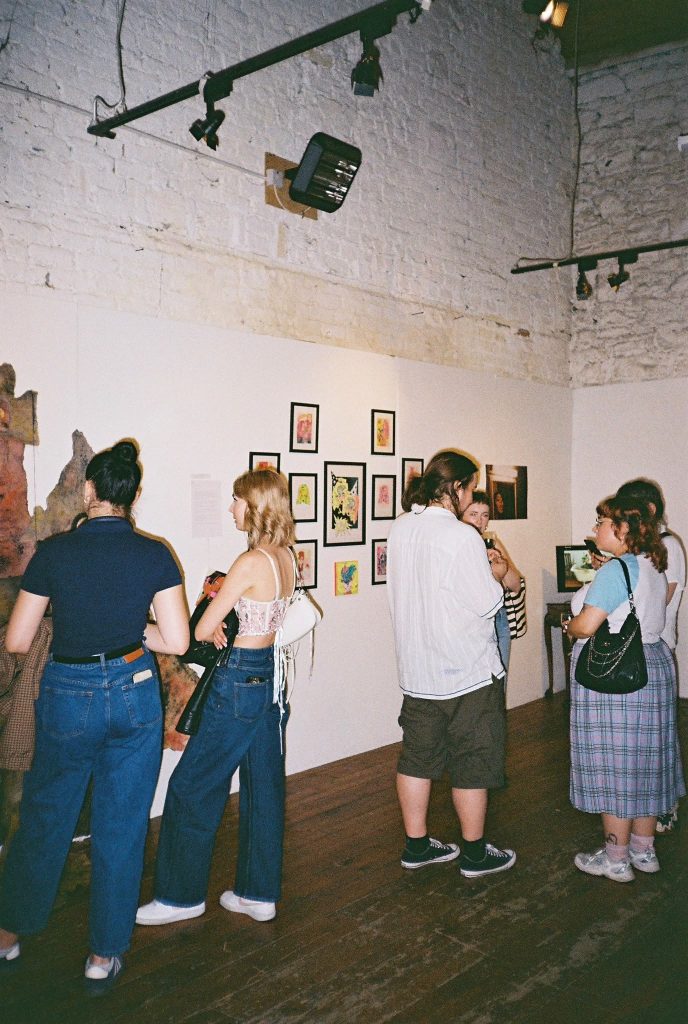
Approximately 40 to 50 people attended the launch. Online, 40 likes might appear modest; within a room, they became people who had travelled, listened and chosen to support seven artists. Its fullest form appeared in the relationships between the work, the zines and the people handling them.
“These are real people with real lives and real experiences who came here and decided, ‘I’m going to be here, and I’m going to support you and these seven female creatives,’” Rosina says. “I hope that the girls feel the love, because I think they deserve to feel all of the love.”
Conspiring in Her Favour
The launch also challenged Rosina’s instinct to do everything herself. Her younger sister Isabel, her friend Timmy and one of the participating artists helped prepare the space. Others arranged their own work and contributed ideas about its presentation. What emerged was neither overly clean nor falsely prestigious. It was expressive, communal and alive.
“I feel like people really are conspiring in your favour,” Rosina says. “People want you to do well.”
That recognition is supported by a family willing to take her ideas seriously. Her twin brother Andrew, an animator establishing his own company, is one of her most valued critics. When early versions of the Good Girls Gone Sinful zines did not yet work as pieces of design, he told her. Rosina returned to the indexes, editor’s letters and surrounding pages with fresh eyes. Her father acts as a different kind of measure: if a provocative joke can make him laugh without crossing the line, she trusts its balance. Her mother offers support while discussing the uncertainty facing creative careers and the necessity of making a place for yourself within them.
Support is not constant agreement. It is the criticism, practical help and belief that allow work to become stronger. Accepting it does not compromise Rosina’s independence; it makes ambitious independence sustainable.
That lesson will accompany The Five Stages of Grief of a Broken Heart, which Katie O’Rourke at Friarsgate has helped Rosina develop from a three-year-old pop-up book into a solo exhibition. The original work emerged after the end of a relationship, shortly after Rosina completed her BA in printmaking at Limerick School of Art and Design. Longlisted for the RDS Visual Art Awards, she was given the opportunity to propose a project for a printmaking residency in Paris. The city of love met a broken heart.
Rosina translated denial, anger, bargaining, depression and acceptance into rooms within a home. Feeling trapped inside the house, it seemed natural for grief to reside there. As with the seven sins becoming magazines, she found a physical architecture for an internal experience.
“If you live, it’s a good story,” she says.
What began in personal pain now offers an audience a way to recognise its own heartbreak and eventually laugh at the scale it once occupied. Rosina has returned to the older work able to see how far she has travelled, revising it without dismissing the person who first made it.
Something Made by Hand
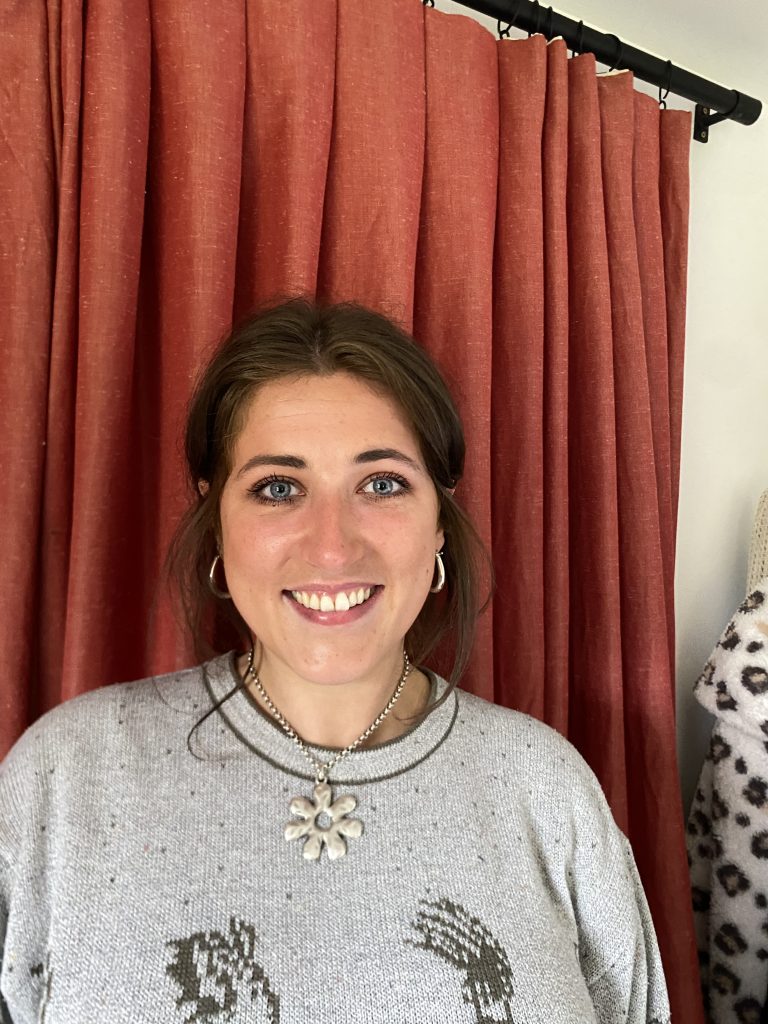
Rosina’s creative energy is perhaps most immediately shared through her workshops. She enjoys people and draws energy from speaking to them. Bookbinding instruction becomes performance, conversation and encouragement; technical details become memorable because her excitement makes them exciting. She invites participants to talk about themselves and imagine where the process might fit within their own lives.
“It’s not just about creating something at the very end,” she says. “It could be absolutely crap. But at least you tried.”
After one workshop, a man was seen buying materials so that he could continue bookbinding independently. For Rosina, that single continuation was enough. It embodies the scale at which she believes cultural change can occur: not through waiting to become powerful enough to transform everything, but by making a difference within one reachable corner.
Her commitment to physical media has deepened as artificial intelligence makes authorship feel less certain. The last thing Rosina’s grandmother wrote was a shopping list. Rosina kept it because her grandmother’s hand had moved across that paper on that morning.
“I think it’s a spiritual experience to be creating anything,” she says. “What a beautiful thing for you to be able to have, from one human being to another.”
Paper gathers folds, fingerprints and wear. Photographs become warm where somebody repeatedly strokes them. A hand-bound zine carries both its images and the movements that brought it into being. Rosina’s work insists upon that human trace while remaining open to other hands.
She is a conduit for a particularly vibrant creative energy in Ireland because she refuses the false choice between the individual and the collective. Her personality powers the work, but it does not consume the room. It travels outwards: into seven artists trusted with seven complicated emotions; into a workshop participant buying his first bookbinding materials; into a family whose criticism and care sharpen her ideas; and into audiences invited to touch, laugh and recognise themselves.
Rosina is not asking feminine creativity to become quieter, cleaner or more respectable before it is taken seriously. She is asking women to become more fully themselves: angry without being reduced to anger, proud without apology, desirous without shame and individual without being isolated. Good Girls Gone Sinful showed what can happen when that invitation is extended with enough conviction. Seven artists did not disappear inside Rosina’s vision. They became more visible within it.
There is only one Rosina. Her work matters because she knows the same is true of everyone else.
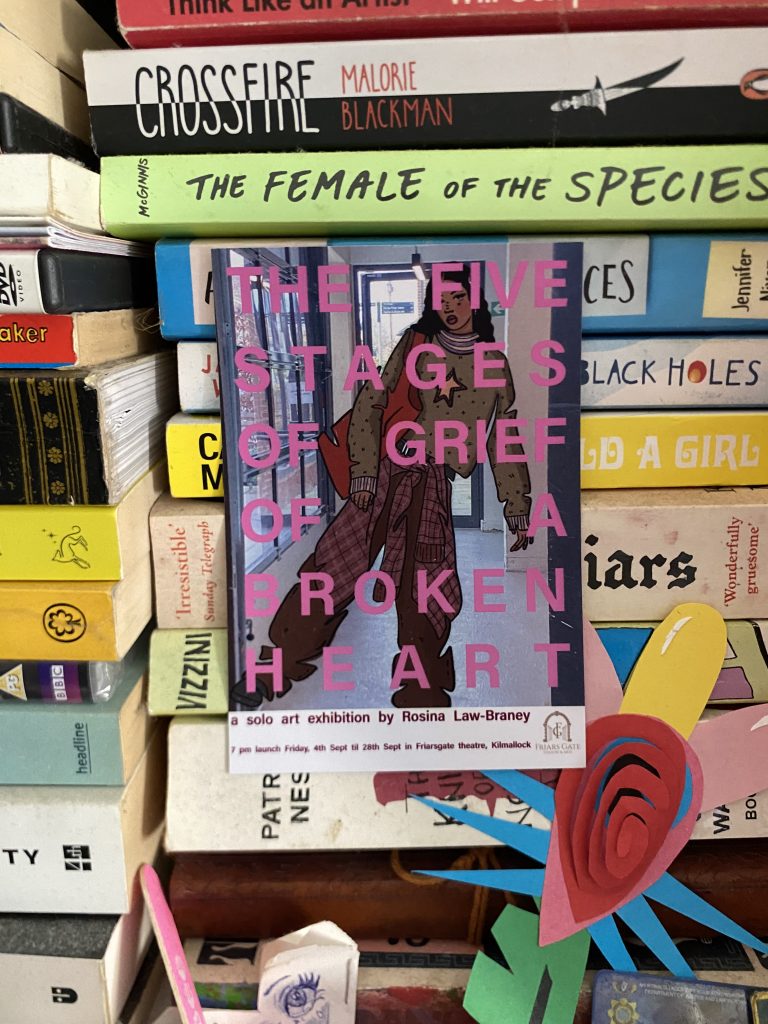
See Rosina’s forthcoming exhibition, The Five Stages of Grief of a Broken Heart, at Friarsgate Theatre in Kilmallock, County Limerick. The exhibition launches at 7pm on Friday 4 September and remains open until 28 September.
friarsgate.ie
Keep up with Rosina via social media:
@unadulterated.rosie
Keep up with the future of Good Girls Gone Sinful, including news of its planned return and forthcoming open call:
@good.girls.gone.sinful
Explore more about her illustration, independent publishing and community workshops through her profile with Le Chéile Collective:
lecheilekenmare.com
Support Go Leor. Get the Print. Join the Story.
Go Leor is an independent Irish arts magazine built by hand, heart, and community. Your support keeps meaningful storytelling alive – in print, in culture, and in conversation.
Through Patreon, you can support the magazine in two simple ways:
- Supporter Listing
Have your name printed inside every issue as part of the community helping Go Leor grow. - Print Copy – UK & Ireland
Receive the latest print issue delivered each month across the UK and Ireland, with your name included inside the magazine.
The Latest Articles

Maria Noonan-McDermott: Where Memory Becomes Art
Transforming intimate family memories into paintings and poetry, her work invites others to recognise stories of their own.
Alexander Edward: Weaving from the Land
Growing his own willow beside Strangford Lough, Alexander Edward brings coppicing, landwork and an ancient craft into bold contemporary forms.
John Britton: Finding Calm Through Ink
After three decades of visceral performance and constant travel, John Britton has found a quieter connection through ink, mentorship and calm.
Yvonne Moore: Following Curiosity into Colour
Refusing to settle into a single style, Yvonne Moore follows curiosity across colour, poetry and community, creating art that brings her – and those around her – fully to life.
Lucy Fleming: Carrying the North Coast Light
Through fluorescent colour, oil pastel and an instinct for collaboration, Lucy Fleming turns the light of the North Coast into images that connect art, music and community.
Paul Burch: Shaping Old Mountains in Clay
After decades spent teaching others, Paul Burch has returned to clay, building warm, characterful sculptures from memory, landscape and the freedom to experiment.