Alice Rekab
Artist
Tracing identity through objects, inheritance, and the quiet movement of the Atlantic Ocean as a space of connection and shared histories
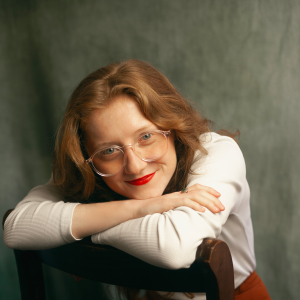
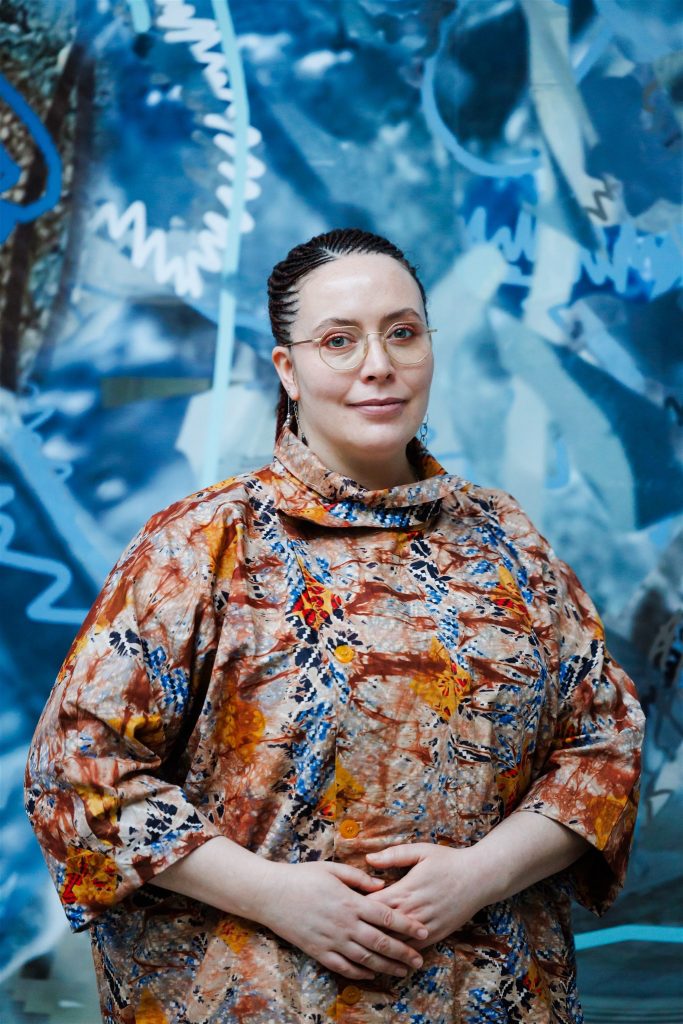
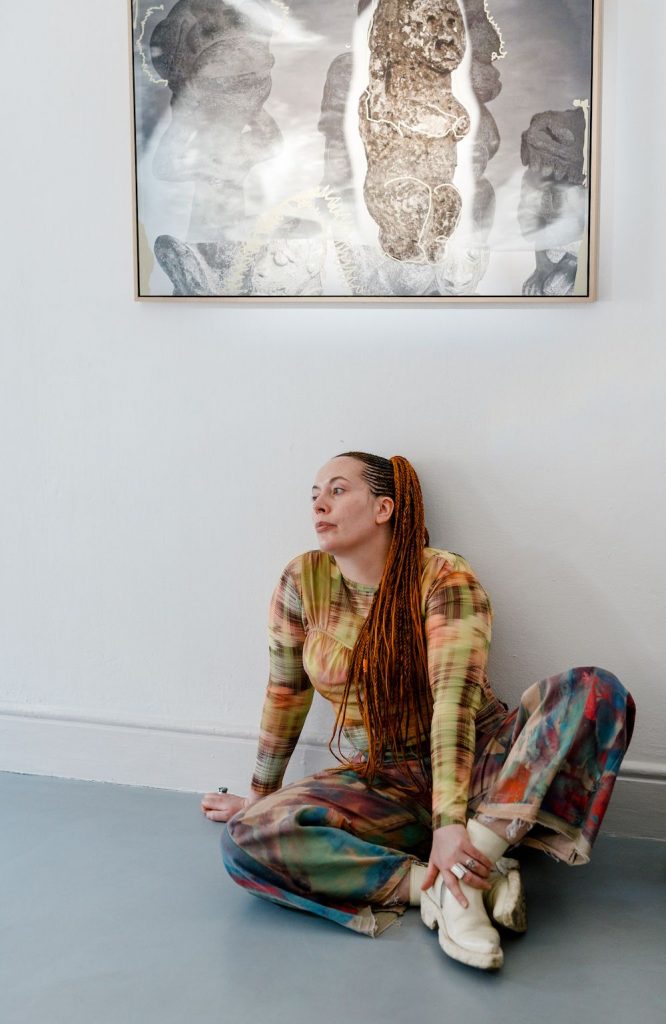
There is no fixed point in Alice Rekab’s work – only a continuous movement between memory, material, and place.
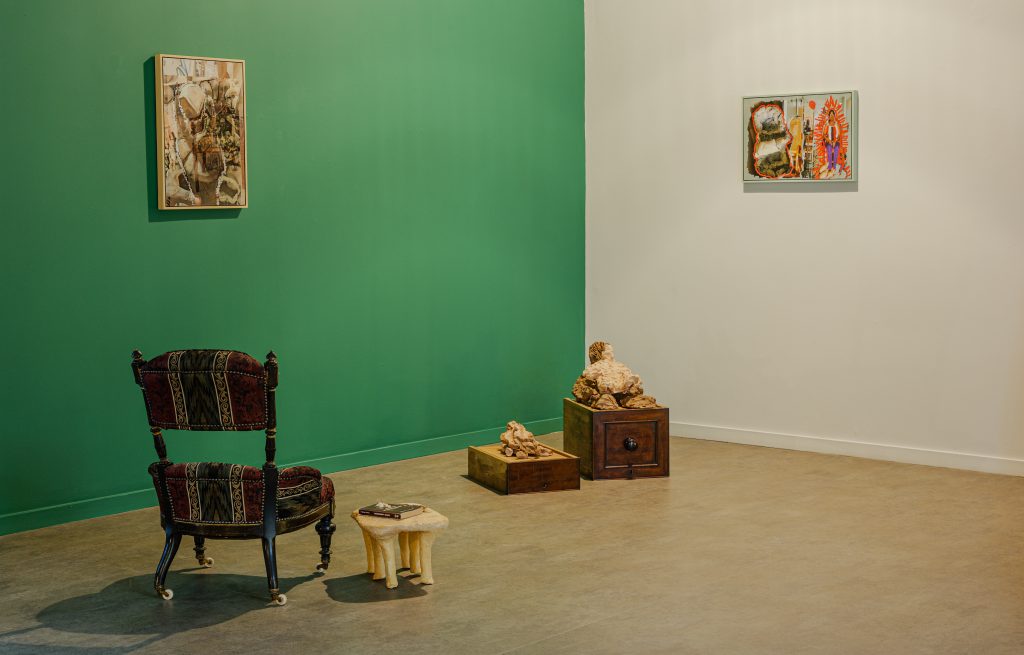
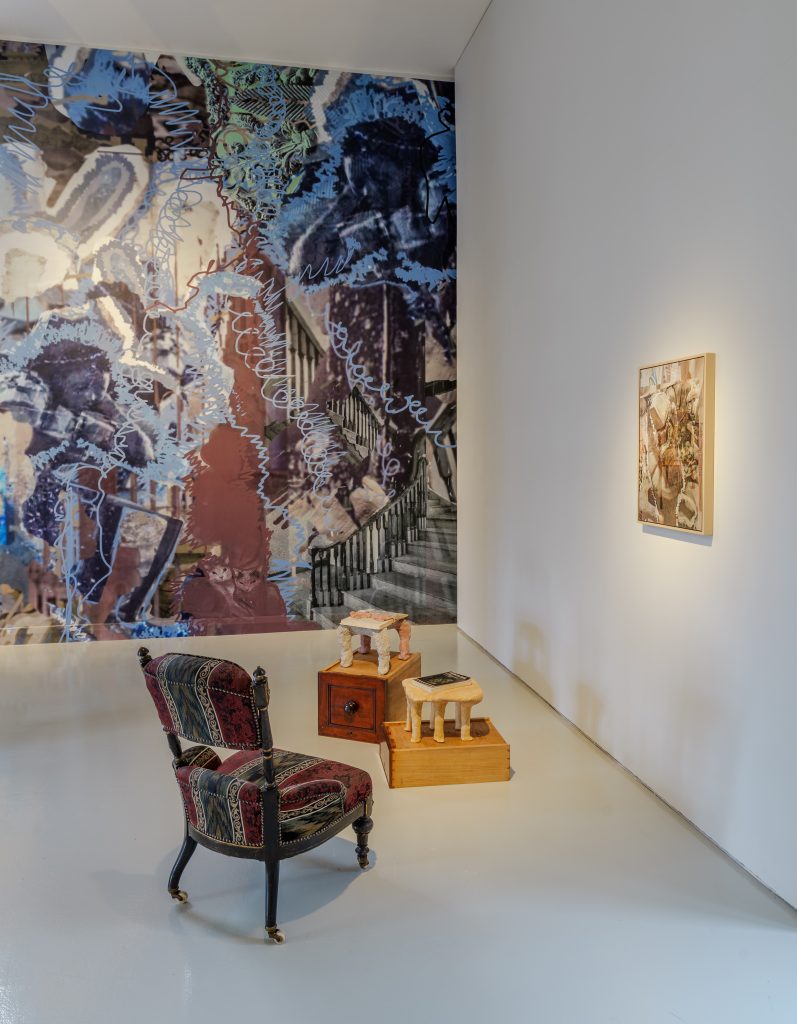
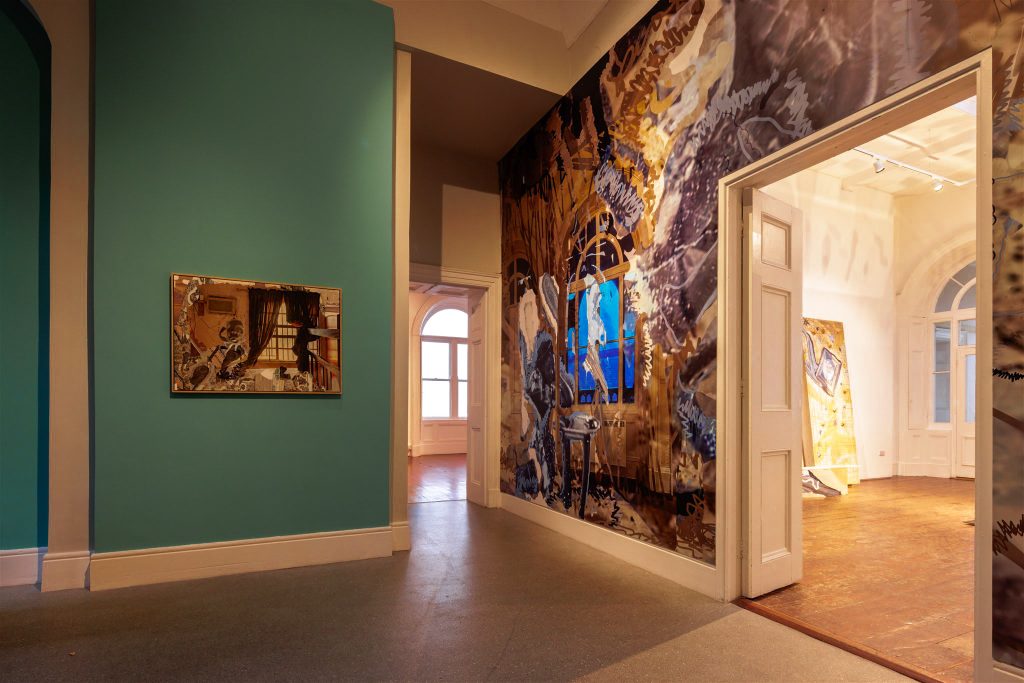
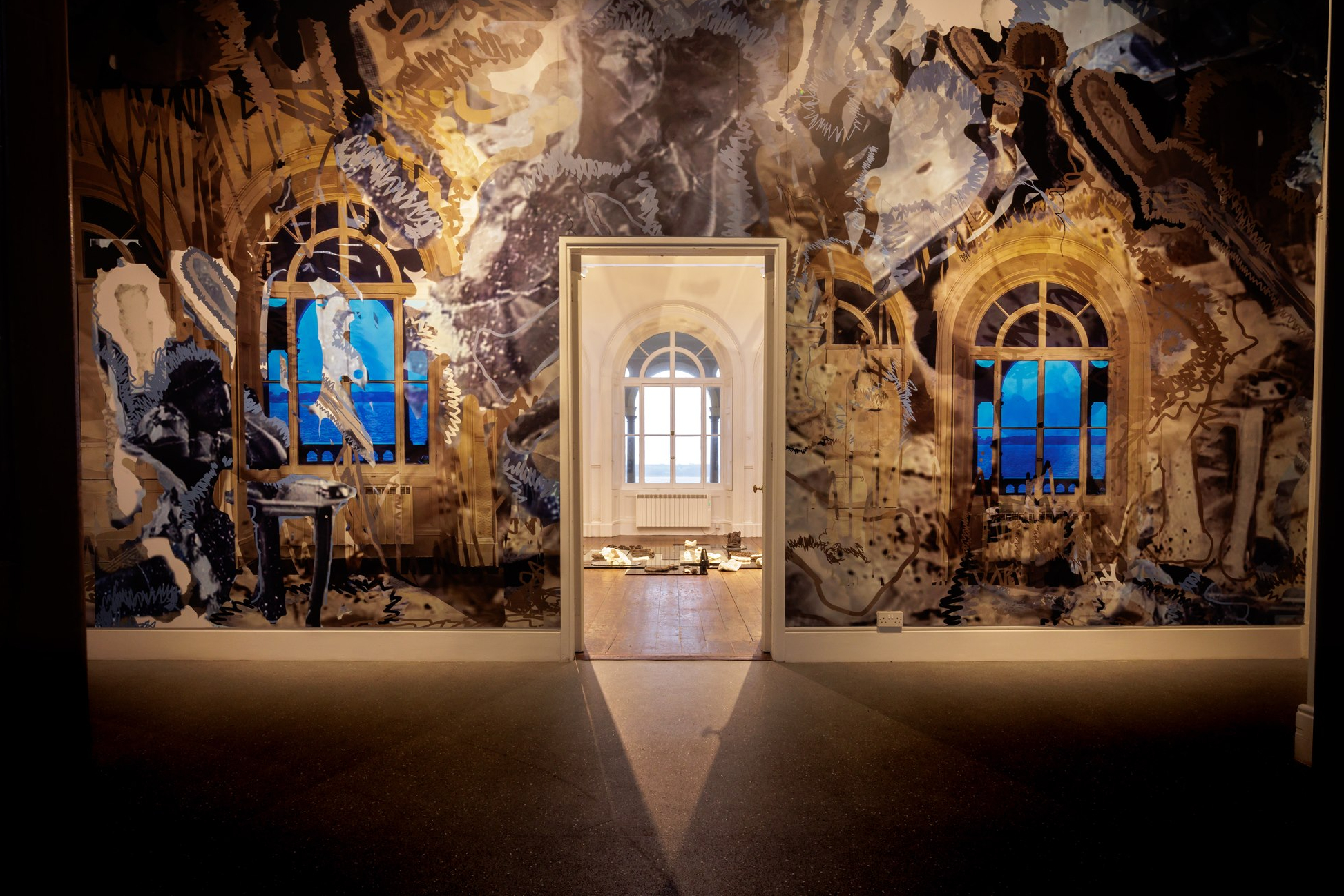
Even when an exhibition arrives fully formed, it is already in the process of becoming something else – reshaped by place, by people, by the quiet shifts that occur when work moves through the world. Their recent exhibition, Clann Miotlantach / Mythlantics, curated by Miguel Amado, has done exactly that.
“It’s interesting that it’s now concluding as a tour, having been going for 18 months,” they reflect. “It began at Sirius Arts Centre in Cobh, then moved around the country to Galway Arts Centre, Highlanes Gallery, and Limerick City Gallery of Art… and then had these offshoots at Liverpool Biennial and Edinburgh Art Festival.”
What might, for another artist, exist as a finished body of work instead becomes something more fluid here – an evolving constellation of objects, ideas, and encounters.
“When a body of work moves,” Rekab says, “the question becomes: how do you get it to respond to each site? How do you make it relevant to those places?”
That question sits at the centre of Clann Miotlantach / Mythlantics, not just as a logistical challenge, but as a philosophical one. Because the work itself is concerned with movement – with migration, inheritance, and the shifting ground of identity.
The home as archive
To step into Rekab’s installations is to step into something recognisable, but slightly displaced.
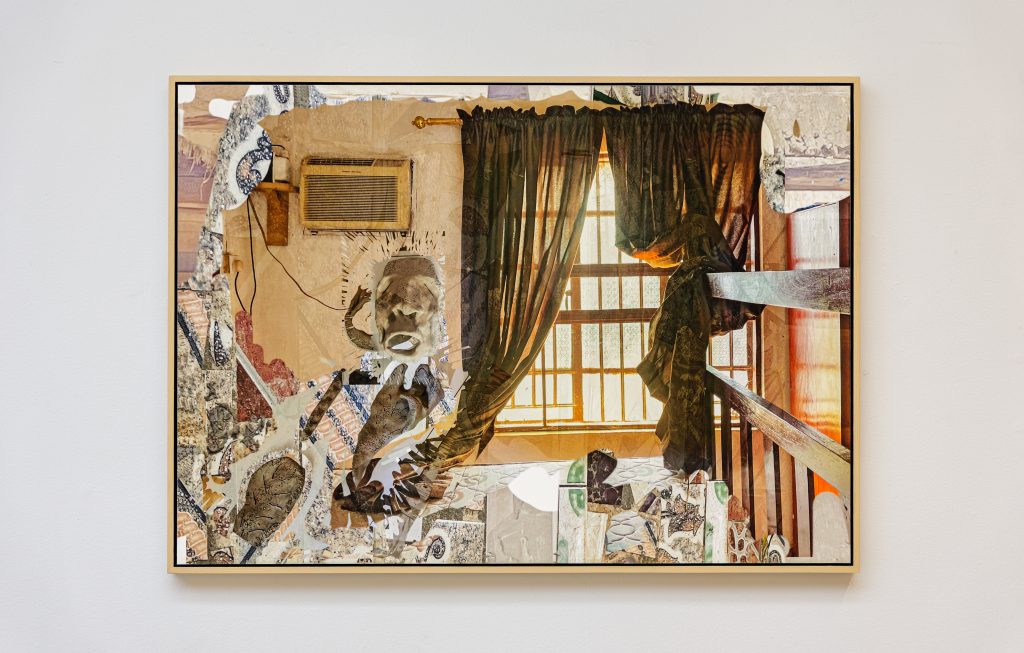
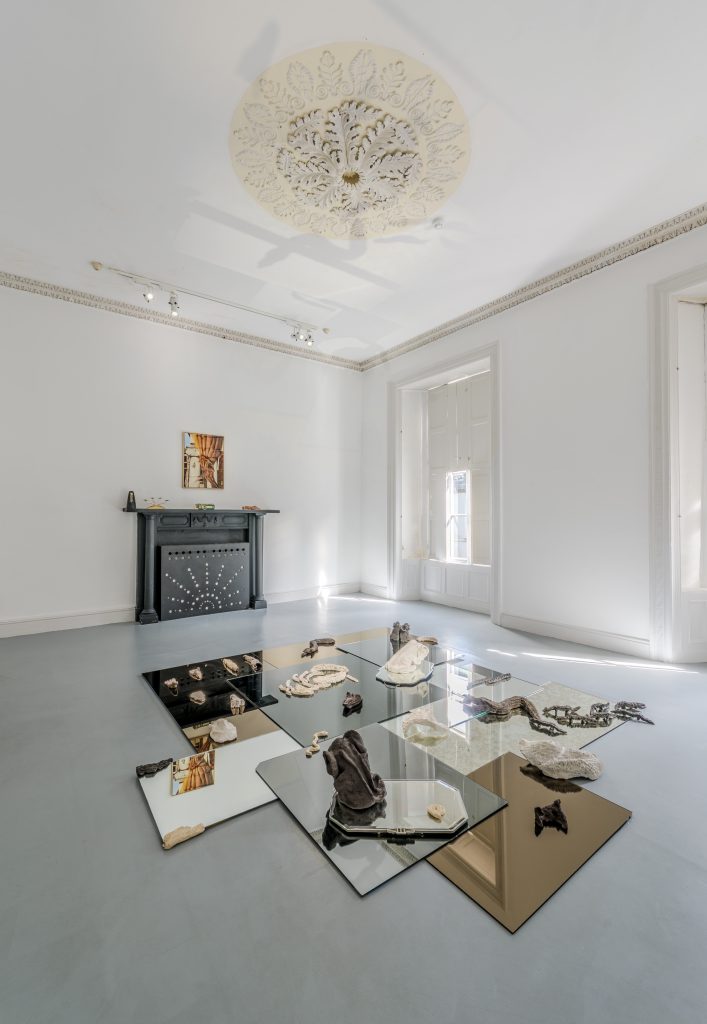
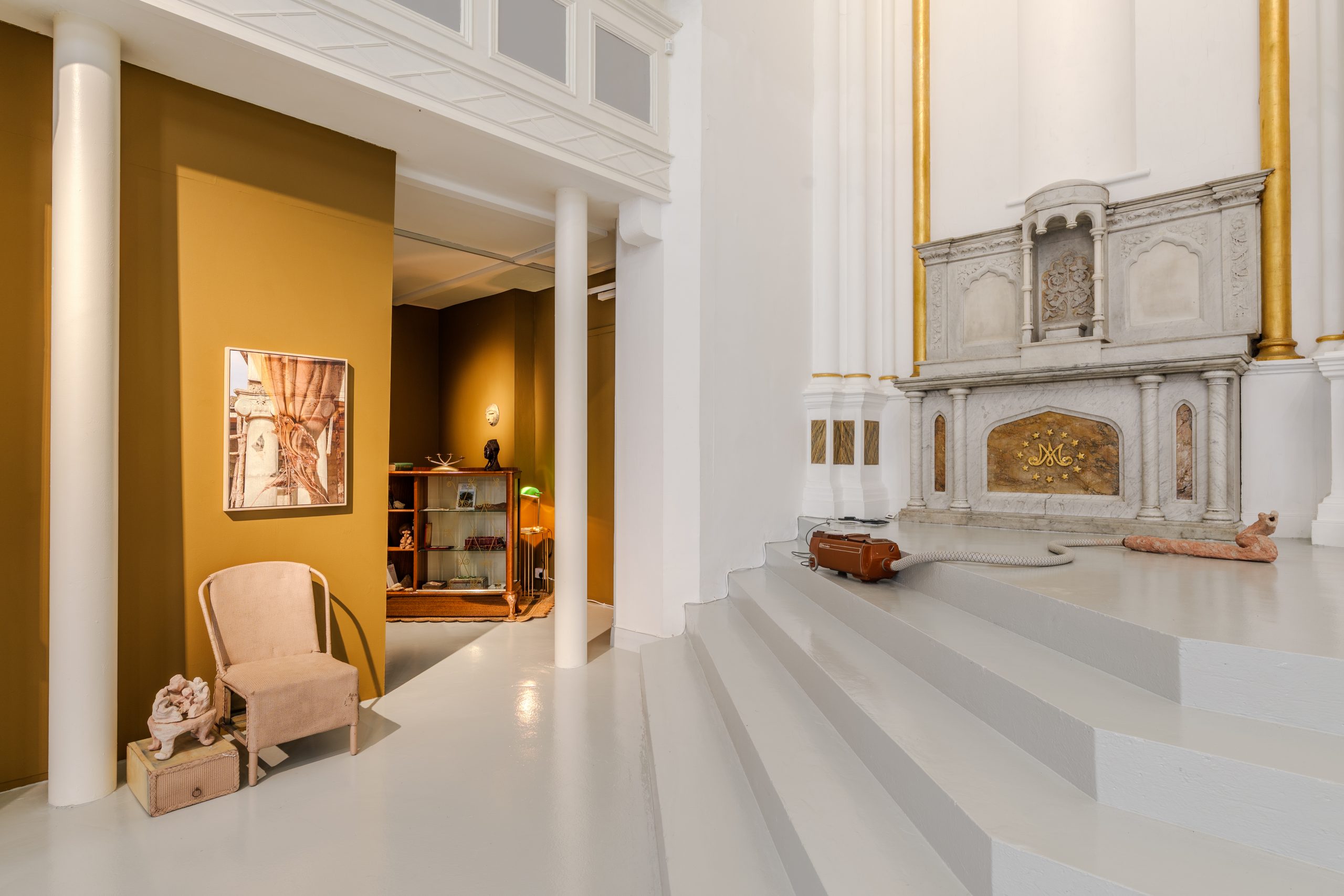
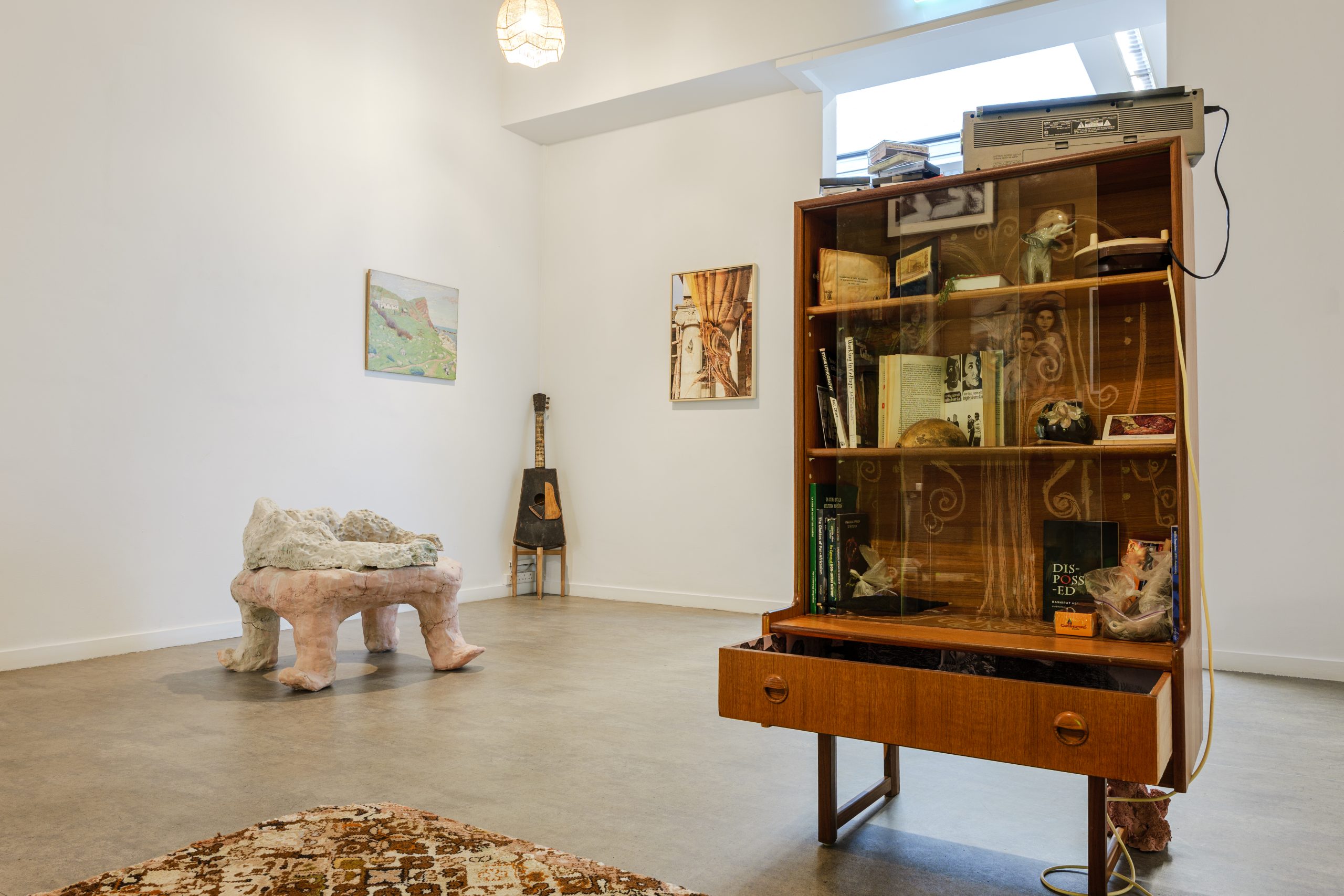
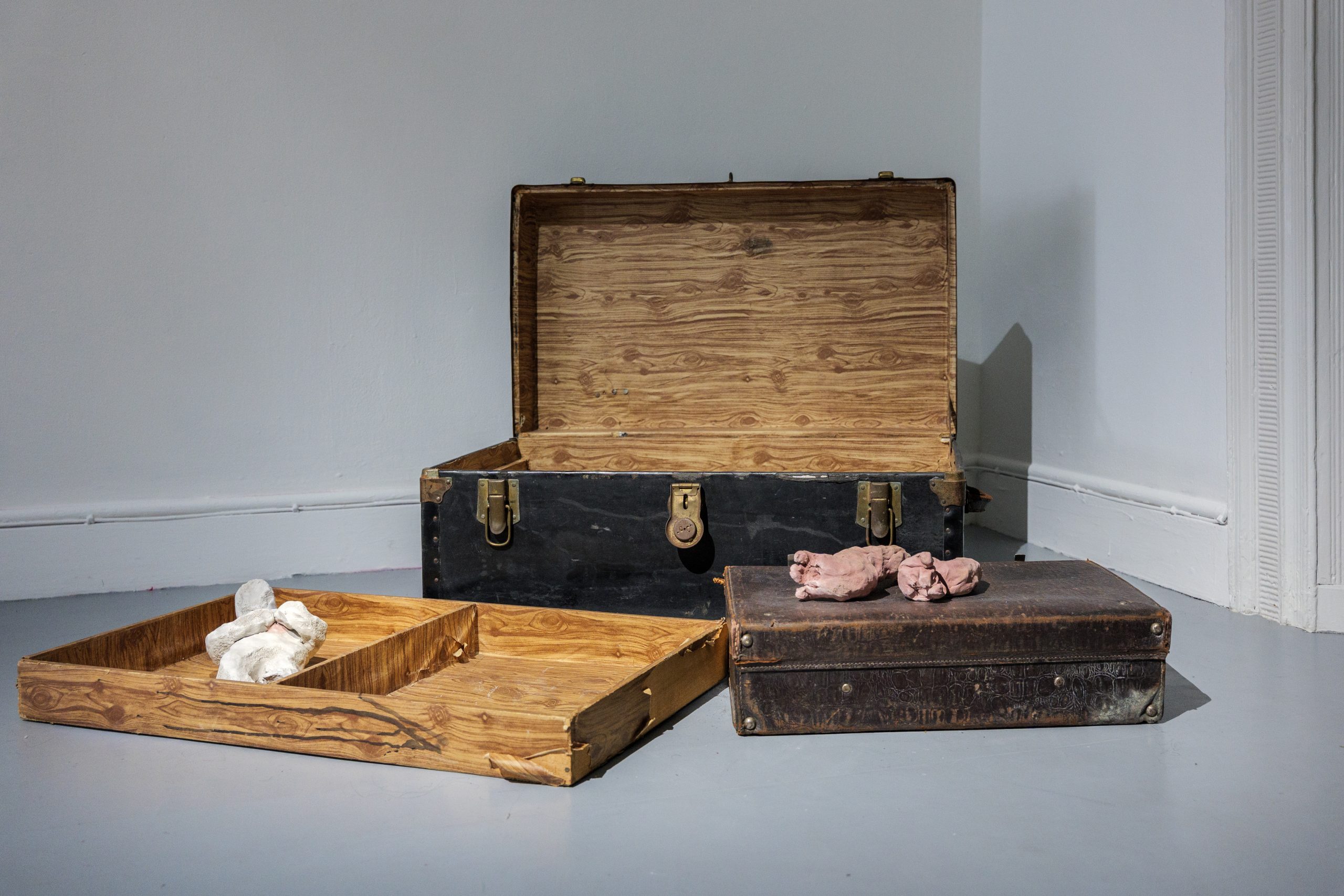
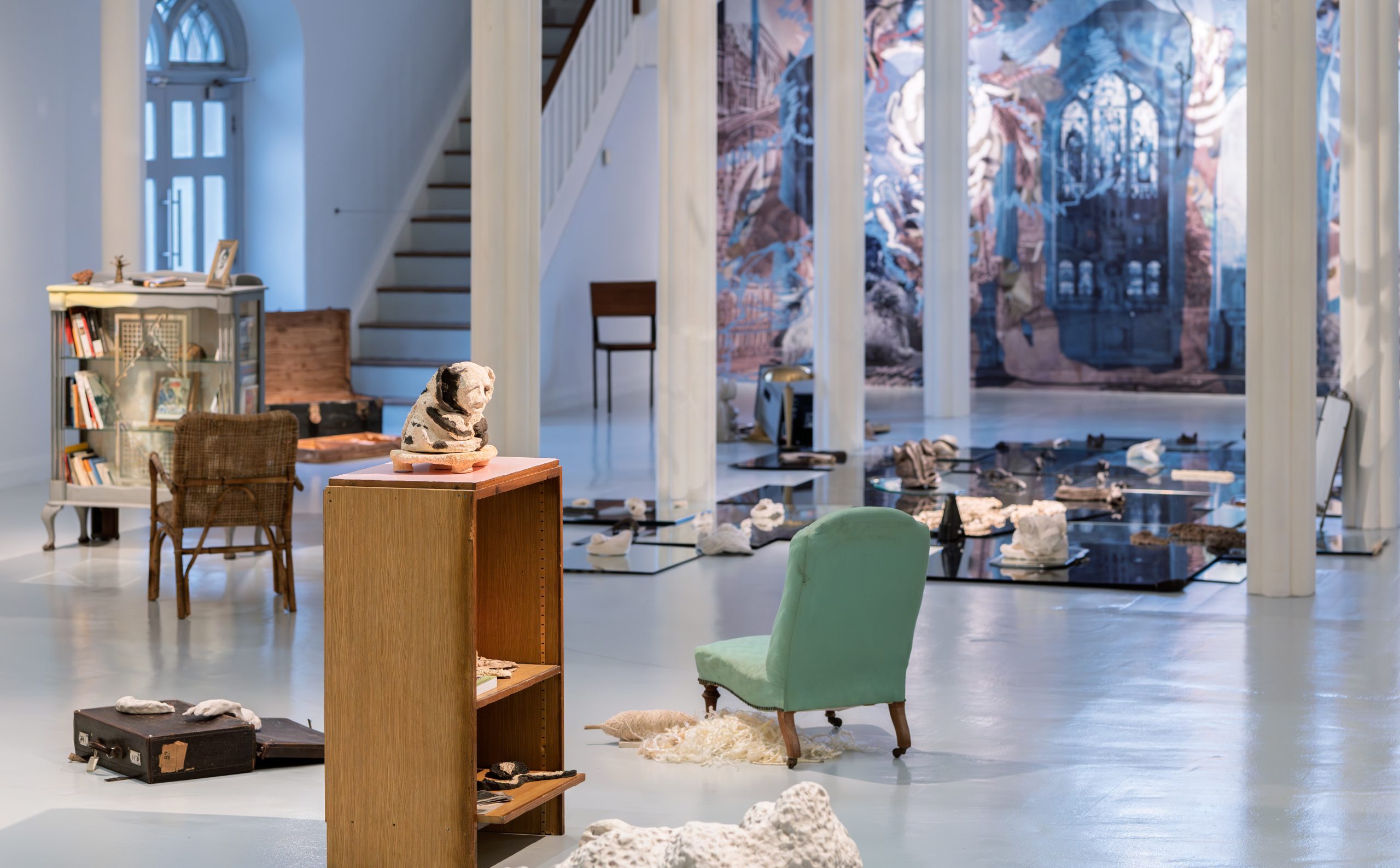
There are objects that feel like they belong to a home – photographs, textiles, heirlooms – but they are rearranged, recontextualised, placed into conversation with items and forms that resist easy categorisation.
“You might have noticed there are a lot of domestic materials in the installations,” they say. “Things that usually appear in home spaces, not gallery spaces.”
This is not incidental. It is a deliberate act of translation – bringing the private into the public, the intimate into the institutional.
“I wanted to bring home into those spaces… to make that kind of welcome present.”
That home, however, is not singular.
Rekab’s father is from Sierra Leone, with Syrian heritage; their mother is Irish, with a lineage shaped by revolution and nation-building. These histories do not sit neatly alongside one another – they overlap, diverge, and reconnect in unexpected ways.
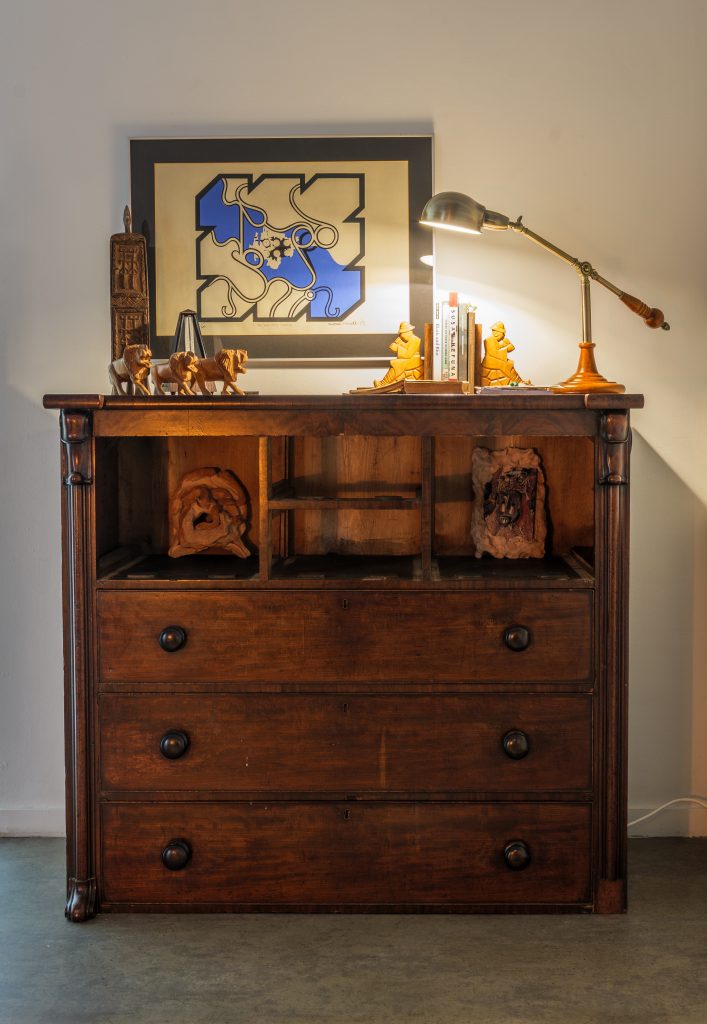
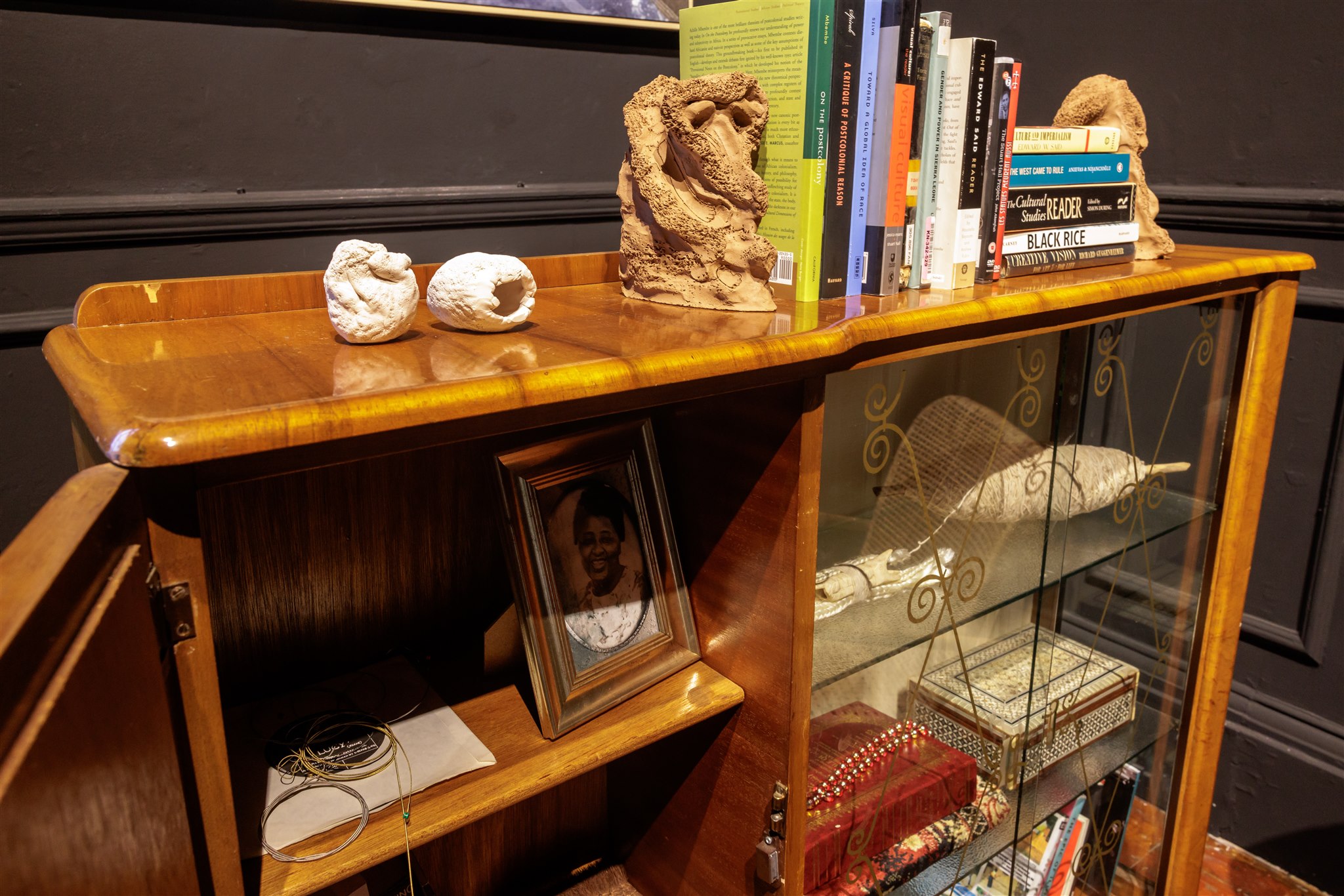
“My home had objects from Africa, the Middle East, and Ireland all together,” they explain. “All on the same mantelpiece, as it were.”
That early experience – of difference held in proximity – becomes foundational.
“It informed a methodology… an approach to bringing objects together in space.”
Objects that speak beyond intention
There are moments in Rekab’s work where meaning exceeds intention – where an object reveals more than the artist initially understood it to hold.
During the tour in Galway, a small inlaid box – something Rekab had included simply because it belonged to their family – became the focus of recognition.
“Someone on the tour said, ‘Everyone in Damascus has one of these.’ And I didn’t know that.”
The object shifted instantly – from personal artefact to shared cultural marker.
“That was really moving,” they say. “You don’t always know what you’re doing… sometimes you’re just making something out of memory, and then it resonates in a broader way.”
This tension – between intuition and recognition – runs throughout the work.
“There’s a transition between something that has immediate personal meaning… and then understanding that it has a wider cultural meaning.”
Identity as accumulation
For Rekab, identity is not something stable or singular. It is built – layered across family, community, country, and beyond.
“When you are of migrant background,” they explain, “sometimes there are bigger gaps between those layers.”
Growing up in a multiethnic context in Ireland, at a time when that experience was less visible, meant navigating those gaps in isolation.
“You might be a family who doesn’t really know anyone else like you.”
That experience continues to shape the work – not as a problem to be resolved, but as a condition to be explored.
“I’m interested in how identity is built through all those layers… and how those connections aren’t always visible at first.”
As a white-presenting person of mixed heritage, Rekab also reflects on the shifting nature of perception.
“Depending on which parent I was with, I had different experiences of what it was like to be in Ireland.”
This multiplicity becomes central.
“To remind ourselves that we’re all made up of different parts… that a unified, unchanging identity isn’t necessarily true.”
The Atlantic Ocean as a living connection
The title ‘Clann Miotlantach / Mythlantics’ suggests a geography that is both real and imagined – a space where histories flow rather than divide.
A key influence here is Bob Quinn’s documentary Atlantean (1984), which traces connections between Ireland, the Western seaboard of Europe, North Africa, and beyond.
“When I saw that film, it was the first time I felt like I belonged in Ireland – not just in a recent way, but in an ancient way.”
The Atlantic Ocean, in this context, is not a boundary. It is a route.
“It’s about mapping the world in a way that isn’t about barriers… but about flow and connection.”
This reframing opens up new ways of understanding identity – not as something rooted in a single place, but as something shaped through movement.
Music, language, and shared space
Although Rekab’s work is grounded in sculptural practice, sound runs through it quietly but persistently.
“My dad taught me music, and I trained as a singer,” they say. “That’s still present in the work.”
Music appears not only through objects – records, instruments – but through live programming, bringing artists into the gallery.
“There are Irish-language musicians, and Black Irish performers… creating a shared cultural space.”
The Irish language itself becomes part of this exchange.
“It’s tied to a kind of postcolonial identity… something that resonates with younger artists and audiences now.”
In this way, the exhibition becomes more than a static display – it becomes a site of gathering.
Clay, memory, and the language of the earth
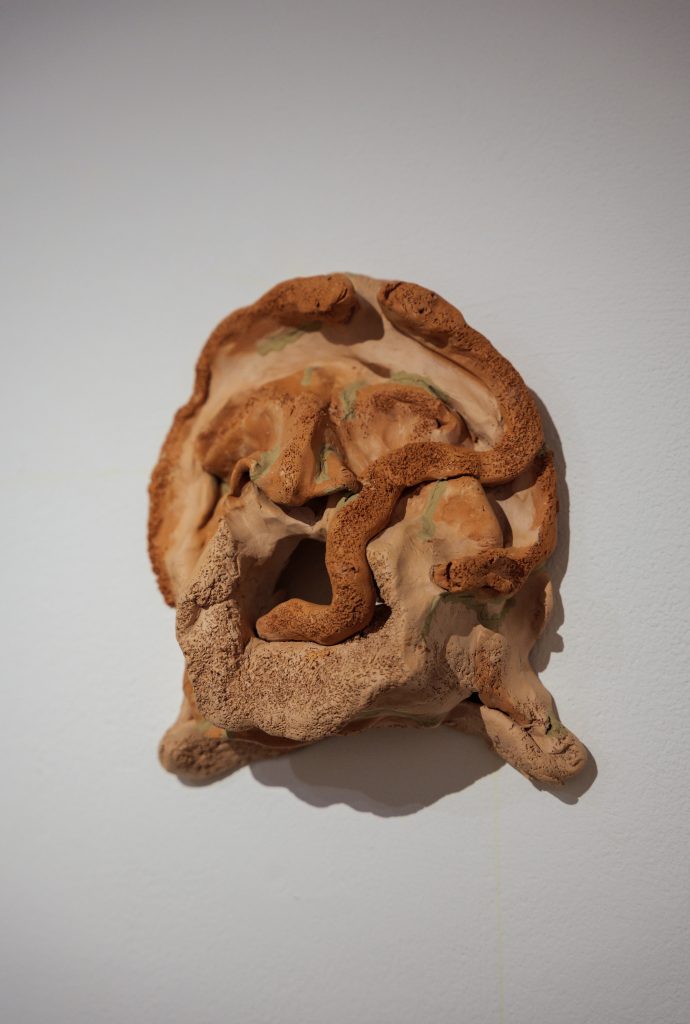
If the installations bring together multiple materials, clay holds a particular weight.
“It’s like a repository of knowledge,” Rekab explains. “Animals, plants, minerals… it’s the earth.”
Unlike more controlled processes, their approach to clay is intuitive. “I don’t start with a plan. I just begin, and the forms emerge.”
What emerges are often creatures – recognisable, but not fixed.
“They’re not anatomically correct… they’re not replicas of anything that exists.”
This openness allows clay to function as something beyond representation. “It has a kind of non-verbal language… something subconscious.”
The material itself carries memory – shaped by where it is sourced, how it is handled, how it is fired.
“Clay from Sierra Leone, from Ireland, from Munich… they all behave differently.”
In Sierra Leone, Rekab encountered a community where clay, labour, and daily life were inseparable.
“The kilns were where they cooked bread… everything was connected.”
These experiences feed back into the work – not as documentation, but as transformation.
“Heat changes clay… stress changes it. That became a way of thinking about how we are changed by experience too.”
Storytelling, invention, and the Irish imagination
Rekab is not interested in dismantling identity, but in understanding how it is made.
“We all tell ourselves stories about who we are,” they say. “And we need to.”
They point to early 20th-century Ireland – the revival of language, aesthetics, and cultural identity – as both recovery and invention.
“It was about reestablishing identity… but it was also about imagination.”
This duality is not a contradiction – it is a condition.
“My work doesn’t try to present a single, linear narrative. It knows it’s constructed.”
In acknowledging that, the work opens itself up – allowing multiple narratives to exist side by side.
A practice in motion
As Clann Miotlantach / Mythlantics reaches the end of its current journey, Rekab’s work continues to expand – across geographies, communities, and conversations.
Future projects will explore connections between Ireland and Wales, Ireland and Portugal, different diasporic realms, and various generations.
“There’s a sense that it can always continue to expand… through connection.”
Like the Atlantic Ocean itself, the work does not settle.
It moves. It gathers. It reshapes.
And in doing so, it offers a way of understanding identity not as something to be defined, but as something to be lived, carried, and continually reimagined.
Explore Alices’s selected work, sign up for their newsletter, and get their latest news via their website: alicerekab.com
And keep up with Alice via social media: @alicerekab
Support Go Leor. Get the Print. Join the Story.
Go Leor is an independent Irish arts magazine built by hand, heart, and community. Your support keeps meaningful storytelling alive – in print, in culture, and in conversation. Through Patreon, you can join as a monthly supporter and receive exclusive benefits across our tiered memberships:
Fir Bolg: Your name printed inside every issue.
Muintir Neimhidh: Your name + monthly issue delivered (UK & Ireland) and PDF issues.
Muintir Partholóin: All previous benefits + monthly editor’s dispatch.
Bradán Feasa: All benefits + help shape future articles and themes.
Your backing helps us print, publish, and grow a space for creative voices across Ireland and beyond.
The Latest Articles

Joshua Burnside – Inside It’s Not Going to Be Okay
From the layered textures of Teeth of Time to a more exposed and intimate sound in It’s Not Going to be Okay, Burnside enters a new phase of his work

Kerrie Hanna – Carrying the Land Through Authentic Material and Light
Ancient pigment and endangered craft meet feminist reclamation and community authorship in a practice rooted in land and light

Anne Harper – The Magic Stories That Still Live in the Land
From ancient hills in County Down to evolving musical practice, uncovering the quiet connections that link mythology, place, and lived experience

Why Online Movements Have Such a Powerful Grip on People
Mark Malone explores how people are drawn into online spaces – and how understanding, not judgement, might be the way out

Frances Magee – Preserving Ireland’s Natural World in Cyanotype Magic
In her North Belfast garden, Frances Magee transforms carefully tended plants into luminous cyanotypes – where texture, imperfection and light combine in work that feels timeless.

Mark Bonello – Capturing the Spirit of Ireland’s North Coast
From London galleries to the North Coast studio, Mark Bonello paints light, labour, and lived experience with unwavering focus