FÉOIL

Illustrator & Street Artist

From distorted bodies and three-headed wolves, FÉOIL turns experiences that resist easy conversation into images too large, strange and alive to be ignored.

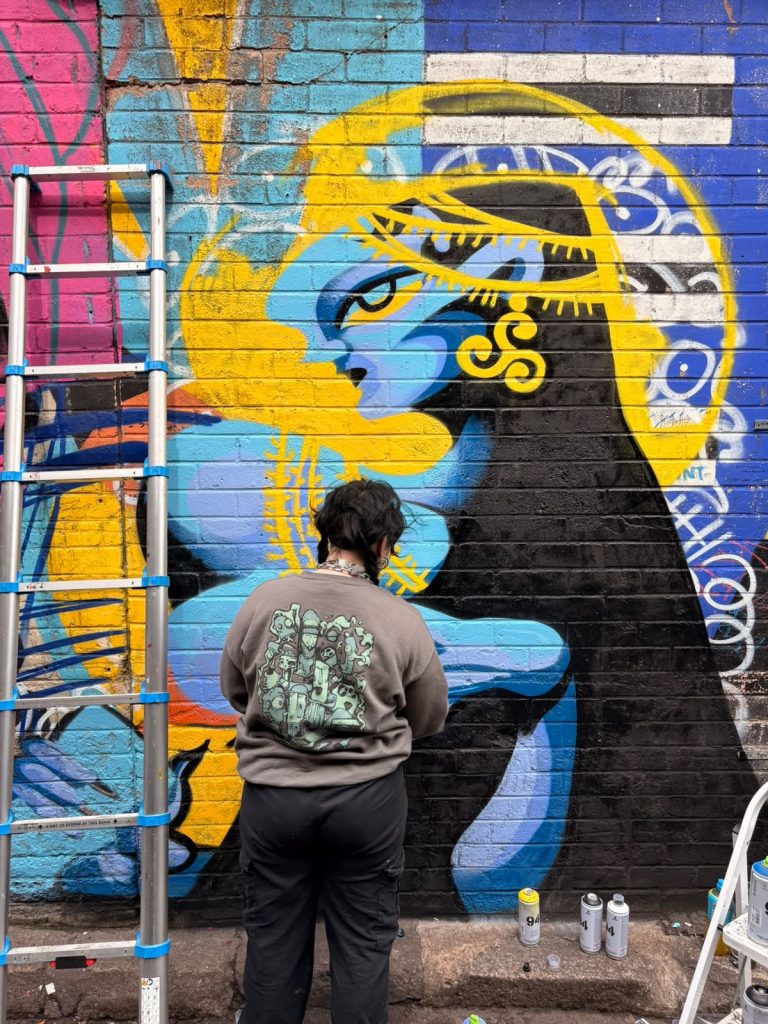
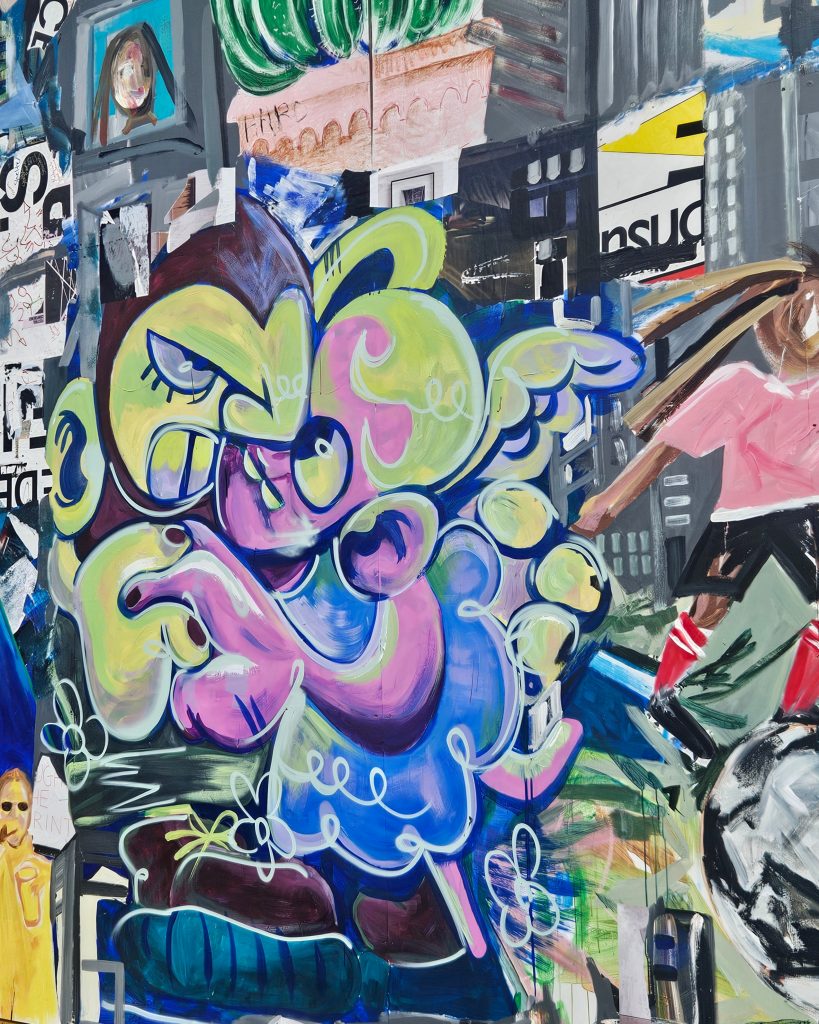
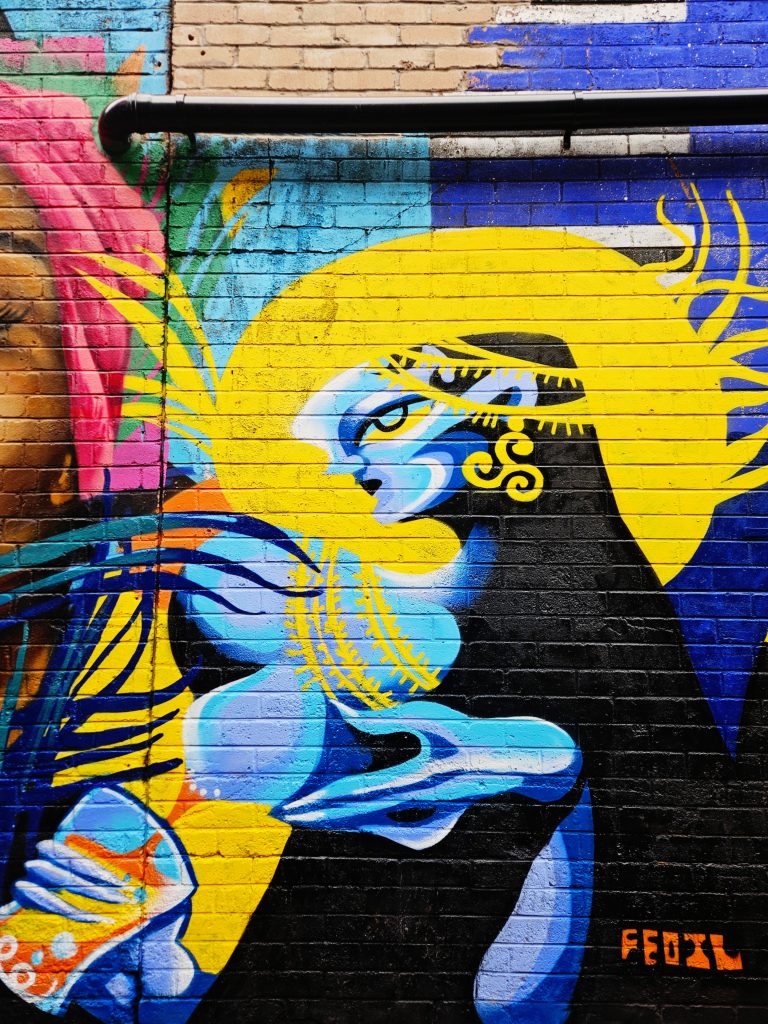
FÉOIL wants to go bigger. Spray paint may be the foundation of their street work, but the real material they are trying to master is scale: the shift from an etching that fits in the hand to a figure capable of occupying an entire wall.

“I think size is kind of an underrated medium,” they say.

Throughout FÉOIL’s work, changing the size or proportion of a body also changes how it can be understood. Limbs stretch, viewpoints tilt and human figures slip towards beasts. A small drawing can hold something difficult to say; a public wall can place that feeling in front of thousands of strangers.

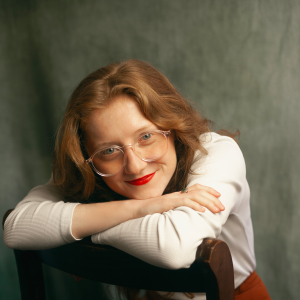
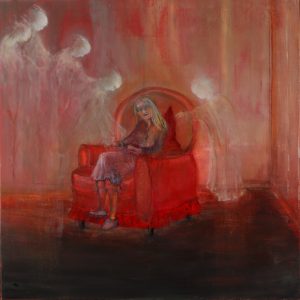
Behind the moniker is Eibhlín “Eibh” Duffy, an Irish-Scottish illustrator and street artist raised in County Down and now based in Belfast. Working across spray paint, illustration, printmaking and painting, they create figures that are grotesque, funny, wounded, watchful and feminine. The work is personal, yet never settles for a straightforward portrait of victimhood.

Different Strokes

Entering Belfast’s street-art community gave FÉOIL something they had struggled to find elsewhere: a creative environment where difference does not automatically become competition.

The artists around them may share walls, events and paint jams, but their visual languages remain recognisably their own. That variety means there is less pressure for everybody to fight for the same narrow position.

“We’re all interconnected, but there’s not very much competition in that way because we all kind of fit a different niche,” FÉOIL says. “It’s one of the best parts, because I struggle with competition a lot.”

The route into spray paint was also shaped by physical necessity. FÉOIL is dyspraxic and frequently injures their hands. Printmaking, particularly processes involving sharp cutting tools, became difficult to sustain. Spray painting presents its own strain – the joints in their fingers can become sore – but it offers another way to keep working when a different method becomes inaccessible.

Moving between materials prevents one injury or limitation from closing down the entire practice. FÉOIL would now like to work more with brushes and emulsion. Whatever the material, the ambition remains the same: to move between the tiny and the monumental.

Taking Up More Wall

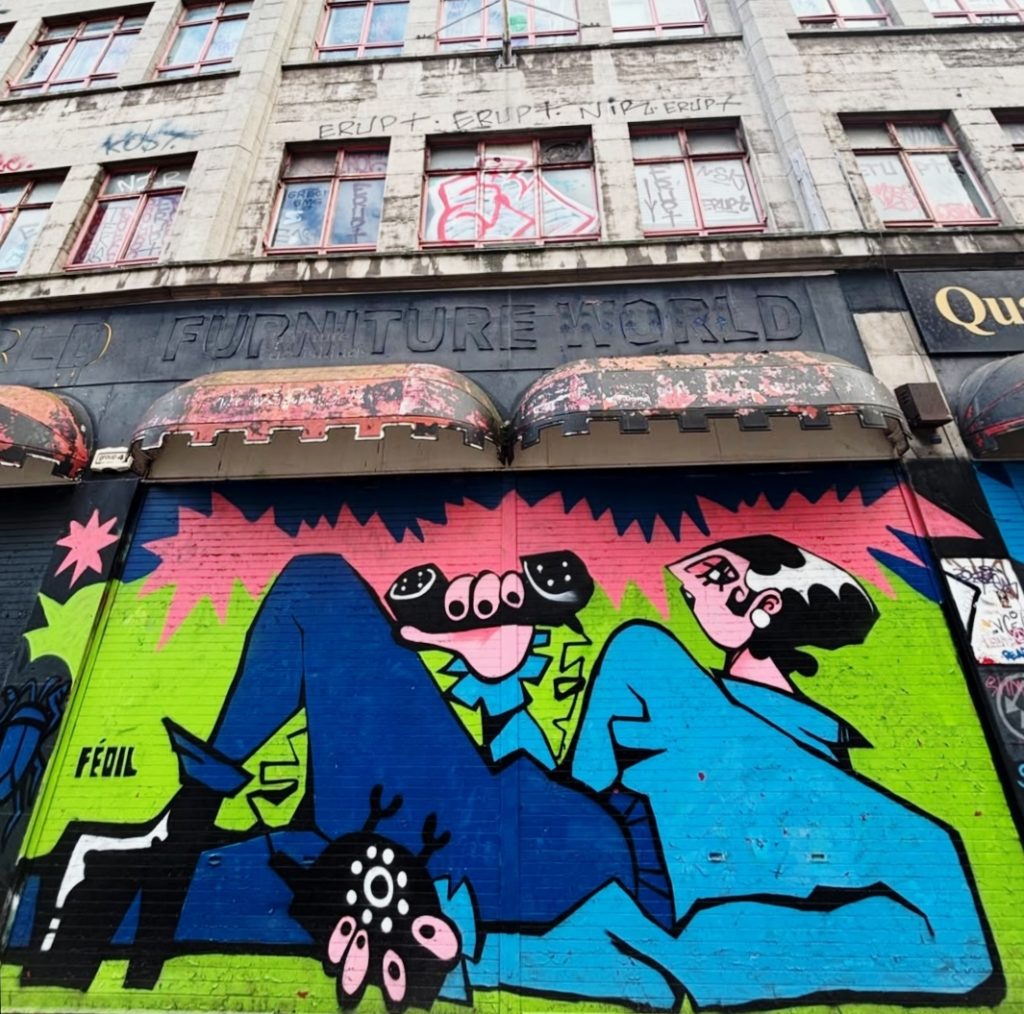
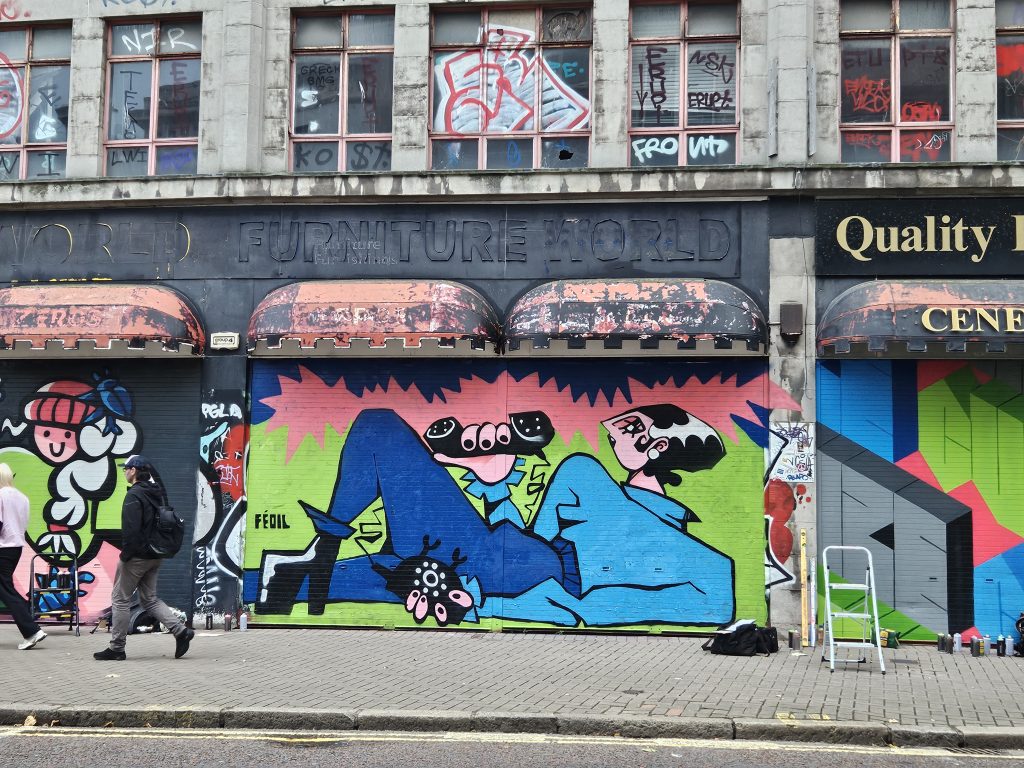
A large shutter on North Street became an early test of that ambition. Another artist had been expected to complete the job but withdrew, and FÉOIL was put forward as a replacement. They had only been spray painting for around a year and a half and were working beside artists with considerably more experience.

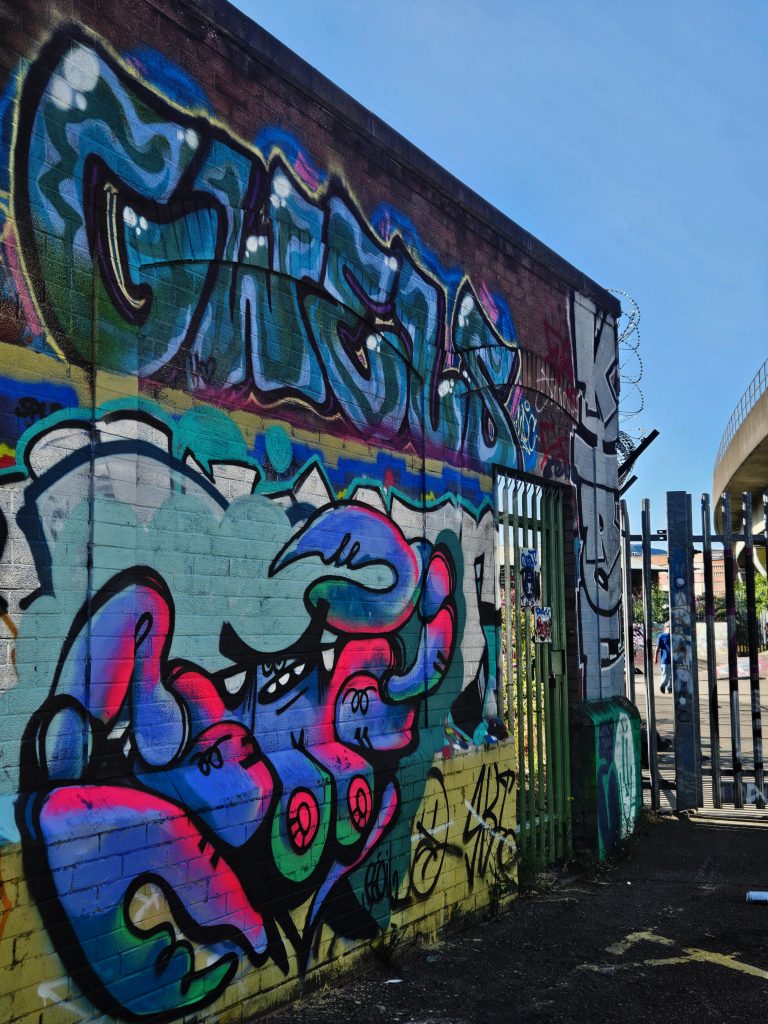
On Culture Night in 2025, FÉOIL had two surfaces to complete: the North Street shutter and another wall barely the size of a door. Initially, the smaller spot felt disappointing. Once the reality of completing both in a single day became clear, it felt like a mission.

The shutter was one of the biggest things they had painted. FÉOIL arrived unsure whether they could manage it, then did.

“I was like, ‘Oh my God, it’s this massive thing.’ But I did it and I smashed it.”

Their pride is immediately followed by an artist’s qualification: the piece is “all right”, and they keep considering whether to return and fix it. People pass it on foot and see it from buses; unless it is painted over, it remains part of North Street. FÉOIL had taken up a larger piece of the city than they knew they could handle.

FÉOIL admires artists who move between extremely small prints and enormous murals without treating either as the lesser form. They want the same freedom. Size alters the physical relationship between the figure and the person looking at it.

A Distorted View

Perspective is one of FÉOIL’s most effective tools. In pieces such as íte’s sacrifice (in the name of rot), where a girl looks down up from the bottom of a well, the angle places the viewer inside a moment of vertigo. The body and its surroundings do not simply describe a scene; they reproduce something of its sensation.

“Perspective is one of those things that can really lend itself to communication in a piece – how it makes you feel as well,” they say. “It kind of tricks the eye, and that sort of makes you feel different about things.”

Dyspraxia affects FÉOIL’s spatial awareness in daily life. They bump into things and fall, and do not feel that they perceive perspective in the same way as other people. In their art, that difference becomes a visual language of its own. Angles are pushed, bodies extended and the supposedly correct view loses its authority.

Realism has never felt comfortable. FÉOIL found greater freedom in twisted characters whose proportions could answer to the image rather than a fixed idea of perfection. Body dysmorphia also informs the way they see and represent bodies: not as stable forms observed from a safe distance, but as shapes altered by perception.

That distortion is sometimes read as body horror. FÉOIL welcomes the term because it recognises the estrangement inside the work. Objectification, difficult experiences of sex and men, and a sense that their body was the principal thing for which they might be valued all feed into figures that appear stretched, exposed or physically transformed.

“Everything’s kind of twisted and difficult, and you don’t quite fit your own skin,” they say.

FÉOIL works under a moniker that can appear to separate artist from art, yet their practice remains intensely personal. They describe it as a second skin and a means of communication. It shows how they see something when ordinary explanation has failed to make that view legible to somebody else.

“I kind of just make to get by,” they say. “I make to keep going.”

The Ulster Woman Looks Back

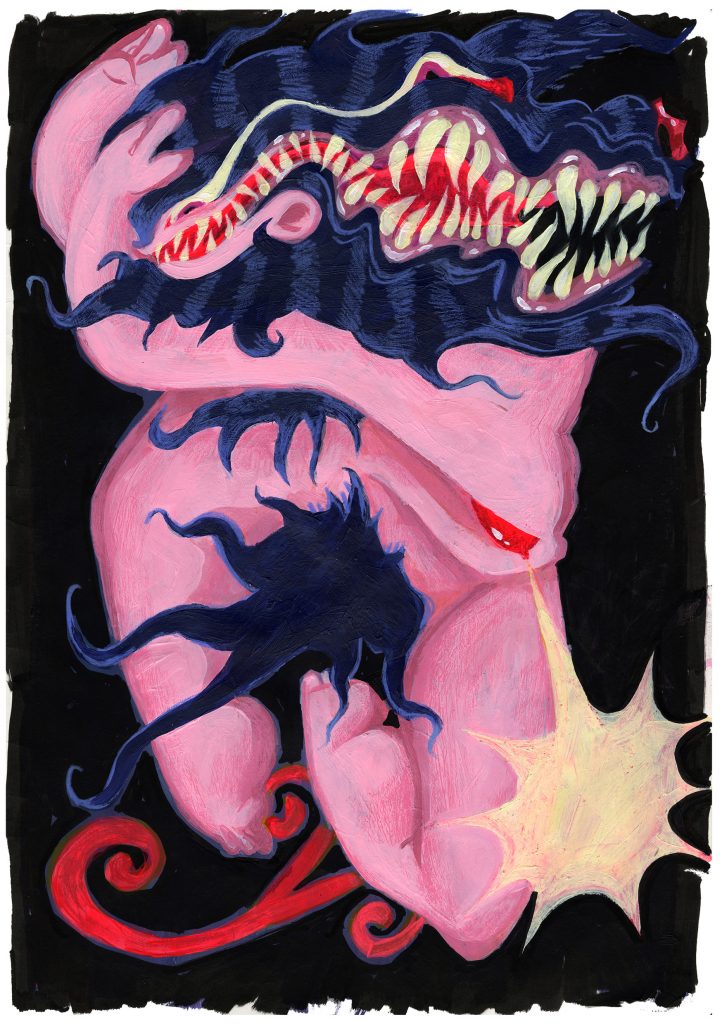
That need to communicate is at the centre of Bean Ultach, or Ulster Woman. The work considers violence against women across Ulster, including women who understand themselves as Irish and those who identify as British.

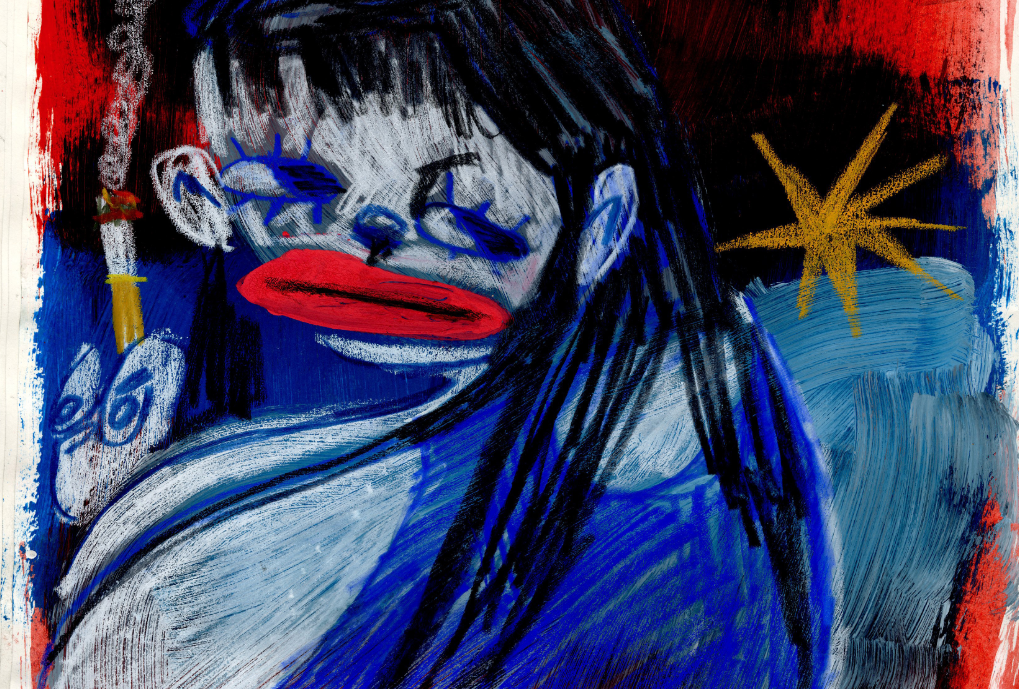
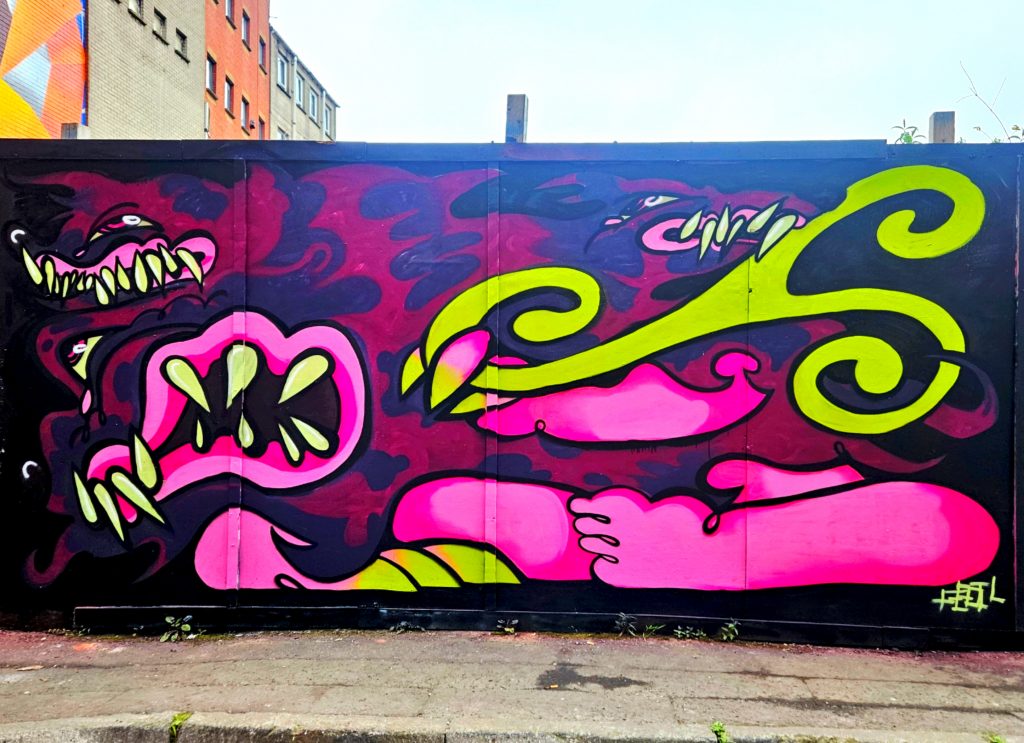
FÉOIL’s Ulster woman is not presented as passive. She has become a twisted form representing the way abuse twists and changes women – experience has taught her that protection must be constant. Fur covers her body like armour, while her strained posture retains the force of what produced the transformation.

The piece is informed by FÉOIL’s experience of childhood abuse and by the difficulty of speaking about trauma in a way that permits a conversation to continue. A direct disclosure can leave both people inside a silence: one has offered a painful truth, while the other may not know what can follow it.

Art enters that silence. FÉOIL is alert to the danger that an artwork can romanticise trauma, but it can also give thought somewhere to go. Rather than closing with the statement that a person was victimised, an image can ask what changed and why defensive behaviour is so often judged without regard for what made defence necessary.

The wolf draws partly upon accounts of women imprisoned after fighting back against long-term abuse. FÉOIL is interested in the difficult ground between uncomplicated categories: a person can have been victimised without victimhood containing the whole of who they are; an act of resistance can be violent while still carrying the history of what preceded it.

That ambiguity is especially urgent in a culture inclined to swallow pain, keep going and turn discomfort into a joke.

When Bean Ultach was made, it responded to the recorded number of women killed violently in Northern Ireland since 2020. The figure written into the original project was 30. FÉOIL speaks about it not as a completed statistic but as a number that continues to change, rising to 33 earlier this year, binding the personal history within the piece to an ongoing public emergency.

Speaking Without Speaking

FÉOIL can name what happened to them, but understands that the subject creates a visceral reaction in other people. Their work does not attempt to make it comfortable. It asks viewers to remain with the initial recoil long enough for another response to become possible.

“I want people to kind of feel a bit ‘oh’, but feel a wee bit better as it goes on – an exposure to it,” they say. “It’s talking to people without talking to people.”

The monstrous bodies refuse a familiar picture of the ideal victim. They can be damaged and defensive, ugly and beautiful, frightened and dangerous. FÉOIL wants the work to remain raw without reproducing the objectification it examines or dictating its only meaning.

Public art adds another negotiation. Illustration allows FÉOIL to confront the naked body directly; the street limits what can be shown. Artistic nudity can quickly be flattened into the assumption that all nudity is sexual. They have begun bringing more of that bodily language into murals while considering audiences who encounter a wall without choosing to enter a gallery.

The tension suits a practice concerned with how bodies are read. A monstrous figure may be the more accurate portrait.

Choosing FÉOIL

The name FÉOIL grew from a longer history of self-renaming. After traumatic experiences while growing up, Eibh would adopt a new name or nickname and try to become somebody different. Each change felt like shedding a skin.

When they began spray painting at university, they wanted a moniker: a more confident identity capable of entering the street-art world even when they did not feel able to enter it simply as themselves.

Feoil is the Irish word for meat or flesh. Feoiliteach can mean a meat-eater or consumer of meat. For an artist preoccupied with bodies and objectification, the bluntness was right.

“We’re all meat,” they say. “We’re all human bodies. We’re skin suits with stuff inside them.”

The word reduces everybody to the same physical substance while reclaiming the idea of being treated as a piece of meat. It is gender-neutral enough that somebody seeing it beside a wall cannot immediately decide the gender of the artist. It sounds sharp, carries an Irish connection and – despite proving awkward to spray as a tag – has begun to feel permanent.

Most importantly, this is the first time Eibh has taken another name for a good reason. FÉOIL does not mark an attempt to flee what happened or erase the person who experienced it. It names an identity they actively chose.

As their understanding of Irish grows, the moniker encourages them to keep learning the language rather than use an Irish word as a detached aesthetic. The name acts as what they call “a carrot on a stick”.

Femininity Without Permission

Alienation appears throughout FÉOIL’s work because they spent much of their early life alone. They see a particular relationship between femininity and loneliness: women and feminine people can be isolated because their presence is treated as valuable only when it is useful to somebody else.

FÉOIL remembers male friendships changing in adolescence as gender and the possibility of sex entered how other people understood them. The message was difficult to miss: “You can’t be around unless you’re useful.”

They would like to see solidarity between women that is not organised solely around men or romantic relationships. At the same time, FÉOIL’s own relationship with womanhood does not fit into a simple declaration. They are nonbinary and prefer gender-neutral language. They do not object to being seen as a woman, but have never felt like a lady in the socially approved meaning of the word.

Drawing offers another definition. In FÉOIL’s work, femininity is not always tidy, delicate or well behaved.

“It’s ugly, it’s grotesque, it’s fat and it’s thin,” they say.

It can encompass all of those conditions without any one becoming a rule.

Their figures are predominantly feminine, but their meaning is not restricted to women. Experiences of being objectified, alienated, misread or condemned for protecting oneself can cross gender. The bodies are theirs, but a viewer may recognise what it means to become strange to oneself.

Regrowth

FÉOIL is often severe about their own work. They do not always enjoy what they make and can move quickly from loving a piece to hating it. The purpose of making is not constant satisfaction. It is that the act helps them continue.

Looking backwards has nevertheless revealed a change. Old images show the practice shifting, flowing and adapting. FÉOIL compares the process to regrowing a limb: a body repairing itself does not return unchanged, but makes another form of movement possible.

At 24, they feel more repaired than they have in a long time. It is not a claim that every injury has disappeared or that art provided a simple cure. It recognises the work involved in looking at something made years earlier without rejecting it completely.

The same movement runs through the entire practice. An injured hand leads from one medium to another. Poor spatial awareness becomes exaggerated perspective. A history of unwanted names gives way to a chosen one. A body treated as an object grows fur, heads and the capacity to watch every direction at once.

Now FÉOIL wants more wall.

The ambition is practical – larger commissions, greater confidence and new materials – but it is also consistent with everything their figures already do. They take private sensations that are too easily dismissed and alter their scale.

FÉOIL is one of the most visually independent artists working in Ireland today. Beneath the immediate force of their imagery lies a depth of knowledge, rigorous self-questioning and a burgeoning confidence.

Together, these qualities reveal an artist blossoming into one of the great creative voices of their generation. By confronting violence, objectification, alienation and other experiences carried by feminine bodies, FÉOIL creates work that is arresting without allowing spectacle to eclipse thought.

Their figures do more than command attention: they bring us face to face with experiences our society has overlooked, minimised or made difficult to discuss, asking us to reckon with the blind spots that remain our own.

Explore FÉOIL’s illustration, murals and public projects via their website:
feoiliteach.co.uk.
Follow their latest work, street-art events and works in progress on social media:
@feoiliteach.

Support Go Leor. Get the Print. Join the Story.

Go Leor is an independent Irish arts magazine built by hand, heart, and community. Your support keeps meaningful storytelling alive – in print, in culture, and in conversation.

Through Patreon, you can support the magazine in two simple ways:

  • Supporter Listing
    Have your name printed inside every issue as part of the community helping Go Leor grow.
  • Print Copy – UK & Ireland
    Receive the latest print issue delivered each month across the UK and Ireland, with your name included inside the magazine.

The Latest Articles