Caroline Murphy

Visual Artist

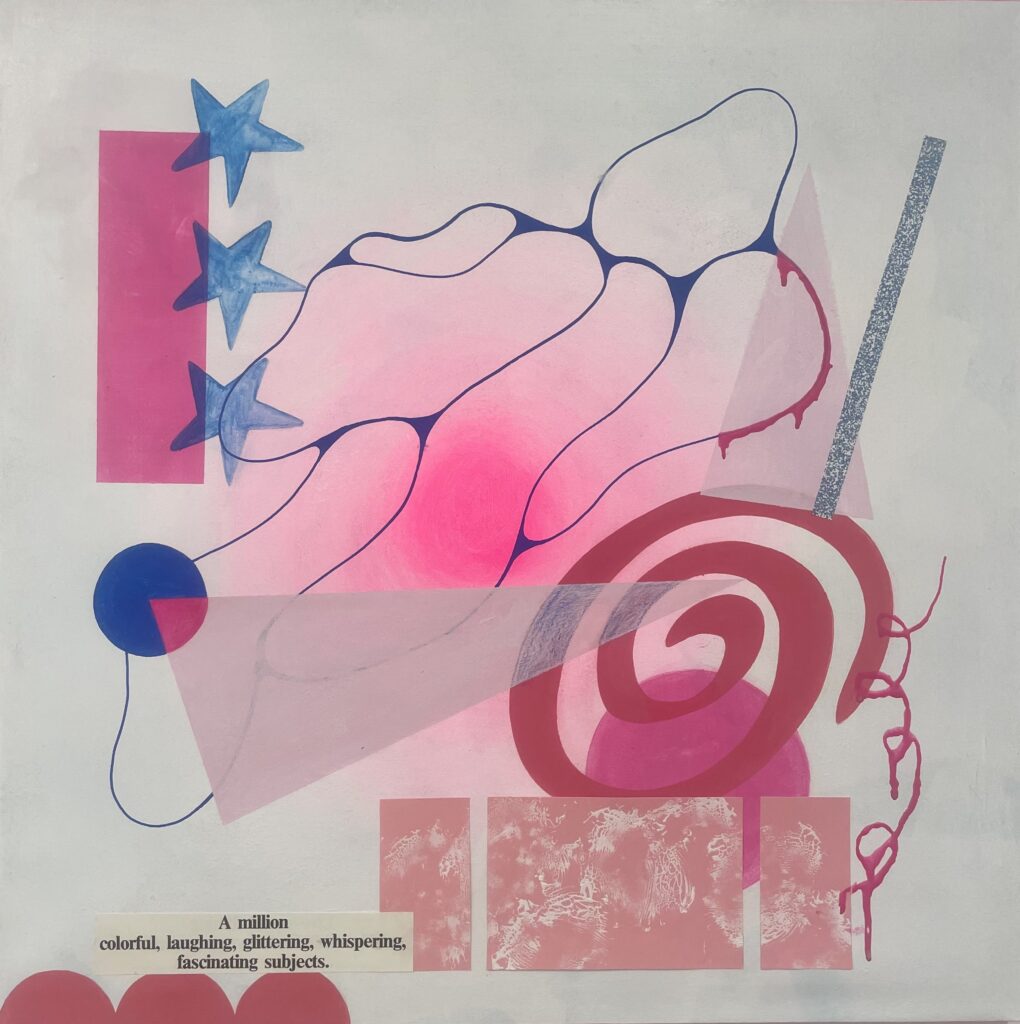
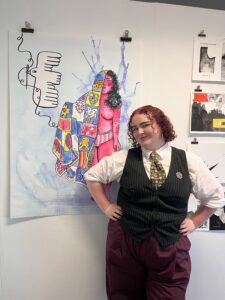
Working under the name Pansy Soup, Belfast artist Caroline Murphy brings together colour, found materials and a willingness to see where an idea leads.

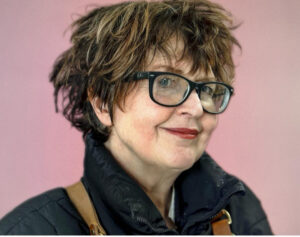
Photograph: Liadain Kaminska

A sketchbook can be turned on its side, flipped upside down or brought closer to the eye. A wall stays where it is. For Caroline Murphy, moving into mural painting meant discovering how much her smaller work depended on the freedom to move it around.

With abstract shapes, there was often no fixed way an image needed to face. Turning the page was part of making it, a habit so familiar that she barely noticed it until the surface became a building.

“I don’t think I really realised I did that until I wasn’t able to do it anymore,” she says.

The change in scale brought practical challenges, but it also opened up possibilities. Sketches made among musicians became illustrations, then murals.

A studio offered space beyond the boundaries of a notebook. Conversations with other artists gave her fresh reasons to keep experimenting.

For Caroline, who makes work under the name Pansy Soup, those developments have grown from being around people making things, and having somewhere to try things herself.

A Name With Several Ingredients

Pansy Soup brings together two aspects of how Caroline understands her work. The first word carries a personal association with anxiety and the language sometimes used to dismiss sensitivity. Expressions that suggest someone is weak or too sensitive have stayed with her, touching on feelings she has experienced about herself.

The second half is more playful. She likes the image of a soup containing pansies, and the idea of different ingredients coming together feels appropriate for an artist who moves between techniques.

Painting, drawing, collage and design can all become part of the mixture. The name leaves room for them to coexist without requiring her to settle on a single medium.

Anxiety has been present in her work since school. During A-level art, researching other artists introduced her to the possibility of expressing feelings she had previously wanted to keep private.

“I always thought it was something to hide,” she says. “I didn’t really want people knowing about it.”

Seeing how artists drew on their own experiences gave her a way to approach hers. Art could express something difficult to articulate, and might also reach someone who recognised the feeling.

Once she tried it, she found it helpful. Anxiety had been part of her life for so long that she felt it would find its way into her work somehow. Choosing to explore it gave her a more deliberate relationship with something already there.

Finding Things, Following Patterns

Caroline’s interest in materials also reflects concerns that extend beyond making art. She describes herself as an environmentalist, with climate change weighing on her since she first learned about it. That awareness shapes everyday choices, including buying her clothes second hand.

It carries into her artwork through found objects, reused materials and upcycled frames. There is a practical pleasure in making use of something already available, but she also enjoys what those materials bring to the process.

“I like making art that can’t really be meticulously planned.”

Something found by chance introduces a possibility she might never have arrived at through planning alone. An object has its own dimensions, surface and history of use. Working with what turns up gives her something to respond to.

She finds that materials discovered at random, or brought together spontaneously, often lead to the most satisfying results.
Patterns have a similar ability to catch her attention. Wallpaper, household objects and the design of everyday surroundings offer details that can set an idea in motion. She is particularly drawn to the fashion and design of the 1970s and 1980s, when colour and pattern filled domestic interiors.

Album artwork from those decades is another longstanding interest. Its colours and arrangements connect her enthusiasm for music with her graphic design background.

That attraction to pattern does not necessarily mean she wants to spend hours repeating a single design. Sustained, highly technical repetition can be difficult to stay engaged with. She generally has several pieces underway, moving between them as her attention shifts.

“I normally am working on three or four things at once.”

Some paintings are put aside for months before she returns to them. Having more than one thing available gives her somewhere else to go when a piece stops holding her attention, and the opportunity to revisit it later.

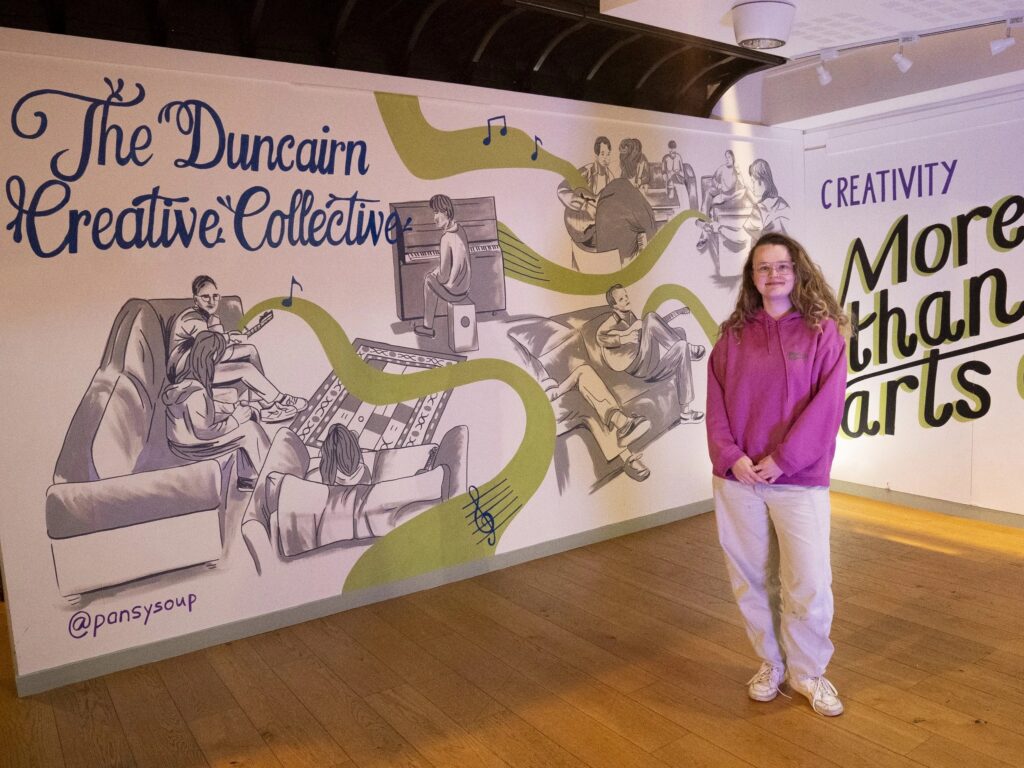
Sketching The Sound Of A Room

Caroline’s relationship with The Duncairn began through its Creative Collective in 2025. The programme brought together young artists, predominantly musicians, from across Ireland to develop new work.

As one of a small number of visual artists involved, she was invited to sketch while the musicians worked together. It was unfamiliar territory. She had not drawn people for years, and observing them in the middle of a collaborative process required her to return to skills she had not recently used.
The experience also gave her access to something she had rarely seen: the beginnings of a piece of music.

Many of the musicians were meeting for the first time. They brought different backgrounds and approaches into small groups, then worked towards something shared. Caroline could watch that process unfold while finding her own way to record it.

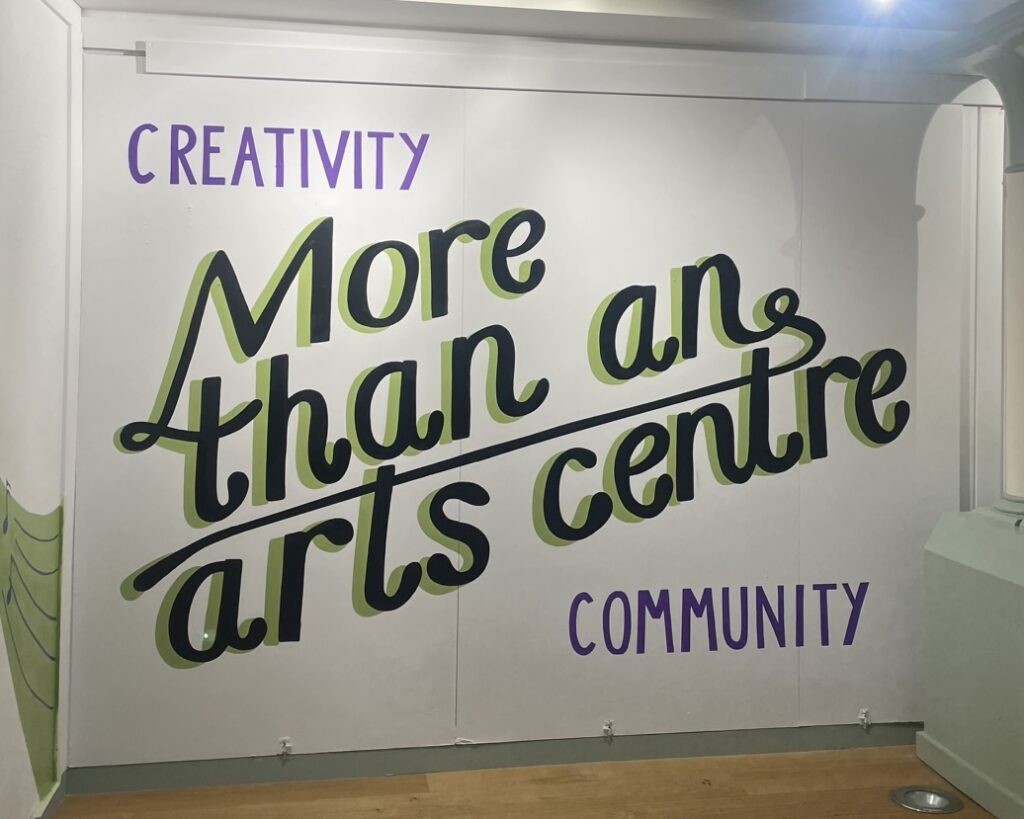
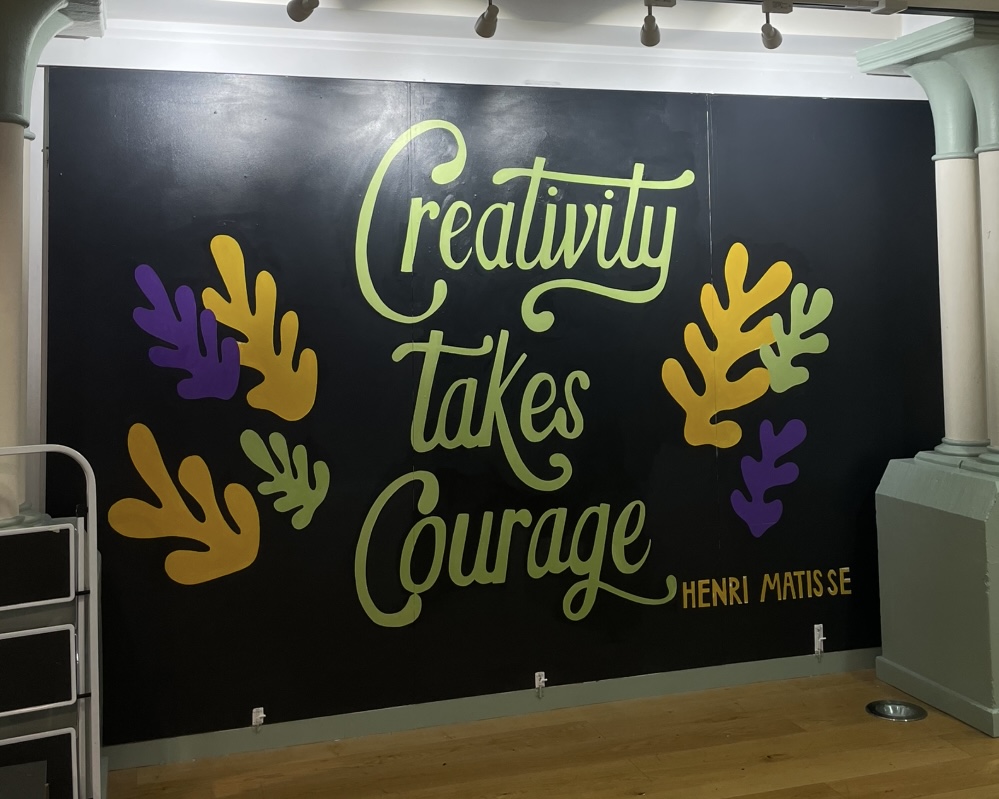
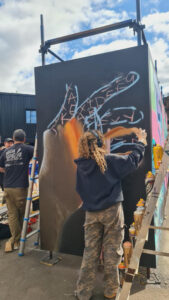
Afterwards, she developed the sketches into more finished illustrations. Those drawings led to a commission to paint three walls in The Duncairn’s Good Room.

It was the largest work she had undertaken. She enjoyed the project, while also having to work out its practical demands as she went, including how long painting at that scale would take.

“That was a really good project that just came off the back of me doing those sketches for the collective.”

An invitation to observe other people creating had become an opportunity to change the room itself. She returned to the Creative Collective the following year, continuing to sketch as another group of musicians developed their work.

Space To Make Something Bigger

In September 2025, Caroline moved into a studio at The Duncairn. Before then, she had never had a studio of her own.

Her degree in graphic design and illustration had involved a different working environment. Outside that, much of what she made had been confined to sketchbooks. A studio changed what she could attempt simply by providing somewhere to spread out.

Larger pieces became possible. Different works could remain in progress at the same time, giving her more freedom to follow the way she naturally works.

Just as significant was the company. She shares the studio with another designer, and there are other artists working in the building. Being able to see what someone else is making, discuss an idea or talk through a process has made a substantial difference.

“I think that’s probably what’s most inspiring for me,” she says, “to just talk to other creative people about things.”

She also finds encouragement in the habits of the designer she works alongside. Seeing someone else bring discipline and motivation to their day can help her find some of her own.

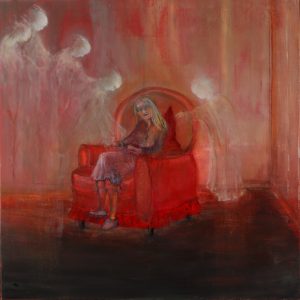
The studio has given her room to return to oil painting, something she enjoyed at school but had less time for while studying graphics and illustration. A painting of her cat is one of the ways she is rebuilding those skills.

She wants to become more confident painting recognisable subjects, including portraits and animals, with the eventual aim of bringing them into surreal compositions. For now, she is allowing time for the technique to develop.

Taking The Work Outside

Painting walls has brought lessons that a sketchbook could never quite prepare her for. Alongside the fixed viewpoint and unfamiliar scale, there is the difference between a digital mock-up and paint on a physical surface.

Caroline has come to accept that the two will not match exactly. The changes introduced by making something by hand have their own appeal.

“I suppose that’s kind of nice about it,” she says, “because it’s like the human touch.”

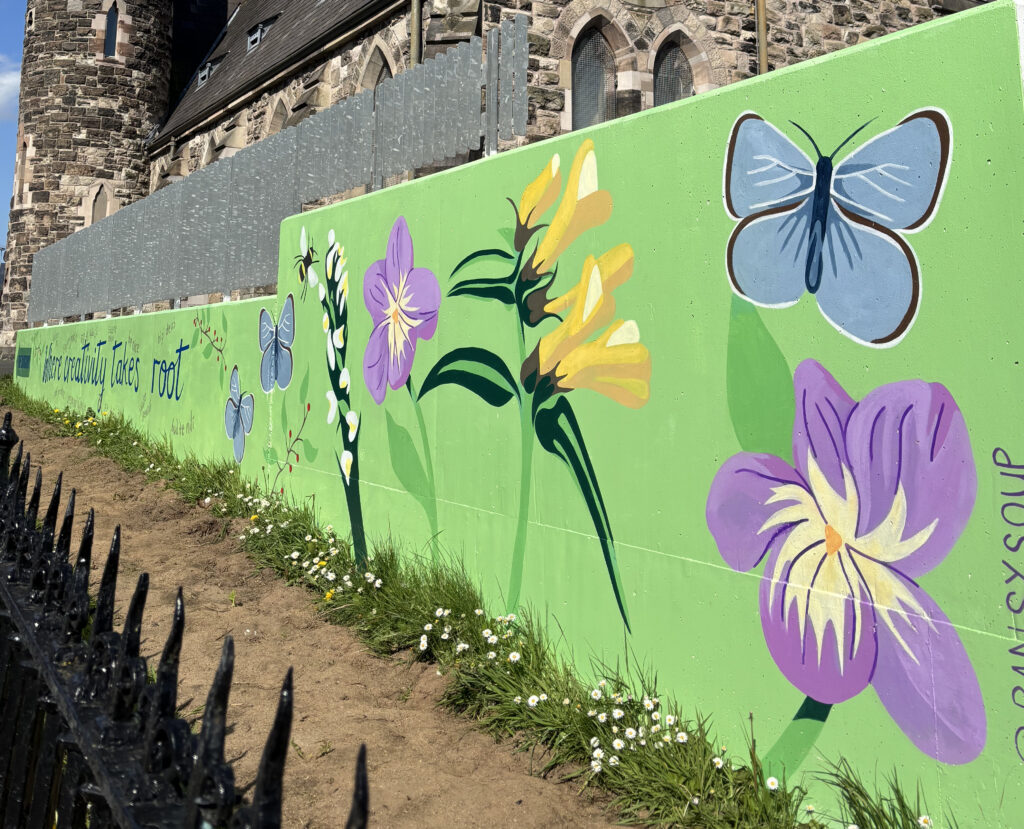
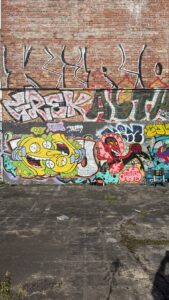
Her outdoor biodiversity mural at The Duncairn added another set of considerations. Created alongside the centre’s community garden project, it features threatened local species and a message chosen through community involvement: “Where Creativity Takes Root”. Around it, the phrase “Be Nice” appears in fifteen languages spoken in Belfast.

The setting brought her environmental interests into a shared public space. It also brought the weather into her working process.

Rain delayed the start for weeks. Cold made the work more difficult, and when she did begin, rain followed soon afterwards.

These were problems she had never previously needed to consider. Each one became part of learning how an image behaves when it leaves a controlled indoor environment.

The Experience Behind The Image

Caroline’s interest in the human decisions behind an artwork informs her views on generative AI. She feels strongly about its environmental impact and finds its increasing presence in creative work frustrating.

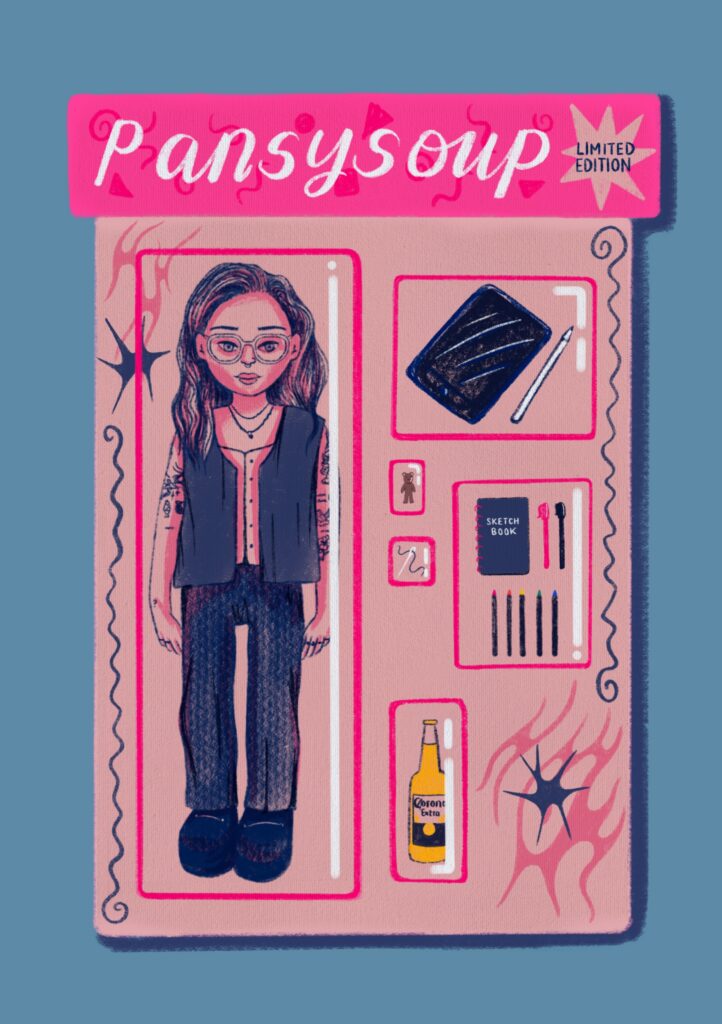
Her illustrated response to the AI doll trend offered an opportunity to make her own version. The broader issue continues to occupy her, particularly because what interests her in art extends beyond the finished image.

“What interests me the most about art is the artist’s personal experience and how that’s informed their work, and what techniques they use and what they’ve experimented with.”

The experiments, choices and experiences are part of what she wants to understand when looking at someone’s work. A compelling result carries the evidence of a person figuring something out.

As generated images become more invasive, she feels encouraged to devote more attention to traditional techniques, physical experimentation and mark-making. She wants to explore the kinds of decisions and effects that emerge through handling materials herself.

It is a direction consistent with her enjoyment of found objects and unpredictable combinations. The process matters because of what can happen while she is doing it.

Being In The Room

The Duncairn is part of a wider creative community that Caroline has been getting to know for years. She first attended Belfast’s Late Night Art with her school art class, and some of the work she encountered then has stayed with her.

She still tries to go each month. Exhibitions introduce her to artists she might otherwise never discover, while the regular turnout offers a visible reminder of the people supporting creative work in the city.

“There’s so many people that will come every month and show up for things like that.”

More recently, poetry evenings have become another source of interest. A connection with a poet whose work appeared alongside hers in a magazine led to her designing posters for his new poetry night.

The link developed through a shared publication, then became another opportunity to contribute. Like sketching musicians at The Duncairn, it brought her into contact with an art form she could appreciate while offering something of her own.

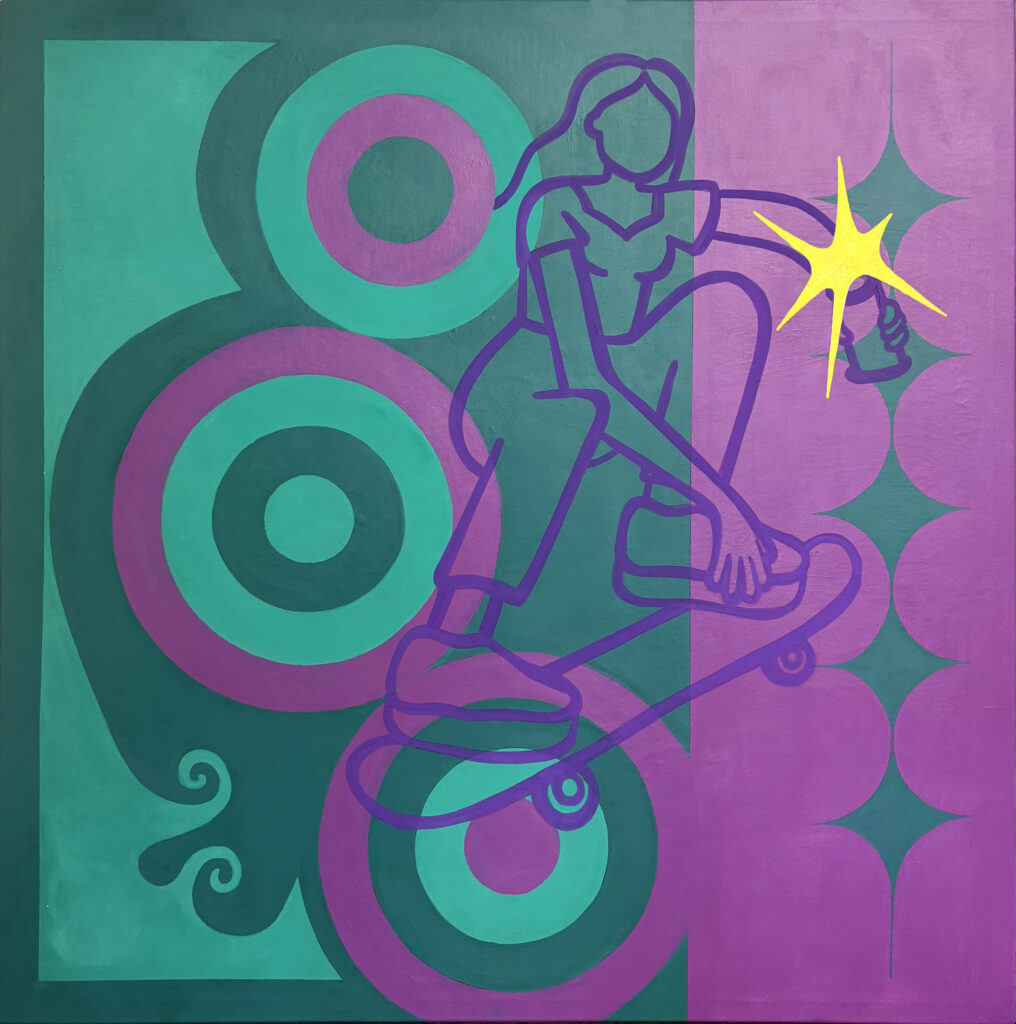
She has also painted a skateboard for a Culture Night exhibition, enjoying the variety of approaches brought to the same kind of object. Even there, the aspect she would have liked more of was the chance to meet and talk with the other artists before the exhibition.

Again and again, she returns to the value of those encounters.

“It’s just being in a room with other creative people,” she says, “I think is what’s most inspirational for me in general.”

Her work continues to develop through that exchange: watching musicians begin a composition, noticing another designer’s working habits, discovering an artist at an exhibition. Alongside the found materials and patterns that catch her eye, these experiences give her something new to respond to.

There are paintings to return to, techniques to practise and ideas still waiting to take shape. Having room to try them, and people nearby with whom to share the experience, is helping Caroline discover what she wants to make next.

Keep up with Caroline via social media: @pansysoup

Support Go Leor. Get the Print. Join the Story.

Go Leor is an independent Irish arts magazine built by hand, heart, and community. Your support keeps meaningful storytelling alive – in print, in culture, and in conversation.

Through Patreon, you can support the magazine in two simple ways:

  • Supporter Listing
    Have your name printed inside every issue as part of the community helping Go Leor grow.
  • Print Copy – UK & Ireland
    Receive the latest print issue delivered each month across the UK and Ireland, with your name included inside the magazine.

The Latest Articles