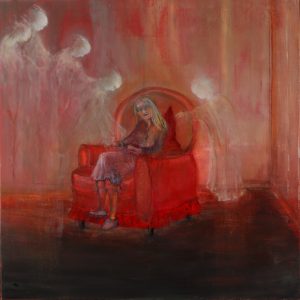
Grace McMurray
Artist
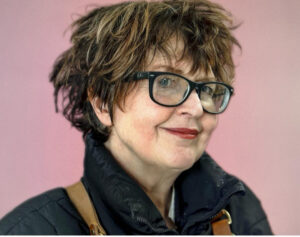
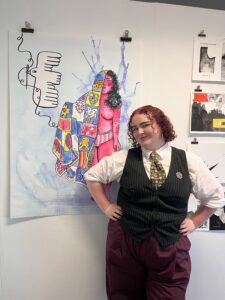
Through knitting, embroidery, drawing and costume, Grace McMurray makes work that carries personal histories, shared enthusiasms and the value of time spent creating.
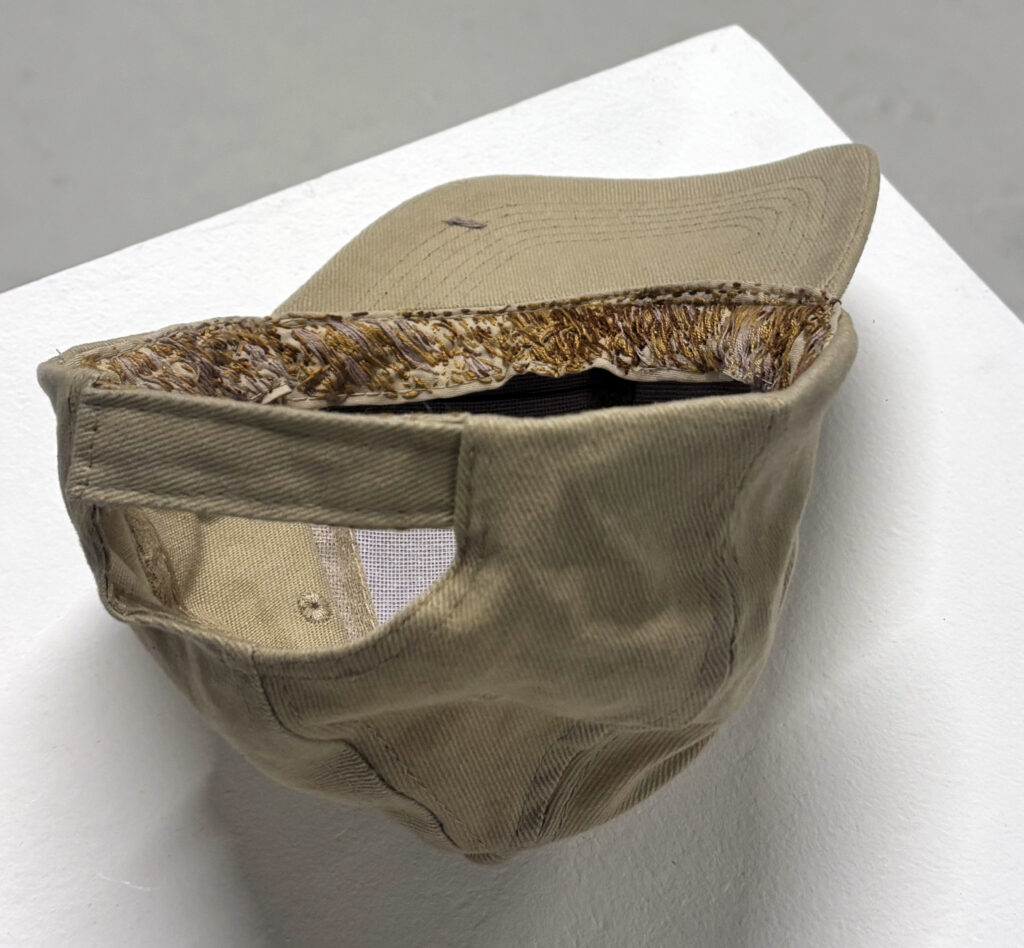
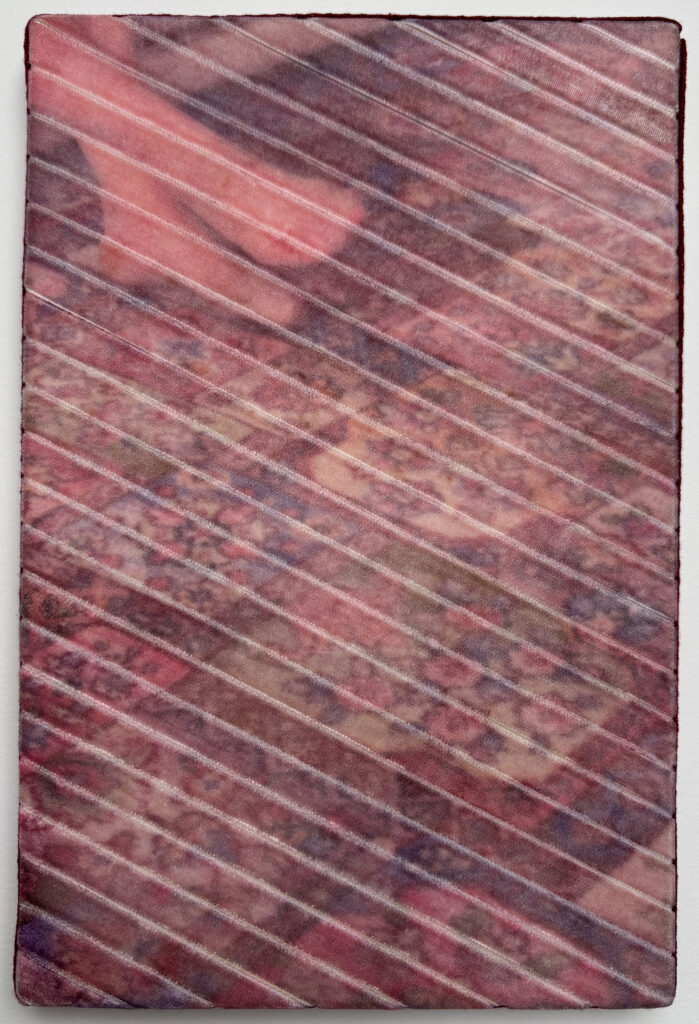
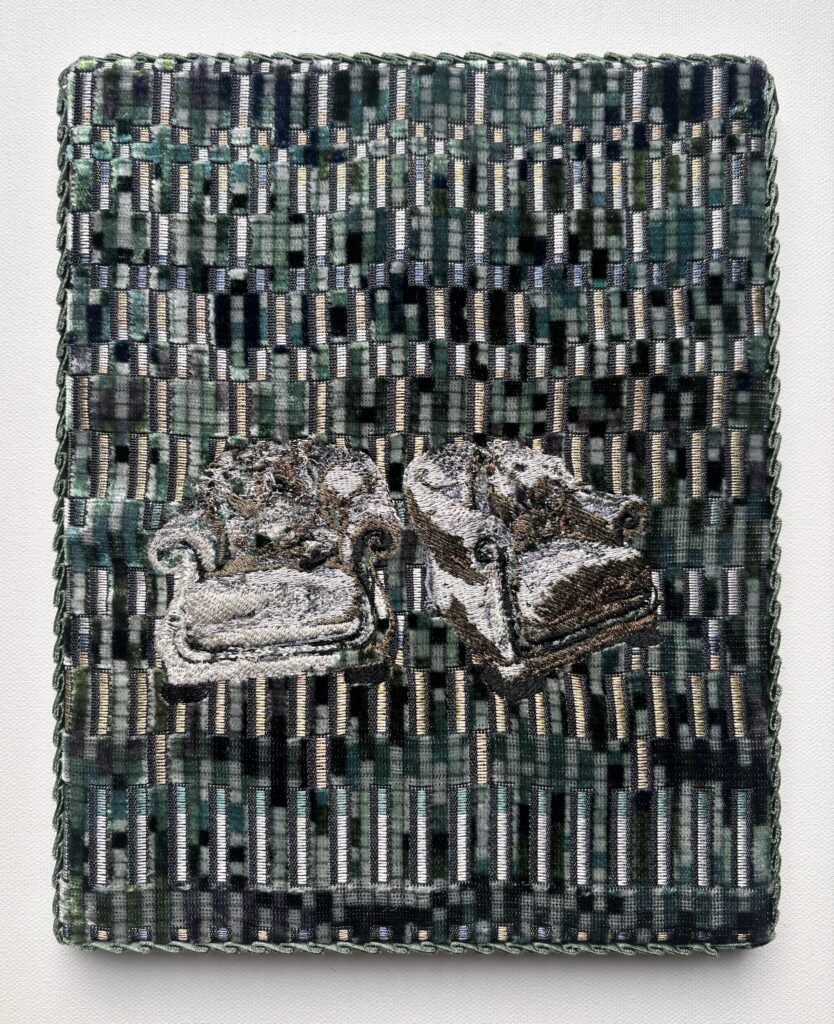
There is pattern everywhere in how Grace McMurray remembers her mother’s house. Growing up among siblings, noise and competing visual details, she sometimes found the surroundings overwhelming. She also remembers feeling embarrassed about coming from the country. Now, returning to those rooms through embroidery, she is finding images she wants to spend time with. Small details of the family home have become the subject of new work, allowing her to look again at a place she once experienced differently.
The embroideries take particular visual moments from the house and give them another form, reflecting how her relationship with the place has changed. They are personal images, but they can also prompt recognition in someone else: the patterns, objects and arrangements through which a family makes a home, and the complicated feelings that can gather around them.
Living between Rathfriland and Belfast, Grace has developed a practice that includes drawing, knitting, weaving, patchwork, embroidery and installation. She studied Fine Art Sculpture at Wimbledon College of Art, graduating in 2008, and is a member of Array Collective, which won the Turner Prize in 2021. Throughout her work, materials offer ways of understanding experience and communicating it. “I feel like I’ve kind of found myself in my work,” she says.
Learning The Pattern
Grace first learned to knit from her sister, who had learned from their mother, who had in turn learned from hers. The skill arrived through a family history of making, accompanied by expectations about what women should know and who their work should serve. Knitting could provide for other people without the need to spend money, while the time taken to do it was treated as readily available.
“You learned these skills not for yourself, but for others.”
Taking that knowledge into her own practice became a way to challenge the obligation attached to it. She could make things for herself, deciding what the skill would mean and where her time would go. An activity passed down through the family became a means of asserting a choice within that inheritance.
She returned to knitting while studying in London, where homesickness and the feeling of being misunderstood made a familiar skill especially valuable. People struggled to understand her accent and knew little about Ireland. Knitting was something she knew how to do well, and the labour within it offered a point of recognition even for people who might not know how to approach the finished artwork.
That remains a complicated measure of value. Someone who feels uncertain about contemporary art might still appreciate that an object took a long time to make. Grace recognises that response, while also questioning the assumptions behind the way creative work and women’s time are valued.
The hours are present in the object, but they are part of a larger experience of thinking, learning and making.
From Image To Stitch
Pattern recognition is central to how Grace understands her surroundings. It can involve noticing repeated behaviours in people as much as responding to a visual arrangement. Knitting brings together several forms of that attention: a written language of instructions, a visual pattern and the physical structure made by following it.
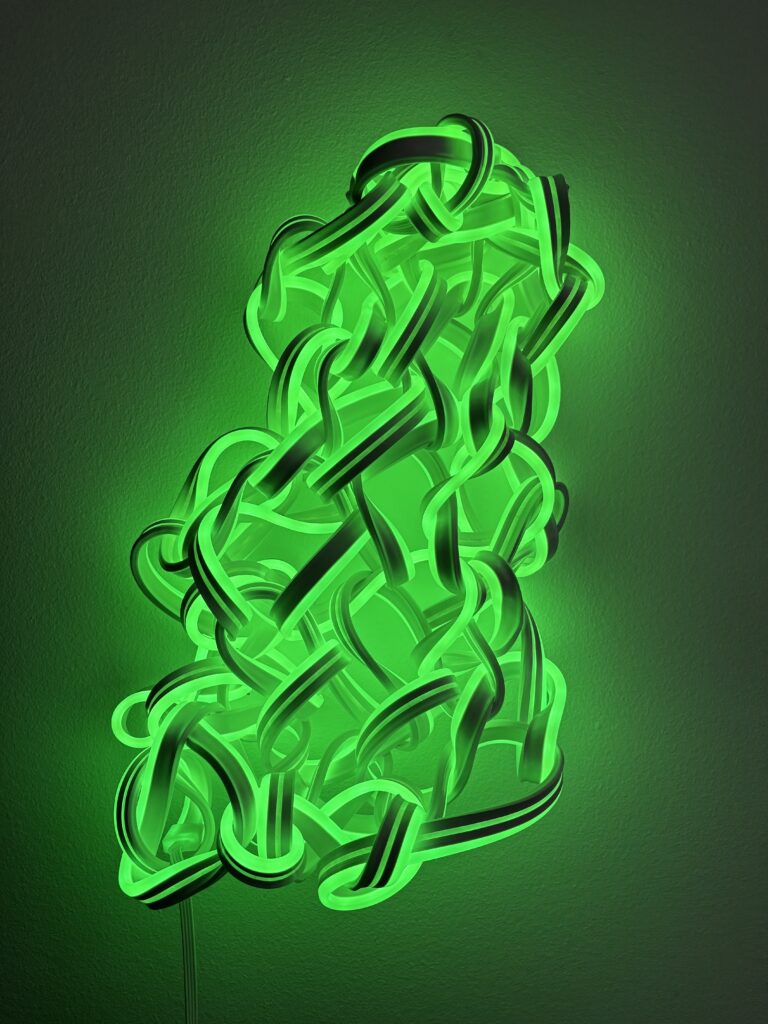
Working on graph paper allows her to break an image down and translate it into another form. A gridded design might initially suggest something digital, with individual units resembling pixels. In knitting, however, those units become loops, constructing a surface whose apparent flatness conceals a three-dimensional structure. Each translation changes the image, carrying it further from its starting point.
“I guess it’s about processing images multiple times.”
Through that process, the result can become something she had not anticipated. Arts funding helped her acquire a knitting machine, opening up the possibility of larger work and giving her another way to bring ideas into physical form.
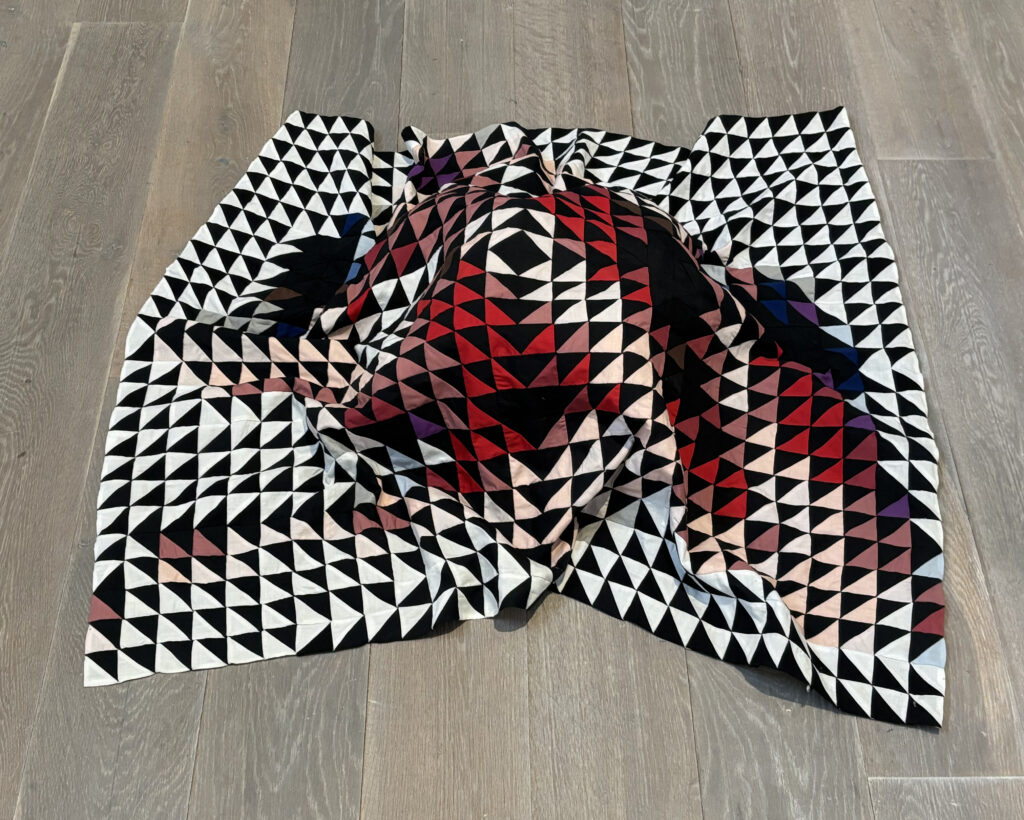
Her background in sculpture remains present in these decisions. An image can become an object, something worn or something whose dimensions relate to a body. Some works are her own height. Scale and form allow her to consider how a person might recognise themselves in an artwork, or how an object might suggest a bodily presence without depicting a figure directly.
Wearing What Matters
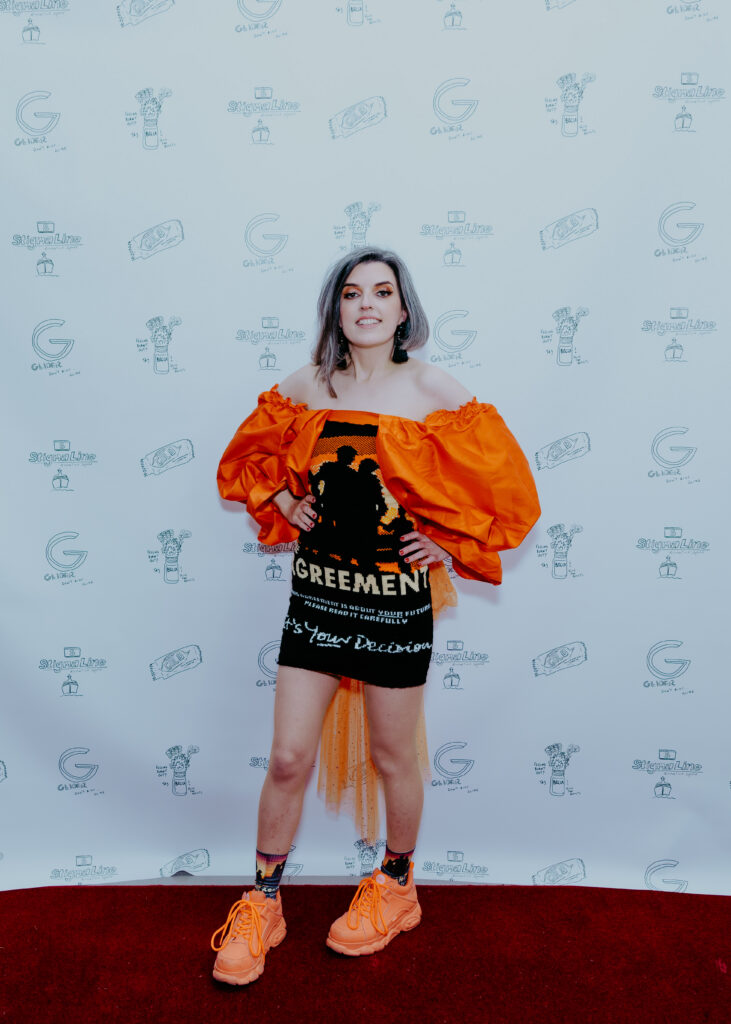
Clothing offers Grace a way to express an interest or part of herself before any conversation begins. During college, she translated a Mondrian painting into a jumper, making the image wearable. Later, working with Array Collective brought further opportunities to make things for bodies, performances and protests, where an idea might need to travel on a sign or a costume.
“It’s playful and it shows who you are without having to really tell people.”
Costume gives her room to follow an idea through many small details, building layers that people can discover gradually. Something that first attracts attention through its overall appearance can reward a closer look with further references and unexpected elements.
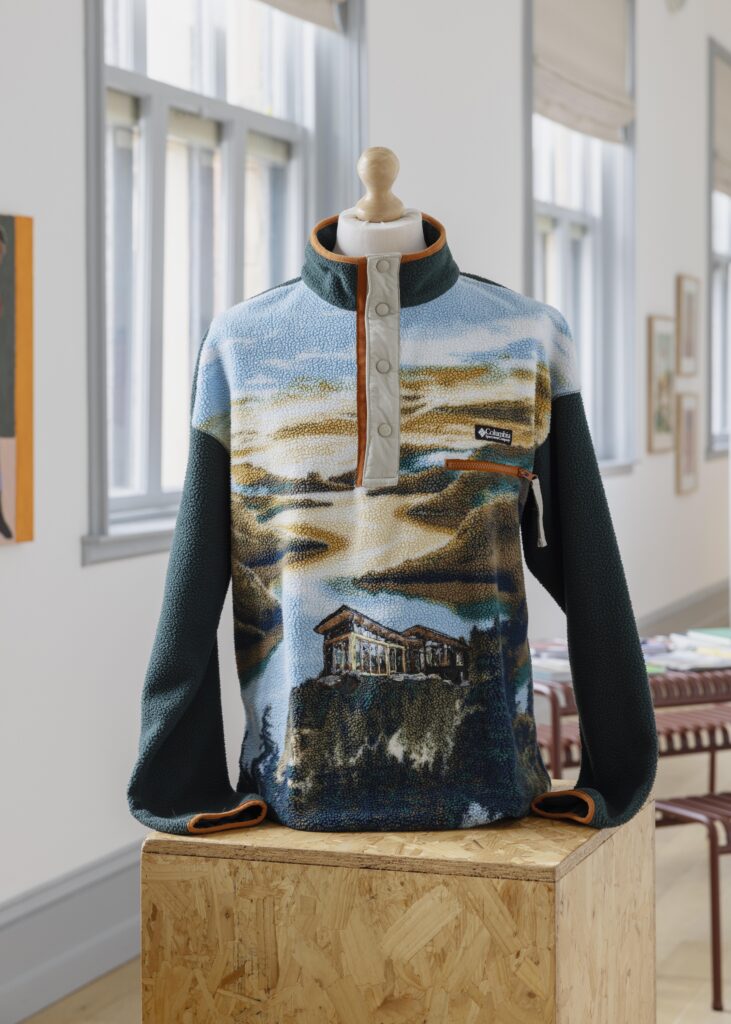
Her work inspired by Heated Rivalry grew from a similar desire to make a connection visible. She began a Canadian fleece as a way of showing her enthusiasm for the story and signalling that others could feel comfortable approaching her. “It was almost like this hidden language between people,” she says. Someone who knew the reference could recognise it without needing an explanation.
For Grace, the story offered “a really beautiful queer love story without trauma”. The fleece became an expression of queer joy and shared enthusiasm, leading to further pieces after a curator invited her to develop the work for an exhibition. The invitation gave her both a reason to continue and the confidence that somebody else believed in what she was making.
Those connections can happen in everyday life, too. Grace works in a bookshop, where wearing something she has made in response to a book can prompt an immediate reaction from somebody who recognises it. Books, television and music provide shared points of reference, allowing people to begin a conversation through something they already care about.
Finding Recognition
Grace reads widely, listens to music and seeks out different art forms, allowing those experiences to inform what she makes.
“I try and immerse myself,” she says. “And I read a lot, and I think it all informs the work, and therefore I feel like I become more myself.”
Sharing those interests online has also become a way to find people with whom she feels a connection.
She does not need to explain every personal experience behind an artwork. “I show parts of it and I hide other parts,” she says. There is room for viewers to bring their own understanding, whether through a familiar cultural reference or an image that reminds them of their own family home. The work can carry something specific to Grace while allowing somebody else to recognise a part of their life within it.
Loss has become an important presence following her father’s death around two and a half years ago. Books and music can offer different ways of approaching that experience, sometimes expressing something she has struggled to articulate. At other times, a particular subject is too raw to spend time with. What she feels able to read or hear changes, and the work develops alongside that changing relationship.
Irish literature offers a further connection between personal experience, place and identity. These encounters feed her practice without requiring every reference to be made explicit.
“I feel like art is for everyone.”
She wants people to be able to approach the work on different levels, without feeling that it belongs to someone else or demands a particular kind of explanation before they can respond.
The Work Behind The Work
Having a full-time job gives Grace some freedom from needing her artwork to earn money, but it also limits the energy available to make it. A day in a customer-facing role can leave little capacity for the evening. Ideas continue to accumulate even when there is not enough time or energy to carry them through.
“I don’t think people realize how much it takes out of you to make something.”
An enthusiastic response to a garment can quickly become a request for another, without much understanding of what producing it would involve. Enjoying the finished object does not account for the preparation, concentration, failed attempts and practical demands that came before it.
“It takes so much effort to even get to a point of creation.”
Grace tries to maintain a connection to making through smaller activities, knowing how daunting it can feel to return after time away. A deadline can help, as can the trust of another person. Within Array, discussing ideas before being given room to develop them brings both encouragement and a responsibility to the others involved.
Materials and equipment introduce their own uncertainties. Machines do not always produce what she intended, and a section may be lost or a pattern emerge differently. Grace has increasingly found possibilities within those disruptions.
“The errors in it are actually beautiful and actually probably better than what it should have been.”
An unrepeatable result can become something she loves for precisely the qualities she had not planned.
Letting The Work Happen
For all the effort involved, Grace speaks with particular pleasure about the moments when something comes together. While making a costume for an Array Collective opening in New York, she found herself laughing as it took shape. The result exceeded what she had imagined, and the enjoyment was there in the act of making it.
Those moments keep her interested in what might happen next. She describes the excitement of installing work and finding that an arrangement feels right, or seeing an idea become an object that surprises her. The satisfaction comes from a connection to the work itself, strengthened when somebody else finds something meaningful within it.
“Even if I don’t make much, what I do make, I really love,” she says. There is a growing confidence in allowing herself to work within her own capacity, without making every pause or unfinished idea a source of pressure. “Just letting myself do what I can do” has become part of how she approaches the practice.
That attitude extends to others, too. The care and effort within a piece matter, as does the person finding the time to make it. Grace’s work continues to develop through family histories, shared interests and the discoveries made while translating an idea into material.
Giving those discoveries room to happen is something she wants to protect. As she puts it: “Don’t let capitalism win.”
Find Grace’s latest work and events by visiting her website: gracemcmurray.com
And keep up with her via social media: @graciemcm
Support Go Leor. Get the Print. Join the Story.
Go Leor is an independent Irish arts magazine built by hand, heart, and community. Your support keeps meaningful storytelling alive – in print, in culture, and in conversation.
Through Patreon, you can support the magazine in two simple ways:
- Supporter Listing
Have your name printed inside every issue as part of the community helping Go Leor grow. - Print Copy – UK & Ireland
Receive the latest print issue delivered each month across the UK and Ireland, with your name included inside the magazine.
The Latest Articles

Caroline Murphy: Colour, Pattern and Possibility
Working under the name Pansy Soup, Belfast artist Caroline Murphy brings together colour, found materials and a willingness to see where an idea leads.

Annemarie Mullan: Creating Together with Cré
From articulated clay figures to ambitious group exhibitions, Annemarie brings stories into physical form while helping eight distinct creative voices become stronger together.

Critter: Strange Creatures and Creative Freedom
Through goblins, cartoon villains and a growing world of strange creatures, Belfast artist Critter is finding the freedom to make what he wants and enjoy making it.

Curly Bap: Making Art for Others and Herself
From animal portraits to experiments with paper, textiles and clay, Curly Bap is finding her next direction through the people, places and creative possibilities around her.

Noodle: Familiar Faces and an Eye for Light
Portraiture, playful references and a fascination with light shape Noodle’s paintings, as the Scottish artist explores new subjects and larger surfaces from her studio in Bangor.

Maria Noonan-McDermott: Where Memory Becomes Art
Transforming intimate family memories into paintings and poetry, her work invites others to recognise stories of their own.