
Helen Hancock
Glassblower & Artist
Derry artist Helen Hancock transforms breast milk, ashes and other intimate materials into luminous glassworks that preserve stories of motherhood, loss and family.
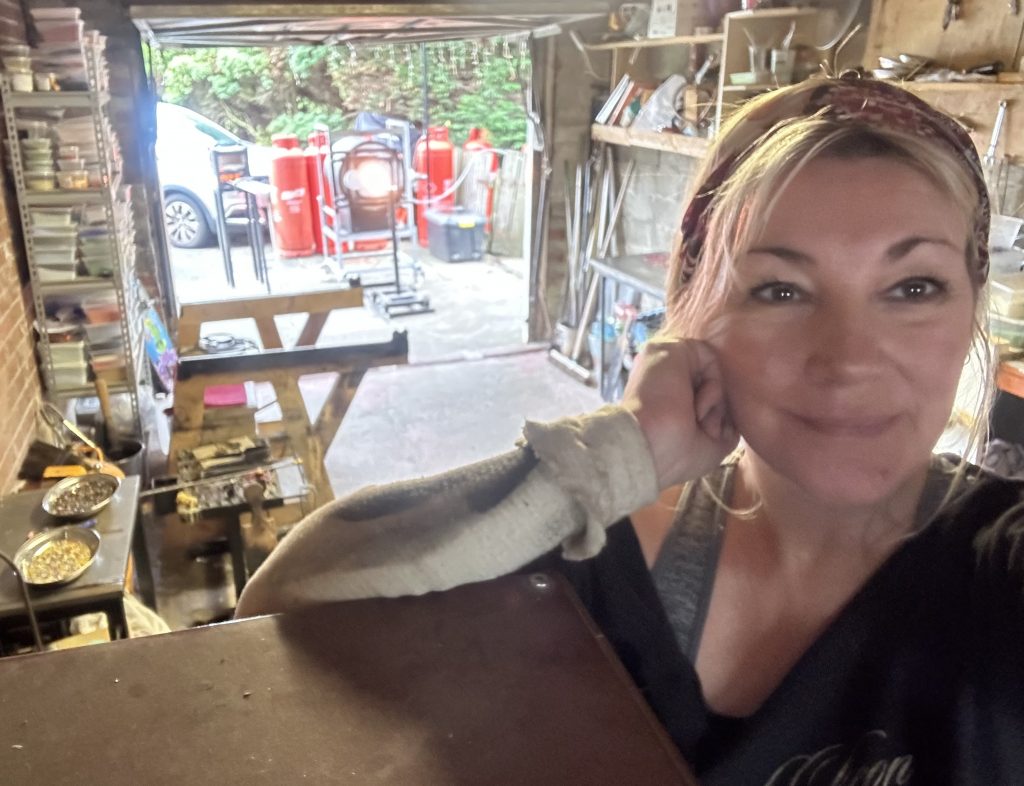
Helen Hancock likes to imagine one of her paperweights being discovered at the back of a drawer two hundred years from now. Its finder may not immediately understand the pale, cloud-like substance suspended inside the glass. They may have to follow a family story backwards, through parents and grandparents, before learning that it contains the breast milk of an ancestor, preserved for the child she once fed.
It is an image that captures something essential about Hancock’s work. Her objects are beautiful in their own right: luminous forms shaped through heat, breath, timing and decades of skill. Yet they also carry stories far larger than their physical scale. Breast milk, ashes, baby teeth and other intensely personal materials enter molten glass and become lasting records of care, grief, birth and belonging. What might otherwise disappear is given a form that can move through generations.
For the Derry glass artist, this meeting of material and memory is not an intellectual exercise. It has emerged from a life in which art, motherhood, loss and community support have repeatedly crossed paths. Her practice is technically accomplished, emotionally perceptive and sometimes wonderfully irreverent. It is also built upon a radical act of attention: taking seriously the things people entrust to her, however small or unconventional they may seem to anyone else.
Staying in Love with Glass
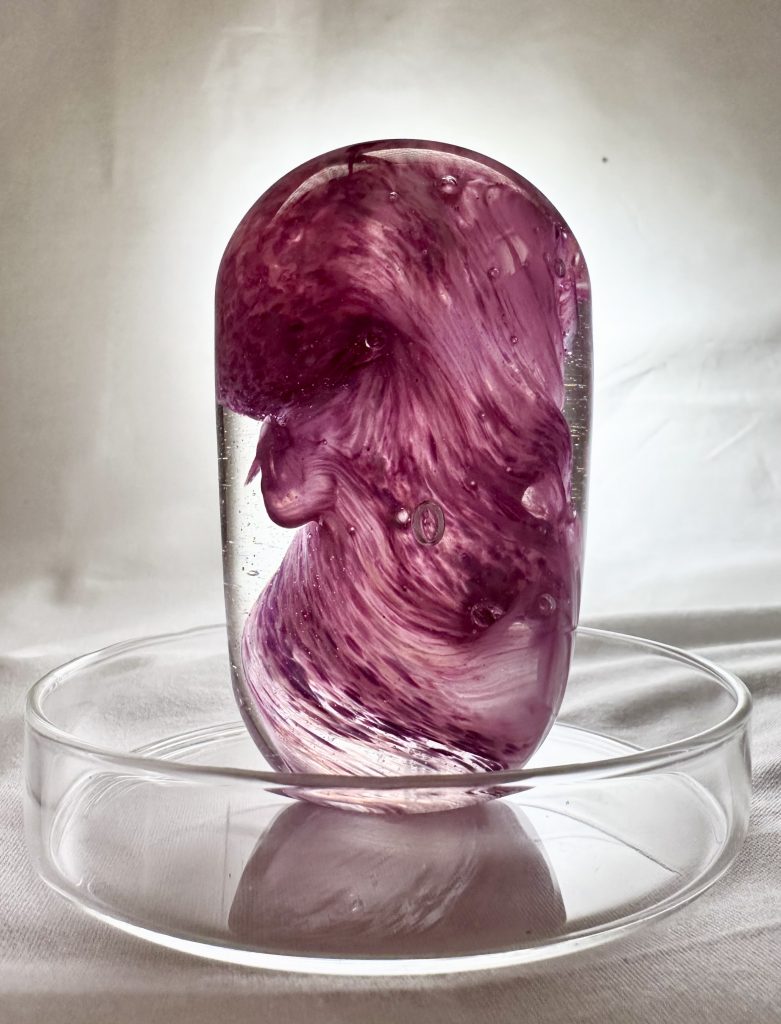
Hancock has been working with glass for more than thirty years. After studying Craft Design Glass at the National College of Art and Design in Dublin, she lived in Seattle, where she encountered an ambitious international glass culture and worked among some of the field’s most accomplished makers. Even now, decades into her practice, the material retains its power to surprise her.
“I’m just excited to be able to work with the material,” she says. “Sometimes I surprise myself, being able to do things I didn’t think I’d still be able to do thirty years later.”
Glassblowing asks for concentration and physical confidence. The artist must work with a substance that is fluid, intensely hot and always changing. There is little room for hesitation. Hancock now works alone, which places practical limits on the weight and scale she can handle, but she has come to see those limits as a useful part of her practice rather than something to fight.
Her approach is increasingly guided by a desire to “work smarter, not harder.” After moving house and rebuilding her workshop, she initially imagined expanding: a larger hot shop, more equipment and more workshops. Instead, the experience clarified what she actually wanted. She began thinking about reducing the operation and protecting the pleasure she finds in making.
The financial demands of creative work can easily disturb an artist’s relationship with their craft. Hancock is frank about that tension. “I want to stay in love with it as long as I can,” she says. Her definition of success is refreshingly grounded: keeping the car on the road, feeding her family, taking an occasional holiday and accepting exhibitions that provide a good reason to travel. “That’s a lovely life for me. I think that’s bloody brilliant.”
There is no rigid house style governing what comes next. Breast milk commissions provide a dependable centre to the business, but around them Hancock gives herself room to experiment. “I don’t have a particular theme or colour that I run with,” she explains. “I’m just playing.”
That freedom is producing new forms. One developing series presents small objects like specimens beneath glass domes, set on turned wooden bases made by her partner, Brian. Their collaboration allows glass and wood to speak to one another: one material glowing and translucent, the other warm, grounded and marked by growth. The works feel at once scientific and mysterious, as though preserving evidence of something newly discovered.

Leaving the Furnace – and Finding a Way Back
Hancock’s long relationship with glass has not followed a straight line. After more than a decade as a maker, she was persuaded that the craft would lead nowhere. She put away her tools and gradually stopped telling people she was an artist at all.
Her world became centred on pregnancy, birth and supporting other mothers. That change grew from difficult personal experience. When her daughter Lily was born, both the birth and early feeding were traumatic. Despite many people becoming involved, Hancock felt that nobody could provide the knowledgeable support she needed. Lily struggled to receive enough milk, while Hancock was left isolated and confused by a system she had assumed would know how to help.
Less than a year later, she became pregnant again and lost her baby at twenty-six weeks following a termination for medical reasons. The loss was compounded by the treatment she encountered within the healthcare system and by the stigma surrounding the circumstances in which the pregnancy ended. During a period of profound grief, she chose to donate the milk her body had produced, knowing how valuable milk for premature babies could be.
When her son George was born, Hancock once again experienced a difficult birth and inadequate feeding support. Rather than accept that other women would continue to face the same confusion, she decided to become the person she had needed.
“I have to try and change this in some way,” she remembers thinking. “I have to try and become a person that I wish I’d had there.”
She undertook two years of training as a breastfeeding counsellor and subsequently trained as a doula and in infant massage, baby yoga and toddler yoga. The knowledge she acquired was not peripheral to her life; it became another vocation. Today, she continues to support parents through a large international WhatsApp community, bringing empathy and specialist understanding to people who may be frightened, exhausted or recovering from trauma.
In 2016, Hancock and her children entered Women’s Aid and fled their home. She lost the business she had built around birth and infant support and spent an extended period living in isolation. It was during this upheaval that glass returned.
An old college friend asked her to help in his workshop. Her first response was emphatic: she had been away too long and did not believe she could do it. At around the same time, a Canadian biochemical engineer who was creating glass vessels for collecting breast milk encouraged Hancock to make them for a European audience. The two opportunities converged. She forced herself back into the hot shop and, within days, was producing dozens of vessels.
The speed of that return suggests that the knowledge had never truly left her body. Glass had waited, and when Hancock picked up her tools again, she did so as both the artist she had been and the woman she had become.
Giving Motherhood a Material Form
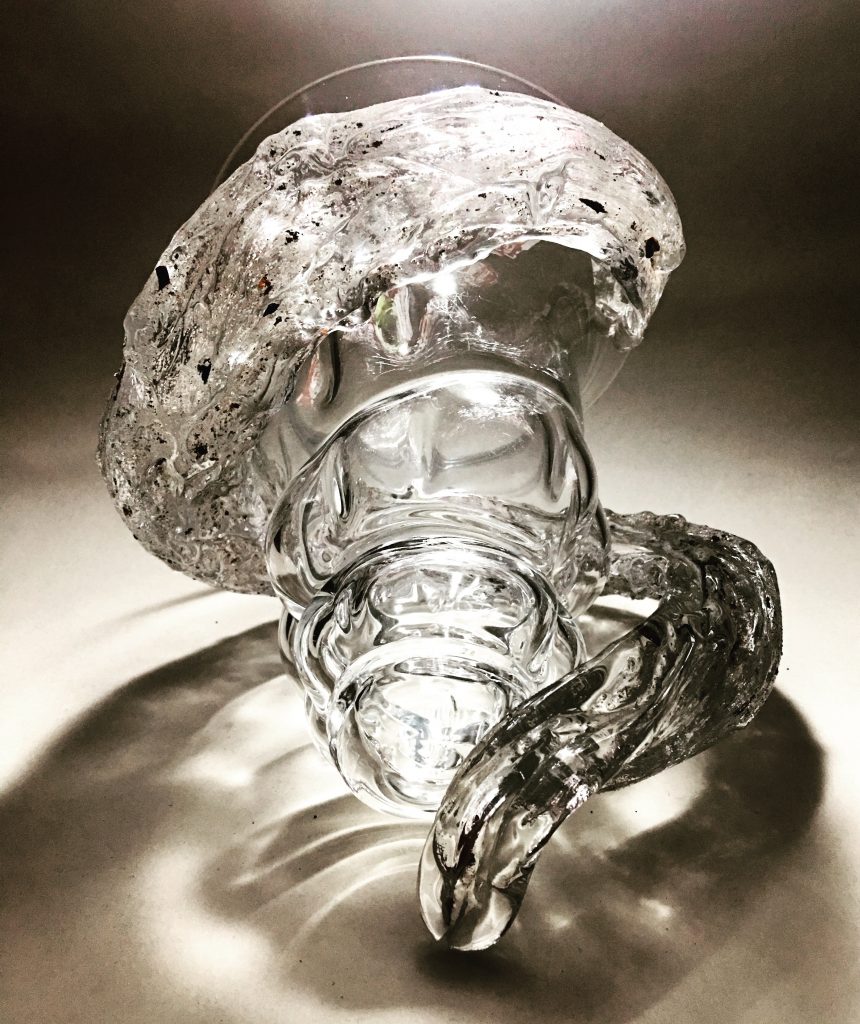
In 2017, Hancock began developing the work for which she is now best known: incorporating human breast milk directly into hot glass. The process brought together two areas of knowledge that had previously seemed separate, but in retrospect appear almost destined to meet.
Breast milk is usually understood through function. It nourishes a baby for a finite period before that stage of family life passes. Hancock allows it to be considered differently – as material, evidence, inheritance and a visible expression of care. Within her pieces, pale traces move through clear glass like clouds, moons or distant constellations. Something intimate and temporary becomes solid enough to outlast its maker.
The trust required for these commissions is significant. People are not simply posting an ingredient to a studio; they are sending a substance inseparable from their bodies and from an often complicated period of their lives. For some, feeding has been joyful. For others, it has involved pain, medical difficulty, disappointment or bereavement. Hancock’s experience as a counsellor shapes every conversation around the work.
“It’s the language that I use around them,” she explains. “They’ll understand that I understand what they’re dealing with.”
That understanding distinguishes the finished object from a conventional keepsake. Hancock knows how much effort may be represented by even a small quantity of milk. She also understands the grief that can gather around feeding when reality bears little resemblance to what a parent had hoped for. Her commissions do not flatten those experiences into a sentimental story. They give each person space to decide what the material means to them.
The art also opens wider conversations about whose experiences are deemed worthy of serious cultural attention. Breastfeeding remains burdened by embarrassment, misinformation and judgement.
Hancock has encountered people who dismiss the work because of its subject, as though material connected to motherhood cannot belong within contemporary craft. Her response is not to make the work more palatable. Instead, she continues to insist – through skill, beauty and longevity – that these experiences deserve form, visibility and respect.
Her humour helps. Among mothers in her support group, there was once a running joke about “revenge glass”: an elegant vase containing breast milk, presented anonymously to a particularly unsupportive family member.
The idea never needed to become a commercial line to make its point. Hancock’s practice may carry grief and tenderness, but it is not solemn. It belongs to living communities of women who laugh, vent, argue and sustain one another.
When a Tooth Becomes Gold
Breast milk is only one of the materials people have asked Hancock to place in glass. She also works with ashes and has experimented with placenta, umbilical cord, blood and baby teeth. Her answer to an unfamiliar request is often simple: she will try.
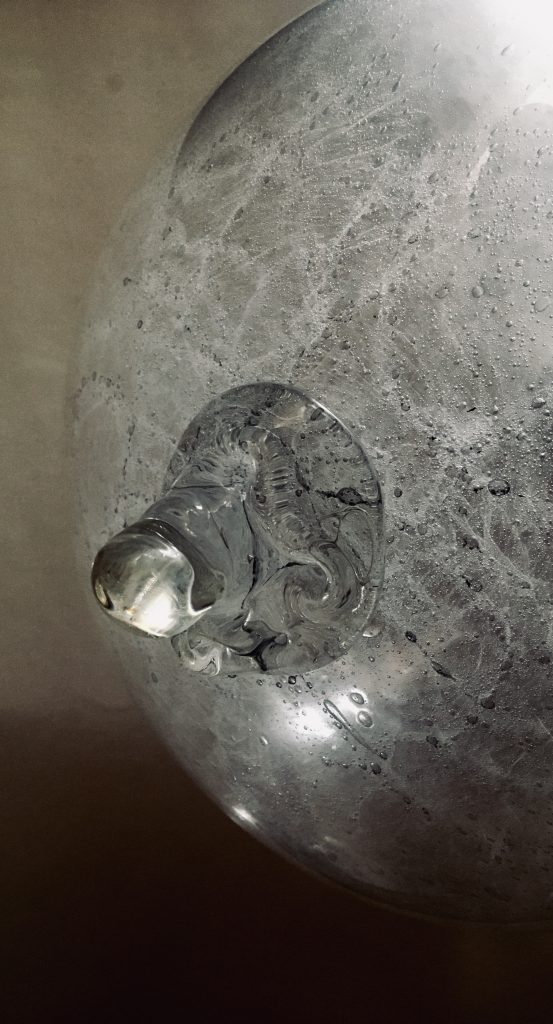
The results can be unpredictable. A tooth, subjected to the heat of the furnace, releases gas and creates its own natural bubble. Inside the glass, that void takes on a gold colour.
“The bubble turns gold – pure gold,” Hancock says. “It’s incredible. Each just creates its own thing with the glass, so it’s totally unique to that person.”
There could hardly be a more fitting transformation. The lost childhood tooth, usually tucked into a box or forgotten in a drawer, produces an image of preciousness without the artist having to impose it. The material makes its own mark. Hancock creates the conditions, but heat, chemistry and chance complete the work.
Not everyone understands why somebody might want such an object. Hancock does not need them to. “Everyone does things for their own personal reasons,” she says. “It’s not my journey. It’s not about me.”
That absence of judgement is vital, particularly when she is commissioned to combine milk with ashes. At times, the materials come from a mother and a baby who has died. Hancock’s own experience of loss, together with her counselling training, allows her to approach these commissions without evasiveness or empty reassurance. She cannot remove grief, but she can handle what has been entrusted to her with patience, skill and dignity.
Objects That Keep Company
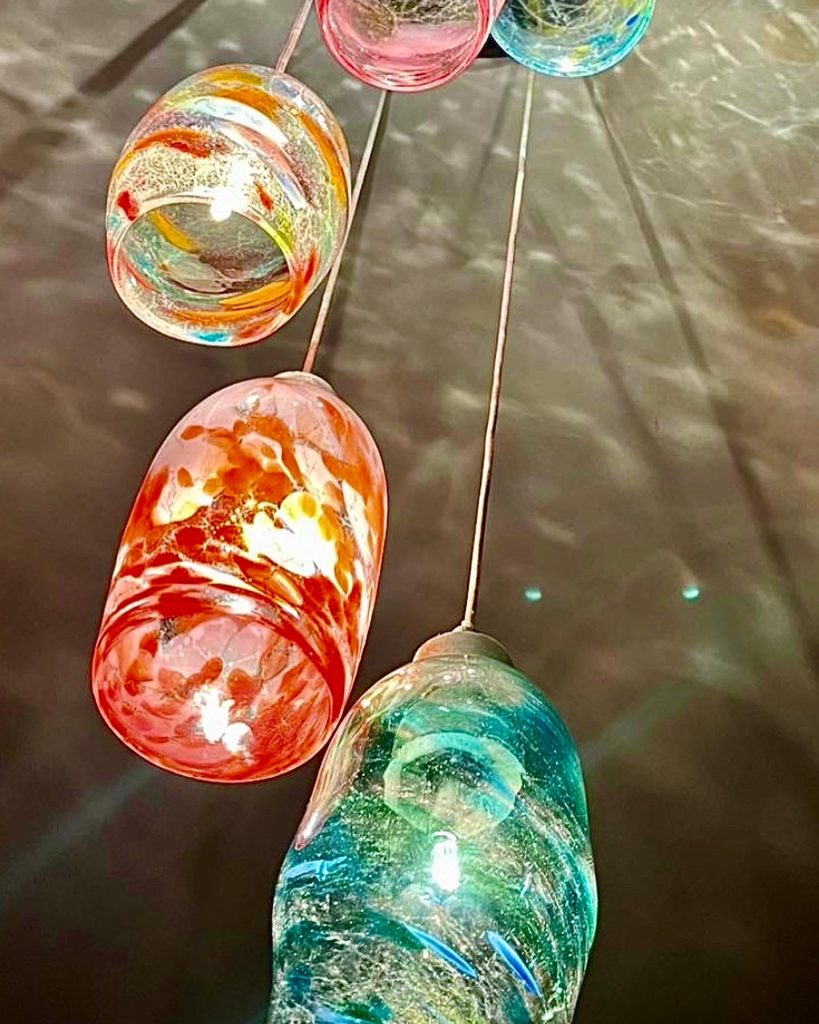
The emotional effect of Hancock’s work is perhaps clearest in the objects that become part of a family’s daily surroundings. She recalls making a group of suspended glass lights for a mother of five children, two of whom had died. The mother had retained milk connected with each child. Hancock created an individual dome for all five, each coloured to represent its child and containing their milk.
The lights now hang above the family’s dining table. They illuminate an ordinary domestic space while quietly acknowledging every member of the family.
“Each light, each dome, represents their five children,” Hancock says. “It lights up their space, and there’s just this constant sense of presence.”
The work does not demand a ceremony every time the family enters the room. Its power lies in being there: held within the rhythms of meals, conversations and passing days. It gives absence a place without allowing loss to erase the lives around it.
This is why Hancock thinks so often about durability. Many breast milk keepsakes are made with resin, a material that will eventually discolour or degrade. Properly made glass can remain intact for centuries. Its apparent fragility is paired with remarkable endurance. The contradiction suits a practice concerned with bodies, children and memory: all vulnerable, all capable of leaving traces far beyond their own moment.
The people who receive Hancock’s work often cry when she places it in their hands. The reaction is not simply to a beautiful object. It is the recognition that an experience which may have been invisible to everyone else has been witnessed and made tangible.
Beyond the Commission
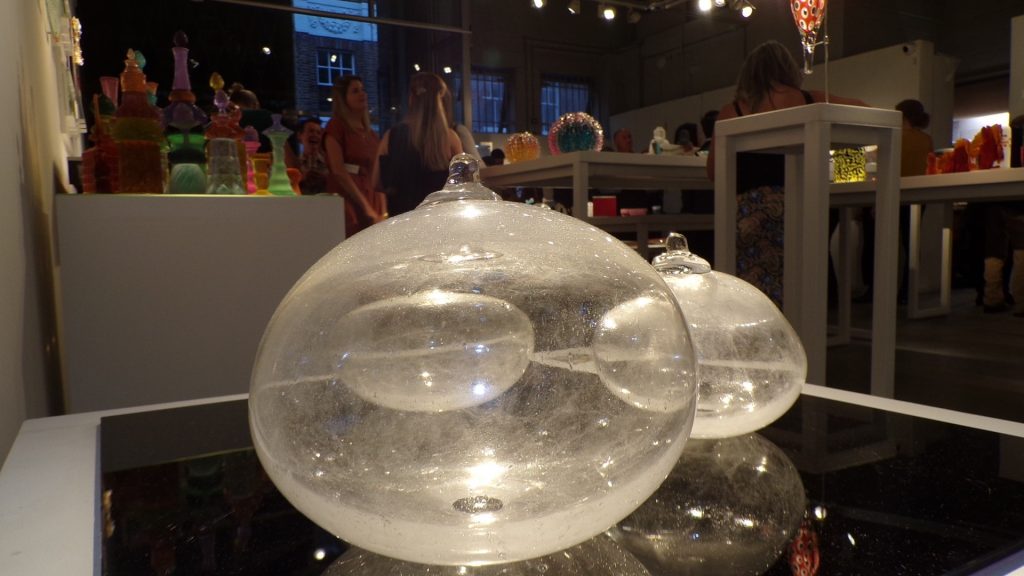
Although commissioned work provides Hancock’s foundation, her wider artistic practice continues to expand. Sculptural pieces such as Embryo, made in partnership with Brian, move between glass and turned wood. A trio of domed works brings her fascination with specimens, containment and organic form into a gallery setting. These are not separate from her keepsake practice so much as another way of asking the same questions: what can a vessel contain, what does an object remember, and how does form alter the way we look at something vulnerable?
Collaboration has also carried her work into jewellery. Working with jeweller Patrick McWilliams, Hancock has developed rings and other high-end pieces that set milk glass within carefully made metal forms. The partnership places her material research in dialogue with another craft and allows intimate glass to be worn close to the body. The rings have travelled to international exhibitions, including Romanian Jewelry Week, while other sculptural works have appeared in group exhibitions in Ireland.
Hancock also produces awards and exhibition pieces alongside the paperweights, pendants, vessels and baubles that sustain the studio. The breadth of her output is evidence of an artist who refuses to be confined by the category through which people first discover her.
After a period of major change, she is deliberately leaving the future open. A move to a rural home near the Donegal border has altered how she wants to live and work. There are horses and chickens nearby, a hillside outside and enough distance from the city to think. The workshop will continue, but perhaps in a leaner and more focused form. Some long-running community projects are ending; new sculptural ideas are only beginning to take shape.
“I haven’t really fully decided yet where things are going to go,” she says. “Watch this space.”
For an artist whose practice depends upon transformation, uncertainty is not an empty space. It is raw material.
Hancock knows that glass changes the instant it enters heat; that a tooth can leave gold in its wake; that a vocation put away for years can return with renewed purpose. Her work has grown not by separating art from life, but by allowing each to change the other.
What she makes is not simply memorial glass, breast milk glass or contemporary craft, though it can be all of those things. It is an art of recognition. It recognises motherhood as a subject worthy of beauty and complexity. It recognises that grief and love frequently occupy the same object. It recognises the small physical traces through which families tell their stories.
Above all, Helen Hancock’s glass gives permanence to experiences that are too often hidden, dismissed or allowed to disappear. It holds them up to the light – and asks us to look again.
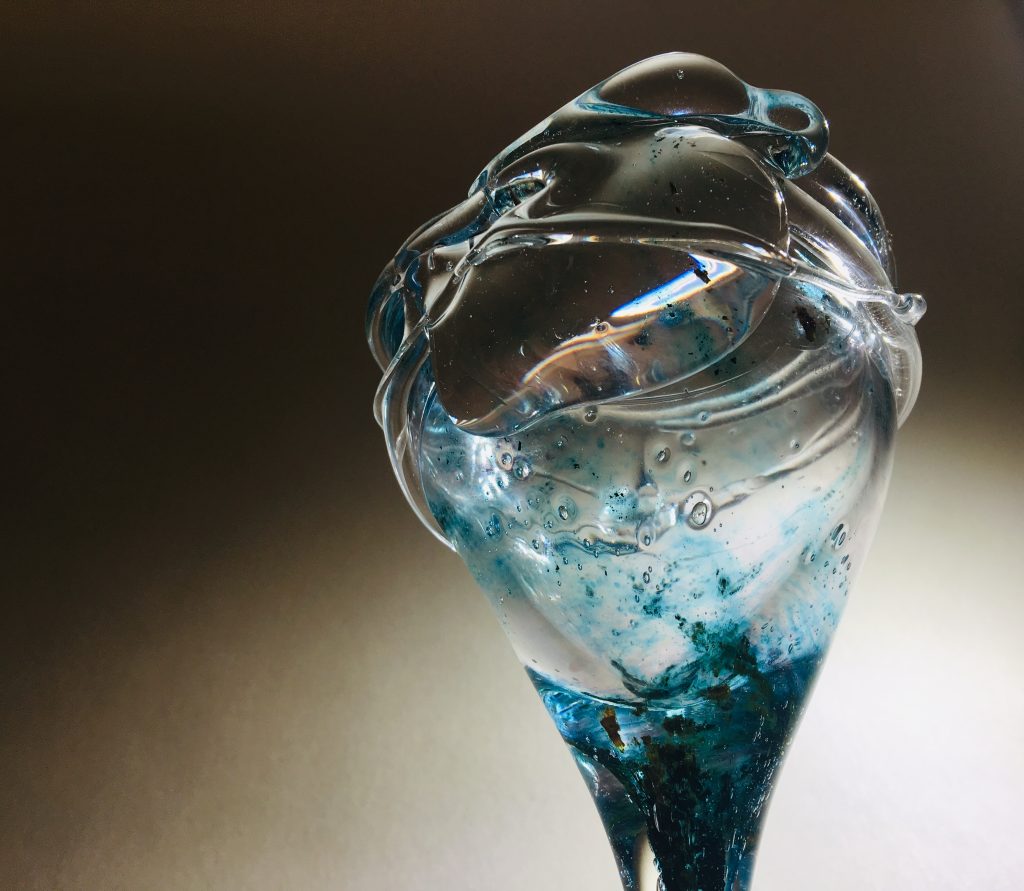
See Helen’s Gestation in Of Sand & Ash, a major exhibition bringing together over 65 glass artists at the National Design & Craft Gallery in Kilkenny, from 6 August to 24 October. Her piece Embryo is also showing at Artlink Fort Dunree.
Explore Helen Hancock’s work and commission information through her website:
helenhancockglass.com
And keep up with her via social media:
@helen_hancock_glass
Support Go Leor. Get the Print. Join the Story.
Go Leor is an independent Irish arts magazine built by hand, heart, and community. Your support keeps meaningful storytelling alive – in print, in culture, and in conversation.
Through Patreon, you can support the magazine in two simple ways:
- Supporter Listing
Have your name printed inside every issue as part of the community helping Go Leor grow. - Print Copy – UK & Ireland
Receive the latest print issue delivered each month across the UK and Ireland, with your name included inside the magazine.
The Latest Articles

Maria Noonan-McDermott: Where Memory Becomes Art
Transforming intimate family memories into paintings and poetry, her work invites others to recognise stories of their own.
Rosina Law-Braney: Reclaiming the Seven Deadly Sins
Through zines, illustration and humour, Rosina Law-Braney creates vibrant feminist stories that make room for identity, desire, grief and collective creative freedom.
Alexander Edward: Weaving from the Land
Growing his own willow beside Strangford Lough, Alexander Edward brings coppicing, landwork and an ancient craft into bold contemporary forms.
John Britton: Finding Calm Through Ink
After three decades of visceral performance and constant travel, John Britton has found a quieter connection through ink, mentorship and calm.
Yvonne Moore: Following Curiosity into Colour
Refusing to settle into a single style, Yvonne Moore follows curiosity across colour, poetry and community, creating art that brings her – and those around her – fully to life.
Lucy Fleming: Carrying the North Coast Light
Through fluorescent colour, oil pastel and an instinct for collaboration, Lucy Fleming turns the light of the North Coast into images that connect art, music and community.