
Greta Baltic
Artist & Photographer
Lithuanian-born visual artist Greta Baltic uses photography, folklore and collaboration to explore life between cultures – while creating spaces in which other artists can be seen.
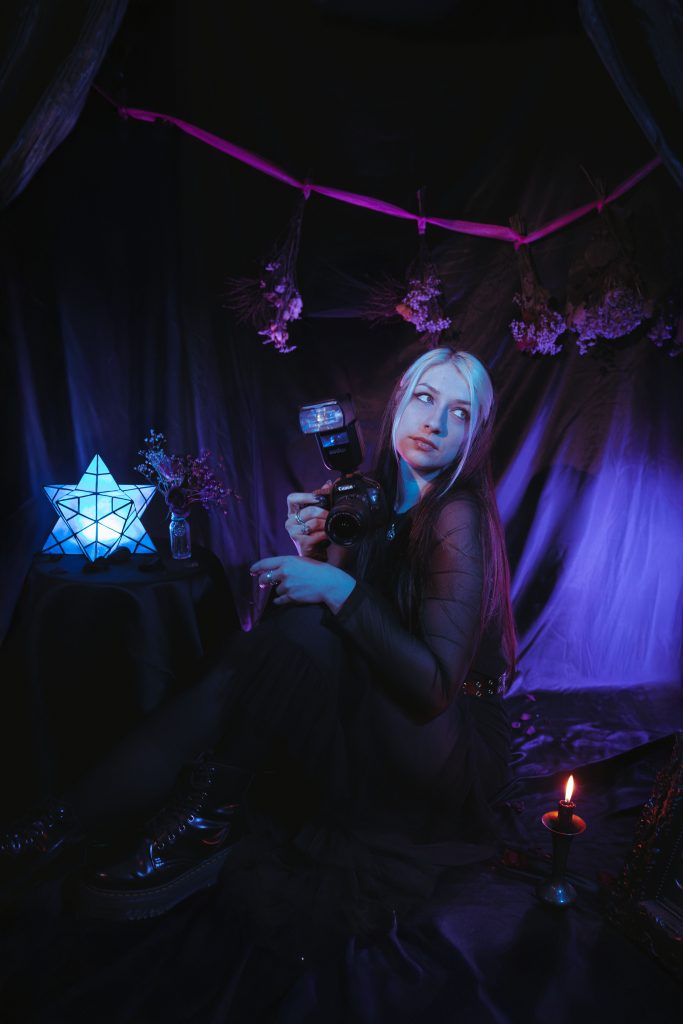
By the end of a conversation intended to focus on her own work, Greta Baltic was already turning the attention towards everyone else. She wanted to know whether the artists sharing her studio could be featured, whether musicians were welcome and whether there might be an opportunity to speak with Rosina Law-Braney, whose work had created the exhibition in which Greta was preparing to participate. If the door was open, Greta intended to hold it open for as many people as possible.
This instinct is not separate from her photography. It is one of the clearest ways to understand it.
Greta is a Lithuanian-born, Ireland-based photographer, videographer and visual artist whose work can move from an intimate portrait to the surge of a live performance, from saturated colour to stark black and white, or from a digital image into drawing, audio and installation. Her photographs are technically assured and immediately atmospheric, but their impact comes from something deeper than style. Greta pays attention to the person in front of her. She listens for what they want to express and helps them find a visual language capable of carrying it.
The same care extends beyond individual shoots. Greta has formed communities for women and non-binary people in the arts, brought people from outside traditional art circles into cultural projects and used her own visibility to direct attention towards collaborators. She does not treat creativity as a scarce resource to be guarded. In Greta’s world, one person becoming more visible does not require another to disappear.
Her newest work makes that generosity deeply personal. Through the Lithuanian Folk Project, Greta is returning to a culture she inherited but did not always feel able to claim with confidence. The result is a body of work about pride, memory and the strange experience of belonging to two places while sometimes feeling completely claimed by neither.
Returning to a Remembered Country
Born in Šiauliai, Lithuania, Greta grew up in Limerick within a fully Lithuanian family, but distance complicated her relationship with her country of birth. Lithuania existed through personal memories, the stories passed down by her family and an image of the country as it had been when they left. Meanwhile, Lithuania itself continued changing.
“I was very disconnected from my roots, even though I am fully Lithuanian,” Greta explains. “I think I built it up over years in my head – what Lithuania is like, what my family think Lithuania is and how it was years ago.”
That distance became the starting point for her Lithuanian Folk Project. Before returning, Greta wanted to explore the country held within her imagination: a place assembled from family recollection, partial memory, inherited culture and the perspective of somebody growing up elsewhere. The project was not intended to present Lithuania as a fixed or easily summarised identity. It began with the uncertainty of how much of that identity she could call her own.
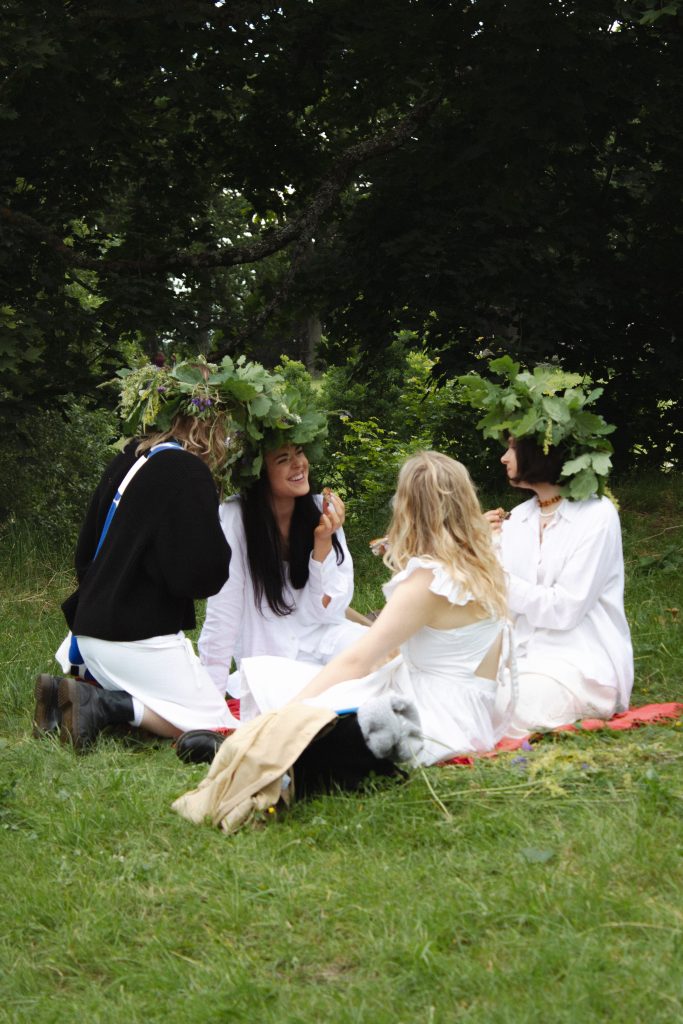
Greta then travelled to Lithuania to attend and photograph Joninės, the midsummer festival rooted in ancient Baltic traditions. Bonfires, wreaths, music, movement and the symbolic search for the fern flower reconnect contemporary celebrations with the country’s pagan past. Greta arrived with an idea shaped by years of absence and discovered an event much larger and more confidently celebrated than even her family remembered.
“Going there was so surreal,” she says. “My family didn’t realise how big that festival had become because we hadn’t been back in so long. Things have really modernised. The tradition is very old and has pagan roots, but the festival is more prominent now than it was when my parents lived there.”
Rather than watching history recede, Greta encountered a country actively investing in its return. Modernisation had not removed the old customs. It had given people new ways to gather around them.
“It was a very pleasant and proud moment,” she remembers. “As a country, they have grown so much and put so much time and effort into bringing back these traditions. It was amazing to see. I wish I could go back every year.”
Greta’s experience photographing live music and public events is visible throughout the resulting images. She is able to hold movement without losing detail: bodies passing through smoke and evening light, traditional clothing and woven materials, collective celebration and the quieter concentration of individual participants.
The photographs do more than document how Joninės looked. They communicate how it felt to stand within a tradition that was at once culturally familiar and personally new.
Reclaiming Pride
On 14 August 2026, Greta will presenting her work at The People’s Museum of Limerick as part of Good Girls Gone Sinful. Created by artist and facilitator Rosina Law-Braney, the exhibition uses the seven deadly sins as a framework through which women artists can reclaim qualities historically used to discipline or shame them.
The project grew from Rosina’s feminist research into the position of women in a male-dominated art world and the necessity of artists working together to be heard above its noise. Alongside the exhibition, she has created a collection of zines styled after teenage magazines, complete with illustrations, articles, puzzles and cut-out activities. Their playful presentation is part of a serious re-examination of the messages women receive about their bodies, ambitions, appetites and emotions.
Greta was initially tempted by wrath.
“As a woman, it is such a strong emotion,” she says. “I have work that I wanted to use to express that.”
Pride, however, offered the more personal challenge. Greta had not always felt proud of being different while growing up in Ireland. Choosing pride would allow her to explore not only affection for Lithuanian culture but the hesitation, displacement and self-consciousness that had complicated it.
“It was so dear to my heart – the Lithuanian people and Lithuanian culture, and how I haven’t always been proud to be different growing up in a different country,” she explains. “It was something I really wanted to do for myself.”
Within Good Girls Gone Sinful, pride does not mean superiority or an absence of self-criticism. It is the refusal to remain ashamed of one’s origins. Greta transforms a word often treated as a moral warning into permission: permission to study where she came from, to celebrate what survived migration and to decide for herself what being Lithuanian can mean.
Rosina’s contribution was not to prescribe that answer but to create the conditions in which Greta could search for it. That distinction matters enormously to her.
“Part of Rosina’s work is giving people space and the platform to explore the things they want,” Greta says. “Memory was a big thing I wanted to explore, and she really allowed that to happen.”
Greta speaks about Rosina with the same enthusiasm she brings to so many of her collaborators. She is quick to identify the labour that made her own opportunity possible and equally quick to encourage others to examine it. This generosity does not diminish Greta’s authorship. It reveals her understanding that important art rarely emerges without a network of trust, conversation and practical support around it.
Bringing a Digital World Into the Room
“When she told me she wanted to exhibit some of my work in real life, I thought, ‘This is what needs to live in the physical,’” Greta says. “I want to print things, sketch things and draw things.”
“When it’s digital, it looks so different. You can’t touch it or feel it,” she explains. “It’s going to come together in a very new way. It will be an interactive experience.”
Living Between Ireland and Lithuania
Returning to Lithuania did not provide Greta with a simple resolution. If anything, it gave greater definition to the space between her two cultures.
“I don’t feel Lithuanian, and I also don’t feel Irish at all,” she says. “I’m in this in-between, in the diaspora of the two.”
It is an uncomfortable position, but also an artistically fertile one. Greta can recognise connections that might be less visible from entirely within either culture. Lithuania and Ireland have different histories, languages and traditions, yet both carry strong relationships with land, folklore, pagan custom, migration and cultural identity.
Greta sees the logical continuation of the Folk Project as an exploration of its Irish counterpart. Placing the cultures beside one another would allow her to examine similarities without pretending they are interchangeable. More importantly, it could create an honest visual language for the hybrid identity already shaping her life.
Such work would also speak to an Ireland that has never been as static as its narrowest definitions suggest. Migration is not an interruption to modern Irish identity; it is one of the forces continually remaking it. Greta’s perspective offers an opportunity to understand belonging as something constructed through participation and relationship, rather than granted only by birthplace or perfect cultural fluency.
Language embodies this complexity. Greta speaks Lithuanian fluently, but because she left at a young age, her formal reading education in the language was interrupted. During her return, she searched galleries and cultural spaces in Vilnius and found a collection of Lithuanian and wider Baltic poetry translated into English.
“Whenever I don’t feel inspired, I read the poems over and over again as a way to connect,” she says. “The things they speak about can be very specific to the culture.”
The translated poems allow Greta to reach a part of her inheritance through the language in which she can now read most freely. Translation becomes neither a failure nor a lesser form of connection. It becomes the bridge available to her. Poetry joins photography, philosophy and visual art within the wide field of material she continually consumes, carrying elements of Baltic culture back into her daily life in Ireland.
When Words Are Not Enough
Before Greta imagined a career in photography, she wanted to become a therapist. She was fascinated by human behaviour, mental health and the relationship between thought, emotion and the ways people treat one another. That interest has never disappeared, but a profound loss changed the route through which she began pursuing it.
After the death of a close friend, Greta found that language could not contain the scale or complexity of grief.
“When we go through very big emotions, traumatic things or the loss of somebody close, words don’t always make you feel better,” she says. “Grief isn’t something you can simply talk through. You have to experience it.”
Making art became central to how Greta moved through that experience. Rather than leaving her earlier interests behind, she redirected them into visual work. She continues to read psychology and philosophy independently, and that knowledge informs the attention she gives to the inner world of the person being photographed.
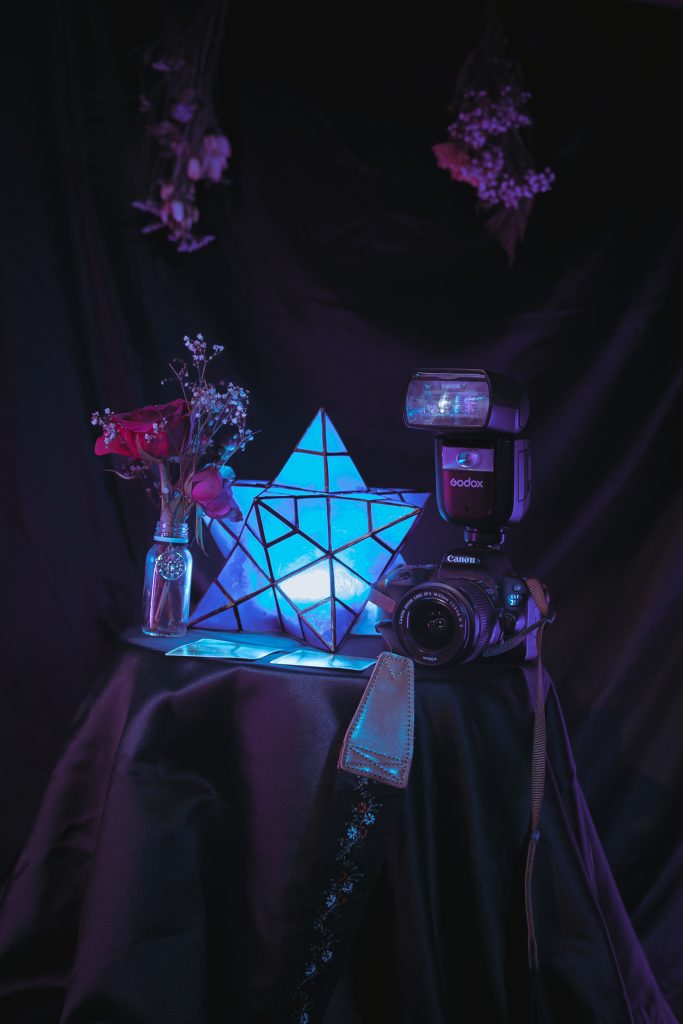
This is one of the qualities that distinguishes Greta’s portraiture. She can create theatrical, high-contrast images filled with stylised light, bold colour and carefully constructed personas, but she does not reduce the subject to an accessory within her own aesthetic. The question is not simply how Greta wants them to look. It is what they are trying to communicate and what kind of environment will allow them to do so without retreating behind self-consciousness.
Her images can be vivid, strange, romantic, gothic or playful because the people within them have been invited to participate in the act of their own representation. Greta’s style remains recognisable, but it is spacious enough to hold another person’s identity.
That capacity is especially visible in her collaborations with musicians. For Alana Henderson’s 2026 single Appetite, Greta directed and edited a black-and-white music video drawing upon silent cinema, surrealism and a darkly playful visual order. The song examines perfectionism, denial and the experience of building a life around what one believes one ought to want. Greta responded with roses, cake, ritualised movement and a self-contained world that never overpowered the emotional source of the song.
Describing their collaboration, Henderson emphasised that Greta “listened, really listened” and translated the original idea into images that felt true to what had existed in her head. It is a brief statement, but it captures something essential about Greta’s impact. She does not arrive to impose a ready-made answer. She listens closely enough to discover the visual answer that belongs to the person beside her.
A Community That Continues Without Her
Greta’s belief in collaboration has also taken structural form. Through Girl Club Ireland, she created a community for women and non-binary people working throughout the arts. Musicians, producers, painters, ceramicists, photographers, fashion designers and others joined a group chat that grew to hundreds of participants.
The premise was simple but necessary: independent artists needed somewhere they could ask questions, exchange skills, find collaborators, promote releases and speak without the intimidation that can accompany heavily male-dominated creative industries.
“When you’re independent, it’s so hard as a woman sometimes,” Greta says. “You can feel like you’re surrounded by men, and it can be intimidating. Having a space for women and non-binary people meant we could support each other if we needed anything, wanted to collaborate or wanted to promote something.”
Not every artist can afford every service they need. Girl Club encouraged forms of mutual exchange, allowing people to trade time and skills rather than wait for financial circumstances to grant permission. A photographer might need styling; a musician might need images; a designer might need a model or a filmmaker. Greta understood that the resources were already present within the community if people could be given a trusted way to find one another.
Although she has stepped back from actively driving the group at the same intensity, members continue using it to seek advice and make work together. This may be the clearest measure of what Greta created. The community no longer depends upon her constant presence to justify its existence.
“That has been a big part of my work – that it’s not solitary and it’s not just me,” she says. “I really want to make spaces for people who need them.”
Girl Club also became a subject of creative documentation. In one online series, filmmaker Marianna Martens interviewed women at different stages of their careers: somebody just beginning, Greta several years into her work and an actor with decades of experience. The project resisted the idea that an artistic career follows one universal timetable, allowing experience to pass between generations rather than remaining siloed within them.
Greta’s community-building is especially impressive because it responds to an industry problem through practical action. It is easy to describe the arts as collaborative while continuing to reward individual visibility above collective wellbeing. Greta has done the slower work of introducing people, maintaining spaces and encouraging them to call upon one another. The resulting photographs, films, songs and working relationships may not all bear her name, but they remain part of her creative impact.
The Courage to Be Visible
For all the confidence of Greta’s images, she is candid about the uncertainty of releasing work into the endless movement of the internet. “Sometimes I’m just making stuff and wondering, ‘Does anyone see me? Hello?’” she admits.
The comment is playful, but it reveals the vulnerability beneath a career built around visibility. Artists can spend their days making other people appear powerful, beautiful and understood while remaining unsure whether anybody has paused long enough to understand them in return.
Greta deserves that attention. Her work already demonstrates an unusual combination of visual confidence, emotional perception and generosity towards other artists. She is capable of directing an image without suffocating the person inside it. She can use the camera to explore her own uncertainty while creating spaces in which hundreds of others become less isolated. Even when discussing a major step in her career, she remains alert to who built the platform, who else could benefit and whose work deserves to be encountered next.
The Lithuanian Folk Project represents a significant blossoming of these qualities. It brings Greta’s skill as an event photographer into conversation with her family history, her interest in psychology, her love of poetry, her collaborative instincts and a growing readiness to occupy physical space. Pride, in her hands, becomes neither vanity nor certainty. It is the courage to examine an identity she once felt pressure to minimise and to share what she finds without simplifying its contradictions.
The work also changes the meaning of visibility. Greta is not asking only to be looked at. She is asking to be recognised in full: Lithuanian and shaped by Ireland, confident and uncertain, an independent artist and a member of a much larger creative network. In making that request for herself, she extends it to everyone she photographs and everyone she brings into the room.
Greta Baltic has spent years helping other people see themselves more clearly. With this project, she is turning that same perceptiveness towards her own history – and emerging as one of the most thoughtful, generous and exciting visual storytellers working in Ireland today.
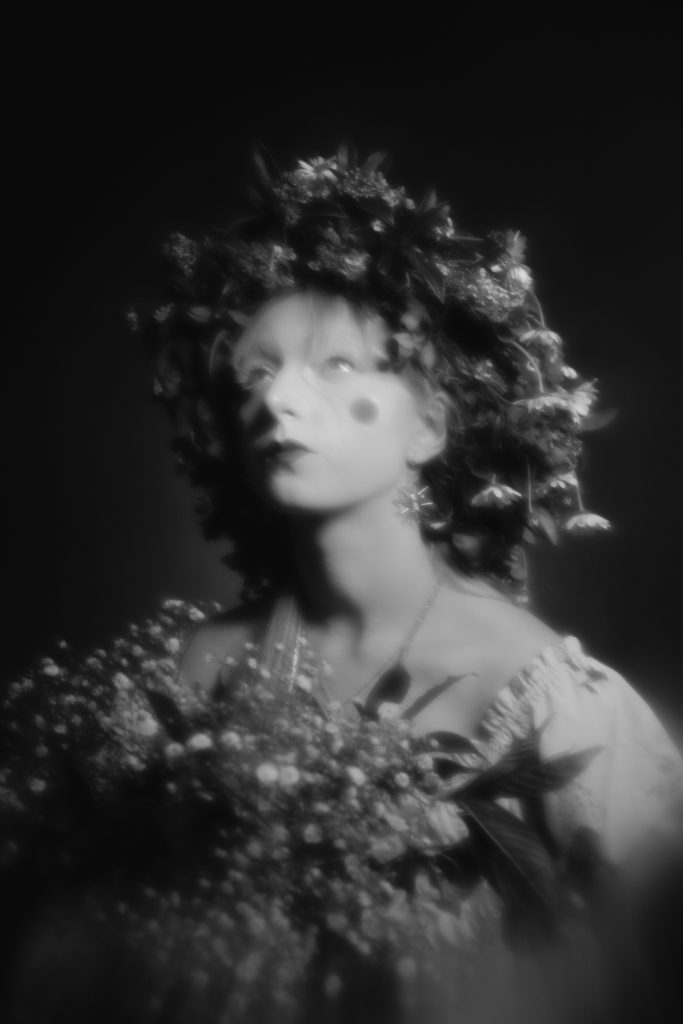
Good Girls Gone Sinful opens at The People’s Museum of Limerick on 14 August 2026:
@good.girls.gone.sinful
Discover Greta’s photography, portraiture, live-music work and developing Lithuanian Folk Project via her website:
gretabaltic.myportfolio.com
And keep up with her via social media:
@gretabaltic


Support Go Leor. Get the Print. Join the Story.
Go Leor is an independent Irish arts magazine built by hand, heart, and community. Your support keeps meaningful storytelling alive – in print, in culture, and in conversation.
Through Patreon, you can support the magazine in two simple ways:
- Supporter Listing
Have your name printed inside every issue as part of the community helping Go Leor grow. - Print Copy – UK & Ireland
Receive the latest print issue delivered each month across the UK and Ireland, with your name included inside the magazine.
The Latest Articles

Maria Noonan-McDermott: Where Memory Becomes Art
Transforming intimate family memories into paintings and poetry, her work invites others to recognise stories of their own.
Rosina Law-Braney: Reclaiming the Seven Deadly Sins
Through zines, illustration and humour, Rosina Law-Braney creates vibrant feminist stories that make room for identity, desire, grief and collective creative freedom.
Alexander Edward: Weaving from the Land
Growing his own willow beside Strangford Lough, Alexander Edward brings coppicing, landwork and an ancient craft into bold contemporary forms.
John Britton: Finding Calm Through Ink
After three decades of visceral performance and constant travel, John Britton has found a quieter connection through ink, mentorship and calm.
Yvonne Moore: Following Curiosity into Colour
Refusing to settle into a single style, Yvonne Moore follows curiosity across colour, poetry and community, creating art that brings her – and those around her – fully to life.

Lucy Fleming: Carrying the North Coast Light
Through fluorescent colour, oil pastel and an instinct for collaboration, Lucy Fleming turns the light of the North Coast into images that connect art, music and community.