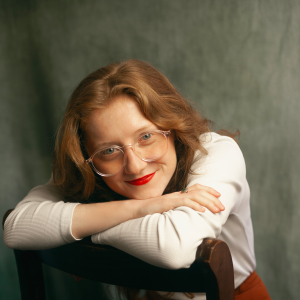

Martina O’Connor
Contemporary Artist
Martina uses vibrant colour and expressive palette-knife work to preserve treasured memories, familiar objects and the everyday places that have shaped her life.
For around six years, a photograph of the Ferris wheel at Portstewart waited on Martina O’Connor’s phone. She had taken it knowing that she wanted to paint it, but other images arrived, life continued moving and the photograph remained among a growing collection of possibilities. Martina did not forget about it. She simply waited until its moment came.
When she finally returned to the image, it brought much more than a coastal scene onto the canvas. Its red and white structure rose against the familiar Portstewart skyline, with the Dominican College building standing beyond it, while the sea and surrounding light carried Martina back to the summers she had spent there as a teenager.
She remembers her mother gathering with three sisters, her brothers and a crowd of cousins whenever the sun appeared. They would descend upon the beach together, playing games and sport before walking up to Morelli’s for ice cream. Martina still visits Portstewart regularly, but the painting allowed those different eras of her life to meet within the same image.
“I took a picture of it at the time because of the colours – the red and the white – and obviously that skyline,” she says. “It took me probably about six years to paint it, but I always had it stored and thought, ‘That’s definitely one I want to paint.’”
This is how inspiration often works for Martina. Her phone is filled with photographs of landscapes, buildings, flowers and passing scenes that may not reveal their full importance until years later. Each is a small moment held against time, ready to return when the artist and the image find one another again.
Coming Back to the Easel
Painting had been part of Martina’s life long before it became her profession. She loved art from a young age and devoted so much time to it at school that, when choosing her A-levels, she worried it might distract from other subjects. Martina set art aside, studied languages and went on to become a primary-school teacher – a career she loved for 27 years.
The desire to paint never entirely disappeared. It remained “a wee thing in the background,” resurfacing whenever time allowed. During periods of maternity leave, and in the small gaps available while raising three sons and teaching, Martina repeatedly found herself returning to an easel.
“Whenever I got a chance at all, I found myself going back and trying to squeeze in a painting or two,” she remembers.
Around six years ago, Martina was diagnosed with breast cancer. The diagnosis led her to step away from teaching and prioritise her health, closing a substantial chapter of her life while unexpectedly creating room for something that had been waiting alongside it.
“Something that was difficult at the time turned into something really positive,” she says. “I thought this would be a time for me to do some painting. I just fell in love with painting again and found that I had all the time in the world to paint.”
Art did not replace everything that had come before it. Martina has no regrets about teaching, and being a mother and camogie coach remain central to her life. Instead, painting became the next expression of the energy and curiosity she had carried through those other roles. What once had to be squeezed into occasional free moments was finally allowed to expand.
Falling for Oil Paint
Martina did not have the opportunity to use oils at school. They were expensive and largely absent from the curriculum she encountered, but an uncle who recognised her ability later asked her to paint several scenes from Galway. She bought a set of oils for the commissions and immediately connected with the medium.
“I loved the texture of them and the thickness,” Martina says. “I loved the fact that they don’t dry too quickly, and you can come back to them and work over them.”
Although she has used acrylics – often as an underpainting beneath oils – nothing else has offered the same physicality or freedom. Martina is self-taught, developing her understanding of colour and technique through experimentation, repetition and a willingness to discover what the paint can do.
Her use of the palette knife grew in much the same way. Martina initially worked mainly with brushes before buying a knife and deciding to try it for herself. Each time she introduced it to a painting, the image seemed to become brighter and more alive. Returning exclusively to the brush began to feel like withholding something from the work.
“I always had that temptation to think, ‘The palette knife is going to make it a lot more interesting,’” she explains.
The knife now gives Martina’s paintings their recognisable movement and texture. Oil is pushed, lifted and drawn across the canvas in decisive marks, creating surfaces that remain visibly active. Her description of the process is fittingly tactile: it can feel like frosting a cake, constantly moving the material around until the right flow appears.
“The palette knife gives me that freedom to swish and swirl it,” she says. “You’re constantly moving it around until you get that nice flow and feel, and you think, ‘Yes, that works.’”
Turning the Everyday Magical
Colour is fundamental to Martina’s way of seeing. She is fascinated by architecture, buildings, shape and form, but it is often colour that first makes her pause. While driving, walking or moving through a familiar place, she is continually composing possible paintings in her mind and photographing anything that catches her attention.
“I’m always looking and seeing the painting,” she explains. “I’m visualising it and taking photographs. They are little moments in time that can appear at any time and in any place.”
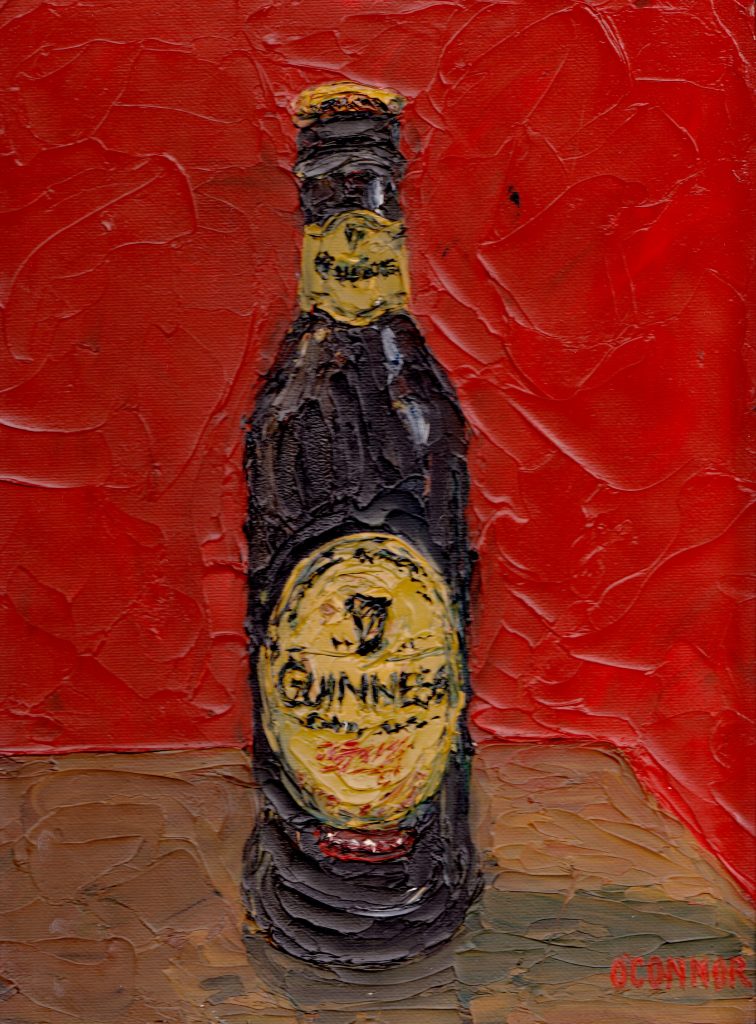
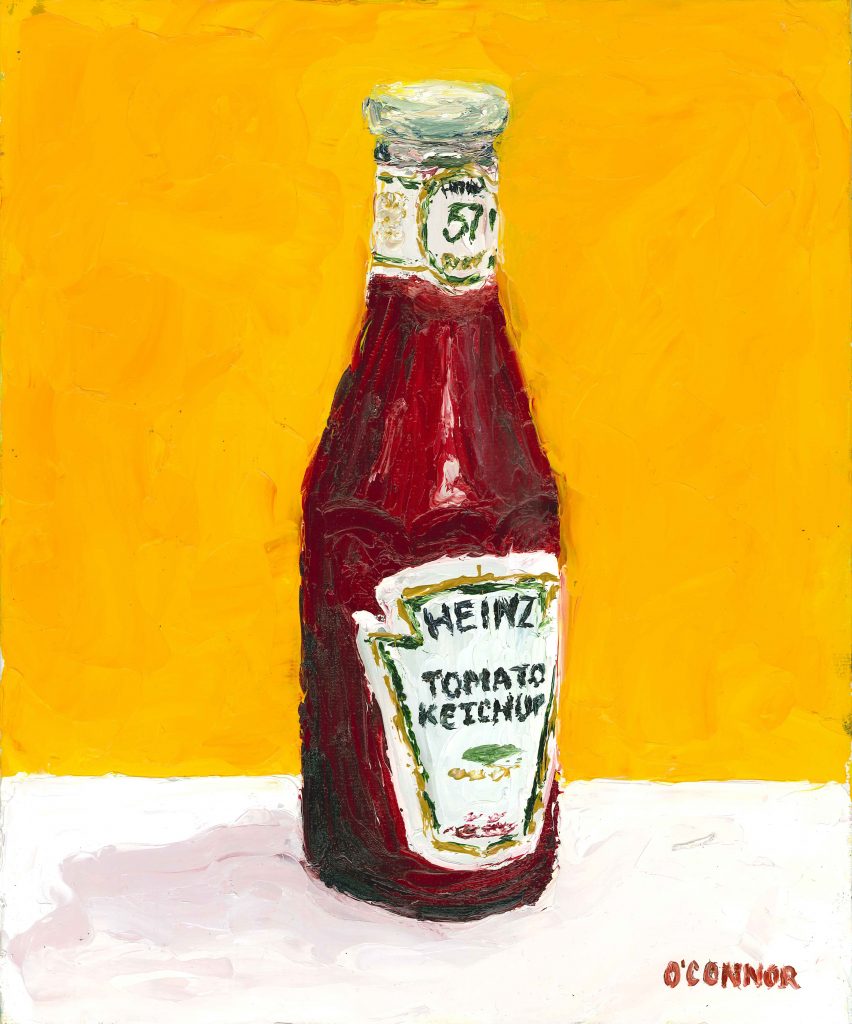
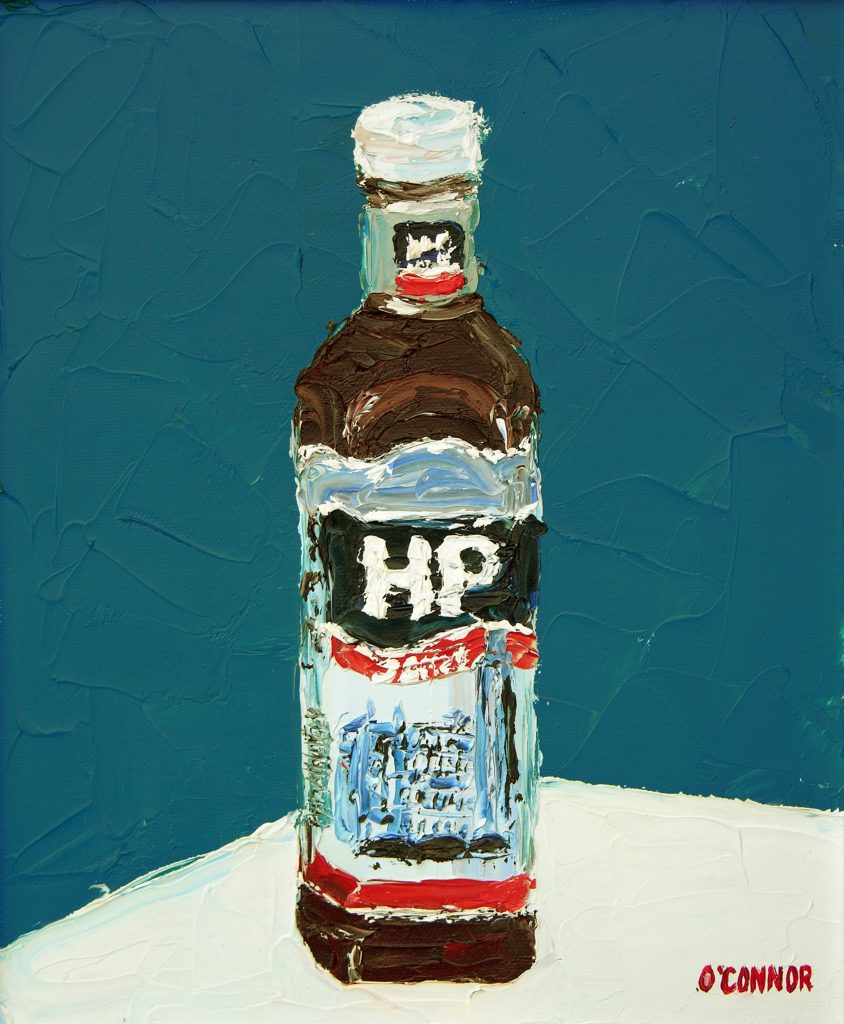
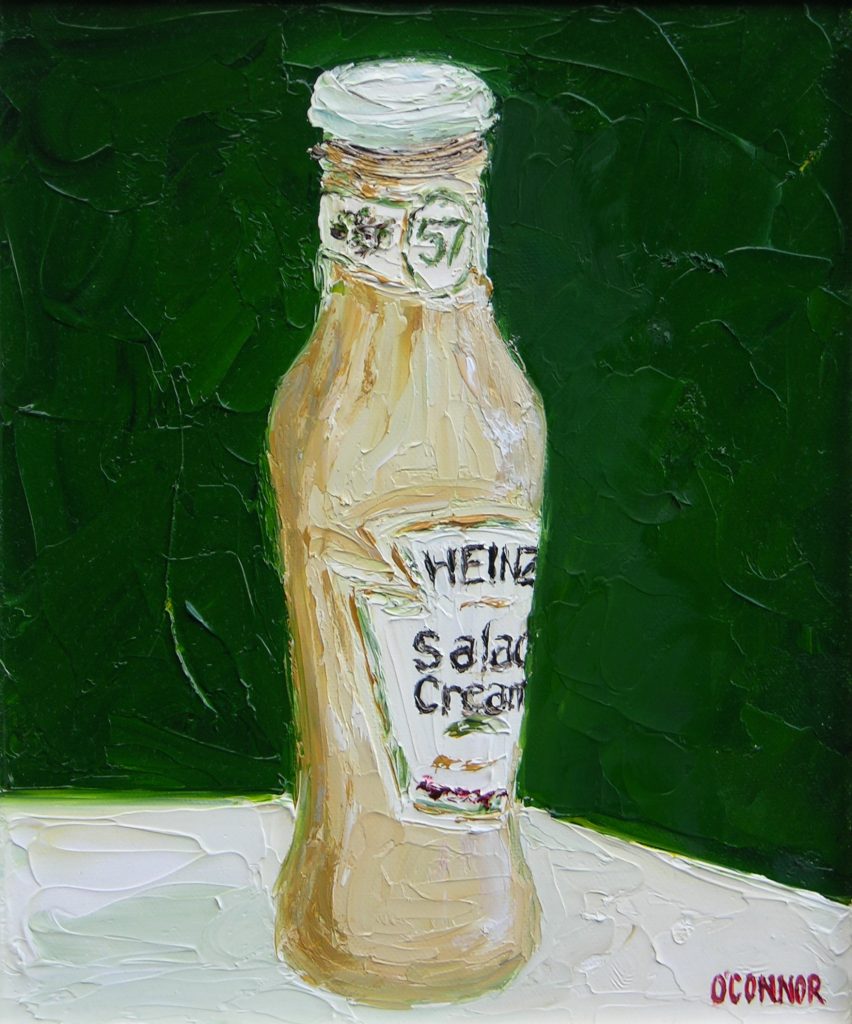
Her use of strong colour does not remove a subject from reality so much as reveal the emotional brightness hidden within it. A building, bottle or ordinary household object may seem unremarkable when passed each day, but the palette knife allows Martina to heighten the light around it and recover the reasons it attracted her in the first place.
“I love how strong colours and vibrancy can turn something that might look quite dull to the eye into something a bit more fantastic and magical.”
That transformation is particularly evident in Ferris Wheel at Portstewart. The painting is recognisable as a specific place, but its saturated colour and energetic surface communicate something a photograph alone cannot: the excitement of summer returning, light striking the water and an entire family converging on the coast.
Martina’s landscapes and cityscapes are therefore shaped as much by personal association as geography. When she lived in Belfast, she painted the Albert Clock, the Royal Mail building and other structures that formed part of her surroundings. Now her attention frequently returns to the North Coast and places such as Portstewart, Portrush and Bushmills. Photographs from Portnoo, Donegal and family travels in Greece are also waiting to become paintings, including a church where her cousin was married.
Wherever Martina happens to be, the paintings follow the movement of her life.
Flowers That Remain in Bloom
Martina moves freely between these still lifes, landscapes, cityscapes and floral paintings. She may spend a period absorbed in flowers before feeling the need to return to a landscape, allowing each change in subject to refresh the way she approaches the next.
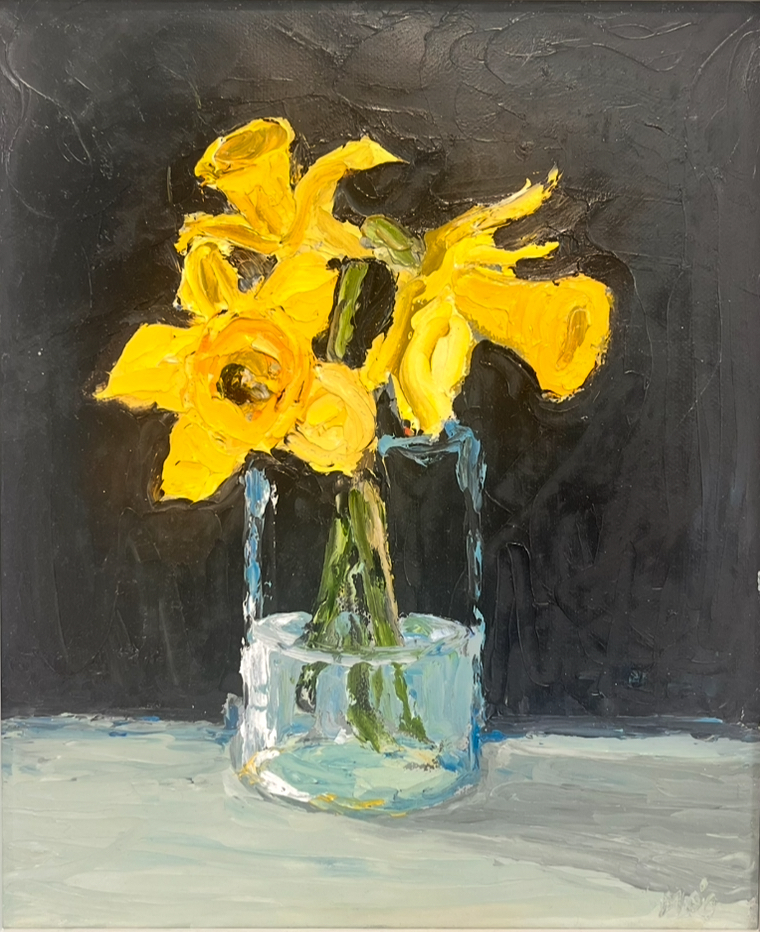
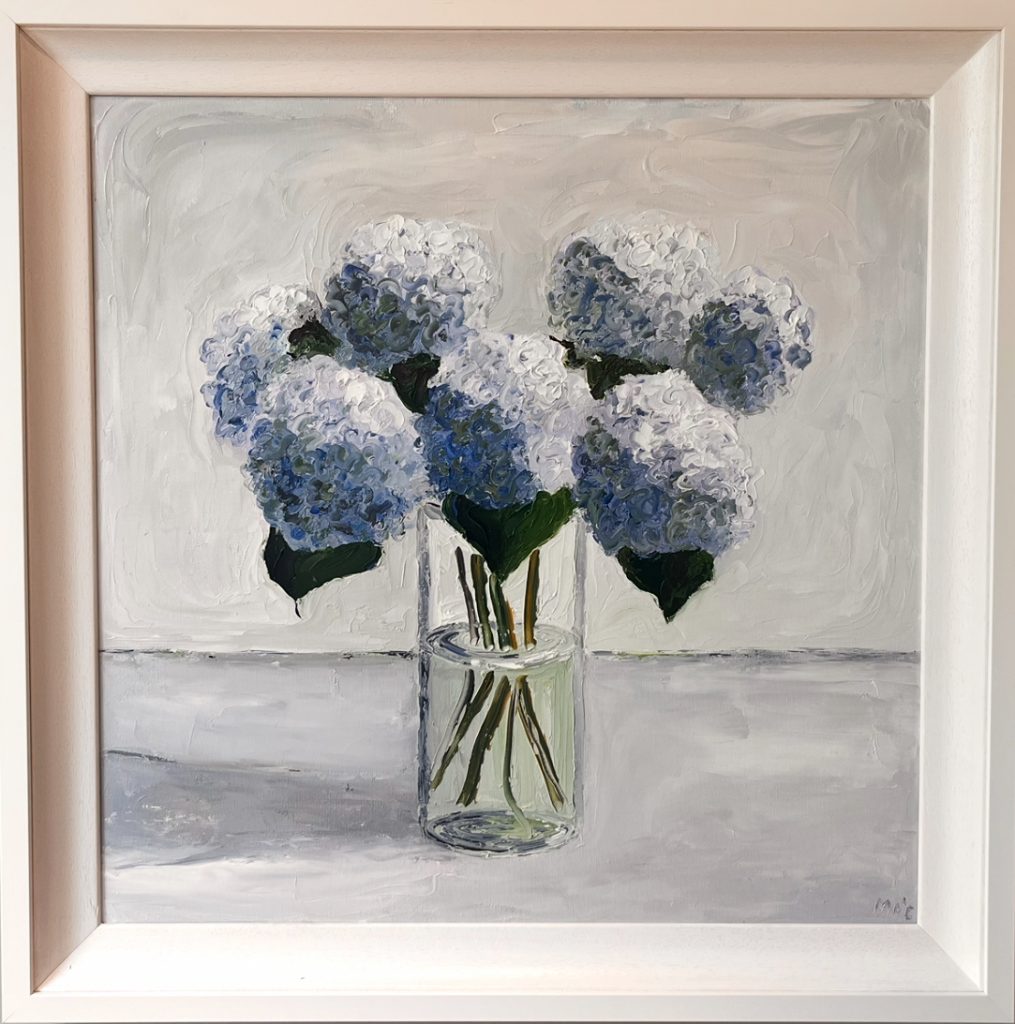
Hydrangeas hold a particular fascination, despite Martina associating them with “an old person’s flower” when she was a child. She now notices their abundance in gardens and the possibilities contained in each cluster of petals. Roses and magnolia appear frequently too, their layered forms ideally suited to the thickness of oil and the movement of her palette knife.
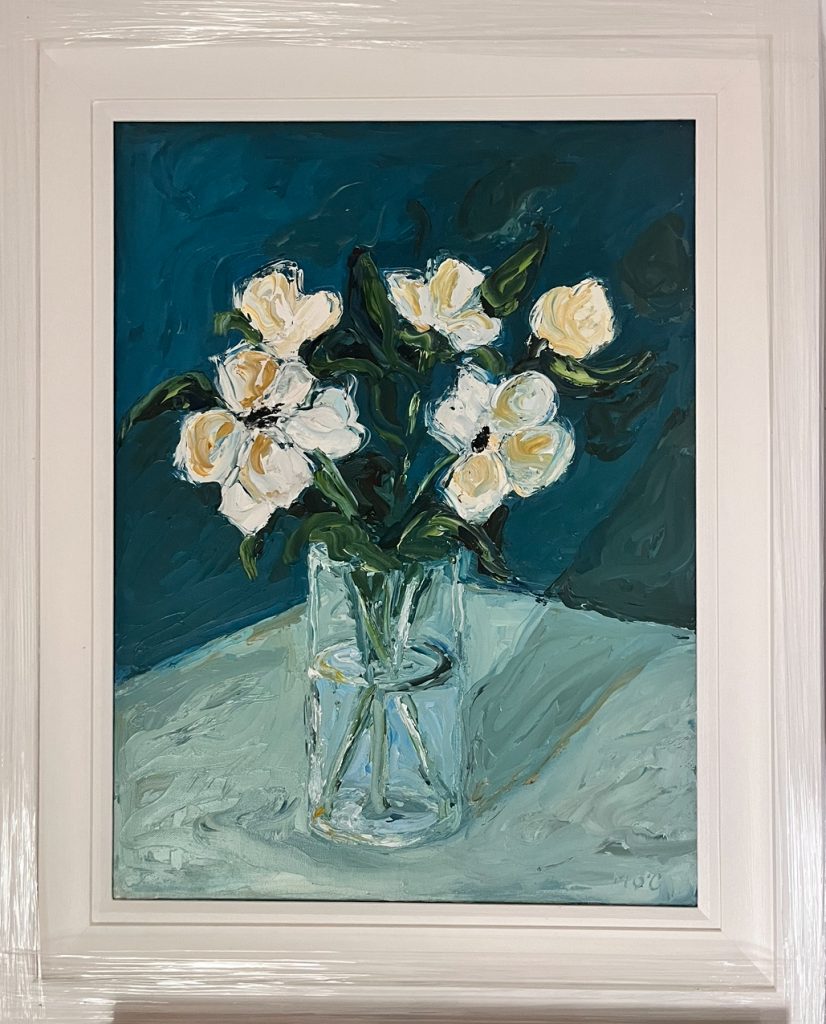
Works such as Timeless build flowers petal by petal, allowing white blooms to emerge from a soft, restrained background. Other arrangements place vivid flowers against deep blues and browns, using contrast to heighten their presence. Martina draws inspiration from gardens encountered while travelling as well as flowers closer to home, although she jokes that she tends to look after her painted flowers better than the real ones.
The florals reveal the quieter side of her attention. They do not depend upon a dramatic event, only the decision to stop and observe something while it is briefly in bloom. In preserving that encounter through paint, Martina creates another of the moments in time that connect her work.
Finding a Creative Home
Since August 2025, Martina has worked from a studio at The Courthouse in Bushmills. The move began with an invitation from a friend to attend a series of social painting sessions called Brushstrokes and Brew. Martina had already seen the studios advertised but assumed Bushmills would be too far away. After making the journey, she realised how manageable it was and took a walk through the creative spaces downstairs.
She quickly fell in love with the building.
“It is just a lovely environment to work in,” Martina says. “You’re working with other artists, and it’s a really lovely creative space that has grown from strength to strength.”
The Courthouse brings artists, makers and visitors together beneath one roof. Alongside the studios, its bistro, Designerie shop and workshop rooms create a place where people can eat, discover locally made work, take part in an activity or encounter an artist in the process of making. For Martina, the people already working there were as important as the physical space. They spoke openly about their experiences and helped her imagine what it might be like to join them.
Her studio schedule still has to bend around family life. Martina’s sons are now 20, 17 and 15, each balancing sport, part-time work and summer plans of their own. Martina also coaches her local senior camogie team, having played the sport throughout her life. Painting may now be her profession, but it exists within a full network of commitments and relationships.
Learning to Be Seen
Becoming an artist publicly required a different kind of adjustment. After 27 years of being known as a teacher, sharing paintings online and describing herself through her art felt like entering entirely new territory.
“You feel like you’re exposing your soul,” Martina says. “It takes a certain level of confidence to broadcast it. Even going on Instagram was a big thing for me.”
A friend provided the gentle nudge she needed to publish that first post. Social media remains one of the less natural parts of the work – the task that has to be fitted around actually painting – but it has allowed Martina to show the details and textures of her canvases, connect with collectors and gradually become more comfortable claiming this new chapter of her life.
The change has not been a rejection of everything she was before. The teacher, mother, teammate and coach all remain present in the artist. Her ability to notice other people’s attachments to places and objects is inseparable from a life spent within classrooms, families and teams. Even her paintings frequently begin with another person: an uncle offering an early commission, a husband pointing towards a bottle, a collector requesting its companion or a friend encouraging her to share what she has made.
Martina’s path towards painting was neither immediate nor carefully planned. It took decades, a long career, a growing family and a profound interruption before the ambition she had carried since childhood could move from the background to the centre of her days. She now speaks about that arrival with an unmistakable sense of contentment.
“I’m doing what I absolutely love doing, and I feel really content and happy that I am where I am right now,” she says. “It might have taken me a few decades to get there, but I’m here and I’m doing it now.”
Her paintings are filled with things that waited: a photograph held for six years, an old love of art preserved through a teaching career, flowers returning with the season and familiar objects accumulating stories from one owner to the next. Martina’s work reminds us that returning to something does not mean arriving late. Sometimes an image – or a life – simply needs time before its colours are ready to emerge.
Visit Martina’s studio at The Courthouse in Bushmills to discover her original oil paintings and discuss commissions:
thecourthousebushmills.com
Her website and online shop also offer a selection of prints and available work:
martinaoconnor.com
And follow her via social media:
@martina_oconnorart
Support Go Leor. Get the Print. Join the Story.
Go Leor is an independent Irish arts magazine built by hand, heart, and community. Your support keeps meaningful storytelling alive – in print, in culture, and in conversation.
Through Patreon, you can support the magazine in two simple ways:
- Supporter Listing
Have your name printed inside every issue as part of the community helping Go Leor grow. - Print Copy – UK & Ireland
Receive the latest print issue delivered each month across the UK and Ireland, with your name included inside the magazine.
The Latest Articles

Dee Magee: Captivating Jewellery Exploring Identity, Storytelling and Sustainability
From raven-sized lockets and reclaimed silver to animation and community, Dee Magee uses Quirky but Fierce to make room for the ideas that refuse to stay in one lane.

FÉOIL: Powerful Street Art Confronting Trauma, Identity and the Body
From distorted bodies and three-headed wolves, FÉOIL turns experiences that resist easy conversation into images too large, strange and alive to be ignored.

Helen Hancock: Powerful Glass Art Preserving Motherhood, Memory and Loss
Derry artist Helen Hancock transforms breast milk, ashes and other intimate materials into luminous glassworks that preserve stories of motherhood, loss and family.

Vicki McCorkell: Transforming Wood into Remarkably Detailed Pyrography Art
Ballymena artist Vicki McCorkell transforms locally sourced wood into dark, intricate works shaped by mythology, dreams and human emotion.

Greta Baltic: A Powerful Exploration of Lithuanian Identity Through Photography
Lithuanian-born visual artist Greta Baltic uses photography, folklore and collaboration to explore life between cultures – while creating spaces in which other artists can be seen.

Seba Brhom: Art, Memory and the Beauty of Being Seen
A Syrian artist and teacher now living in Northern Ireland, Seba Brhom uses drawing, fabric, Arabic lettering and community workshops to share beauty, memory and gratitude.